Crafts and makingEast AsiaHinduBuddhist
Najeonchilgi
In its own language: 나전칠기
A Korean craft of inlaying mother-of-pearl onto lacquered wood to create decorative objects.

Najeonchilgi is a traditional Korean handicraft that involves inlaying pieces of shellfish onto lacquered surfaces. It originated in ancient China and was adopted by Korea during the Silla period, flourishing under the Goryeo and Joseon dynasties.
When is Najeonchilgi kept?
Najeonchilgi is kept on continuously from ancient times to the present day.
Najeonchilgi is a refined Korean art form where artisans embed iridescent shell fragments into layers of natural lacquer. This technique transforms ordinary wooden items into luminous works of beauty. The craft reflects centuries of cultural exchange and artistic evolution, serving as a symbol of Korean heritage and skilled craftsmanship.
Origins and history
The practice began in ancient China before spreading to Japan and eventually South Korea. During the Three Kingdoms period, lacquering techniques were introduced, followed by shell inlay methods in the Silla era. The Goryeo dynasty marked a golden age for this craft, heavily influenced by Buddhist aesthetics. Aristocrats prized these intricate items as gifts for foreign dignitaries. Later, under the Joseon dynasty, Confucian values encouraged simpler, nature-inspired designs. Despite colonial interruptions in the early twentieth century, the tradition revived after independence, becoming a symbol of national wealth.
Materials and process
Artisans require immense patience to complete the more than thirty steps involved in creating najeonchilgi. They start with a base made of wood, metal, or porcelain, then fill gaps with a mixture of clay and lacquer tree resin. Small pieces of abalone shell are cut using two specific methods: jureumjil for filling and ggeuneumjil for cutting. These shells are pasted onto the surface and polished until smooth. Modern makers sometimes use cashew lacquer instead of traditional otchil, though this can affect durability. Historically, abalone shells were sourced locally, but shortages led to imports from Australia, Taiwan, and the Philippines.
Objects and usage
Originally reserved for nobility, these objects included stationary chests, dining tables, trays, and wardrobes. Over time, the craft expanded to include jewelry boxes, mirrors, combs, and various accessories like earrings and bracelets. Contemporary artists also apply the technique to modern items such as water bottles and phone cases. The Ottchil Museum in Tongyeong showcases both traditional and modern examples, highlighting the ongoing relevance of the craft. Exhibitions across Korea and internationally continue to promote najeonchilgi as a distinctively Korean contribution to contemporary art.
How Najeonchilgi is kept
Skilled artisans prepare a base material, apply layers of lacquer and clay, and meticulously inlay cut shell pieces. The object is then polished and finished with additional lacquer coats. Masters teach these techniques through universities and museums, ensuring the knowledge passes to new generations despite challenges from mass production and material costs.
When and where
The craft has been practiced continuously since the Three Kingdoms period, evolving through the Goryeo and Joseon dynasties to the modern era.
It originated in China and is most strongly associated with South Korea, where it remains a significant cultural tradition. It is also found in Japan, known as raden.
What Najeonchilgi means
Historically, najeonchilgi symbolized wealth and status among the aristocracy. During the Goryeo period, it reflected Buddhist spiritual ideals through its intricate patterns. In the Joseon era, simpler designs emphasized Confucian humility. Today, it represents Korean cultural pride and artistic excellence on the global stage.

Questions people ask about Najeonchilgi
When is Najeonchilgi kept?
Najeonchilgi is kept on continuously from ancient times to the present day.
Where is Najeonchilgi kept?
Najeonchilgi belongs to the traditions of South Korea, China and Japan.
Who keeps Najeonchilgi?
As our sources describe it, Najeonchilgi is kept by Korean craftsmen. Many other communities and families now share it too.
See also
 YūzenA Japanese resist-dyeing craft that creates painterly patterns on fine kimono
 KokeshiHand-turned Japanese wooden dolls painted with floral designs and slender faces
 HanjiThe Korean craft of making durable paper from mulberry fiber and root mucilage.
 Shell moneyTraditional currency made from cowries, ground clam beads, and carved sea shells
Good reading and sources
The facts on this page come from the Wikipedia article "Najeonchilgi", written by its contributors and used under the CC BY-SA 4.0 licence, and from its Wikidata record (CC0). EveryParampara rewrote the text in its own words, with AI assistance, and compares every page with the article to make sure no passage is copied. It may be reused under the same CC BY-SA 4.0 licence with a link back.
It may contain mistakes. Traditions differ from one family, village and community to the next, and the people who keep them know them best. If something is wrong, tell us. Last refreshed 2026-10-05.
More from South Korea
All the traditions of South Korea 🇯🇵 Tokyo, Japan and 1 moreBonsai盆栽
A Japanese craft of keeping small trees in shallow pots, shaped for contemplationCraft
🇯🇵 Tokyo, Japan and 1 moreBonsai盆栽
A Japanese craft of keeping small trees in shallow pots, shaped for contemplationCraft
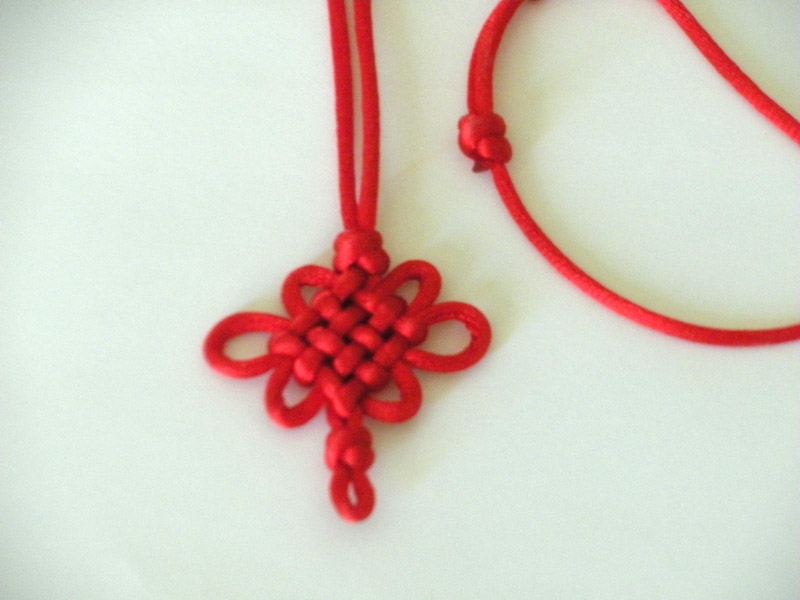 🇨🇳 China and 2 moreChinese knotting中國結 (Zhōngguó jié)
A folk craft of cord tied into lucky shapes, made in China and given as charmsCraft
🇰🇷 South KoreaHanji한지
The Korean craft of making durable paper from mulberry fiber and root mucilage.Craft
🇨🇳 China and 2 moreChinese knotting中國結 (Zhōngguó jié)
A folk craft of cord tied into lucky shapes, made in China and given as charmsCraft
🇰🇷 South KoreaHanji한지
The Korean craft of making durable paper from mulberry fiber and root mucilage.Craft
 🇨🇳 Longquan, China and 4 moreCeladon青瓷 (qīngcí)
Green-glazed pottery first made in China, valued for colours that echo jadeCraft
🇨🇳 Longquan, China and 4 moreCeladon青瓷 (qīngcí)
Green-glazed pottery first made in China, valued for colours that echo jadeCraft
The same idea elsewhere
All of this kind 🇮🇷 Shiraz, Iran and 1 moreKhatamخاتم
A Persian inlay craft that builds geometric patterns from thousands of tiny cut piecesCraft
🇮🇷 Shiraz, Iran and 1 moreKhatamخاتم
A Persian inlay craft that builds geometric patterns from thousands of tiny cut piecesCraft
 🇮🇪 Galway, Ireland and 1 moreBrigid's crossCros Bhríde
A cross of woven rushes or straw, made for Saint Brigid's Day on the first of FebruaryCraft
🇮🇪 Galway, Ireland and 1 moreBrigid's crossCros Bhríde
A cross of woven rushes or straw, made for Saint Brigid's Day on the first of FebruaryCraft
 🇦🇺 AustraliaBark painting
Ochre pictures on flattened tree bark, an Aboriginal art form of northern AustraliaCraft
🇦🇺 AustraliaBark painting
Ochre pictures on flattened tree bark, an Aboriginal art form of northern AustraliaCraft
 🇺🇸 United States and 1 moreDreamcatcherᐊᓴᐱᑫᔒᓐᐦ (asabikeshiinh)
A hand-woven hoop from Anishinaabe tradition, hung above a cradle to protect a childCraft
🇺🇸 United States and 1 moreDreamcatcherᐊᓴᐱᑫᔒᓐᐦ (asabikeshiinh)
A hand-woven hoop from Anishinaabe tradition, hung above a cradle to protect a childCraft