Yūzen
In its own language: 友禅
A Japanese resist-dyeing craft that creates painterly patterns on fine kimono

Yūzen is a Japanese textile dyeing craft that creates delicate pictorial patterns on silk garments. Developed in seventeenth-century Japan, artisans pipe rice paste onto fabric to separate brush-painted colours before washing the cloth clean.
Yūzen is a traditional Japanese resist-dyeing method used to decorate silk garments and accessories. Named after a seventeenth-century fan painter, the craft allows makers to paint detailed multi-coloured scenes directly onto fabric. Outlines made from rice paste keep liquid dyes from bleeding into neighbouring sections. The result is a refined, pictorial look that remains a standard for formal kimono.
Origins and history
The method emerged during the seventeenth century in Japan. It takes its name from Miyazaki Yūzen, a popular fan painter who refined the approach. During this period, ruling authorities imposed strict sumptuary laws on luxury dress. Artists used this new dyeing style to skirt garment regulations while still making elaborate, pictorial robes called kosode. A pattern book featuring these designs appeared in 1688, sparking widespread interest across the country. Unlike many historical textile arts, the practice remained popular across centuries without being forgotten. Dyers later absorbed Western movements, creating fresh motifs influenced by Art Nouveau around the turn of the twentieth century.
The hand-painted method
The classic hand technique, known as hon-yūzen or itome-yūzen, begins with a sketch drawn in ink made from dayflowers. This ink vanishes when heated. Makers pipe a paste made from rice powder, bran, and lime along the lines to form fine barriers. A soybean liquid is brushed over the cloth as a mordant to help the fibres take colour. Dyers then hand-paint liquid dyes into each bounded section, often blending shades to create soft gradients. After the patterns are set with steam, artisans shield the painted parts with more paste to dye the background. Finally, washing removes all the paste from the silk.
Stencils and new materials
Technological shifts in the late nineteenth century brought new variations to the craft. Artisans developed stencil methods, known as kata-yūzen, allowing patterns to be reproduced more rapidly. Hirose Jisuke of Kyoto adapted these stencil approaches for fine silk. Makers applied coloured pastes through cut stencils with spatulas, using separate sheets for each hue. The introduction of synthetic dyes also allowed the technique to work on imported wool cloth. Another nineteenth-century style, velvet yūzen, involved dyeing velvet cloth and carefully carving away sections of pile. These variations widened the scope of Japanese textile art.
Garments and modern use
Today, the technique remains closely associated with formal Japanese attire. It is frequently seen on formal black kimono, known as kurotomesode, as well as on decorative sashes. Master dyers in Kyoto continue to produce individual hand-dyed robes. The visual language of these patterns has also influenced twentieth-century haute couture designers, including Hanae Mori. Related methods have been applied beyond mainland Japan, such as in the stencil-dyed bingata textiles of Okinawa. Through both hand-painted and stencilled forms, the craft continues to define the appearance of traditional Japanese dress.
How Yūzen is kept
The traditional process begins with drawing a guide design in botanical ink. Artisans pipe narrow ridges of rice paste along the sketch lines and apply a soybean mordant. Using fine brushes, dyers paint multi-coloured pigments and gradients inside the paste barriers. The fabric is steamed to lock in the colour. Workers cover the completed motifs with resist paste and colour the background cloth with a brush or dye bath. Finally, the garment is washed thoroughly in water to rinse away all paste lines.
When and where
The craft is practised in Japan, with deep historic roots and active studios in Kyoto. Its methods also connect to regional textile arts in Okinawa.

Questions people ask about Yūzen
What is yūzen?
It is a Japanese resist-dyeing craft. Dyers use fine lines of rice paste to prevent brush-applied dyes from spreading into other parts of the fabric, creating intricate pictures.
Where did yūzen originate?
The technique developed in Japan during the seventeenth century. It was popularized by Miyazaki Yūzen, a fan painter whose designs were adapted for traditional robes.
What kinds of garments use this dyeing technique?
The craft is mainly used on formal kimono, such as kurotomesode, as well as obi sashes and other traditional Japanese dress.
How does stencil yūzen differ from the freehand style?
Freehand yūzen relies on piped paste outlines and hand brushwork. Stencil yūzen, or kata-yūzen, uses cut stencils and spatulas to apply coloured pastes across the fabric in layers.
See also
 KokeshiHand-turned Japanese wooden dolls painted with floral designs and slender faces
 HalloweenAn annual observance on 31 October marking the eve of All Saints' Day, rooted in Christian tradition and Celtic heritage
 Kishiwada Danjiri MatsuriA high-speed festival of wooden shrine floats pulled through Kishiwada, Japan
 RakugoJapanese solo comic storytelling told from a cushion using a fan and a cloth
Good reading and sources
- Yūzen on WikipediaEncyclopedia
- More photos on Wikimedia CommonsPhotos and video
- Wikidata recordOpen data
The facts on this page come from the Wikipedia article "Yūzen", written by its contributors and used under the CC BY-SA 4.0 licence, and from its Wikidata record (CC0). EveryParampara rewrote the text in its own words, with AI assistance, and compares every page with the article to make sure no passage is copied. It may be reused under the same CC BY-SA 4.0 licence with a link back.
It may contain mistakes. Traditions differ from one family, village and community to the next, and the people who keep them know them best. If something is wrong, tell us. Last refreshed 2026-10-04.
More from Japan
All the traditions of Japan 🇯🇵 Tokyo, Japan and 1 moreBonsai盆栽
A Japanese craft of keeping small trees in shallow pots, shaped for contemplationCraft
🇯🇵 Tokyo, Japan and 1 moreBonsai盆栽
A Japanese craft of keeping small trees in shallow pots, shaped for contemplationCraft
 🇰🇷 South Korea and 2 moreNajeonchilgi나전칠기
A Korean craft of inlaying mother-of-pearl onto lacquered wood to create decorative objects.Craft
🇯🇵 JapanKokeshiこけし
Hand-turned Japanese wooden dolls painted with floral designs and slender facesCraft
🇰🇷 South Korea and 2 moreNajeonchilgi나전칠기
A Korean craft of inlaying mother-of-pearl onto lacquered wood to create decorative objects.Craft
🇯🇵 JapanKokeshiこけし
Hand-turned Japanese wooden dolls painted with floral designs and slender facesCraft
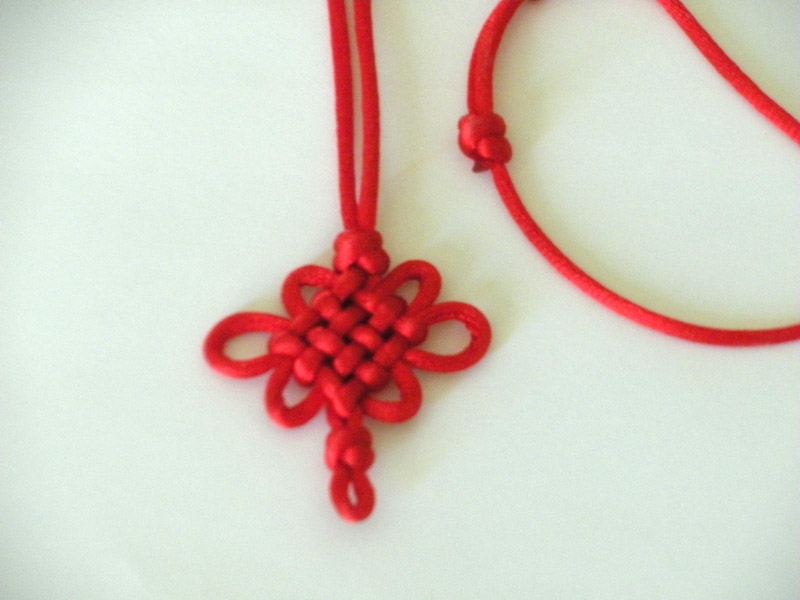 🇨🇳 China and 2 moreChinese knotting中國結 (Zhōngguó jié)
A folk craft of cord tied into lucky shapes, made in China and given as charmsCraft
🇨🇳 China and 2 moreChinese knotting中國結 (Zhōngguó jié)
A folk craft of cord tied into lucky shapes, made in China and given as charmsCraft
The same idea elsewhere
All of this kind 🇮🇷 Shiraz, Iran and 1 moreKhatamخاتم
A Persian inlay craft that builds geometric patterns from thousands of tiny cut piecesCraft
🇮🇷 Shiraz, Iran and 1 moreKhatamخاتم
A Persian inlay craft that builds geometric patterns from thousands of tiny cut piecesCraft
 🇮🇪 Galway, Ireland and 1 moreBrigid's crossCros Bhríde
A cross of woven rushes or straw, made for Saint Brigid's Day on the first of FebruaryCraft
🇮🇪 Galway, Ireland and 1 moreBrigid's crossCros Bhríde
A cross of woven rushes or straw, made for Saint Brigid's Day on the first of FebruaryCraft
 🇦🇺 AustraliaBark painting
Ochre pictures on flattened tree bark, an Aboriginal art form of northern AustraliaCraft
🇦🇺 AustraliaBark painting
Ochre pictures on flattened tree bark, an Aboriginal art form of northern AustraliaCraft
 🇺🇸 United States and 1 moreDreamcatcherᐊᓴᐱᑫᔒᓐᐦ (asabikeshiinh)
A hand-woven hoop from Anishinaabe tradition, hung above a cradle to protect a childCraft
🇺🇸 United States and 1 moreDreamcatcherᐊᓴᐱᑫᔒᓐᐦ (asabikeshiinh)
A hand-woven hoop from Anishinaabe tradition, hung above a cradle to protect a childCraft