Celadon
In its own language: 青瓷 (qīngcí)
Green-glazed pottery first made in China, valued for colours that echo jade

Celadon is green-glazed pottery and the glaze used on it. The technique began in China, where kilns in Zhejiang made the Longquan wares, and potters in Korea, Japan, Thailand and Vietnam later took it up. Chinese courts prized these wares for centuries because their colour recalled jade.
Celadon is a name for green-glazed pottery and for the glaze itself. Chinese potters were the first to make it, and their wares in these soft greens and blues were valued at court for looking like jade. The craft travelled to Korea and Japan and to parts of Southeast Asia, where potters made it their own. Collectors and museums still study it closely.
What it is
Celadon is the name for pottery finished in a soft green glaze, and also for the glazes themselves. Specialists more often say greenware. The glaze is usually partly see-through, and many pieces carry crackle, a pattern of tiny cracks across the surface. Although the finest examples are porcelain, the colour and the glaze can also be made on stoneware and earthenware. In Japan a related bluish white glaze, seihakuji, is often preferred to a full green. Pieces include bowls, cups, vases, plates, boxes, censers and water jars for tea.
The name celadon
Celadon is not a Chinese word. European buyers and scholars gave the ware that name. The explanation most often repeated places it in 17th-century France, where a shepherd called Celadon, a character in Honoré d'Urfé's romance L'Astrée, wore pale green ribbons; the author took the figure from Ovid. A rival suggestion derives the word from Saladin, the Ayyubid ruler, and from a gift of forty ceramic vessels that he is said to have sent in 1171 to Nur ad-Din Zengi, ruler of Syria. Neither account can be confirmed.
Colour and the kiln
The green comes from iron oxide in the glaze or in the clay. Potters fire at high heat in a reducing kiln, one where the fire is starved of oxygen, so the iron shifts from ferric to ferrous. Roughly 0.75 to 2.5 per cent iron gives the wanted green; less makes blue, more turns the glaze olive and then black. Titanium dioxide adds a yellowish cast. Colour also depends on glaze thickness, the clay underneath, the exact recipe and the heat reached. Even pieces from one firing differ, because conditions vary in different parts of the kiln. Whites, greys, blues and yellows all appear.
Chinese kilns
Chinese greenwares go back to Shang dynasty earthenware. Wang Zhongshu reports glazed shards from Eastern Han tombs in Zhejiang, and such ware became well known in the Three Kingdoms period; these early pieces, now called proto-celadons, lean brown and yellow. Yue ware came first among the major types, followed by northern kilns and Yaozhou ware, sometimes supplied to the imperial court. Longquan wares appeared under the Northern Song and thrived after the court moved south. Ru, Guan, Ge and the secret colour wares also count. Export ran through East Asia, Southeast Asia and the Middle East. Blue and white porcelain later pushed celadon out of fashion, though old styles were revived.
Korean and Japanese work
Korean workshops made greenware from the Three Kingdoms period onward, and their best-known pieces are the pale green-blue wares of Goryeo and Joseon. Sanggam, an inlay method, was a Korean invention. The Gangjin kiln sites in South Jeolla Province held 188 kilns and sent pottery across Korea and abroad. In Japan greenware arrived in the Song period and was long avoided because firings failed so often; kaolin is scarce there, though Amakusa in Kyushu supplies some. Work in the Longquan manner centred on Arita and Saga. Three Song and Yuan pieces are national treasures.
How Celadon is kept
Celadon is a craft of potters rather than a public observance. A workshop prepares a refined body and a glaze whose iron content is measured, because unwanted chemicals can spoil the colour. The pot may be shaped, moulded or carved with shallow designs that let the glaze gather and read darker. It then goes into a reducing kiln at high temperature; true celadon needs at least 1,260 °C, and the favoured range runs from about 1,285 to 1,305 °C. Apprentices, family workshops and studio artists all take part. Firing is the moment of risk, since results vary within a single kiln load.
When and where
Celadon belongs above all to China, where Zhejiang province and the Longquan kilns are the best known sites. Korea has its own strong line, especially the kiln complex at Gangjin in South Jeolla Province. In Japan, Longquan-style production centred on Arita and Saga. Thailand and Vietnam also made celadon, and a few European potteries tried it without much success.
What Celadon means
For Chinese users the pull of celadon lay in its likeness to jade, the material their culture valued most, so a green glaze carried a sense of worth and refinement. Pale blue pieces were prized especially highly. In Korea, jade worked into gogok shapes appears in crowns and jewels as a sign of creativity, the universe, divinity and leadership. The craft also marks continuity: later Chinese makers deliberately returned to older styles.


Questions people ask about Celadon
What exactly is celadon?
The word covers two things: pottery with a green glaze that recalls jade, which specialists more often call greenware, and the family of glazes used to give that colour. Pieces can be porcelain, stoneware or earthenware.
Where does it come from?
Celadon began in China, where kilns in Zhejiang province and above all Longquan were famous for it. The craft later reached Korea, Japan, Thailand and Vietnam. Some European potteries made pieces as well, but it never became a major part of their work.
Why is it called celadon?
The word is European, not Chinese. The explanation most often given places it in 17th-century France, where a shepherd named Celadon in a popular romance wore pale green ribbons. Another idea connects the name with Saladin, an Ayyubid ruler. Nobody has settled the question.
How does the green appear?
A small amount of iron oxide in the glaze gives the colour, but only when the kiln is fired hot and starved of oxygen. Below about 0.75 per cent iron the glaze turns blue; above 2.5 per cent it goes olive, then black.
Is celadon still made?
Yes. It never stopped. Chinese workshops continued at a lower level and later revived old styles, Korean potters still work in the Goryeo manner, and Japanese artists have taken both greenware and the bluish white seihakuji into modern design.
See also
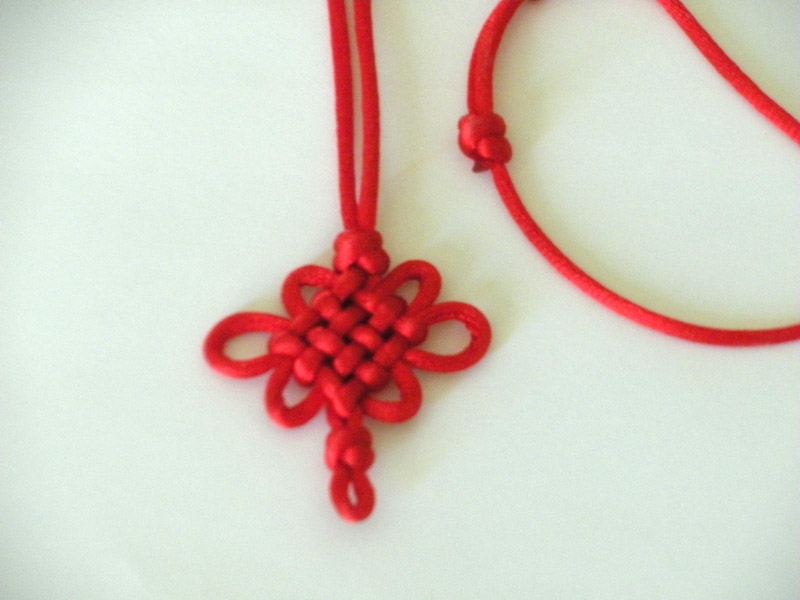 Chinese knottingA folk craft of cord tied into lucky shapes, made in China and given as charms
 IkatA resist-dyeing craft from Southeast Asia, where yarns are tied and dyed before weaving
 BonsaiA Japanese craft of keeping small trees in shallow pots, shaped for contemplation
 HanjiThe Korean craft of making durable paper from mulberry fiber and root mucilage.
Good reading and sources
- Encyclopaedia BritannicaArticle
- Korean Celadon PotteryWorld History Encyclopedia, Article
- Korean Celadon PotteryWorld History Encyclopedia, Article
- Celadon on WikipediaEncyclopedia
- More photos on Wikimedia CommonsPhotos and video
- Wikidata recordOpen data
The facts on this page come from the Wikipedia article "Celadon", written by its contributors and used under the CC BY-SA 4.0 licence, and from its Wikidata record (CC0). EveryParampara rewrote the text in its own words, with AI assistance, and compares every page with the article to make sure no passage is copied. It may be reused under the same CC BY-SA 4.0 licence with a link back.
It may contain mistakes. Traditions differ from one family, village and community to the next, and the people who keep them know them best. If something is wrong, tell us. Last refreshed 2026-10-05.
More from China
All the traditions of China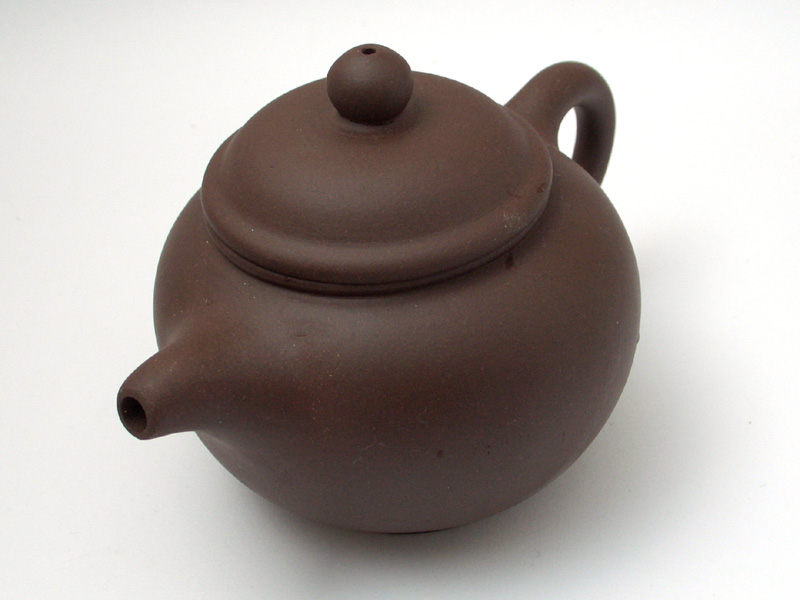 🇨🇳 Yixing, ChinaYixing clay teapot紫砂
Handcrafted Chinese purple clay teapots that season with every brewCraft · Tea, coffee and drinking ceremonies
🇨🇳 Yixing, ChinaYixing clay teapot紫砂
Handcrafted Chinese purple clay teapots that season with every brewCraft · Tea, coffee and drinking ceremonies
 🇺🇬 Uganda and 4 moreBarkcloth
Cloth beaten from tree bark across Africa, Asia and the PacificCraft
🇺🇬 Uganda and 4 moreBarkcloth
Cloth beaten from tree bark across Africa, Asia and the PacificCraft
 🇵🇬 Papua New Guinea and 5 moreShell money
Traditional currency made from cowries, ground clam beads, and carved sea shellsCraft
🇵🇬 Papua New Guinea and 5 moreShell money
Traditional currency made from cowries, ground clam beads, and carved sea shellsCraft
 🇰🇷 South Korea and 2 moreNajeonchilgi나전칠기
A Korean craft of inlaying mother-of-pearl onto lacquered wood to create decorative objects.Craft
🇰🇷 South Korea and 2 moreNajeonchilgi나전칠기
A Korean craft of inlaying mother-of-pearl onto lacquered wood to create decorative objects.Craft
The same idea elsewhere
All of this kind 🇮🇷 Shiraz, Iran and 1 moreKhatamخاتم
A Persian inlay craft that builds geometric patterns from thousands of tiny cut piecesCraft
🇮🇷 Shiraz, Iran and 1 moreKhatamخاتم
A Persian inlay craft that builds geometric patterns from thousands of tiny cut piecesCraft
 🇮🇪 Galway, Ireland and 1 moreBrigid's crossCros Bhríde
A cross of woven rushes or straw, made for Saint Brigid's Day on the first of FebruaryCraft
🇮🇪 Galway, Ireland and 1 moreBrigid's crossCros Bhríde
A cross of woven rushes or straw, made for Saint Brigid's Day on the first of FebruaryCraft
 🇦🇺 AustraliaBark painting
Ochre pictures on flattened tree bark, an Aboriginal art form of northern AustraliaCraft
🇦🇺 AustraliaBark painting
Ochre pictures on flattened tree bark, an Aboriginal art form of northern AustraliaCraft
 🇺🇸 United States and 1 moreDreamcatcherᐊᓴᐱᑫᔒᓐᐦ (asabikeshiinh)
A hand-woven hoop from Anishinaabe tradition, hung above a cradle to protect a childCraft
🇺🇸 United States and 1 moreDreamcatcherᐊᓴᐱᑫᔒᓐᐦ (asabikeshiinh)
A hand-woven hoop from Anishinaabe tradition, hung above a cradle to protect a childCraft