Kokeshi
In its own language: こけし
Hand-turned Japanese wooden dolls painted with floral designs and slender faces

Kokeshi are limb-free wooden dolls crafted by Japanese woodturners for more than 150 years. Originating as children's toys in the hot-spring towns of northern Honshu, the figures are painted with delicate facial features and bright floral rings before being coated in protective wax.
Kokeshi are traditional wooden dolls from northern Japan, recognized by their cylindrical trunks, rounded heads, and lack of limbs. Woodturners first created them over a century and a half ago in the hot-spring resorts of the Tōhoku region. Today, craftspeople continue to paint these figures with delicate facial expressions and banded or floral patterns, keeping historic regional styles alive while also exploring modern creative forms.
Origins at hot springs
Woodturners known as kijishi, skilled in using lathes, first crafted kokeshi during the middle of the Edo period. Working near Tōgatta Onsen in Zaō, these artisans sold the wooden toys to travelers visiting thermal baths in north-eastern Japan. The craft gradually spread across other regional spa settlements. In 1923, folklore researchers founded the Sendai Kokeshi Association and later published a 1928 book that introduced the figures to the entire country. Craftsmen and collectors met at Naruko Onsen in August 1939 for a national gathering, where they formally agreed on the standardized phonetic spelling used for the dolls today.
Wood and regional types
Artisans season their timber outdoors for one to five years before turning it on a lathe. Makers select specific species for their physical qualities, including dogwood for its soft texture, cherry for its deeper colour, and Japanese maple known as itaya-kaede. Traditional dolls, or dentō-kokeshi, are grouped into eleven distinct regional varieties associated with specific hot-spring areas, such as Naruko, Tsuchiyu, and Tsugaru. Each variety follows established rules for proportions and decorative motifs. The Naruko style is the most widespread, and carvers still run craft workshops along the main street of Naruko Onsen Village.
Painting and creative styles
Once a doll is shaped on the lathe, the artisan draws facial features using fine brushstrokes. The trunk is decorated with ring motifs or floral designs, applied with black, red, and occasionally green, yellow, blue, or purple inks. A wax layer is then added to protect the surface. While traditional makers adhere to regional patterns, artists after World War II introduced creative kokeshi, or shingata-kokeshi. These modern pieces give artists complete freedom in shape, coloration, and subject matter, and their makers are mostly based in cities. Since the 1950s, carvers have customarily signed their names on the base or back.
Modern competitions and folklore
A popular twentieth-century theory claimed kokeshi were created as substitutes for unwanted infants, but historical records offer no support for this idea, with the earliest mentions appearing only in 1965. Today, the craft is celebrated through regular exhibitions and juried contests. Shiroishi-Zao hosts the long-running national exhibition each year, while creative doll competitions take place in Shibukawa and Tokyo, attracting makers from Japan and abroad. The distinctive shape of the doll has also influenced contemporary popular culture, inspiring digital avatar designs, modern character figurines, and themed stage costumes.
How Kokeshi is kept
Carvers prepare cured wood, such as maple, cherry, or dogwood, shaping the head and trunk on a lathe without adding arms or legs. They paint delicate facial lines and colourful floral or circular patterns before applying a finishing coat of wax. Traditional makers follow regional conventions rooted in specific hot-spring villages, while creative makers experiment freely with shapes and colours. Artisans sign their finished pieces, and collectors and craftsmen meet at regular exhibitions and competitions across Japan.
When and where
Woodturners craft kokeshi throughout the year. Annual gatherings and competitions mark the craft calendar, including the long-running national exhibition held each year in Shiroishi-Zao and creative doll events in Tokyo and Shibukawa.
The craft originated in the Tōhoku region of northern Honshu, Japan, especially within hot-spring towns across Miyagi, Fukushima, Yamagata, Iwate, and Aomori. While traditional carving remains centered in these spa villages, creative doll artists work in cities across Japan.
What Kokeshi means
Kokeshi were originally created as cheerful playthings for children and souvenirs for visitors to northern hot springs. Each traditional design represents the local heritage of its home spa village. Although modern urban legends linked the figures to infant loss, historical evidence shows they were valued simply as lathe-turned folk toys and craft objects.


Questions people ask about Kokeshi
What is a kokeshi doll?
A kokeshi is a traditional Japanese wooden doll with a round head, a cylindrical body, and no arms or legs. Artisans hand-paint the figures with fine facial features and floral or ring motifs.
Where did kokeshi originate?
Kokeshi originated in the Tōhoku region of northern Honshu, Japan. Lathe woodworkers first produced them in the mid-Edo period as toys for visitors staying at local hot-spring resorts.
What materials are used to make them?
Craftsmen use wood that has seasoned outside for one to five years. Common choices include dogwood, cherry, and a Japanese maple known as itaya-kaede, finished with coloured inks and wax.
How do traditional and creative kokeshi differ?
Traditional kokeshi follow eleven strict regional styles tied to northern spa towns, maintaining set shapes and painted motifs. Creative kokeshi, developed after World War II, allow makers complete freedom with shape and colour.
See also
 HalloweenAn annual observance on 31 October marking the eve of All Saints' Day, rooted in Christian tradition and Celtic heritage
 Kishiwada Danjiri MatsuriA high-speed festival of wooden shrine floats pulled through Kishiwada, Japan
 RakugoJapanese solo comic storytelling told from a cushion using a fan and a cloth
 Traditional tattooingThe ancient custom of marking the skin for protection, healing, status and sacred rites
Good reading and sources
- Kokeshi on WikipediaEncyclopedia
- More photos on Wikimedia CommonsPhotos and video
- Wikidata recordOpen data
The facts on this page come from the Wikipedia article "Kokeshi", written by its contributors and used under the CC BY-SA 4.0 licence, and from its Wikidata record (CC0). EveryParampara rewrote the text in its own words, with AI assistance, and compares every page with the article to make sure no passage is copied. It may be reused under the same CC BY-SA 4.0 licence with a link back.
It may contain mistakes. Traditions differ from one family, village and community to the next, and the people who keep them know them best. If something is wrong, tell us. Last refreshed 2026-10-04.
More from Japan
All the traditions of Japan 🇯🇵 Tokyo, Japan and 1 moreBonsai盆栽
A Japanese craft of keeping small trees in shallow pots, shaped for contemplationCraft
🇯🇵 Tokyo, Japan and 1 moreBonsai盆栽
A Japanese craft of keeping small trees in shallow pots, shaped for contemplationCraft
 🇰🇷 South Korea and 2 moreNajeonchilgi나전칠기
A Korean craft of inlaying mother-of-pearl onto lacquered wood to create decorative objects.Craft
🇰🇷 South Korea and 2 moreNajeonchilgi나전칠기
A Korean craft of inlaying mother-of-pearl onto lacquered wood to create decorative objects.Craft
 🇯🇵 Kyoto, JapanYūzen友禅
A Japanese resist-dyeing craft that creates painterly patterns on fine kimonoCraft
🇯🇵 Kyoto, JapanYūzen友禅
A Japanese resist-dyeing craft that creates painterly patterns on fine kimonoCraft
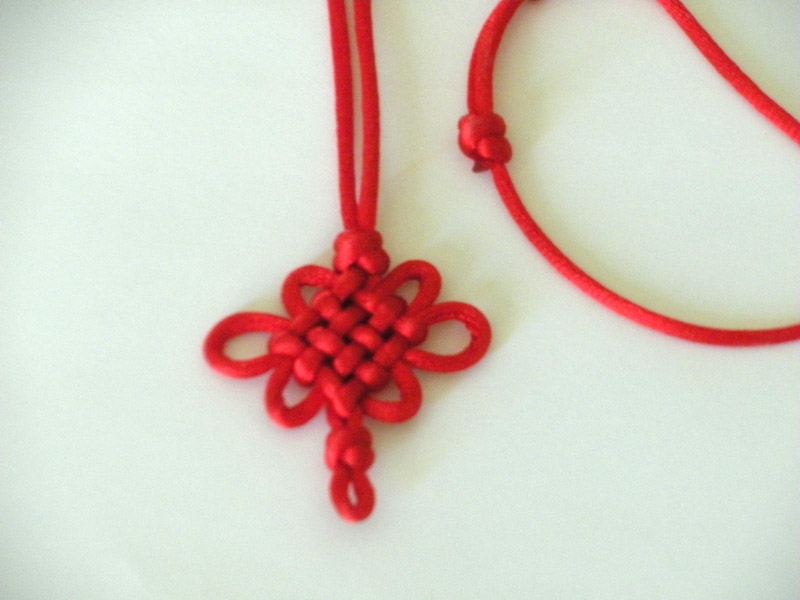 🇨🇳 China and 2 moreChinese knotting中國結 (Zhōngguó jié)
A folk craft of cord tied into lucky shapes, made in China and given as charmsCraft
🇨🇳 China and 2 moreChinese knotting中國結 (Zhōngguó jié)
A folk craft of cord tied into lucky shapes, made in China and given as charmsCraft
The same idea elsewhere
All of this kind 🇮🇷 Shiraz, Iran and 1 moreKhatamخاتم
A Persian inlay craft that builds geometric patterns from thousands of tiny cut piecesCraft
🇮🇷 Shiraz, Iran and 1 moreKhatamخاتم
A Persian inlay craft that builds geometric patterns from thousands of tiny cut piecesCraft
 🇮🇪 Galway, Ireland and 1 moreBrigid's crossCros Bhríde
A cross of woven rushes or straw, made for Saint Brigid's Day on the first of FebruaryCraft
🇮🇪 Galway, Ireland and 1 moreBrigid's crossCros Bhríde
A cross of woven rushes or straw, made for Saint Brigid's Day on the first of FebruaryCraft
 🇦🇺 AustraliaBark painting
Ochre pictures on flattened tree bark, an Aboriginal art form of northern AustraliaCraft
🇦🇺 AustraliaBark painting
Ochre pictures on flattened tree bark, an Aboriginal art form of northern AustraliaCraft
 🇺🇸 United States and 1 moreDreamcatcherᐊᓴᐱᑫᔒᓐᐦ (asabikeshiinh)
A hand-woven hoop from Anishinaabe tradition, hung above a cradle to protect a childCraft
🇺🇸 United States and 1 moreDreamcatcherᐊᓴᐱᑫᔒᓐᐦ (asabikeshiinh)
A hand-woven hoop from Anishinaabe tradition, hung above a cradle to protect a childCraft