Seasons, harvest and the calendarEast AsiaShinto, Taoist and folk Chinese
Dongzhi Festival
In its own language: 冬至
A winter solstice festival of family reunions, ancestor rites and sweet rice balls
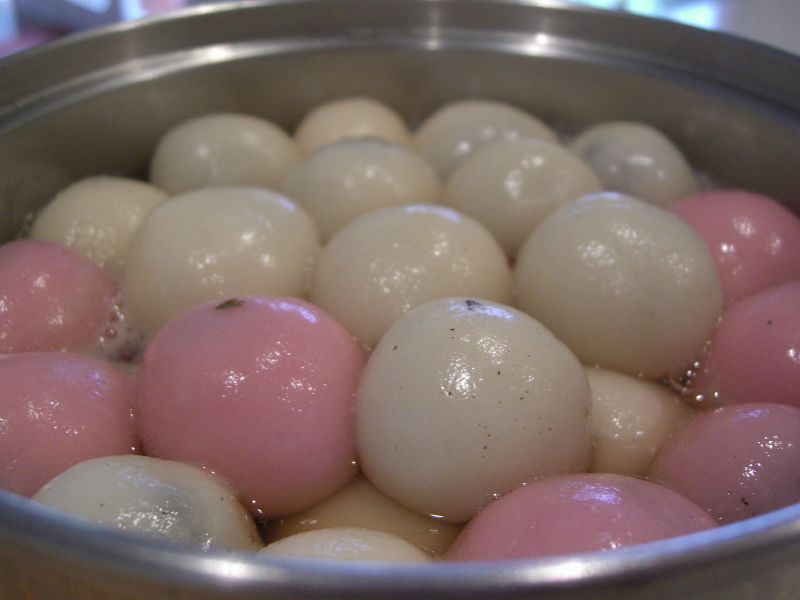
Dongzhi is a traditional winter solstice festival observed across China, Taiwan, and East Asia between 21 and 23 December. Families gather on the year's longest night to worship ancestors, share steaming bowls of tangyuan or dumplings, and welcome the return of longer daylight hours.
When is Dongzhi Festival in 2026?
Dongzhi Festival 2026 is on Tuesday, 22 December 2026. Other years: 2027, Wednesday, 22 December 2027; 2028, Thursday, 21 December 2028.
Dongzhi marks the arrival of the winter solstice, the shortest day and longest night of the solar calendar. Rooted in ancient Chinese ideas of cosmic harmony, the holiday celebrates the gradual return of positive energy and lengthening daylight. Families gather to honour ancestors, share festive meals of round rice dumplings or warming stews, and mark the passage of time together at midwinter.
Origins and meaning
The festival took shape during the Zhou dynasty and became an official celebration under the Han dynasty. In traditional cosmology, the winter solstice represents the hexagram for returning in the I Ching, signaling a shift where daylight lengthens and bright, positive energy begins to rise again. Historically, Han workers rested from their duties to join relatives for sacrifices to heaven and ancestors. Across many generations, people regarded this milestone as a marker of ageing, considering themselves one year older immediately after the midwinter feast rather than waiting for the arrival of the lunar new year.
Feasting on dumplings and tangyuan
Food forms the heart of Dongzhi celebrations. In southern China and across overseas communities, families prepare tangyuan, which are round glutinous rice balls served in sweet soup or savoury broth. Their spherical shape symbolizes completeness and reunion. In northern areas, people eat ear-shaped dumplings filled with meat. This practice is traced to the ancient physician Zhang Zhongjing, who cooked lamb dumplings to save villagers from frostbitten ears during bitter cold. Some households attach cooked rice balls to doorways and windows as protective amulets to safeguard young children from harmful spirits.
Regional customs
Traditions vary across regions. In Taiwan, families offer steamed nine-layer rice cakes shaped like chickens, ducks, sheep, and tortoises to venerate ancestors, before sharing tonic hot pots brewed with ginger duck, mutton, and fortifying herbs. In Suzhou, worshippers light incense at dawn. Korean households historically cooked red bean porridge with rice balls to dispel bad spirits and settled lingering debts. In Japan, the day brings customs such as eating squash or drinking hot water infused with citrus, while farmers across rural areas gather late winter harvests like radishes, wheat, and barley.
How Dongzhi Festival is kept
Observance begins with family reunions and ancestral veneration. In clan halls or at home altars, relatives burn joss paper and present offerings of wine, dumplings, or sculpted rice cakes to honour departed kin. Workplaces often close early to allow employees to travel home. Households gather around the kitchen table to roll glutinous rice dough into smooth balls or fold dumplings. After offering prayers, families sit down to an evening reunion feast. Some stick boiled rice balls onto door frames and furniture as protective talismans for children before retiring for the night.
When and where
Dongzhi is the twenty-second term in the traditional solar calendar. It falls annually at the December solstice, usually between 21 and 23 December, marking the moment when the sun reaches 270 degrees celestial longitude.
The festival is widely observed across China, Taiwan, and East Asian diaspora communities. Regional variations are also kept in South Korea, Japan, and Vietnam, where seasonal foods and midwinter rites mark the solstice.
What Dongzhi Festival means
Dongzhi represents the turning point of the year, where darkness reaches its peak and begins yielding to light and warmth. The spherical shape of tangyuan embodies family wholeness, unity, and harmony. Steamed cakes shaped like domestic animals signify prosperity and good fortune, while the shared meal acknowledges that each participant has safely advanced one year in age.
On the table
Flavours: Ginger


Days Dongzhi Festival is marked
Dongzhi Festival dates: 2026, 2027, 2028
| Year | Dongzhi Festival date |
|---|---|
| 2026 | Tuesday, 22 December 2026 |
| 2027 | Wednesday, 22 December 2027 |
| 2028 | Thursday, 21 December 2028 |
Questions people ask about Dongzhi Festival
When is Dongzhi Festival in 2026?
Dongzhi Festival 2026 is on Tuesday, 22 December 2026. Other years: 2027, Wednesday, 22 December 2027; 2028, Thursday, 21 December 2028.
What is the Dongzhi Festival?
Dongzhi is a midwinter celebration observed across China and East Asia. It marks the winter solstice, celebrating the return of longer daylight hours, family reunion, and ancestral respect through seasonal feasts.
What special foods are eaten during the holiday?
Families traditionally share round glutinous rice balls called tangyuan, meat-filled dumplings, steamed animal-shaped rice cakes, warming tonic hot pots, and red bean porridge.
Why are tangyuan eaten during Dongzhi?
Tangyuan are round balls made from glutinous rice flour that sound like and symbolize family reunion. They represent wholeness and harmony, and extra pieces are sometimes used as protective charms around the house.
See also
 KadomatsuA Japanese New Year gateway decoration of pine and bamboo where a visiting deity can rest
 Double Ninth FestivalAn autumn festival of mountain walks, chrysanthemum wine and ancestor remembrance
 DaeboreumA Korean festival of the first lunar full moon, marked by fires, wishes and feastsFlying Fish FestivalA months-long seasonal fishing observance kept by the Tao people of Orchid Island
Good reading and sources
- A Chinese sweet that’s a homophone for reunionBBC, Article
- A Chinese sweet that’s a homophone for reunionBBC, Article
The facts on this page come from the Wikipedia article "Dongzhi", written by its contributors and used under the CC BY-SA 4.0 licence, and from its Wikidata record (CC0). EveryParampara rewrote the text in its own words, with AI assistance, and compares every page with the article to make sure no passage is copied. It may be reused under the same CC BY-SA 4.0 licence with a link back.
It may contain mistakes. Traditions differ from one family, village and community to the next, and the people who keep them know them best. If something is wrong, tell us. Last refreshed 2026-10-06.
More from China
All the traditions of China
🇨🇳 China and 5 moreDouble Ninth Festival重陽節
An autumn festival of mountain walks, chrysanthemum wine and ancestor remembranceSeasonal · Tea-time and snacking customs
🇨🇳 Suzhou, China and 3 moreDongzhi冬至
A midwinter festival celebrating the return of light with family feasts and dumplingsSeasonal · Dinner
 🇬🇧 United Kingdom and 5 moreHarvest festival
A thanks for the gathered crop, kept with church meals, songs and shared foodSeasonal · Feasts and festival meals
🇬🇧 United Kingdom and 5 moreHarvest festival
A thanks for the gathered crop, kept with church meals, songs and shared foodSeasonal · Feasts and festival meals
 🇮🇷 Iran and 5 moreWinter solstice
The shortest day and longest night of the year, marked with fire, feasting and poetrySeasonal
🇮🇷 Iran and 5 moreWinter solstice
The shortest day and longest night of the year, marked with fire, feasting and poetrySeasonal
The same idea elsewhere
Midwinter and the longest night compared 🇵🇪 Cusco, Peru and 4 moreIntiinti (Quechua)
The Inca sun deity, honoured with temples, offerings and the June festival Inti RaymiSpiritual
🇵🇪 Cusco, Peru and 4 moreIntiinti (Quechua)
The Inca sun deity, honoured with temples, offerings and the June festival Inti RaymiSpiritual
 🇺🇦 Ukraine and 1 moreDidukhдідух
A wheat sheaf kept at Christmas to honour ancestors and pray for a bountiful harvestHome
🇺🇦 Ukraine and 1 moreDidukhдідух
A wheat sheaf kept at Christmas to honour ancestors and pray for a bountiful harvestHome
 🇬🇪 Tbilisi, GeorgiaChichilakiჩიჩილაკი
A shaved hazelnut branch crafted as a Georgian Christmas tree and burned at EpiphanyFestival
🇬🇪 Tbilisi, GeorgiaChichilakiჩიჩილაკი
A shaved hazelnut branch crafted as a Georgian Christmas tree and burned at EpiphanyFestival
 🇫🇮 FinlandChristmas in Finlandjoulu
A quiet midwinter festival of saunas, grave candles and table casseroles across FinlandSeasonal · Dinner
🇫🇮 FinlandChristmas in Finlandjoulu
A quiet midwinter festival of saunas, grave candles and table casseroles across FinlandSeasonal · Dinner