Festivals and celebrationsEast AsiaBuddhistIndigenous and traditional
Chuseok
In its own language: 추석
A Korean harvest festival of ancestral rites, seasonal rice cakes, and folk games
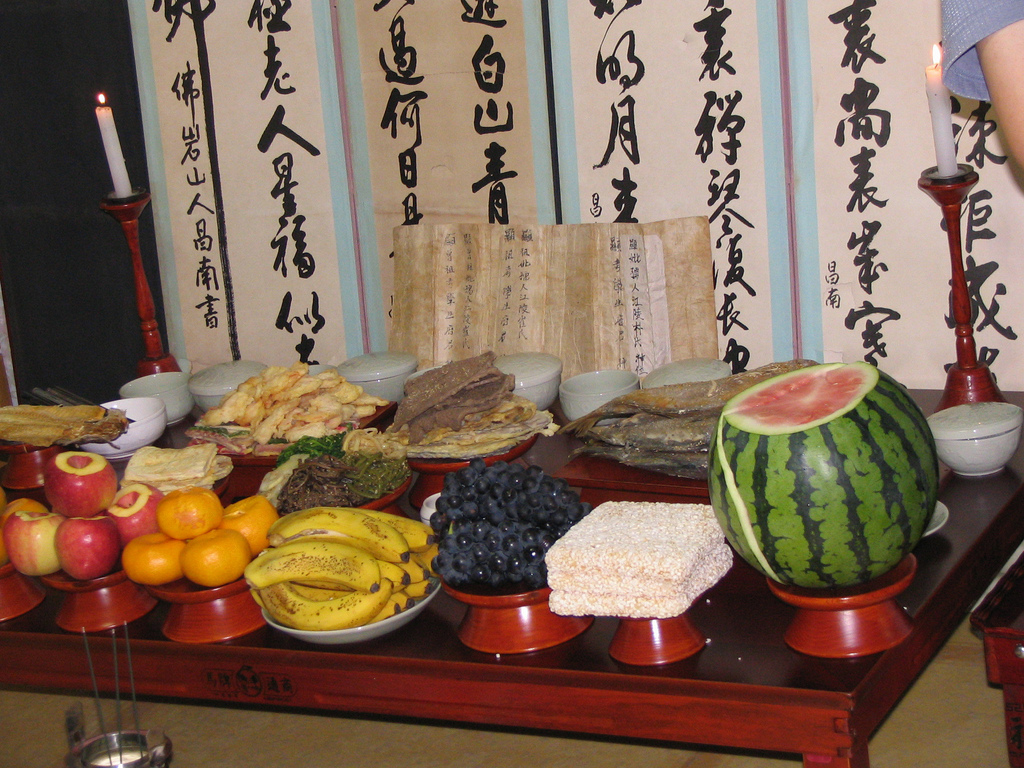
Chuseok is a major Korean harvest festival held on the full moon of the eighth lunar month. Families gather in their ancestral hometowns to honor past generations with ritual food offerings, share half-moon rice cakes, and enjoy traditional games and dances.
When is Chuseok in 2027?
Chuseok 2027 runs from 15 to 17 September 2027. Other years: 2026, 25 to 27 September 2026; 2028, 3 to 5 October 2028.
Chuseok is Korea's autumn harvest festival, observed on the night of the eighth lunar month's full moon. Families return to their ancestral hometowns to thank their forebears for the year's agricultural bounty. Across the Korean Peninsula, households conduct memorial ceremonies, tidy ancestral graves, and share seasonal delicacies like pine-scented rice cakes, turning the full-moon holiday into a central time for family reunion and community games.
Origins and early contests
According to popular tradition, the holiday traces back to gabae in the ancient Silla kingdom. Under the third Silla king, women formed two teams for a month-long weaving competition. The group that produced more cloth won, and the losing team prepared a celebratory feast for them. Archery matches and martial displays accompanied these gatherings. Historians also link the observance to early shamanistic ceremonies welcoming the harvest moon. In these rites, rural communities offered freshly gathered crops to ancestral spirits and local deities. If a farming season yielded no produce, worship was postponed, highlighting the festival's deep connection to the land.
Rites for the ancestors
Morning ceremonies begin with charye, a memorial service held inside the home. Families arrange offerings of fresh rice, meat, soup, vegetables, and rice cakes across a ritual table according to cardinal directions. Soup and rice sit to the north, fruits and vegetables face south, meats occupy the centre and west, while drinks and sweets rest in the east. Later in the day, relatives carry out seongmyo by visiting ancestral burial mounds. During beolcho, they trim wild grasses and clear weeds around the tombs before laying out food and liquor, expressing gratitude to deceased forebears whose protective spirits are believed to guide the family.
Seasonal food and drink
The central holiday treat is songpyeon, a rice cake packed with fillings such as toasted sesame, chestnut, jujube, beans, or honey. Cooks steam these cakes over pine needles, giving them a clean fragrance. Though raw dough starts round, the stuffed cake forms a half-moon, a shape long associated with growth and bright prospects in Korean folklore. Households also serve hangwa, colourful sweets made from grain flour, roots, and honey, including honey-glazed yakgwa cookies. Feasts feature savoury noodle dishes like japchae, pan-fried jeon pancakes, and freshly brewed baekju, a clear liquor crafted from newly harvested rice grains.
Folk games and dancing
Holiday afternoons and evenings bring communal sports and performances. Men compete in ssireum, a traditional form of wrestling where opponents grip fabric belts called satba to topple each other. Village gatherings historically included taekkyon martial contests and juldarigi, a ritual tug-of-war where a victory by the team representing female forces portended a rich harvest. After dusk, women dressed in colourful hanbok robes join hands under the full moon for ganggangsullae. They rotate in a growing circle while singing rhythmic verses, preserving a celebratory performance that unites neighbours across generations.
How Chuseok is kept
Millions of people travel to their family hometowns, causing packed transit routes across the country. Celebrations start at dawn with the charye memorial table set with newly harvested foods. Family members then travel to family gravesites for beolcho, cutting away overgrown weeds and placing food and drink offerings at the tombs. Dressed often in traditional hanbok garments, relatives return home to prepare songpyeon rice cakes, exchange gifts, and share large banquets. The day concludes with outdoor folk games, including wrestling matches and circle dances under the autumn full moon.
When and where
Chuseok takes place on the fifteenth day of the eighth month on the East Asian lunisolar calendar, coinciding with the autumn full moon. In South Korea, official observances span three consecutive days, covering the day before, the festival itself, and the following day. In North Korea, it is kept as a single-day holiday.
The festival is celebrated throughout North Korea and South Korea. While urban centres see offices, schools, and shops close as residents depart, rural hometowns and ancestral family homes become the primary centres of gathering. Cultural institutions such as the National Folk Museum of Korea also host public events.
What Chuseok means
Chuseok centers on gratitude for nature's bounty and respect for the lineage that sustains the living. Offerings of new grain honour deceased ancestors, who are viewed as protective guardians. The crescent shape of songpyeon rice cakes represents future growth and good fortune, drawing from an ancient prophecy where a half-moon symbolised rising strength. Communal games like tug-of-war reflect hopes for agricultural fertility and harmony.
On the table


Days Chuseok is marked
Chuseok dates: 2026, 2027, 2028
| Year | Chuseok date |
|---|---|
| 2026 | 25 to 27 September 2026 |
| 2027 | 15 to 17 September 2027 |
| 2028 | 3 to 5 October 2028 |
Questions people ask about Chuseok
When is Chuseok in 2027?
Chuseok 2027 runs from 15 to 17 September 2027. Other years: 2026, 25 to 27 September 2026; 2028, 3 to 5 October 2028.
What is Chuseok?
Chuseok is a major Korean autumn holiday celebrating the harvest and honouring ancestors. Families gather to conduct memorial rituals, share special seasonal foods, tidy ancestral tombs, and enjoy traditional folk entertainment.
What is the significance of songpyeon?
Songpyeon is a pine-scented rice cake shaped like a half-moon. The crescent form represents progress and a promising future, referencing an ancient Korean legend where a half-moon symbolised rising fortunes.
What rituals are performed during the holiday?
Families hold charye, an early-morning memorial rite offering seasonal foods on a strictly arranged table, and seongmyo, a visit to ancestor gravesites to clear away weeds and pay respects.
See also
 Buddha's BirthdayA festival marking the birth of Siddhartha Gautama, observed across Asia with temple rituals and community gatherings.
 Chinese New Year's EveA reunion day for ethnic Chinese families before the Lunar New Year, marked by feasts, rituals, and staying up late.
 HaenyeoFemale free-divers of Jeju Island who harvest seafood from the ocean.
 GanggangsullaeA Korean harvest dance where women hold hands and sing in circles under the full moon
Good reading and sources
- Chuseok on WikipediaEncyclopedia
- More photos on Wikimedia CommonsPhotos and video
- Wikidata recordOpen data
The facts on this page come from the Wikipedia article "Chuseok", written by its contributors and used under the CC BY-SA 4.0 licence, and from its Wikidata record (CC0). EveryParampara rewrote the text in its own words, with AI assistance, and compares every page with the article to make sure no passage is copied. It may be reused under the same CC BY-SA 4.0 licence with a link back.
It may contain mistakes. Traditions differ from one family, village and community to the next, and the people who keep them know them best. If something is wrong, tell us. Last refreshed 2026-10-04.
More from South Korea
All the traditions of South Korea 🇮🇳 India and 4 moreWater lantern
Small lamps floated on water to honour the dead and ask for good fortuneFestival
🇮🇳 India and 6 moreBuddha's Birthday佛诞 (Fódàn)
A festival marking the birth of Siddhartha Gautama, observed across Asia with temple rituals and community gatherings.Festival
🇨🇳 China and 5 moreChinese New Year's Evechúxī
A reunion day for ethnic Chinese families before the Lunar New Year, marked by feasts, rituals, and staying up late.Festival · Dinner
🇮🇳 India and 4 moreWater lantern
Small lamps floated on water to honour the dead and ask for good fortuneFestival
🇮🇳 India and 6 moreBuddha's Birthday佛诞 (Fódàn)
A festival marking the birth of Siddhartha Gautama, observed across Asia with temple rituals and community gatherings.Festival
🇨🇳 China and 5 moreChinese New Year's Evechúxī
A reunion day for ethnic Chinese families before the Lunar New Year, marked by feasts, rituals, and staying up late.Festival · Dinner
 🇨🇳 Hong Kong, China and 5 moreLunar New Year
New year festivals dated by the moon, kept from East Asia to the Middle EastFestival
🇨🇳 Hong Kong, China and 5 moreLunar New Year
New year festivals dated by the moon, kept from East Asia to the Middle EastFestival
The same idea elsewhere
Harvest and thanksgiving compared 🇮🇳 Ayodhya, India and 7 moreDiwaliदीपावली (Dīpāvalī)
A five-day festival of lights celebrated across India and its diaspora to mark the victory of light over darkness.Festival · Feasts and festival meals
🇮🇳 Ayodhya, India and 7 moreDiwaliदीपावली (Dīpāvalī)
A five-day festival of lights celebrated across India and its diaspora to mark the victory of light over darkness.Festival · Feasts and festival meals
 🇮🇱 Jerusalem, IsraelSukkotסוכות
A seven-day autumn Jewish festival of temporary booths, harvest prayers and hospitalitySpiritual
🇮🇱 Jerusalem, IsraelSukkotסוכות
A seven-day autumn Jewish festival of temporary booths, harvest prayers and hospitalitySpiritual
 🇮🇪 Ireland and 2 moreJack-o'-lantern
A carved pumpkin lantern lit with a candle to brighten and protect Halloween nightsFolklore
🇮🇪 Ireland and 2 moreJack-o'-lantern
A carved pumpkin lantern lit with a candle to brighten and protect Halloween nightsFolklore
 🇹🇱 Timor-LesteUma Lulik
Sacred ancestral clan houses and ritual shrines in East TimorSpiritual
🇹🇱 Timor-LesteUma Lulik
Sacred ancestral clan houses and ritual shrines in East TimorSpiritual