Dress and adornmentSoutheast AsiaMuslimSecular and civic
National costume of Indonesia
In its own language: Pakaian Nasional Indonesia
The formal attire worn by Indonesians to represent the nation's diverse cultural heritage.

Indonesians wear national costumes to display their identity during official events and traditional ceremonies. The most recognized styles include batik shirts for men and kebaya blouses for women, which originated in Java and Bali but are now worn across the archipelago. These garments reflect the country's many ethnic groups and textile traditions.
When is National costume of Indonesia kept?
National costume of Indonesia is kept during official state functions, weddings, and religious festivals.
Indonesians wear specific traditional outfits to honor their national identity and cultural diversity. These costumes appear at government functions, weddings, and religious gatherings. They showcase the rich textile history of the archipelago, blending ancient weaving techniques with modern formal wear.
National attire styles
Men often wear batik shirts paired with a black velvet peci cap. This combination signals formality and is common among government officials. Women typically wear a kebaya, a sheer blouse, over a sarong or kain panjang. The kebaya has roots in the Majapahit Kingdom court. It was adapted to be more modest under Islamic influence. Today, these styles transcend local boundaries and serve as the standard dress for the nation.
Textile traditions
Indonesia uses various methods to create intricate fabrics. Batik involves wax-resist dyeing to form patterns on cloth. Songket features gold or silver threads woven into silk or cotton. Ikat dyes yarns before weaving them into fabric. Ulos is a hand-woven cotton cloth used by Batak tribes. Each region produces distinct textiles that carry specific social meanings. Certain designs are reserved for nobility or specific genders.
Regional diversity
Every province maintains its own unique traditional dress called baju adat. These outfits vary widely in design and material. Traditional weddings offer the best view of this variety, with elaborate bridal wear showcasing local craftsmanship. Headgear also differs by region. Javanese men wear blangkon caps, while Balinese men use udeng turbans. Acehnese men don kupiah hats. These items identify the wearer's specific ethnic background.
Historical context
Written records from the fourteenth century show textiles were vital to social and religious life. National figures like Sukarno popularized the peci cap as a symbol of secular nationalism. UNESCO recognized Indonesian batik as an Intangible Cultural Heritage Masterpiece in 2009. This designation encourages the preservation of these ancient dyeing and weaving skills for future generations.
How National costume of Indonesia is kept
People wear these costumes during significant life events and public duties. Men don batik shirts and peci caps for meetings and ceremonies. Women wear kebaya blouses for weddings and official functions. During Kartini Day, women celebrate female emancipation by wearing kebaya. Regional attire appears at local festivals and weddings. Families pass down weaving knowledge through generations. Textiles are exchanged during rites of passage like births and marriages.
When and where
It is worn year-round for specific occasions. Kartini Day falls on April 21. Religious festivals like Eid al-Fitr see men in Baju koko and peci. Official state events require formal national dress. Weddings occur throughout the calendar year depending on local customs.
This tradition is strongest in Indonesia. Java and Bali are central to batik and kebaya origins. Palembang and Pandai Sikek are known for songket production. Jakarta serves as a hub for government officials who wear these styles daily. Communities across all provinces maintain their distinct regional dress codes.
What National costume of Indonesia means
These clothes represent national unity amid great diversity. The peci cap conveys secular nationalist pride. Batik reflects artistic heritage and spiritual depth. Regional textiles signal local identity and social status. Specific patterns denote nobility or gender roles. Wearing these outfits honors ancestors and preserves cultural memory. They connect individuals to their community and history.


Questions people ask about National costume of Indonesia
When is National costume of Indonesia kept?
National costume of Indonesia is kept during official state functions, weddings, and religious festivals.
What is the national costume of Indonesia?
It includes batik shirts and peci caps for men, and kebaya blouses with sarongs for women. These styles originated in Java and Bali but are now worn nationwide for formal and traditional occasions.
Why is batik important?
Batik is a wax-resist dyeing technique recognized by UNESCO as Intangible Cultural Heritage. It represents Indonesian identity and artistic skill. Patterns vary by region and often carry specific social or spiritual meanings.
What is the peci cap?
The peci is a black velvet cap worn by Muslim men. It became a symbol of secular nationalism through leaders like Sukarno. It is now part of the standard formal attire for men in Indonesia.
See also
 UlosA hand-woven textile of the Batak people in Indonesia, worn for warmth and ceremony.
 TaisTraditional hand-woven cloth of East Timor, worn as dress or used in ceremonies and exchange.
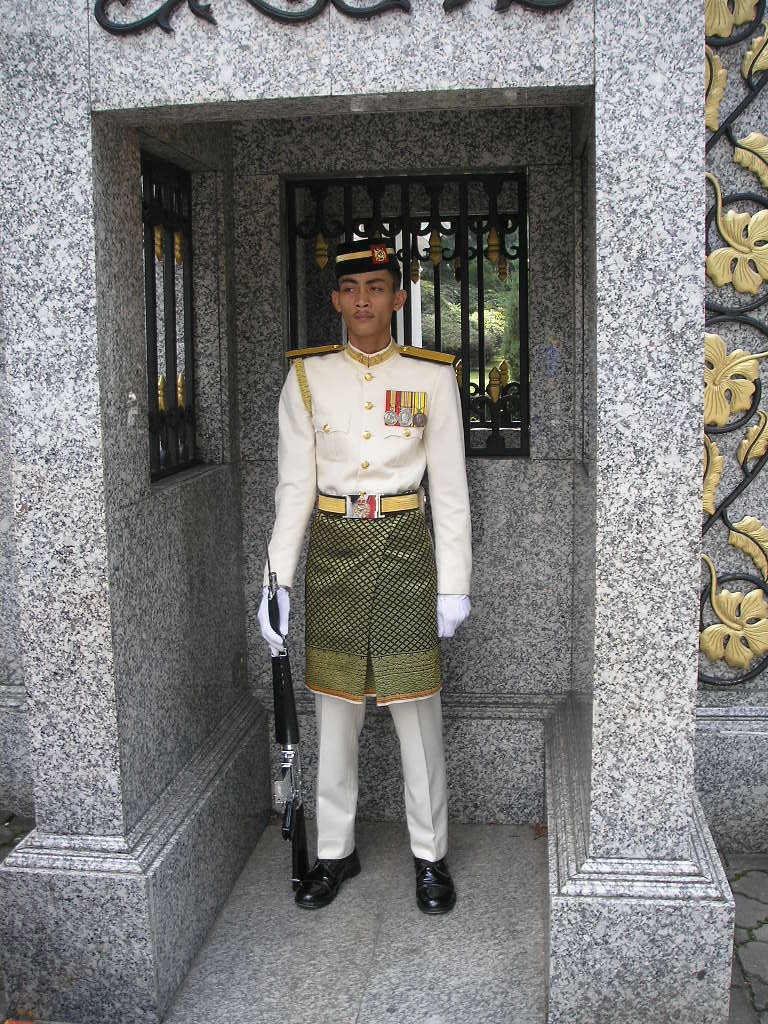 SampingA traditional Malay waist cloth worn over festive attire in Southeast Asia
 KebayaA front-opening blouse and wrapped cloth, worn by women across Southeast Asia
Good reading and sources
The facts on this page come from the Wikipedia article "National costume of Indonesia", written by its contributors and used under the CC BY-SA 4.0 licence, and from its Wikidata record (CC0). EveryParampara rewrote the text in its own words, with AI assistance, and compares every page with the article to make sure no passage is copied. It may be reused under the same CC BY-SA 4.0 licence with a link back.
It may contain mistakes. Traditions differ from one family, village and community to the next, and the people who keep them know them best. If something is wrong, tell us. Last refreshed 2026-10-08.
More from Indonesia
All the traditions of Indonesia
🇹🇱 Dili, Timor-Leste and 1 moreTais
Traditional hand-woven cloth of East Timor, worn as dress or used in ceremonies and exchange.Dress
🇮🇩 North Sumatra, IndonesiaUlosᯥᯞᯘᯬ᯲
A hand-woven textile of the Batak people in Indonesia, worn for warmth and ceremony.Dress
🇮🇩 Yogyakarta, Indonesia and 4 moreKebayaꦏꦼꦧꦪ
A front-opening blouse and wrapped cloth, worn by women across Southeast AsiaDress
 🇲🇾 Malacca, Malaysia and 5 moreBaju Melayuباجو ملايو
The long-sleeved Malay man's shirt and trousers, formal national dress in Malaysia and BruneiDress
🇲🇾 Malacca, Malaysia and 5 moreBaju Melayuباجو ملايو
The long-sleeved Malay man's shirt and trousers, formal national dress in Malaysia and BruneiDress
The same idea elsewhere
All of this kind 🇮🇳 Paithan, IndiaPaithani
A handwoven silk sari from Maharashtra, with a squared border and a peacock palluDress
🇮🇳 Paithan, IndiaPaithani
A handwoven silk sari from Maharashtra, with a squared border and a peacock palluDress
 🇳🇴 Norway and 3 moreGákti
A traditional coat worn by the Sámi people across northern Scandinavia and Russia, signaling origin and status through cDress
🇳🇴 Norway and 3 moreGákti
A traditional coat worn by the Sámi people across northern Scandinavia and Russia, signaling origin and status through cDress
 🇼🇸 Samoa and 1 moreʻIe tōga
Precious woven mats exchanged in Samoan ceremonies to honor family ties and chiefly status.Dress
🇼🇸 Samoa and 1 moreʻIe tōga
Precious woven mats exchanged in Samoan ceremonies to honor family ties and chiefly status.Dress
 🇮🇱 Israel and 1 moreTzitzitצִיצִית
Knotted ritual fringes worn on a four-cornered garment, a reminder of the commandmentsDress
🇮🇱 Israel and 1 moreTzitzitצִיצִית
Knotted ritual fringes worn on a four-cornered garment, a reminder of the commandmentsDress