Dress and adornmentSoutheast Asia
Ulos
In its own language: ᯥᯞᯘᯬ᯲
A hand-woven textile of the Batak people in Indonesia, worn for warmth and ceremony.

The ulos is a traditional draped cloth from North Sumatra, Indonesia. The Batak community weaves it by hand to provide physical warmth and spiritual strength during daily life and important rituals.
When is Ulos kept?
Ulos is kept on daily wear and specific ceremonies.
The ulos is a hand-woven textile central to Batak culture in North Sumatra, Indonesia. It serves as both everyday clothing and a sacred symbol of warmth, bravery, and social bonds within the community.
Cultural meaning
The Batak people view the ulos as one of three essential sources of warmth, alongside the sun and fire. Historically, this cloth was believed to grant men courage and help women overcome infertility. Over time, its role evolved from simple utility to a powerful emblem of love and ceremonial duty. Giving an ulos, known as mangulosi, represents a deep bond between giver and receiver.
Wedding traditions
Marriage ceremonies feature the ulos prominently. During these events, the bride's family presents a specific type called pargomgom to the groom's mother. This exchange serves to ceremonially bind the couple together. The act reinforces family connections and honors the union through the sharing of this respected textile.
Production methods
Artisans create ulos using manual looms. They spin cotton into yarn and use earthenware pots to hold dye water. While silk is sometimes mentioned, cotton remains the primary material. The weaving process requires skill and patience, ensuring each piece reflects the care and tradition of the maker.
Types and usage
Different parts of the body require specific ulos designs. Men might wear pieces like ande-ande or tali-tali, while women use haen or ampe-ampe. Some varieties, such as ragidup or sadum, are reserved for special occasions. The rules for giving ulos depend on family ties and social status, ensuring respect flows correctly.
How Ulos is kept
Weavers spin cotton and dye it in clay pots before weaving it on manual looms. Families wear the cloth draped over shoulders for warmth. Elders give specific types to younger relatives or guests to show affection. Couples receive them during weddings to symbolize their union. The practice continues despite modernization, though its daily significance has shifted.
When and where
It is worn year-round for warmth and used during weddings and family gatherings.
It originates from North Sumatra, Indonesia, among the Batak people.
What Ulos means
The ulos provides warmth, bravery, and strength. It symbolizes love when given as mangulosi. It binds families and couples together in ceremony.


Questions people ask about Ulos
When is Ulos kept?
Ulos is kept on daily wear and specific ceremonies.
Where is Ulos kept?
Ulos belongs to the traditions of Indonesia, and is tied most closely to North Sumatra.
Who keeps Ulos?
As our sources describe it, Ulos is kept by Batak people. Many other communities and families now share it too.
See also
 MawlidAn annual festival marking the birth of the Prophet Muhammad, marked by poetry, processions and feasts.
 ShehnaiA traditional reed instrument played at weddings and temple festivals across India
 BarongA sacred Balinese masked dance drama depicting the eternal struggle of good and evil
 Lion danceA dynamic ritual dance featuring costumed lions, drums and martial acrobatics
Good reading and sources
- Ulos on WikipediaEncyclopedia
- More photos on Wikimedia CommonsPhotos and video
- Wikidata recordOpen data
The facts on this page come from the Wikipedia article "Ulos", written by its contributors and used under the CC BY-SA 4.0 licence, and from its Wikidata record (CC0). EveryParampara rewrote the text in its own words, with AI assistance, and compares every page with the article to make sure no passage is copied. It may be reused under the same CC BY-SA 4.0 licence with a link back.
It may contain mistakes. Traditions differ from one family, village and community to the next, and the people who keep them know them best. If something is wrong, tell us. Last refreshed 2026-10-05.
More from Indonesia
All the traditions of Indonesia 🇮🇩 Palembang, Indonesia and 3 moreSongketᬲᭀᬂᬓᬾᬢ᭄
A hand-woven cloth threaded with gold or silver, worn at weddings and royal courtsDress
🇮🇩 Palembang, Indonesia and 3 moreSongketᬲᭀᬂᬓᬾᬢ᭄
A hand-woven cloth threaded with gold or silver, worn at weddings and royal courtsDress
 🇮🇳 India and 5 moreBindi
A dot worn between the eyebrows, red for marriage and devotion, worn daily by many womenDress
🇮🇳 India and 5 moreBindi
A dot worn between the eyebrows, red for marriage and devotion, worn daily by many womenDress
 🇹🇱 Dili, Timor-Leste and 1 moreTais
Traditional hand-woven cloth of East Timor, worn as dress or used in ceremonies and exchange.Dress
🇹🇱 Dili, Timor-Leste and 1 moreTais
Traditional hand-woven cloth of East Timor, worn as dress or used in ceremonies and exchange.Dress
 🇮🇩 Yogyakarta, Indonesia and 4 moreKebayaꦏꦼꦧꦪ
A front-opening blouse and wrapped cloth, worn by women across Southeast AsiaDress
🇮🇩 Yogyakarta, Indonesia and 4 moreKebayaꦏꦼꦧꦪ
A front-opening blouse and wrapped cloth, worn by women across Southeast AsiaDress
The same idea elsewhere
Weddings compared 🇬🇪 Tbilisi, Georgia and 4 moreGeorgian polyphonic singing
Several voices at once, sung without instruments at Georgian feasts and weddingsPerformance
🇬🇪 Tbilisi, Georgia and 4 moreGeorgian polyphonic singing
Several voices at once, sung without instruments at Georgian feasts and weddingsPerformance
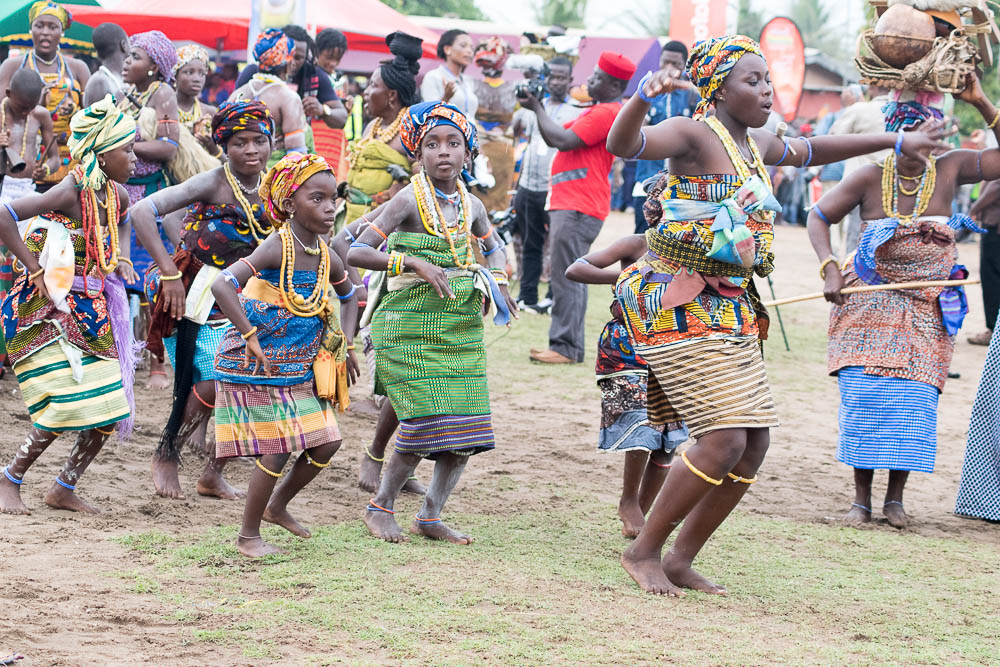 🇬🇭 Ghana and 2 moreAgbadza
An Ewe music and dance, born of war songs and kept for funerals, weddings and festivalsPerformance
🇬🇭 Ghana and 2 moreAgbadza
An Ewe music and dance, born of war songs and kept for funerals, weddings and festivalsPerformance
 🇼🇸 Samoa and 1 moreʻIe tōga
Precious woven mats exchanged in Samoan ceremonies to honor family ties and chiefly status.Dress
🇼🇸 Samoa and 1 moreʻIe tōga
Precious woven mats exchanged in Samoan ceremonies to honor family ties and chiefly status.Dress
 🇳🇿 Auckland, New ZealandWharenui
A Māori carved communal meeting house at the centre of tribal life in New ZealandHome
🇳🇿 Auckland, New ZealandWharenui
A Māori carved communal meeting house at the centre of tribal life in New ZealandHome