Royal, civic and national ceremonySoutheast AsiaSecular and civic
National Day
In its own language: Ngày Quốc khánh
Vietnam's national day, marking the 1945 independence declaration read in Hanoi

Vietnam's national day falls on 2 September. It marks the day in 1945 when Ho Chi Minh read out the declaration of independence at Ba Đình Square in Hanoi, and it is kept across Vietnam with official ceremonies, a day off and, in some years, a military parade.
When is National Day kept?
National Day is kept every year on 2 September.
Vietnam keeps its national day on 2 September each year. On that date in 1945, Ho Chi Minh stood in Ba Đình Square in Hanoi and read a declaration that the country was now independent and would be called the Democratic Republic of Vietnam. The anniversary is a full public holiday, given over to remembrance, official ceremony and, in notable years, large parades.
What it marks
On 2 September 1945, Ho Chi Minh spoke at Ba Đình Square in Hanoi. He read out a text announcing that Vietnam was free of colonial rule and giving the new state its name, the Democratic Republic of Vietnam. The speech pointed to two documents from elsewhere as its models: the American declaration of 1776 and the French revolutionary declaration of the rights of man and of the citizen. The same date carried a second weight, since Japan signed its formal surrender to the Allies that day, which closed the Second World War. Vietnamese people now treat the anniversary as the birthday of the modern nation.
War and revolution
During the Second World War Japan occupied Vietnam, and French authorities were allowed to stay on with a limited role. When the fighting ended in August 1945 the country was left without a working government. The Việt Minh used that gap to take over government offices in cities across the country, an action known as the August Revolution. Emperor Bảo Đại stepped down on 25 August 1945, which ended the Nguyễn dynasty. A week later Ho Chi Minh spoke in Hanoi.
How it is kept
The date is a full public holiday, and banks close too. Official events centre on Hanoi and on the square where the 1945 speech was given. In 2025 the country held the biggest military parade in its history to mark eighty years, on land, in the air and at sea. Because the day off now stretches to two days, many families travel or visit relatives. The article also links a video of the seventieth anniversary parade, held in 2015.
Name and length
In the beginning the date was known as Vietnam Independence Day. The name National Day came into use in 1954. The leadership at that time drew up one shared list of national holidays for the whole country. Since 2007 that list has been changed more than once, but 2 September has stayed a full public holiday and a bank holiday. From 2019 an extra day was added next to it, before or after, making a longer break. Traditional festivals such as Tết Nguyên Đán and Tết Trung Thu were left to be observed as they always had been.
How National Day is kept
The day belongs to the whole country. State ceremonies are held in Hanoi, at Ba Đình Square, the place where the declaration was read in 1945. Wreaths and honours are given, flags fly, and officials speak. In some years the government stages a military parade, with troops marching on land, aircraft overhead and vessels at sea, as happened in 2025 for the eightieth anniversary. Ordinary people get the day off, and many use the time to travel or to gather with family. Banks and public offices stay closed.
When and where
It is fixed to one date, 2 September, and comes round every year. Because the holiday was extended by a day, the break can begin on the day before or run into the day after, depending on where the extra day is placed.
It is kept throughout Vietnam. Hanoi is the centre of the official events, since the square where Ho Chi Minh read the declaration stands there. The article describes the holiday as observed by Vietnam, and the story it tells also reaches Japan, which occupied the country during the war, and the United States, whose declaration of 1776 was one of the texts the 1945 speech echoed.
What National Day means
The date carries the idea of a nation starting. It recalls the moment colonial rule was declared over and a new name was given to the state, the Democratic Republic of Vietnam. Because the surrender of Japan was signed on the same day, the anniversary also stands at the point where the Second World War ended and a different period in Vietnamese life began. For those who keep it, the day belongs to the country as a whole rather than to any one group or faith.
Questions people ask about National Day
When is National Day kept?
National Day is kept every year on 2 September.
What is National Day in Vietnam?
It is Vietnam's national holiday, kept on 2 September. On that date in 1945 Ho Chi Minh read the declaration of independence at Ba Đình Square in Hanoi, naming the new state the Democratic Republic of Vietnam. The date is also the day Japan formally surrendered, ending the Second World War.
Why is it sometimes called Independence Day?
The holiday has two names in English. It began as Vietnam Independence Day, and the name National Day came into use in 1954, when the leadership set out a single list of public holidays for the country. Both names point to the same date.
How is the day marked?
State ceremonies take place in Hanoi, at the square where the declaration was read. Flags are flown and officials speak. In some years there is a military parade. The eightieth anniversary in 2025 brought the largest parade the country had held, on land, in the air and at sea.
What happened in August 1945?
During the Second World War Japan occupied Vietnam while French authorities kept a reduced role. When the war ended, no one held power. The Việt Minh took over government offices across the country in the August Revolution, and Emperor Bảo Đại gave up the throne on 25 August, closing the Nguyễn dynasty.
See also
 Reunification DayA public holiday in Vietnam on 30 April, marking the war's end in 1975
 Water lanternSmall lamps floated on water to honour the dead and ask for good fortune
 CeladonGreen-glazed pottery first made in China, valued for colours that echo jadeFaceThe shared social etiquette of honour, dignity and mutual respect across cultures
Good reading and sources
- Vietnam declares its independence from France | September 2, 1945History.com, Article
- Vietnam declares its independence from France | September 2, 1945History.com, Article
The facts on this page come from the Wikipedia article "National Day (Vietnam)", written by its contributors and used under the CC BY-SA 4.0 licence, and from its Wikidata record (CC0). EveryParampara rewrote the text in its own words, with AI assistance, and compares every page with the article to make sure no passage is copied. It may be reused under the same CC BY-SA 4.0 licence with a link back.
It may contain mistakes. Traditions differ from one family, village and community to the next, and the people who keep them know them best. If something is wrong, tell us. Last refreshed 2026-10-05.
More from Vietnam
All the traditions of Vietnam
🇻🇳 Ho Chi Minh City, VietnamReunification DayNgày Thống nhất
A public holiday in Vietnam on 30 April, marking the war's end in 1975Ceremony
 🇨🇳 China and 5 moreLion dance舞獅
A dynamic ritual dance featuring costumed lions, drums and martial acrobaticsPerformance
🇨🇳 Hong Kong, China and 5 moreFace
The shared social etiquette of honour, dignity and mutual respect across culturesEtiquette
🇨🇳 China and 5 moreLion dance舞獅
A dynamic ritual dance featuring costumed lions, drums and martial acrobaticsPerformance
🇨🇳 Hong Kong, China and 5 moreFace
The shared social etiquette of honour, dignity and mutual respect across culturesEtiquette
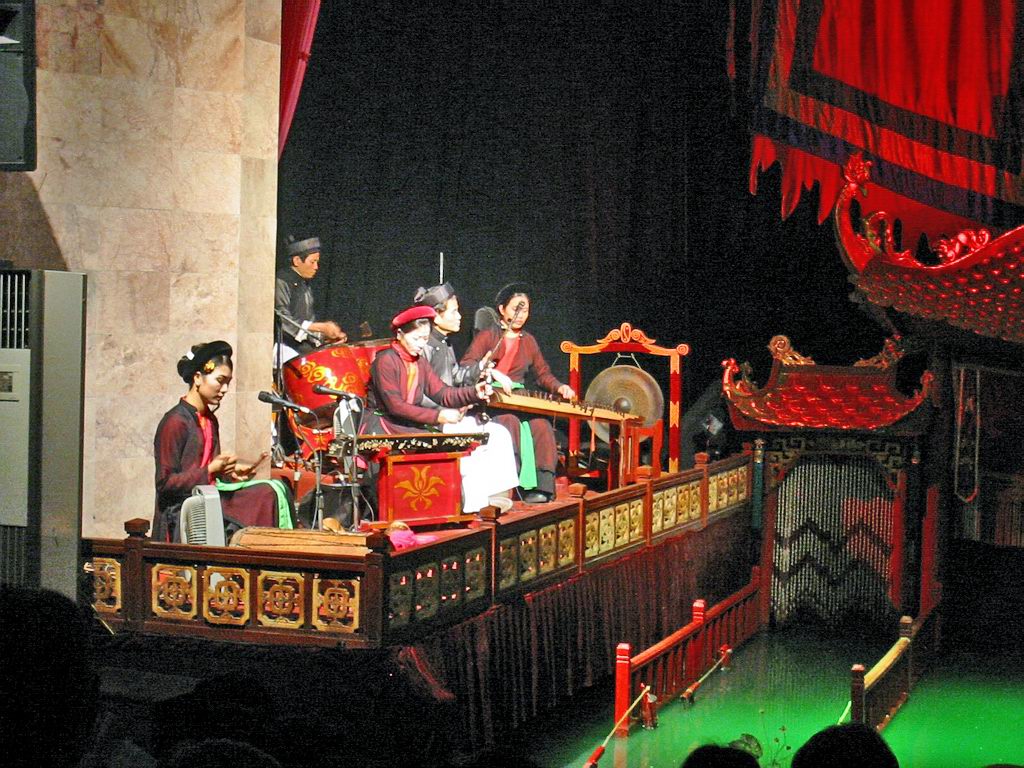 🇻🇳 Hoa Lư, VietnamChèo嘲
Satirical folk musical theatre performed by village troupes across northern VietnamPerformance
🇻🇳 Hoa Lư, VietnamChèo嘲
Satirical folk musical theatre performed by village troupes across northern VietnamPerformance
The same idea elsewhere
All of this kind 🇺🇸 Philadelphia, United States and 1 moreIndependence Day
The United States' national day of parades, barbecues and fireworks, kept each July 4Ceremony
🇺🇸 Philadelphia, United States and 1 moreIndependence Day
The United States' national day of parades, barbecues and fireworks, kept each July 4Ceremony
 🇺🇸 United StatesTalking stick
A carved staff that shows who may speak at a Northwest Coast gatheringCeremony
🇺🇸 United StatesTalking stick
A carved staff that shows who may speak at a Northwest Coast gatheringCeremony
 🇺🇸 Washington, United StatesState of the Union address
The US president's yearly report to Congress and the nation, given in the House chamberCeremony
🇺🇸 Washington, United StatesState of the Union address
The US president's yearly report to Congress and the nation, given in the House chamberCeremony
 🇮🇳 Kolkata, IndiaJana Gana Mana
India's national anthem, from a Bengali hymn of 1911, sung at civic occasionsCeremony
🇮🇳 Kolkata, IndiaJana Gana Mana
India's national anthem, from a Bengali hymn of 1911, sung at civic occasionsCeremony