Royal, civic and national ceremonySoutheast Asia
Reunification Day
In its own language: Ngày Thống nhất
A public holiday in Vietnam on 30 April, marking the war's end in 1975

Reunification Day is a public holiday in Vietnam, kept every year on 30 April. It recalls 1975, when northern forces entered Saigon, then the capital of South Vietnam, ending the Vietnam War, and the day is marked with parades.
When is Reunification Day kept?
Reunification Day is kept each year on 30 April.
Every 30 April, Vietnam keeps a public holiday. The date remembers 1975, when troops from the north took Saigon, the southern capital, and the long war ended. The country then moved towards a single state, a step completed in 1976. People mark the day with parades, and the biggest official events draw guests from abroad.
What the day marks
On 30 April each year, Vietnam keeps a national public holiday. It recalls the moment in 1975 when troops of North Vietnam, together with the Liberation Army of South Vietnam, entered Saigon. Saigon was the capital of South Vietnam at the time, and the city is now known as Ho Chi Minh City. That advance brought the Vietnam War to a close. For the people who keep the day, it stands for the end of a divided country.
From war to one country
The taking of Saigon in 1975 opened a period of transition. It did not settle everything on the same day. Reunification came in stages. In 1976 the National Assembly held a vote to join the two parts of the country, and on 2 July of that year South Vietnam and North Vietnam were merged. The state that came out of this is the Vietnam of today. Many people treat the April date as the start of the process and the July vote as its formal close.
How it is kept
Parades are the public face of the holiday. In 2025, the fiftieth anniversary, Ho Chi Minh City staged a major military parade. Officials and soldiers from countries with friendly relations with Vietnam took part, among them China, Cambodia and Laos. Because the date is a national public holiday, it is observed across the country rather than in one place only. It is a fixed point in the civic year, and it lasts a single day.
Names for the day
One date carries several names. Reunification Day is the common English form, and Ngày Thống nhất is the Vietnamese one. People also say Victory Day, or Ngày Chiến thắng, and some call it Ngày Giải phóng, which means Liberation Day. The state uses a longer formal title that spells out the same event. Other countries have their own holidays called Liberation Day, Unity Day or Victory Day, and those belong to different histories.
How Reunification Day is kept
On 30 April the country marks what happened in 1975. Parades are the main public event, and the largest of them have been staged in Ho Chi Minh City. For the fiftieth anniversary in 2025 the city held a big military parade. It drew officials and soldiers from other countries, among them China, Cambodia and Laos. The date is a national public holiday, so it is observed throughout Vietnam and not only where the war ended.
When and where
The holiday falls on 30 April every year, the same date each time. It is fixed to the anniversary of the events of 1975, so it does not shift the way dates set by a lunar or religious calendar do. It lasts one day.
Reunification Day belongs to Vietnam, where it is a national public holiday. Its closest ties are to Ho Chi Minh City, the place that was called Saigon in 1975, and the biggest parades have been held there. The date is kept across the whole country.
What Reunification Day means
For those who keep it, the day closes a long period of division. It marks the end of the Vietnam War and the start of a process that joined the north and the south into one country. The entry into Saigon is remembered as the turning point. Because reunification took another year to complete, the April date and the July vote are both part of the same story. The occasion is national rather than religious.


Questions people ask about Reunification Day
When is Reunification Day kept?
Reunification Day is kept each year on 30 April.
What is Reunification Day?
It is a public holiday in Vietnam. It remembers 30 April 1975, when forces from the north entered Saigon, then the capital of South Vietnam, bringing the Vietnam War to an end.
Where is it observed?
In Vietnam, where it is a national public holiday. The biggest parades have been held in Ho Chi Minh City, the city called Saigon in 1975. In 2025 the fiftieth anniversary there was marked with a military parade.
Does it have other names?
Yes. In Vietnamese it is Ngày Thống nhất. People also call it Victory Day, or Ngày Chiến thắng, and Ngày Giải phóng, which means Liberation Day. The state has a longer formal title for it as well.
Is it a religious holiday?
No. It is a national and civic occasion, tied to the reunification of the country after the war, and not to any religious calendar or place of worship.
See also
 Water lanternSmall lamps floated on water to honour the dead and ask for good fortune
 CeladonGreen-glazed pottery first made in China, valued for colours that echo jade
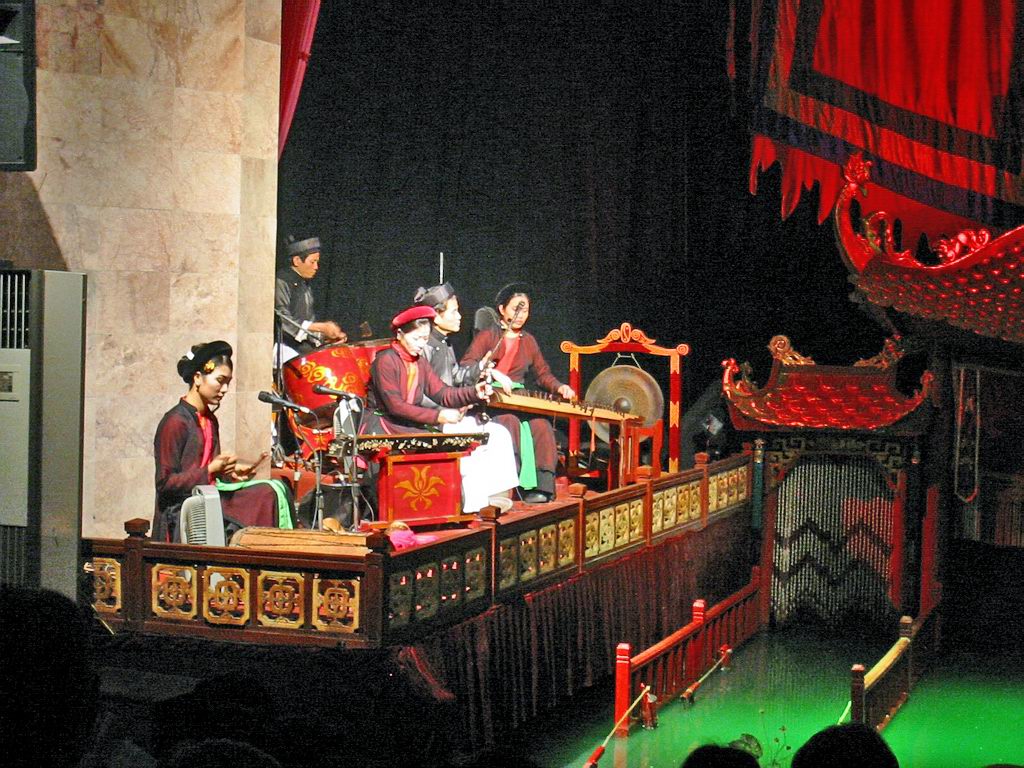 ChèoSatirical folk musical theatre performed by village troupes across northern Vietnam
Good reading and sources
- Celebrations in Ho Chi Minh City mark 50 years since end of Vietnam warThe Guardian, Article
- Celebrations in Ho Chi Minh City mark 50 years since end of Vietnam warThe Guardian, Article
- Reunification Day on WikipediaEncyclopedia
- More photos on Wikimedia CommonsPhotos and video
- Wikidata recordOpen data
The facts on this page come from the Wikipedia article "Reunification Day", written by its contributors and used under the CC BY-SA 4.0 licence, and from its Wikidata record (CC0). EveryParampara rewrote the text in its own words, with AI assistance, and compares every page with the article to make sure no passage is copied. It may be reused under the same CC BY-SA 4.0 licence with a link back.
It may contain mistakes. Traditions differ from one family, village and community to the next, and the people who keep them know them best. If something is wrong, tell us. Last refreshed 2026-10-05.
More from Vietnam
All the traditions of Vietnam 🇻🇳 Hanoi, VietnamNational DayNgày Quốc khánh
Vietnam's national day, marking the 1945 independence declaration read in HanoiCeremony
🇨🇳 Hong Kong, China and 5 moreFace
The shared social etiquette of honour, dignity and mutual respect across culturesEtiquette
🇻🇳 Hoa Lư, VietnamChèo嘲
Satirical folk musical theatre performed by village troupes across northern VietnamPerformance
🇻🇳 Hanoi, VietnamNational DayNgày Quốc khánh
Vietnam's national day, marking the 1945 independence declaration read in HanoiCeremony
🇨🇳 Hong Kong, China and 5 moreFace
The shared social etiquette of honour, dignity and mutual respect across culturesEtiquette
🇻🇳 Hoa Lư, VietnamChèo嘲
Satirical folk musical theatre performed by village troupes across northern VietnamPerformance
 🇨🇳 China and 5 moreLion dance舞獅
A dynamic ritual dance featuring costumed lions, drums and martial acrobaticsPerformance
🇨🇳 China and 5 moreLion dance舞獅
A dynamic ritual dance featuring costumed lions, drums and martial acrobaticsPerformance
The same idea elsewhere
All of this kind 🇺🇸 Philadelphia, United States and 1 moreIndependence Day
The United States' national day of parades, barbecues and fireworks, kept each July 4Ceremony
🇺🇸 Philadelphia, United States and 1 moreIndependence Day
The United States' national day of parades, barbecues and fireworks, kept each July 4Ceremony
 🇺🇸 United StatesTalking stick
A carved staff that shows who may speak at a Northwest Coast gatheringCeremony
🇺🇸 United StatesTalking stick
A carved staff that shows who may speak at a Northwest Coast gatheringCeremony
 🇺🇸 Washington, United StatesState of the Union address
The US president's yearly report to Congress and the nation, given in the House chamberCeremony
🇺🇸 Washington, United StatesState of the Union address
The US president's yearly report to Congress and the nation, given in the House chamberCeremony
 🇮🇳 Kolkata, IndiaJana Gana Mana
India's national anthem, from a Bengali hymn of 1911, sung at civic occasionsCeremony
🇮🇳 Kolkata, IndiaJana Gana Mana
India's national anthem, from a Bengali hymn of 1911, sung at civic occasionsCeremony