Life-cycle ritesEuropeChristian
Podruga
A Balkan custom in which a childless wife agreed to a second wife joining the household
Podruga is a marriage custom from the Balkans in which a husband whose first wife had no children took a second wife into the same home. It was kept mostly by Albanian and Serbian families in Kosovo and Metohija, and it lasted there until the 1980s.
When is Podruga kept?
Podruga is kept on when a first marriage produced no children, and until the 1980s in Kosovo and Metohija.
Podruga is a word from the Balkans for a wife in a second marriage. The custom it names belonged to Albanian and Serbian families, mostly in Kosovo and Metohija. When a first wife had no children, a second wife was brought into the house, and the two women lived and worked together. The first wife kept her place in the home and in the family, and the household gained the children it wanted.
What it is
The word podruga, also written podrugi, means "second in order". In the Balkans it was the name for a woman who entered a marriage as a second wife. The arrangement was easy to describe. A man whose first wife had no children married again, and the new wife moved into the same house. She was there to have children. Both women lived in one household, but each had her own room, her own work and her own duties. The sources place this custom among Albanian and Serbian families, and say it lasted in some places into the 1980s.
How it worked
The first wife stayed in the house, but she was no longer a wife. The sources say she and her husband stopped sharing a bed, and that the church dissolved the marriage. She kept her standing in the household and in the wider community, where she was looked after and treated as part of the family rather than sent away. The second wife took on the task of bearing children. The two women divided the rooms and the chores between them, yet the sources stress that they were always together. Customary law in parts of Kosovo and Metohija allowed the arrangement, provided the first wife agreed, openly or quietly.
Origins and history
The sources call the practice very old and say its earliest written trace is a story from the Bible, in which Sarah, Hagar and Abraham appear. Sarah, expecting no child of her own, brought Hagar to her husband Abraham; and in time, the sources say, Sarah herself gave birth to Isaac. The sources offer that story as an early picture of the same pattern: a wife without children who makes room for another woman so that the family can continue. The custom appears in different cultures to different degrees, according to the sources. In Kosovo and Metohija it survived until the 1980s.
The last known case
The last podruga the sources name is Petkana Filipović, described as Serbian and as coming from Drena, a village in Kosovo and Metohija. She entered a household where Vujica was the husband and Roksanda the first wife. The three lived under one roof, and Petkana bore four daughters and one son. The sources give no dates for her and say nothing about what happened to the household later. She stands as the final example of a practice that had already grown rare.
How Podruga is kept
A husband and his first wife had no children. With the first wife's agreement, sometimes spoken and sometimes unspoken, the husband married a second time. The new wife moved into the family home. The first wife stayed, but the marriage between her and the husband ended, and the sources say the church dissolved it. From then on the two women shared the house: separate rooms, separate chores, one household. The second wife bore the children. The first wife kept her position in the home and in the community, and the sources describe her as protected rather than cast out.
When and where
Podruga had no fixed date. It began when a first marriage produced no children, and it was arranged then, with the first wife's consent. The sources say it was still being practised in Kosovo and Metohija in the 1980s, and that this was where it ended. No calendar day or season belongs to it.
The sources tie podruga to the Balkans, and name Albanian and Serbian families in particular. It is described as established in parts of Kosovo and Metohija, where customary law allowed it, and the last case the sources mention comes from a village there called Drena. Serbia is also named, since the last known podruga is described as Serbian. The custom is not recorded as continuing anywhere today.
What Podruga means
For the families who kept it, podruga was about children and about keeping a woman in her home. The sources reject the idea that the first wife simply sacrificed herself. They describe her consent as an act of love for her husband, and as a practical choice, since many first wives had nowhere else to go. The two women were said to be joined by one aim: raising the next generation. The household kept its name and its future, and the first wife kept her place in it.
Questions people ask about Podruga
When is Podruga kept?
Podruga is kept on when a first marriage produced no children, and until the 1980s in Kosovo and Metohija.
What is a podruga?
Podruga is a word from the Balkans. It names a woman who became a second wife in a household where the first wife had borne no children. The first wife stayed in the home rather than leaving.
Where was this custom kept?
The sources connect it to the Balkans, and name Albanian and Serbian families. It is described as established in parts of Kosovo and Metohija, where customary law permitted it. Serbia is also mentioned, because the last podruga the sources name came from a Serbian family there.
What happened to the first wife?
She stayed in the house, but she was no longer a wife. The sources say the marriage was ended in church and that she and her husband no longer shared a bed. She kept her position in the household and the community, where she was looked after as a member of the family.
Why would a first wife agree?
The sources say the first wife often had no other home, and that her agreement was sometimes quiet rather than stated. They describe her choice as love for her husband rather than sacrifice, and as a way to keep her place in the family.
See also
 VechornytsiEvening gatherings of Ukrainian youth, with songs, jokes, games and winter divination
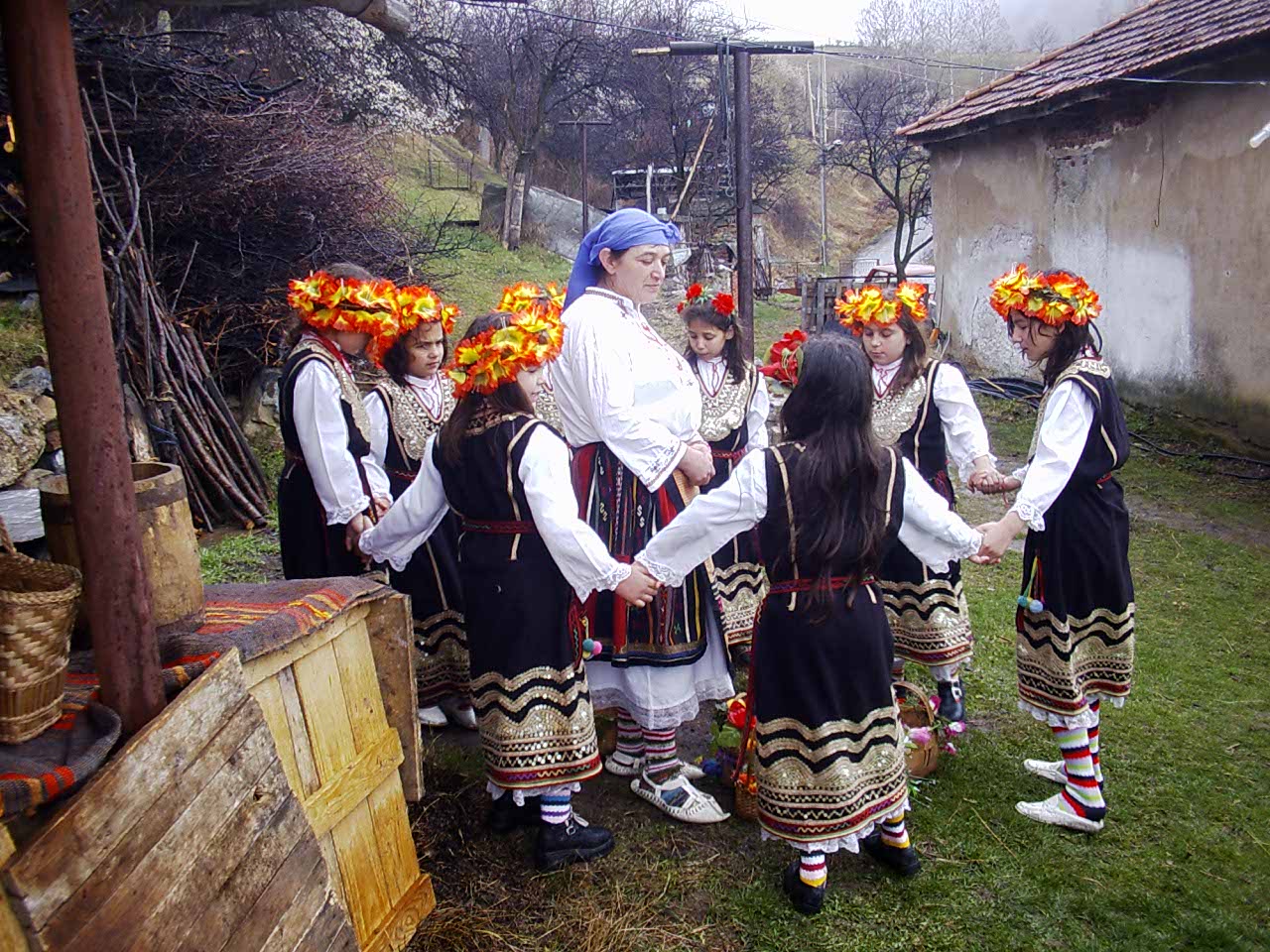 LazariceA spring procession of girls in flower wreaths, singing door to door before Palm Sunday
 Bread and saltBread and salt offered to a guest: a welcome kept from Russia to Albania
 KanunAlbanian customary law kept by word of mouth, centred on honour and the given word
Good reading and sources
The facts on this page come from the Wikipedia article "Podruga", written by its contributors and used under the CC BY-SA 4.0 licence, and from its Wikidata record (CC0). EveryParampara rewrote the text in its own words, with AI assistance, and compares every page with the article to make sure no passage is copied. It may be reused under the same CC BY-SA 4.0 licence with a link back.
It may contain mistakes. Traditions differ from one family, village and community to the next, and the people who keep them know them best. If something is wrong, tell us. Last refreshed 2026-10-09.
More from Kosovo
All the traditions of Kosovo 🇦🇱 Albania and 5 moreSworn virginburrnesha
A vow of chastity that lets a woman of the northern Balkans live as a manRite of passage
🇦🇱 Albania and 1 moreKanunKanû
Albanian customary law kept by word of mouth, centred on honour and the given wordEtiquette
🇷🇸 Serbia and 3 moreLazariceлазарице
A spring procession of girls in flower wreaths, singing door to door before Palm SundaySpiritual
🇧🇩 Bangladesh and 3 moreAs-salamu alaykumسَلَامٌ عَلَيْكُمْ
A traditional Arabic greeting of peace exchanged in daily life and prayerEtiquette
🇦🇱 Albania and 5 moreSworn virginburrnesha
A vow of chastity that lets a woman of the northern Balkans live as a manRite of passage
🇦🇱 Albania and 1 moreKanunKanû
Albanian customary law kept by word of mouth, centred on honour and the given wordEtiquette
🇷🇸 Serbia and 3 moreLazariceлазарице
A spring procession of girls in flower wreaths, singing door to door before Palm SundaySpiritual
🇧🇩 Bangladesh and 3 moreAs-salamu alaykumسَلَامٌ عَلَيْكُمْ
A traditional Arabic greeting of peace exchanged in daily life and prayerEtiquette
The same idea elsewhere
Weddings compared 🇼🇸 Samoa and 1 moreʻIe tōga
Precious woven mats exchanged in Samoan ceremonies to honor family ties and chiefly status.Dress
🇼🇸 Samoa and 1 moreʻIe tōga
Precious woven mats exchanged in Samoan ceremonies to honor family ties and chiefly status.Dress
 🇹🇱 Timor-LesteUma Lulik
Sacred ancestral clan houses and ritual shrines in East TimorSpiritual
🇹🇱 Timor-LesteUma Lulik
Sacred ancestral clan houses and ritual shrines in East TimorSpiritual
 🇮🇩 Indonesia and 2 moreKenduri
A communal prayer meal and gathering shared across Indonesia, Malaysia and BruneiSpiritual · Feasts and festival meals
🇺🇬 UgandaKwanjula
A formal marriage introduction ritual of the Baganda people in Uganda, where families meet to exchange gifts and seek blRite of passage
🇮🇩 Indonesia and 2 moreKenduri
A communal prayer meal and gathering shared across Indonesia, Malaysia and BruneiSpiritual · Feasts and festival meals
🇺🇬 UgandaKwanjula
A formal marriage introduction ritual of the Baganda people in Uganda, where families meet to exchange gifts and seek blRite of passage