Greetings, manners and hospitalityOceaniaIndigenous and traditional
Pōwhiri
A formal Māori welcome onto a marae, with calls, speeches, song and the hongi

A pōwhiri is a formal welcome given by Māori hosts to visitors who come onto a marae. Calls, challenges, speeches and songs come first, and the hongi closes it; the kawa, or protocol, is set by each marae, so the details differ from place to place.
When is Pōwhiri kept?
Pōwhiri is kept on when visitors arrive on a marae, including before a tangihanga.
Pōwhiri is the formal welcome that Māori hosts give to visitors arriving on a marae, the open space in front of the meeting house. It is a set of greetings rather than a single act: a woman's call, a challenge, speeches and songs, and at the end the hongi. People keep it to find out who has come, to honour the dead and to let two groups meet safely.
What a pōwhiri is
A pōwhiri is a welcome given by Māori hosts, the tangata whenua or people of the land, to visitors called manuhiri. It takes place on a marae, and the greetings happen on the marae ātea, the courtyard that lies before the meeting house. The pattern follows kawa, the protocol of that particular marae, so no two are quite alike, though the broad shape holds across iwi. A less formal welcome called a mihi whakatau may be used instead. Pōwhiri mark many occasions: important guests, tourist groups, special events, and the arrival of a body at the marae before a tangihanga, a funeral.
The challenge and the call
At the most formal welcomes, warriors of the marae may put a wero to the visitors. The word means to throw a spear, yet no spear is thrown. In earlier times it revealed whether strangers came in peace, and today it is kept for dignitaries and officials. One warrior, or three in turn, lays a small token called a taki on the ground, then steps back and watches. A senior male visitor lifts the token. After that a woman of the hosts begins the karanga, a long call that rises and falls away. Her words are not fixed. She greets the visitors, names their ancestors, rivers and mountains, and asks them to bring their dead to be mourned.
Speeches, songs and hongi
Formal speaking, the whaikōrero, comes next. The speakers are called kaikōrero and sit at the front on the paepae, a bench kept for them; the role is an honour given to people of high standing. Many marae allow speeches only in te reo Māori. A speaker may greet the meeting house, the land, the mountains and rivers, the people listening and the spirits of the dead, before turning to the business of the day. Each speech is followed by a waiata, a song, to support it. The last guest speaker sets the koha, the gift, on the ground, and the last host speaker, who always speaks after the guests, picks it up. The hongi ends the ceremony.
Today and change
Pōwhiri are still held often, mostly to receive important guests, and they are also performed for tourist groups and at special events. Kawa differs from place to place: who leads the walking on, how people are seated, who may speak, and how the koha is lifted. Whaikōrero remains both an art and something of a contest. It can still turn into a sharp debate, as it did at the Te Matatini welcome in 2023, when speakers argued over who held mana whenua in Tāmaki Makaurau, Auckland. Speakers use gesture as well, holding tokotoko, walking sticks, or weapons such as taiaha and toki, and they may walk about or duck to press a point home.
How Pōwhiri is kept
Visitors gather at the entrance while the hosts get ready. They greet one another and work out who will take each role, and any koha is collected and given to the visitors' last speaker. At a very formal welcome, warriors may first offer the wero and lay a token down. Otherwise a woman of the hosts starts the karanga as the visitors walk in, and callers among the guests answer her. The visitors pause in the courtyard to remember the dead, then take their seats. Speeches and songs follow, guests first, ending with the gift. A final host speech accepts it, and the hongi closes the ceremony.
When and where
There is no fixed date. A pōwhiri happens when visitors arrive on a marae. It may mark a visit by dignitaries or officials, a special event, or a tourist group. One is often held to bring a body onto the marae before a tangihanga. Where a full welcome is not wanted, hosts may choose the mihi whakatau instead.
A pōwhiri belongs to the marae, the Māori meeting places of Aotearoa New Zealand, and it is on marae that it is strongest. Every iwi and often every marae keeps its own kawa. The welcome begins at the entrance and moves onto the marae ātea; if speeches are held indoors, they take place in the wharenui, the meeting house.
What Pōwhiri means
A pōwhiri is held to carry spiritual weight, and it is rooted in Māori mythology. Its purpose is to clear a path between two groups so that they can meet safely, and in older days to learn whether strangers came in peace. The karanga is sacred, the first words spoken between hosts and guests, and the caller carries the mana of the marae. The dead are present throughout: callers invoke the ancestors and can invite the visitors' dead home to be mourned.


Questions people ask about Pōwhiri
When is Pōwhiri kept?
Pōwhiri is kept on when visitors arrive on a marae, including before a tangihanga.
What is a pōwhiri?
It is a formal Māori welcome given to visitors on a marae. Hosts and guests exchange calls, a challenge, speeches and songs, and the hongi closes it. The name also refers to a chant of welcome performed with movement during the ceremony. It is said roughly as PAW-fih-ree.
Where does it take place?
On a marae, usually starting at the entrance and moving onto the marae ātea, the courtyard outside the meeting house. If speeches are held indoors they happen in the wharenui, where visitors take their shoes off before going in. Kawa, the protocol, varies between marae, regions and iwi.
Who does the speaking?
Women of the hosts perform the karanga, the opening call, and callers among the guests reply. Formal speeches, the whaikōrero, are given by men on most marae, seated at the front on the paepae, and many marae allow them only in te reo Māori. A waiata, or song, follows each speech.
What is the koha?
A gift from the visitors to the hosts. It is usually collected before the welcome begins and kept by the visitors' last speaker, who lays it on the ground when their speech ends. The last host speaker then picks it up. This returns the mauri, the life force of the marae, to the hosts.
See also
 MaraeA cleared, sacred gathering place at the heart of Māori and Polynesian community life
 WhakapapaMāori genealogy, recited to place a person among ancestors, land and tribeKarakiaMāori incantations and prayers recited for spiritual guidance, safety and ceremony
Good reading and sources
- Pōwhiri on WikipediaEncyclopedia
- More photos on Wikimedia CommonsPhotos and video
- Wikidata recordOpen data
The facts on this page come from the Wikipedia article "Pōwhiri", written by its contributors and used under the CC BY-SA 4.0 licence, and from its Wikidata record (CC0). EveryParampara rewrote the text in its own words, with AI assistance, and compares every page with the article to make sure no passage is copied. It may be reused under the same CC BY-SA 4.0 licence with a link back.
It may contain mistakes. Traditions differ from one family, village and community to the next, and the people who keep them know them best. If something is wrong, tell us. Last refreshed 2026-10-05.
More from New Zealand
All the traditions of New Zealand 🇮🇳 India and 5 moreRemoval of footwear indoors
The widespread custom of leaving outdoor shoes at the door for cleanliness and respectEtiquette
🇮🇳 India and 5 moreRemoval of footwear indoors
The widespread custom of leaving outdoor shoes at the door for cleanliness and respectEtiquette
 🇳🇿 New ZealandTivaevaetīvaevae
A traditional Polynesian art of artistic quilting made by women for gifts and ceremonies.Craft
🇳🇿 New ZealandKarakia
Māori incantations and prayers recited for spiritual guidance, safety and ceremonySpiritual
🇳🇿 New ZealandTivaevaetīvaevae
A traditional Polynesian art of artistic quilting made by women for gifts and ceremonies.Craft
🇳🇿 New ZealandKarakia
Māori incantations and prayers recited for spiritual guidance, safety and ceremonySpiritual
 🇳🇿 Auckland, New ZealandWharenui
A Māori carved communal meeting house at the centre of tribal life in New ZealandHome
🇳🇿 Auckland, New ZealandWharenui
A Māori carved communal meeting house at the centre of tribal life in New ZealandHome
The same idea elsewhere
Hospitality and welcome compared 🇷🇸 SerbiaSlavaСлава
An annual Serbian family feast honouring their patron saint with blessed bread and wineSpiritual · Feasts and festival meals
🇷🇸 SerbiaSlavaСлава
An annual Serbian family feast honouring their patron saint with blessed bread and wineSpiritual · Feasts and festival meals
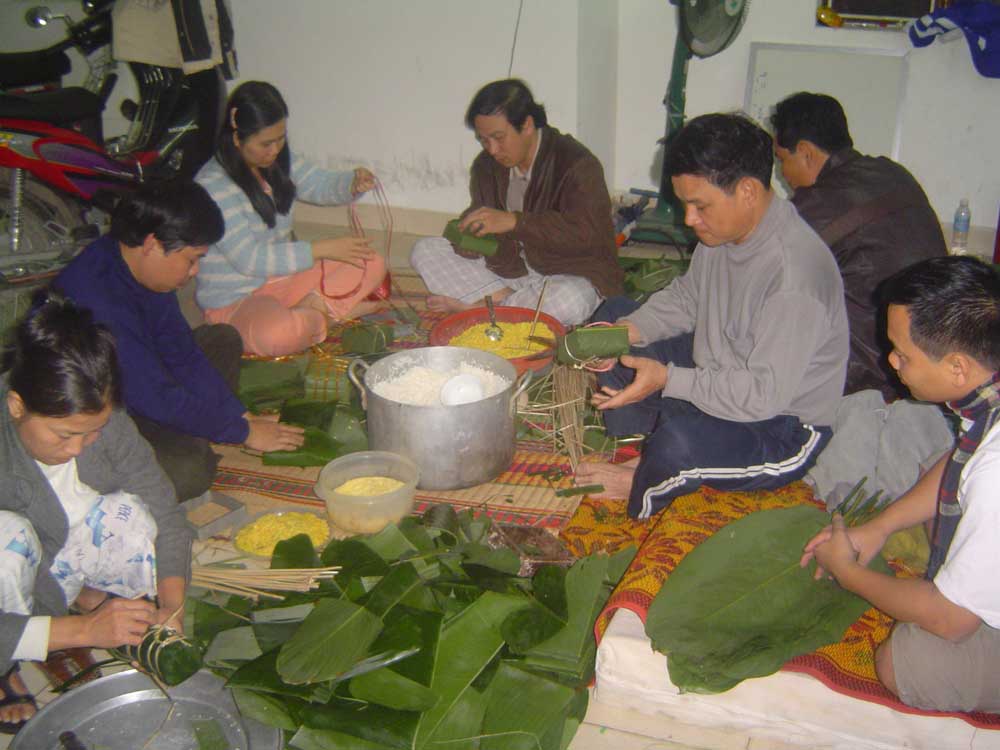 🇻🇳 VietnamTếtTết Nguyên Đán
The Vietnamese festival of the lunar new year, welcoming spring with family gatheringsFestival · Feasts and festival meals
🇻🇳 VietnamTếtTết Nguyên Đán
The Vietnamese festival of the lunar new year, welcoming spring with family gatheringsFestival · Feasts and festival meals
 🇬🇪 Tbilisi, GeorgiaSupraსუფრა
A Georgian feast led by a toastmaster, where toasts, wine and food carry the mealTable custom · Feasts and festival meals
🇬🇪 Tbilisi, GeorgiaSupraსუფრა
A Georgian feast led by a toastmaster, where toasts, wine and food carry the mealTable custom · Feasts and festival meals
 🇪🇬 Egypt and 5 moreLibation
The ceremonial gift of drink given to deities, ancestors, and the earthSpiritual · Tea, coffee and drinking ceremonies
🇪🇬 Egypt and 5 moreLibation
The ceremonial gift of drink given to deities, ancestors, and the earthSpiritual · Tea, coffee and drinking ceremonies