Spiritual and religiousEuropeChristian
Radonitsa
In its own language: Ра́доница (Russian), Ра́даўніца (Belarusian)
A spring day when Orthodox families visit graves, share Easter food and greet the dead

Radonitsa is a day in the Russian Orthodox calendar for remembering the dead, kept on the second Tuesday after Pascha, that is Easter. Families go to the graves after church, bring Easter food, and greet the departed with the words 'Christ is Risen', because the day is named for joy.
When is Radonitsa kept?
Radonitsa is kept on annually, on the second Tuesday of Pascha; in south-west Russia, the second Monday.
Radonitsa is a spring day of remembrance kept in the Russian Orthodox Church. It falls on the second Tuesday of Pascha, as Easter is called in that tradition, and in some parts of south-west Russia on the second Monday. Families go to church, then to the graves of their own dead, carrying Easter food and greeting them with the news of the Resurrection. The Slavs had long visited graves in spring, and the church took that custom up.
What it is
The name Radonitsa is built on the Slavic word radost, which means joy. That may sound odd for a memorial, but the joy belongs to the Resurrection, which Orthodox Christians believe is good news for the dead as well as the living. In the Russian Orthodox Church the day is a commemoration of the departed, and it also appears in English as Radunitsa, Radonica and Radunica. In south-west Russia a local name is Krasnaya Gorka, or Red Hill. Ukrainian communities call it Provody. In Serbia the day is named Pobusani ponedeonik, the Tomb-Sweeping Monday.
Older roots
The Slavs, like many peoples of the ancient world, used to visit the graves of their family in spring and eat together with them. When they became Christians, that habit passed into the Russian Orthodox Church as Radonitsa, so the older custom and the church's remembrance of the dead came together in one day. There are similar practices in the ancient Church. Ambrose of Milan, who lived from about 340 to 397, preached that after Pascha it was right to share joy with the martyrs. John Chrysostom, who lived from 349 to 407, said that in his own day the departed were remembered with joy on the Tuesday of Thomas Week.
How the day is kept
The Typikon, the book that sets out the Orthodox order of service, asks for no special prayers for the dead on this day. Radonitsa is kept as a pious custom rather than a rule. After the Divine Liturgy the priest serves a Panikhida, a memorial service, in the church, and blesses the Easter foods people have carried with them. Clergy then lead a procession with the cross, incense and candles out to the graves, and the faithful follow. At the graves, paschal hymns are sung along with the customary litanies for the dead, closing with the words Memory Eternal.
Food, gifts and weddings
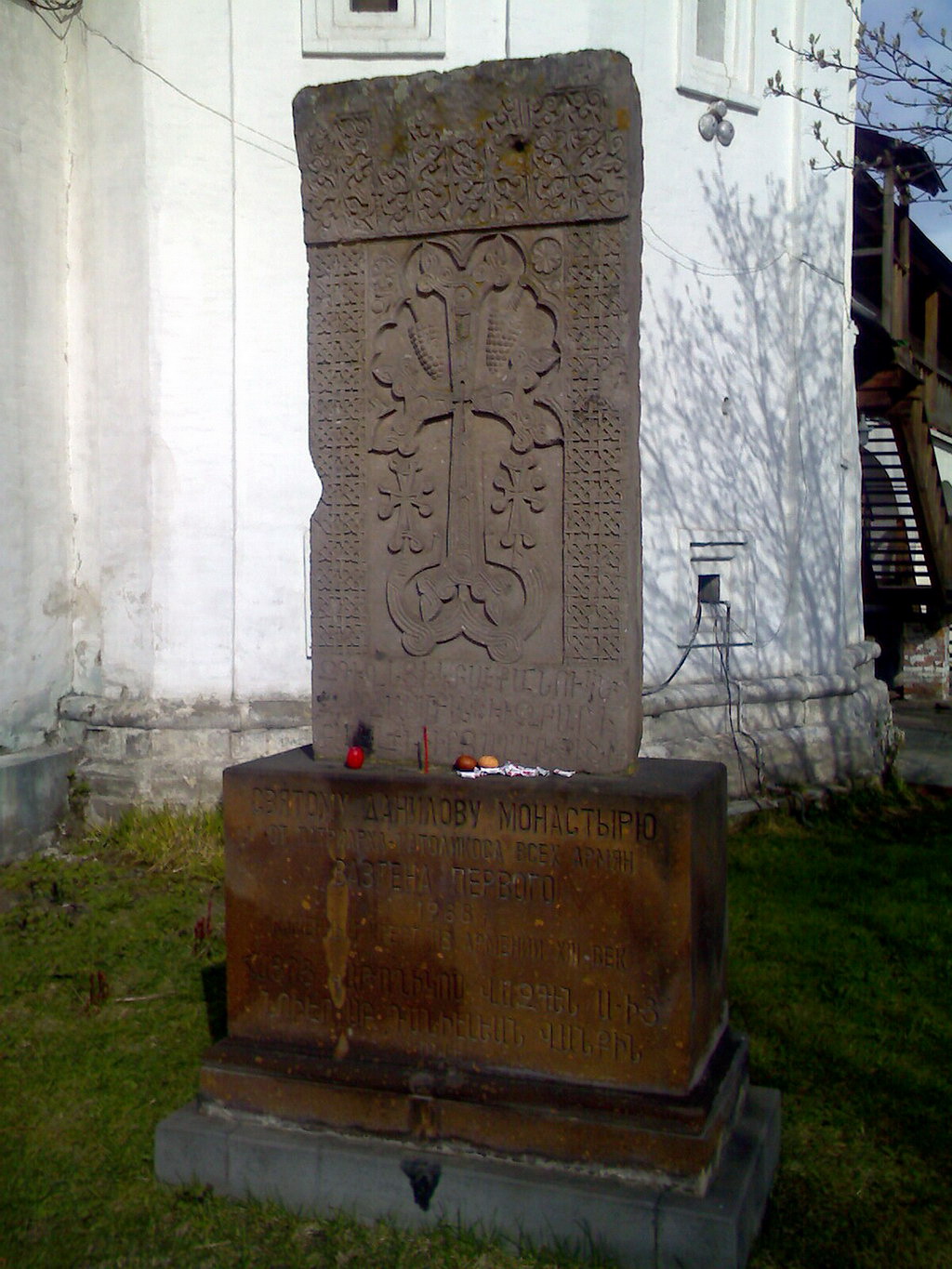
Once the graveside prayers are finished, relatives and friends eat the paschal food together with joy. An Easter egg is often left on a grave, since it stands for Christ coming out of the tomb, and the dead are greeted with the paschal greeting, Christ is Risen. Foods that belong to the day include funeral koliva, dyed eggs and kulichi, with pancakes, dracheni, honey prianiki and cookies. Radonitsa also opens the marriage season, since weddings are not held during Great Lent or Bright Week. Men and women give presents to their in-laws at this time, so that every home may share in the joy.
What it means
Radonitsa is a day of hope rather than gloom. The Christian belief behind it is that the Resurrection of Jesus is not only an event in the past but a promise that reaches the dead, so the departed are greeted as if they can hear the good news. The last days of Holy Week and the joy of the Resurrection leave no room for special prayers for the departed, so the Typikon sets them aside from Great and Holy Thursday until Thomas Sunday, eleven days in all. Radonitsa is the first chance after Pascha to remember the dead; the one exception in those days is a funeral, which cannot be put off.
How Radonitsa is kept
The priest and congregation begin with the Divine Liturgy. Afterwards the priest serves a Panikhida in the church and blesses the Easter foods the faithful have brought. Clergy carrying the cross, incense and candles then lead a procession, and the people follow, to graves in churchyards or in cemeteries. There the dead are remembered with paschal hymns and the customary litanies, closing with Memory Eternal. Relatives and friends then eat the paschal food together. An Easter egg is often placed on a grave, and the departed are greeted with Christ is Risen.
When and where
Radonitsa falls on the second Tuesday of Pascha, which is Easter in the Orthodox calendar, so the date moves each year with Easter. In south-west Russia some keep it on the second Monday instead. Monday is avoided in places where monasteries fast on that day, so that everyone may share the eggs.
The day belongs to the Russian Orthodox Church and to Russian, Belarusian and Ukrainian communities around the world. It is kept across Russia, in Belarus and Ukraine, and in Serbia under the name Pobusani ponedeonik. In Ukraine the same observance is called Provody. In Russia a local name is Krasnaya Gorka, or Red Hill.
What Radonitsa means
To those who keep it, Radonitsa turns mourning into gladness. The joy is not a denial of death but trust in the Resurrection: the dead are greeted with the paschal greeting because Christians believe that Christ's rising from the tomb promises a general resurrection of all the departed. The Easter egg laid on a grave carries the same meaning, a sign of Christ coming out of the tomb. The name itself holds that belief in one word, for it comes from the Slavic term for joy.
Questions people ask about Radonitsa
When is Radonitsa kept?
Radonitsa is kept on annually, on the second Tuesday of Pascha; in south-west Russia, the second Monday.
What is Radonitsa?
It is a day in the Russian Orthodox Church for remembering the dead. It comes on the second Tuesday of Pascha, or Easter, and its name is linked to the Slavic word for joy, because the Resurrection is understood as good news for the departed as well as the living.
Who keeps it?
Russian Orthodox faithful keep it, and it is also observed by Belarusian and Ukrainian communities in their homelands and around the world. In Ukraine the day is called Provody. In Serbia the day is called Pobusani ponedeonik, meaning Tomb-Sweeping Monday.
Why is a memorial called joyful?
The joy belongs to the Resurrection. Orthodox Christians believe that Christ's rising from the tomb brings hope to all the dead, so the departed are greeted with the paschal greeting, Christ is Risen, and an Easter egg is left on the grave as a sign of the general resurrection.
What happens on the day?
After the Divine Liturgy and a Panikhida in church, a priest blesses the Easter foods people have brought. Clergy then lead a procession to the graves, where paschal hymns and litanies are sung and Memory Eternal is said. Relatives and friends eat the paschal food together afterwards.
See also
 Holy SaturdayThe closing day of Holy Week, a Saturday of waiting, fasting and vigil before Easter
 KaddishA Jewish hymn of sanctification recited during prayer services and mourning rituals.
 Saint George's DayA saint's feast on 23 April, kept by churches and patron nations from England to Georgia
 SlavaAn annual Serbian family feast honouring their patron saint with blessed bread and wine
Good reading and sources
- Radonitsa on WikipediaEncyclopedia
- More photos on Wikimedia CommonsPhotos and video
- Wikidata recordOpen data
The facts on this page come from the Wikipedia article "Radonitsa", written by its contributors and used under the CC BY-SA 4.0 licence, and from its Wikidata record (CC0). EveryParampara rewrote the text in its own words, with AI assistance, and compares every page with the article to make sure no passage is copied. It may be reused under the same CC BY-SA 4.0 licence with a link back.
It may contain mistakes. Traditions differ from one family, village and community to the next, and the people who keep them know them best. If something is wrong, tell us. Last refreshed 2026-10-05.
More from Russia
All the traditions of Russia
🇮🇱 Israel and 5 moreKaddishקַדִּישׁ
A Jewish hymn of sanctification recited during prayer services and mourning rituals.Spiritual
 🇧🇾 Belarus and 4 moreDziadyДзяды (Belarusian); Діди (Ukrainian); Dziady (Polish)
A Slavic tradition of feeding and welcoming the spirits of ancestors to ensure family fertility and peace.Spiritual
🇧🇾 Belarus and 4 moreDziadyДзяды (Belarusian); Діди (Ukrainian); Dziady (Polish)
A Slavic tradition of feeding and welcoming the spirits of ancestors to ensure family fertility and peace.Spiritual
 🇵🇱 Poland and 5 moreZaduszkiZaduszki, Dzień Zaduszny
A Polish day of prayer for the dead on 2 November, kept with candles at the gravesSpiritual
🇵🇱 Poland and 5 moreZaduszkiZaduszki, Dzień Zaduszny
A Polish day of prayer for the dead on 2 November, kept with candles at the gravesSpiritual
 🇮🇹 Rome, Italy and 5 moreAll Souls' Day
A Christian observance on 2 November for prayer and remembrance of those who have died.Spiritual
🇮🇹 Rome, Italy and 5 moreAll Souls' Day
A Christian observance on 2 November for prayer and remembrance of those who have died.Spiritual
The same idea elsewhere
Death and mourning compared 🇰🇷 Jeju, South KoreaGut굿
Sacred rites of song, dance, and spirit communion performed by Korean shamansSpiritual
🇰🇷 Jeju, South KoreaGut굿
Sacred rites of song, dance, and spirit communion performed by Korean shamansSpiritual
 🇮🇷 Iran and 7 moreNowruzنوروز
The Iranian new year at the March equinox, kept with fire, greenery and picnicsSeasonal
🇮🇷 Iran and 7 moreNowruzنوروز
The Iranian new year at the March equinox, kept with fire, greenery and picnicsSeasonal
 🇮🇳 Mathura, India and 5 moreHoliहोली (Hindi)
A spring festival of colours and bonfires that marks the end of winter and the triumph of good over evil.Festival
🇮🇳 Mathura, India and 5 moreHoliहोली (Hindi)
A spring festival of colours and bonfires that marks the end of winter and the triumph of good over evil.Festival
 🇲🇽 Mexico City, Mexico and 1 moreDay of the DeadDía de Muertos
A Mexican remembrance of deceased family and friends with altars, marigolds and feastsFestival · Sweets given and shared
🇲🇽 Mexico City, Mexico and 1 moreDay of the DeadDía de Muertos
A Mexican remembrance of deceased family and friends with altars, marigolds and feastsFestival · Sweets given and shared