Customs of food and drinkEast Asia
Reunion dinner
In its own language: 團圓飯
A family gathering meal on lunar new year's eve, kept in China and Vietnam
The reunion dinner is the family meal eaten on the eve of the lunar new year by Chinese and Vietnamese households. Relatives come together for a large spread, often with dumplings, chicken, pork or seafood, and with dishes whose names carry wishes for the year to come.
When is Reunion dinner marked?
Reunion dinner is kept as part of Lunar New Year, which runs from 7 to 21 February 2027.
On the last night of the lunar year, families sit down together for the reunion dinner, a meal that Chinese and Vietnamese households treat as the most important gathering of their year. Plates are piled high, and certain dishes carry wishes for the months ahead. Relatives travel home for it, and the table is meant to hold everyone at once.
What it is
The reunion dinner is the meal that closes one lunar year and opens the next. Families eat it together on the eve of Chinese New Year, during the new year days themselves, and at Vietnamese New Year. Members who live apart travel back to the family table, and many households treat this as the single most important get-together of the twelve months. The table is not laid lightly: the spread is large, and each dish is chosen with thought. Everyone is expected to be present. In Chinese homes the meal belongs to the new year festival; in Vietnam it carries the name Tất niên.
Foods on the table
A traditional reunion table is generous and varied. Dumplings appear, along with chicken, pork or seafood. Fish is a fixture too. In Chinese homes it is served but deliberately not finished, and what remains is put away for the next day. The reason lies in the sound of words: in Chinese, the word for fish sounds the same as phrases about plenty and blessing, so leaving some over is a way of wishing for more in the year ahead. Vietnam is the exception, where the fish is eaten. Fat choy, a black algae with a hair-like look, goes into many dishes because its name sounds like prosperity. Hakka families add their own plates, kiu nyuk and ngiong tiu fu.
Where it is kept
The custom belongs to the lunar new year as it is kept in China and in Vietnam. In Chinese households it is part of the new year festival; in Vietnam it is Tất niên, the year-end meal. What the two share is the shape of the evening: the whole family at one table, food in quantity, and no empty chairs. Hakka families keep their own dishes for the night, cooked alongside the more widely known ones. It is a home custom rather than a public event, taking place in family kitchens and dining rooms.
What it means
Much of the meaning sits in the names of the dishes. Fish sounds like sayings about having plenty, and fat choy sounds like prosperity, so both are eaten with the year ahead in mind. The belief is that one thing follows from the other: a wish spoken over the table is understood to lead to the thing wished for. Alongside that, the meal says something simpler, that the family is together at the turning of the year. Leaving a little fish over is not waste; it is a way of asking that the household never run short.
How Reunion dinner is kept
On the last evening of the lunar year, family members gather at home. The table is filled with a large spread: chicken, pork, seafood or dumplings, and fish. People eat together, and in Chinese homes the fish is not finished, with the remainder kept through the night as part of the custom. In Vietnam the fish is eaten as usual. Hakka households put out kiu nyuk and ngiong tiu fu. The meal is the centre of the evening; the family stays at the table rather than treating it as an ordinary supper.
When and where
Its date follows the lunar calendar, so it moves from year to year instead of sitting on a fixed day. The dinner is eaten on the last evening of the old year, and the observance runs over the new year days that follow, with the Vietnamese year-end meal, Tất niên, falling at the same turn of the year.
The custom is kept wherever Chinese and Vietnamese families mark the lunar new year, and it is strongest at home, around the family table. It is not tied to a building or a public site. In Chinese homes it belongs to the new year festival; in Vietnam it is the year-end meal, Tất niên.
What Reunion dinner means
Dishes on the table are chosen as much for their names as for their taste. Fish, in Chinese, sounds like a saying about plenty, so a plate of it carries a wish for the coming year. Fat choy sounds like prosperity, and is eaten for the same reason. The meal also stands for the family itself: the whole household at one table, ending the year together and starting the next one the same way.
Days Reunion dinner is marked
Questions people ask about Reunion dinner
When is Reunion dinner marked?
Reunion dinner is kept as part of Lunar New Year, which runs from 7 to 21 February 2027.
What is a reunion dinner?
It is the family meal eaten at the turn of the lunar year, on new year's eve in Chinese and Vietnamese practice. Those who keep it treat it as the most important gathering meal of the whole year, with the household together at one table.
Which dishes are served?
The table is large and traditionally holds chicken, pork, seafood or dumplings. Fish is part of it, and fat choy, a hair-like black algae, appears in many dishes. Hakka families add their own plates, kiu nyuk and ngiong tiu fu.
Why is the fish left unfinished?
In Chinese, the word for fish sounds like a phrase about plenty, so keeping some back is a way of wishing the household well for the year. Vietnam is the exception, where the fish is eaten and nothing is held over.
Who keeps this meal?
Chinese families keep it as part of the new year festival, and Vietnamese households keep the same year-end meal under the name Tất niên. Among Chinese families, Hakka households have their own dishes for the night.
See also
 JiaoziCrescent Chinese dumplings filled with meat or vegetables, eaten for fortune and feasts
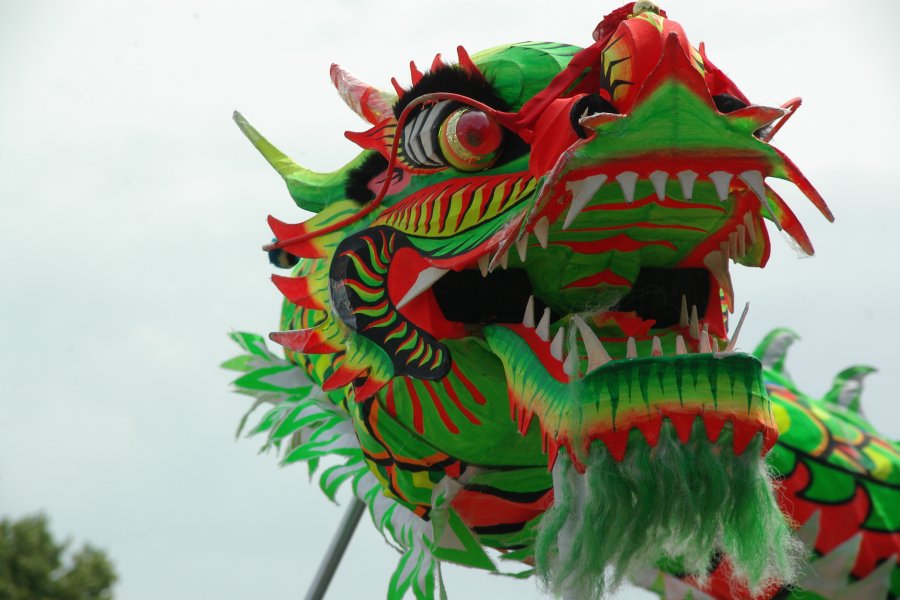 Dragon danceA long dragon puppet on poles, danced by a team at Chinese New Year and other festivals
 Lion danceA dynamic ritual dance featuring costumed lions, drums and martial acrobatics
 VesakA day to honor the birth, awakening, and passing of the Buddha, kept by Buddhists across Asia.
Good reading and sources
The facts on this page come from the Wikipedia article "Reunion dinner", written by its contributors and used under the CC BY-SA 4.0 licence, and from its Wikidata record (CC0). EveryParampara rewrote the text in its own words, with AI assistance, and compares every page with the article to make sure no passage is copied. It may be reused under the same CC BY-SA 4.0 licence with a link back.
It may contain mistakes. Traditions differ from one family, village and community to the next, and the people who keep them know them best. If something is wrong, tell us. Last refreshed 2026-10-05.
More from China
All the traditions of China
🇨🇳 Shanghai, China and 1 moreJiaozi餃子
Crescent Chinese dumplings filled with meat or vegetables, eaten for fortune and feastsTable custom · Breakfast
 🇨🇳 Lhasa, China and 5 moreButter teaབོད་ཇ་
A salted tea churned with yak butter, served to guests across the HimalayaTable custom · Tea, coffee and drinking ceremonies
🇨🇳 Lhasa, China and 5 moreButter teaབོད་ཇ་
A salted tea churned with yak butter, served to guests across the HimalayaTable custom · Tea, coffee and drinking ceremonies
 🇨🇳 Tianjin, ChinaManchu-Han Imperial Feast滿漢全席
A grand multi-day banquet uniting Manchu and Han culinary traditions in ChinaTable custom · Feasts and festival meals
🇨🇳 Tianjin, ChinaManchu-Han Imperial Feast滿漢全席
A grand multi-day banquet uniting Manchu and Han culinary traditions in ChinaTable custom · Feasts and festival meals
 🇨🇳 Chaozhou, China and 1 moreGongfu tea工夫茶
A skilled Chinese method of brewing tea in small teaware with precise heat and timingTable custom · Tea, coffee and drinking ceremonies
🇨🇳 Chaozhou, China and 1 moreGongfu tea工夫茶
A skilled Chinese method of brewing tea in small teaware with precise heat and timingTable custom · Tea, coffee and drinking ceremonies
The same idea elsewhere
New Year compared 🇮🇳 Ayodhya, India and 7 moreDiwaliदीपावली (Dīpāvalī)
A five-day festival of lights celebrated across India and its diaspora to mark the victory of light over darkness.Festival · Feasts and festival meals
🇮🇳 Ayodhya, India and 7 moreDiwaliदीपावली (Dīpāvalī)
A five-day festival of lights celebrated across India and its diaspora to mark the victory of light over darkness.Festival · Feasts and festival meals
 🇮🇷 Iran and 7 moreNowruzنوروز
The Iranian new year at the March equinox, kept with fire, greenery and picnicsSeasonal
🇮🇷 Iran and 7 moreNowruzنوروز
The Iranian new year at the March equinox, kept with fire, greenery and picnicsSeasonal
 🇮🇱 Jerusalem, Israel and 1 moreHanukkahחֲנֻכָּה
An eight-day Jewish festival marking the rededication of the Second Temple in Jerusalem and the miracle of a single day'Festival
🇮🇱 Jerusalem, Israel and 1 moreHanukkahחֲנֻכָּה
An eight-day Jewish festival marking the rededication of the Second Temple in Jerusalem and the miracle of a single day'Festival
 🇪🇬 Egypt and 5 moreMawlidمولد (Mawlid)
An annual festival marking the birth of the Prophet Muhammad, marked by poetry, processions and feasts.Festival · Feasts and festival meals
🇪🇬 Egypt and 5 moreMawlidمولد (Mawlid)
An annual festival marking the birth of the Prophet Muhammad, marked by poetry, processions and feasts.Festival · Feasts and festival meals