Festivals and celebrationsSoutheast AsiaBuddhistIndigenous and traditional
Rocket Festival
In its own language: ບຸນບັ້ງໄຟ
A rainy-season festival of merit-making, music, parades and homemade rockets

Celebrated across Laos and Northeastern Thailand by ethnic Lao communities, Bun Bang Fai welcomes the wet season with Buddhist merit-making, lively street parades, and competitive rocket launches. Villagers fire tall handmade rockets skyward in May or June to encourage timely rains for the upcoming planting cycle.
When is Rocket Festival kept?
Rocket Festival is kept on annually in May or June, during the sixth lunar month.
The Rocket Festival, known as Bun Bang Fai, is a traditional celebration held by Lao communities at the arrival of the monsoon. People gather at local Buddhist temples to gain religious merit, present offerings to monks, and enjoy lively street processions. The festivities culminate in the competitive launching of massive homemade gunpowder rockets into the sky to ask the rain deity for plentiful water for the upcoming rice planting.
Rituals and temple offerings
Preparations begin weeks ahead as villagers and monks construct decorative bamboo rockets. The festival opens with morning prayers and blessings inside the local Buddhist temple. In the afternoon, worshippers carry money trees around the main hall three times clockwise before presenting them to the monks to earn spiritual merit. The following morning, devotees place sticky rice and sweets into the almsbowls of the monks, who recite Buddhist teachings in return. Families also perform a water-pouring ritual called Yaat Nam, asking for ancestral blessings and long life before sitting down together to share a communal meal.
Parades, music and dance
After temple rites conclude, the festival shifts into a raucous street carnival. Pickup trucks carry decorated rockets through the town, surrounded by musicians playing long drums, cymbals, and the khene, a traditional bamboo reed instrument. Choirs and dance troupes move along the route in call-and-response songs known as Soeng Bang Fai. Many parade floats depict folklore scenes, particularly the romantic tale of Pha Daeng and Nang Ai. Participants celebrate with playful revelry, often wearing cross-generational costumes or cross-dressing, while sharing sato or lao-lao, a local grain liquor.
Launching the rockets
The main event is the rocket competition. Built from bamboo tubes or modern plastic pipes packed with charcoal, saltpetre, and sulphur, the projectiles vary from modest sizes to giant nine-metre rockets weighing over a hundred kilograms. Long bamboo poles provide flight stability as the rockets rest on launching racks. Judges score each launch based on how high it climbs, how far it travels, and the quality of its smoke trail. Successful launches are celebrated with cheers, while the builders of misfiring or grounded rockets face lighthearted punishment, often tossed into a mud pit and handed a drink of liquor.
Meaning and folklore
Scholars trace the custom to pre-Buddhist fertility rituals that existed before the arrival of gunpowder. In ancient Lao mythology, firing rockets serves as a direct message to Phaya Thaen, the god of rain, urging him to send down showers for the farming season. The festival also retells popular folk epics, using colourful pageantry and symbolic imagery to evoke fertility and communal renewal. Sponsoring a launch team or a float allows families and local leaders to build social standing while ensuring the community's agricultural prosperity.
How Rocket Festival is kept
Villagers gather at the temple for blessings, offering money trees and morning alms of sticky rice to monks. Afterwards, teams parade their homemade rockets through the streets on decorated vehicles, accompanied by dancing, singing, and khene music. On the final day, the community moves to an open field for the launches. Contestants ignite their rockets from wooden trestles, competing for altitude and flight distance. Builders of rockets that fail to fire are thrown into mud pools and given shots of local liquor.
When and where
Bun Bang Fai takes place during the sixth lunar month, typically in May or June, just as the monsoon begins. Different towns hold their celebrations on staggered weekends during this planting period.
The celebration is widely observed across Laos and the Isan region of Northeastern Thailand, with famous gatherings in Yasothon. Resettled Lao communities also keep the tradition at temple centers in France and the United States.
What Rocket Festival means
The rockets act as messengers sent skyward to remind the rain deity, Phaya Thaen, to water the crops. Rooted in ancient fertility customs, the boisterous dancing, muddy penalties, and merit-making rituals unite the community in hope for a bountiful harvest, health, and good fortune for the agricultural year ahead.


Questions people ask about Rocket Festival
When is Rocket Festival kept?
Rocket Festival is kept on annually in May or June, during the sixth lunar month.
What is the Rocket Festival?
The Rocket Festival, or Bun Bang Fai, is a traditional celebration among Lao people where communities make Buddhist merit, stage colourful parades, and launch homemade gunpowder rockets to encourage monsoon rains.
Why are the rockets fired into the sky?
In traditional Lao belief, the rockets send a signal to Phaya Thaen, the god of rain, asking him to send timely rainfall for the upcoming rice planting season.
What happens if a rocket fails to launch?
If a rocket misfires or fails to fly properly, the team that constructed it is playfully thrown into a muddy puddle and made to drink traditional liquor.
See also
 ChristmasA festival of Jesus's birth, kept on 25 December with gifts, lights and shared meals
 HalloweenAn annual observance on 31 October marking the eve of All Saints' Day, rooted in Christian tradition and Celtic heritage
 Christmas treeA decorated evergreen or artificial tree placed indoors to mark the Christmas season.
 HanukkahAn eight-day Jewish festival marking the rededication of the Second Temple in Jerusalem and the miracle of a single day'
Good reading and sources
- Rocket Festival on WikipediaEncyclopedia
- More photos on Wikimedia CommonsPhotos and video
- Wikidata recordOpen data
The facts on this page come from the Wikipedia article "Rocket Festival", written by its contributors and used under the CC BY-SA 4.0 licence, and from its Wikidata record (CC0). EveryParampara rewrote the text in its own words, with AI assistance, and compares every page with the article to make sure no passage is copied. It may be reused under the same CC BY-SA 4.0 licence with a link back.
It may contain mistakes. Traditions differ from one family, village and community to the next, and the people who keep them know them best. If something is wrong, tell us. Last refreshed 2026-10-04.
More from Laos
All the traditions of Laos 🇹🇭 Phon Phisai, Thailand and 1 moreNaga fireballsบั้งไฟพญานาค (bang fai phaya nak)
A festival of glowing orbs rising from the Mekong River, attributed to a mythical serpent.Festival
🇹🇭 Phon Phisai, Thailand and 1 moreNaga fireballsบั้งไฟพญานาค (bang fai phaya nak)
A festival of glowing orbs rising from the Mekong River, attributed to a mythical serpent.Festival
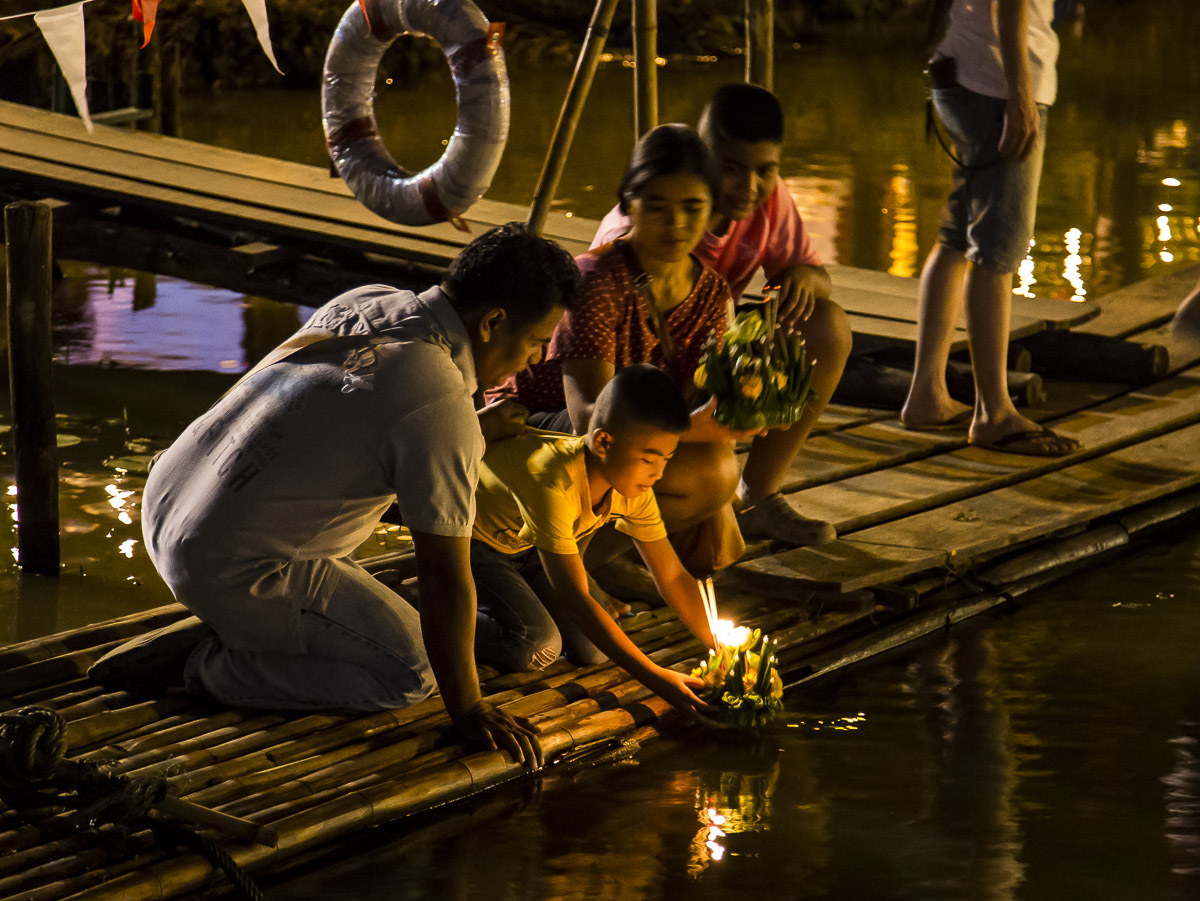 🇹🇭 Chiang Mai, Thailand and 5 moreLoy Krathongลอยกระทง
A Thai festival of floating leaf baskets on rivers to honor water and release negativity.Festival
🇹🇭 Chiang Mai, Thailand and 5 moreLoy Krathongลอยกระทง
A Thai festival of floating leaf baskets on rivers to honor water and release negativity.Festival
 🇹🇭 Thailand and 4 moreVessantara JatakaVessantara Jātaka
A Buddhist festival celebrating the last life of the Buddha as a generous prince.Festival
🇹🇭 Thailand and 4 moreVessantara JatakaVessantara Jātaka
A Buddhist festival celebrating the last life of the Buddha as a generous prince.Festival
 🇱🇰 Colombo, Sri Lanka and 5 moreVesakVisakha Bucha (Thailand), Visakha Bouxa (Laos), Full Moon Day of Kason (Myanmar)
A day to honor the birth, awakening, and passing of the Buddha, kept by Buddhists across Asia.Festival
🇱🇰 Colombo, Sri Lanka and 5 moreVesakVisakha Bucha (Thailand), Visakha Bouxa (Laos), Full Moon Day of Kason (Myanmar)
A day to honor the birth, awakening, and passing of the Buddha, kept by Buddhists across Asia.Festival
The same idea elsewhere
Remembering the ancestors compared
🇮🇪 Ireland and 5 moreHalloween
An annual observance on 31 October marking the eve of All Saints' Day, rooted in Christian tradition and Celtic heritageFestival · Sweets given and shared
 🇮🇳 Ayodhya, India and 7 moreDiwaliदीपावली (Dīpāvalī)
A five-day festival of lights celebrated across India and its diaspora to mark the victory of light over darkness.Festival · Feasts and festival meals
🇮🇳 Ayodhya, India and 7 moreDiwaliदीपावली (Dīpāvalī)
A five-day festival of lights celebrated across India and its diaspora to mark the victory of light over darkness.Festival · Feasts and festival meals
 🇮🇷 Iran and 7 moreNowruzنوروز
The Iranian new year at the March equinox, kept with fire, greenery and picnicsSeasonal
🇮🇱 Jerusalem, Israel and 1 moreHanukkahחֲנֻכָּה
An eight-day Jewish festival marking the rededication of the Second Temple in Jerusalem and the miracle of a single day'Festival
🇮🇷 Iran and 7 moreNowruzنوروز
The Iranian new year at the March equinox, kept with fire, greenery and picnicsSeasonal
🇮🇱 Jerusalem, Israel and 1 moreHanukkahחֲנֻכָּה
An eight-day Jewish festival marking the rededication of the Second Temple in Jerusalem and the miracle of a single day'Festival