Festivals and celebrationsSoutheast AsiaBuddhistIndigenous and traditional
Naga fireballs
In its own language: บั้งไฟพญานาค (bang fai phaya nak)
A festival of glowing orbs rising from the Mekong River, attributed to a mythical serpent.

The Naga fireballs are an annual phenomenon observed along the Mekong River, where glowing spheres appear to rise from the water into the night sky. Local communities attribute these lights to Phaya Nak, a giant serpent spirit inhabiting the river, while scientists have proposed various natural and human-made explanations for the sightings.
When is Naga fireballs kept?
Naga fireballs is kept on annually in late October, on the night of Wan Ok Phansa.
The Naga fireballs are a spectacle of glowing orbs rising from the Mekong River, traditionally linked to a mythical serpent spirit. Locals gather to witness these reddish lights, which some believe are gifts from the Naga, while others view them as a result of natural gases or human activity.
What the fireballs are
Observers describe glowing balls rising from the Mekong River high into the air. These lights range from small sparkles to the size of basketballs. They typically appear reddish or pinkish before disappearing into the night sky. Reports vary widely, with tens to thousands of fireballs seen per night. The phenomenon is most often reported over a 250 km section of the river centered near Phon Phisai. Similar lights have also been noted in smaller rivers and lakes across the region.
Origins and folklore
Local tradition attributes the lights to Phaya Nak, a giant serpent believed to live in the Mekong. Until the mid-1980s, locals called them ghost lights. The local council then officially named them Phaya Nak lights. This shift helped establish the phenomenon as a key part of local folklore. While the light display is said to be hundreds of years old, the specific name is only about thirty-five years old. The event has since become an important cultural anchor for the area.
Scientific explanations
Various theories attempt to explain the lights. Some suggest flammable phosphine gas from the marshy environment causes spontaneous ignition. However, skeptics note that such gas would not stay lit at the speeds observed. Others point to plasma physics, where electricity discharges create floating orbs. A 2002 documentary showed Lao soldiers firing tracer rounds during the festival. Another analysis concluded flare guns were likely used from the opposite bank. Officials have denied these claims, citing heavy police presence.
How it is kept today
Large crowds gather along the Mekong River during Wan Ok Phansa to watch the phenomenon. This Buddhist holiday marks the end of Vassa, a three-month rainy season retreat. The festival draws tourists and locals alike to witness the nightly display. The event serves as both a spiritual observation and a major tourist attraction. People stand by the riverbanks, waiting for the lights to appear and vanish into the dark sky.
How Naga fireballs is kept
People gather along the banks of the Mekong River during the night of Wan Ok Phansa. They wait in large crowds to observe glowing orbs rising from the water. The event coincides with the end of the Buddhist rainy season retreat. Spectators watch the reddish lights ascend and disappear into the night sky.
When and where
The fireballs are seen annually in late October, specifically on the night of Wan Ok Phansa. This date marks the end of Vassa, a three-month period of monastic retreat during the rainy season.
The phenomenon is primarily observed along a 250 km stretch of the Mekong River. The center of this activity is near Phon Phisai in Thailand. Sightings also occur in smaller rivers and lakes throughout the surrounding region.
What Naga fireballs means
For many locals, the fireballs are a sign of respect from Phaya Nak, the mythical serpent spirit of the Mekong. The lights are seen as a gift or a blessing from the river deity. This belief reinforces the community's connection to the water and its ancient legends.
Questions people ask about Naga fireballs
When is Naga fireballs kept?
Naga fireballs is kept on annually in late October, on the night of Wan Ok Phansa.
Where is Naga fireballs kept?
Naga fireballs belongs to the traditions of Thailand and Laos, and is tied most closely to Phon Phisai.
See also
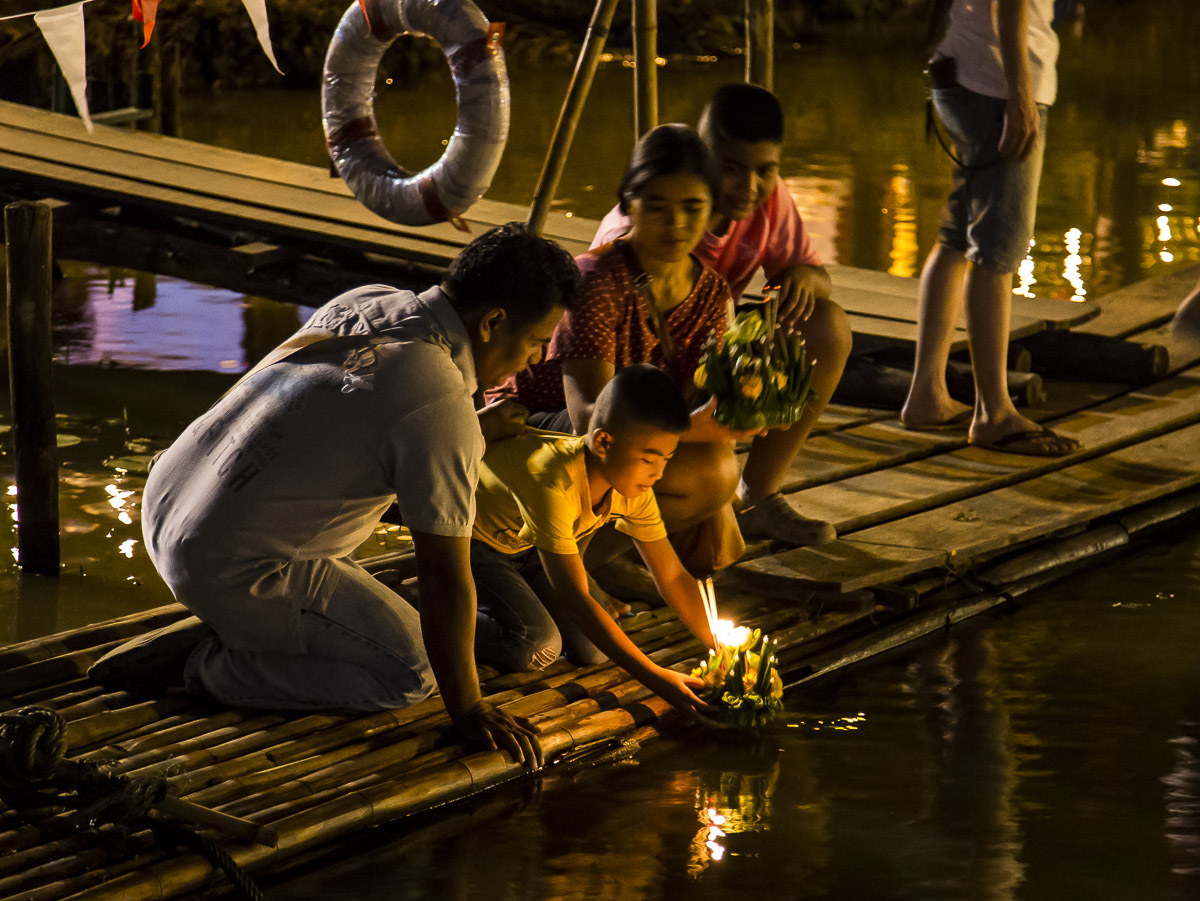 Loy KrathongA Thai festival of floating leaf baskets on rivers to honor water and release negativity.
 Rocket FestivalA rainy-season festival of merit-making, music, parades and homemade rockets
 PretaOfferings and rites for spirits enduring deep hunger across Asian traditions.
 Double Ninth FestivalAn autumn festival of mountain walks, chrysanthemum wine and ancestor remembrance
Good reading and sources
- Thailand’s natural fireball riverAl Jazeera, Article
- Thailand’s natural fireball riverAl Jazeera, Article
- Naga fireball on WikipediaEncyclopedia
- More photos on Wikimedia CommonsPhotos and video
- Wikidata recordOpen data
The facts on this page come from the Wikipedia article "Naga fireball", written by its contributors and used under the CC BY-SA 4.0 licence, and from its Wikidata record (CC0). EveryParampara rewrote the text in its own words, with AI assistance, and compares every page with the article to make sure no passage is copied. It may be reused under the same CC BY-SA 4.0 licence with a link back.
It may contain mistakes. Traditions differ from one family, village and community to the next, and the people who keep them know them best. If something is wrong, tell us. Last refreshed 2026-10-04.
More from Thailand
All the traditions of Thailand
🇹🇭 Chiang Mai, Thailand and 5 moreLoy Krathongลอยกระทง
A Thai festival of floating leaf baskets on rivers to honor water and release negativity.Festival
🇱🇦 Laos and 3 moreRocket Festivalບຸນບັ້ງໄຟ
A rainy-season festival of merit-making, music, parades and homemade rocketsFestival
 🇹🇭 Thailand and 4 moreVessantara JatakaVessantara Jātaka
A Buddhist festival celebrating the last life of the Buddha as a generous prince.Festival
🇹🇭 Thailand and 4 moreVessantara JatakaVessantara Jātaka
A Buddhist festival celebrating the last life of the Buddha as a generous prince.Festival
 🇱🇰 Colombo, Sri Lanka and 5 moreVesakVisakha Bucha (Thailand), Visakha Bouxa (Laos), Full Moon Day of Kason (Myanmar)
A day to honor the birth, awakening, and passing of the Buddha, kept by Buddhists across Asia.Festival
🇱🇰 Colombo, Sri Lanka and 5 moreVesakVisakha Bucha (Thailand), Visakha Bouxa (Laos), Full Moon Day of Kason (Myanmar)
A day to honor the birth, awakening, and passing of the Buddha, kept by Buddhists across Asia.Festival
The same idea elsewhere
Remembering the ancestors compared 🇮🇪 Ireland and 5 moreHalloween
An annual observance on 31 October marking the eve of All Saints' Day, rooted in Christian tradition and Celtic heritageFestival · Sweets given and shared
🇮🇪 Ireland and 5 moreHalloween
An annual observance on 31 October marking the eve of All Saints' Day, rooted in Christian tradition and Celtic heritageFestival · Sweets given and shared
 🇮🇳 Ayodhya, India and 7 moreDiwaliदीपावली (Dīpāvalī)
A five-day festival of lights celebrated across India and its diaspora to mark the victory of light over darkness.Festival · Feasts and festival meals
🇮🇳 Ayodhya, India and 7 moreDiwaliदीपावली (Dīpāvalī)
A five-day festival of lights celebrated across India and its diaspora to mark the victory of light over darkness.Festival · Feasts and festival meals
 🇮🇷 Iran and 7 moreNowruzنوروز
The Iranian new year at the March equinox, kept with fire, greenery and picnicsSeasonal
🇮🇷 Iran and 7 moreNowruzنوروز
The Iranian new year at the March equinox, kept with fire, greenery and picnicsSeasonal
 🇮🇱 Jerusalem, Israel and 1 moreHanukkahחֲנֻכָּה
An eight-day Jewish festival marking the rededication of the Second Temple in Jerusalem and the miracle of a single day'Festival
🇮🇱 Jerusalem, Israel and 1 moreHanukkahחֲנֻכָּה
An eight-day Jewish festival marking the rededication of the Second Temple in Jerusalem and the miracle of a single day'Festival