🇱🇦 Traditions of Laos
17 traditions from Laos, best known first, across 3 cities and towns.
Traditional life in Laos is grounded in Theravada Buddhism, spirit veneration, and the customs of dozens of distinct ethnic groups. Communities maintain strong bonds between monasteries and households through daily almsgiving and seasonal festivals. Water serpent lore and woven silk patterns reflect how deeply myth and craft remain tied to the landscape.
Across the river valleys and mountain slopes of Laos, cultural identity is shaped by a blend of Buddhist devotion, ancestral animism, and regional craftsmanship. From morning alms processions in temple towns to spirit shrines standing quietly outside rural homes, sacred practices guide everyday routines. Nearly fifty distinct ethnic communities preserve their own farming methods, oral histories, and textile arts, creating a shared life rooted in reciprocal giving, reverence for nature, and ancient mythological epics.
Buddhism and daily giving
Theravada Buddhism guides the spiritual routines of roughly two thirds of the population, especially among lowland Lao Loum communities. Life centres around the local temple or wat. Monks renounce material wealth and manual labour, depending entirely on the surrounding village for sustenance. Each morning, residents gather for tak bat, placing food directly into the bowls of walking monks. In return, lay people gain spiritual merit, which can also be transferred to relatives. Sons and daughters often enter monastic life for a short period to make merit for their parents. Major Buddhist monuments, such as the lotus-shaped That Luang stupa, stand as enduring focal points for this shared devotion.
Spirits of the land
Alongside formal religion, many people observe Satsana Phi, an animist system centred on spirits called phi. These beings can represent natural features, territories, buildings, or deceased ancestors. Families often build small spirit houses beside their homes to maintain peace between human households and the unseen realm. Communities honour territorial guardian spirits at public festivals with communal feasts and offerings. Traditionally, phi were thought to influence physical health and the weather. Astrology is also consulted to navigate spiritual forces and observe social boundaries. Flowing waters hold their own sacred guardians, including mythical serpents known as ngueak and protective Buddhist naga, who are said to bring seasonal rains.
Diversity of ethnic traditions
The country officially recognizes forty-seven distinct ethnic groups, broadly grouped by altitude and environment. Lowland Lao Loum farmers cultivate wet rice along the Mekong and speak Tai languages. Mid-altitude slopes are home to Lao Theung groups, notably the Khmu, who practice dry rice farming and uphold ancient animist customs. In the higher ranges, Lao Sung communities, such as the Hmong and Yao, maintain dry-field agriculture and unique spiritual traditions. The Yao blend Taoist deities into their animist ceremonies, while different Hmong branches distinguish themselves through the colours and patterns of their traditional dress, including Red, White, and Striped styles.
Epics and oral storytelling
Storytelling links community celebrations to historic and religious memory. The national epic, Phra Lak Phra Lam, adapts the Ramayana narrative as a former incarnation of the Buddha. Another revered tale, the Vessantara Jataka, recounts a prince who gives away his possessions to cultivate ultimate generosity. Oral tradition also preserves popular folklore, from humorous tales of the trickster Xieng Mieng to origin stories such as the Nithan Khun Borom. During the yearly Rocket Festival, people recite legends of the Toad King, Phya Khankhaak, to encourage the arrival of seasonal rains, keeping ancient poetic cycles alive through public performance.
Silk weaving and motifs
Textile production is an essential regional craft across Laos. Weavers raise silkworms on mulberry foliage to produce delicate threads for clothing and ceremonies. Techniques vary by geography: northern artisans generally weave on hand looms, whereas southern communities work with foot-operated looms. Every ethnic group maintains its own distinct patterns and weaving methods. Protective water spirits, particularly the naga, appear frequently as design motifs in silk cloth. Beyond household looms, Buddhist monasteries have historically preserved cultural treasures, while national museums in Luang Prabang and Vientiane exhibit historic artefacts.
The facts in this overview come from the Wikipedia article "Culture of Laos", written by its contributors and used under the CC BY-SA 4.0 licence. EveryParampara rewrote the text in its own words, with AI assistance, and compares every page with the article to make sure no passage is copied. It may be reused under the same CC BY-SA 4.0 licence with a link back.
The table in Laos
Foods and drinks by the moment they belong to.
| Fasting and breaking the fast | Māgha Pūjā |
|---|
Cities, towns and villages of Laos
 🇹🇭 Phon Phisai, Thailand and 1 moreNaga fireballsบั้งไฟพญานาค (bang fai phaya nak)
A festival of glowing orbs rising from the Mekong River, attributed to a mythical serpent.Festival
🇹🇭 Phon Phisai, Thailand and 1 moreNaga fireballsบั้งไฟพญานาค (bang fai phaya nak)
A festival of glowing orbs rising from the Mekong River, attributed to a mythical serpent.Festival
 🇲🇲 Mandalay, Myanmar and 2 moreSand pagodaသဲပုံစေတီ (Burmese), พระเจดีย์ทราย (Thai)
Temporary sand or mud structures built by Theravada Buddhists to cultivate merit and honor the Buddha.Spiritual
🇲🇲 Mandalay, Myanmar and 2 moreSand pagodaသဲပုံစေတီ (Burmese), พระเจดีย์ทราย (Thai)
Temporary sand or mud structures built by Theravada Buddhists to cultivate merit and honor the Buddha.Spiritual
 🇹🇭 Thailand and 7 moreSpirit house
A small roofed shrine on a pillar, kept in homes and villages across Southeast Asia to honour protective spirits.Spiritual
🇹🇭 Thailand and 7 moreSpirit house
A small roofed shrine on a pillar, kept in homes and villages across Southeast Asia to honour protective spirits.Spiritual
 🇱🇦 Laos and 1 moreBaciບາສີ (Lao)
A Lao rite that calls the soul home and ties a thread on the wrist for good luckSpiritual
🇱🇦 Laos and 1 moreBaciບາສີ (Lao)
A Lao rite that calls the soul home and ties a thread on the wrist for good luckSpiritual
 🇱🇰 Colombo, Sri Lanka and 5 moreVesakVisakha Bucha (Thailand), Visakha Bouxa (Laos), Full Moon Day of Kason (Myanmar)
A day to honor the birth, awakening, and passing of the Buddha, kept by Buddhists across Asia.Festival
🇱🇰 Colombo, Sri Lanka and 5 moreVesakVisakha Bucha (Thailand), Visakha Bouxa (Laos), Full Moon Day of Kason (Myanmar)
A day to honor the birth, awakening, and passing of the Buddha, kept by Buddhists across Asia.Festival
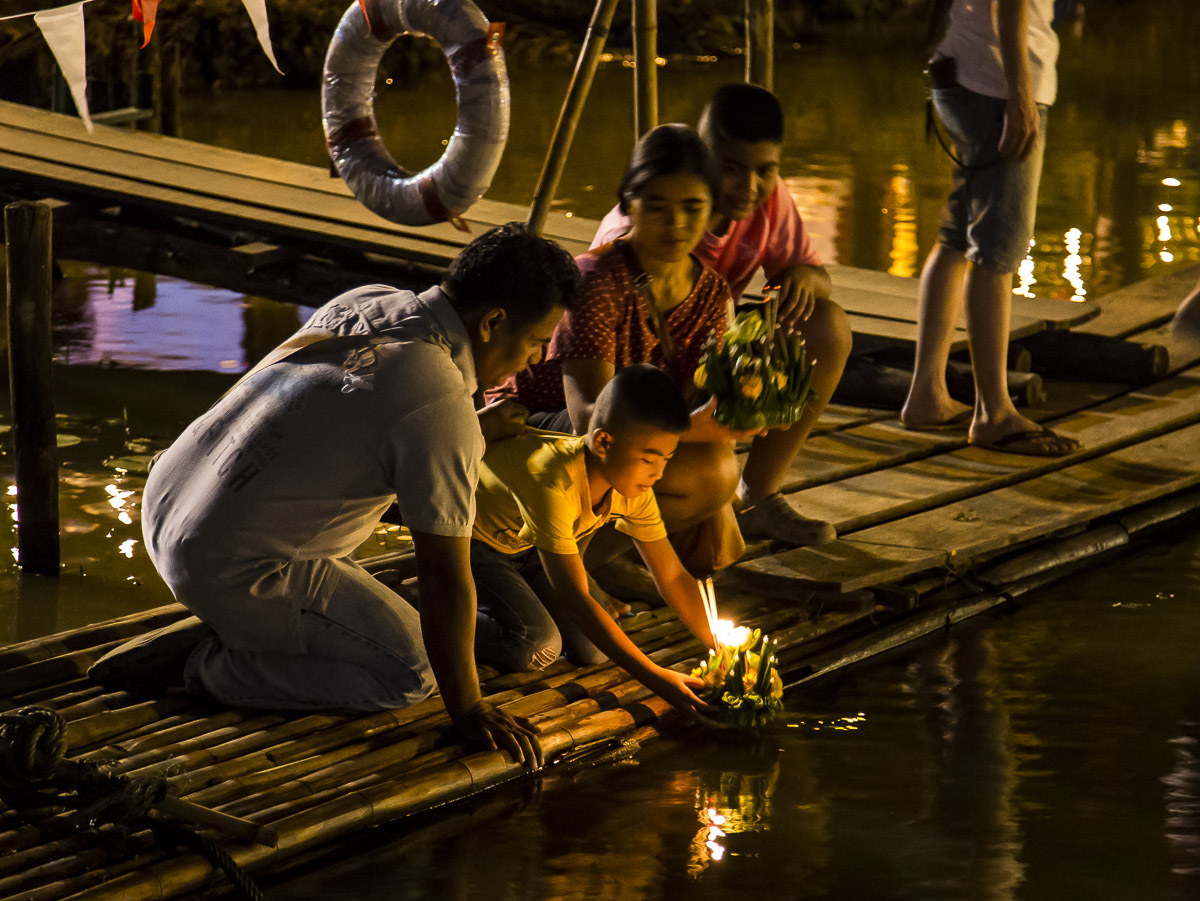 🇹🇭 Chiang Mai, Thailand and 5 moreLoy Krathongลอยกระทง
A Thai festival of floating leaf baskets on rivers to honor water and release negativity.Festival
🇹🇭 Chiang Mai, Thailand and 5 moreLoy Krathongลอยกระทง
A Thai festival of floating leaf baskets on rivers to honor water and release negativity.Festival
 🇹🇭 Thailand and 5 moreMāgha Pūjāមាឃបូជា
A Buddhist holy day honoring monastic unity, moral guidance and spiritual fellowshipSpiritual · Fasting and breaking the fast
🇹🇭 Thailand and 5 moreMāgha Pūjāមាឃបូជា
A Buddhist holy day honoring monastic unity, moral guidance and spiritual fellowshipSpiritual · Fasting and breaking the fast
 🇹🇭 Thailand and 5 moreKathina
A Buddhist season of offering new robes and gifts to monks after the rains retreatSpiritual
🇹🇭 Thailand and 5 moreKathina
A Buddhist season of offering new robes and gifts to monks after the rains retreatSpiritual
 🇱🇦 Luang Prabang, Laos and 5 moreLao New Yearປີໃໝ່ລາວ
A mid-April water festival and Buddhist celebration marking the Lao new yearFestival
🇱🇦 Luang Prabang, Laos and 5 moreLao New Yearປີໃໝ່ລາວ
A mid-April water festival and Buddhist celebration marking the Lao new yearFestival
 🇱🇦 Laos and 3 moreRocket Festivalບຸນບັ້ງໄຟ
A rainy-season festival of merit-making, music, parades and homemade rocketsFestival
🇱🇦 Laos and 3 moreRocket Festivalບຸນບັ້ງໄຟ
A rainy-season festival of merit-making, music, parades and homemade rocketsFestival
 🇹🇭 Chiang Mai, Thailand and 1 moreYi Pengยี่เป็ง
A northern Thai Buddhist festival of sky lanterns, clay lamps and temple sermonsSpiritual
🇹🇭 Chiang Mai, Thailand and 1 moreYi Pengยี่เป็ง
A northern Thai Buddhist festival of sky lanterns, clay lamps and temple sermonsSpiritual
 🇹🇭 Thailand and 5 moreAsalha Pujaอาสาฬหบูชา
A Theravada festival marking the Buddha's first sermon and the monastic orderSpiritual
🇹🇭 Thailand and 5 moreAsalha Pujaอาสาฬหบูชา
A Theravada festival marking the Buddha's first sermon and the monastic orderSpiritual
 🇰🇭 Cambodia and 2 moreSampotសំពត់
A length of cloth wrapped at the waist, the everyday and ceremonial dress of CambodiaDress
🇰🇭 Cambodia and 2 moreSampotសំពត់
A length of cloth wrapped at the waist, the everyday and ceremonial dress of CambodiaDress
 🇹🇭 Thailand and 4 moreVessantara JatakaVessantara Jātaka
A Buddhist festival celebrating the last life of the Buddha as a generous prince.Festival
🇺🇸 New York, United States and 5 moreWorld Religion Day
An annual day in January dedicated to spiritual unity and harmony across all faiths.Spiritual
🇧🇹 Bhutan and 4 moreLhabab Duchenལྷ་བབས་དུས་ཆེན་
A Buddhist festival for the day the Buddha returned to earth from a god's realmSpiritual
🇹🇭 Thailand and 4 moreVessantara JatakaVessantara Jātaka
A Buddhist festival celebrating the last life of the Buddha as a generous prince.Festival
🇺🇸 New York, United States and 5 moreWorld Religion Day
An annual day in January dedicated to spiritual unity and harmony across all faiths.Spiritual
🇧🇹 Bhutan and 4 moreLhabab Duchenལྷ་བབས་དུས་ཆེན་
A Buddhist festival for the day the Buddha returned to earth from a god's realmSpiritual
 🇱🇦 Vientiane, LaosBoun Suang Hueaບຸນຊ່ວງເຮືອ
A Lao festival of riverboat races and floating offerings at the close of Buddhist LentFestival
🇱🇦 Vientiane, LaosBoun Suang Hueaບຸນຊ່ວງເຮືອ
A Lao festival of riverboat races and floating offerings at the close of Buddhist LentFestival
Photo credits on this page
The small pictures above come from Wikimedia Commons under free licences. Some are cropped to fit.
- Vesak: ผู้สร้างสรรค์ผลงาน/ส่งข้อมูลเก็บในคลังข้อมูลเสรีวิกิมีเดียคอมมอนส์ - เ, CC BY-SA 3.0, source
- Loy Krathong: John Shedrick, CC BY 2.0, source
- Kathina: Thai Government, CC BY 2.0, source
- Māgha Pūjā: myself, CC BY-SA 3.0, source
- Lao New Year: Darren On The Road, CC BY 2.0, source
- Yi Peng: Takeaway, CC BY-SA 3.0, source
- Asalha Puja: Chainwit., CC BY 4.0, source
- Rocket Festival: Takeaway, CC BY-SA 3.0, source
- Baci: Dalbera, CC BY 2.0, source
- Naga fireballs: J A Forbes, CC BY-SA 4.0, source
- Sand pagoda: Chainwit., CC BY 4.0, source
- Spirit house: Chainwit., CC BY-SA 4.0, source
- Sampot: George Groslier (1887–1945), Public domain, source
- Boun Suang Huea: ClaireM1FLERéunion, CC BY-SA 3.0, source
- Vessantara Jataka: Adam Jones, CC BY-SA 2.0, source