Yixing clay teapot
In its own language: 紫砂
Handcrafted Chinese purple clay teapots that season with every brew
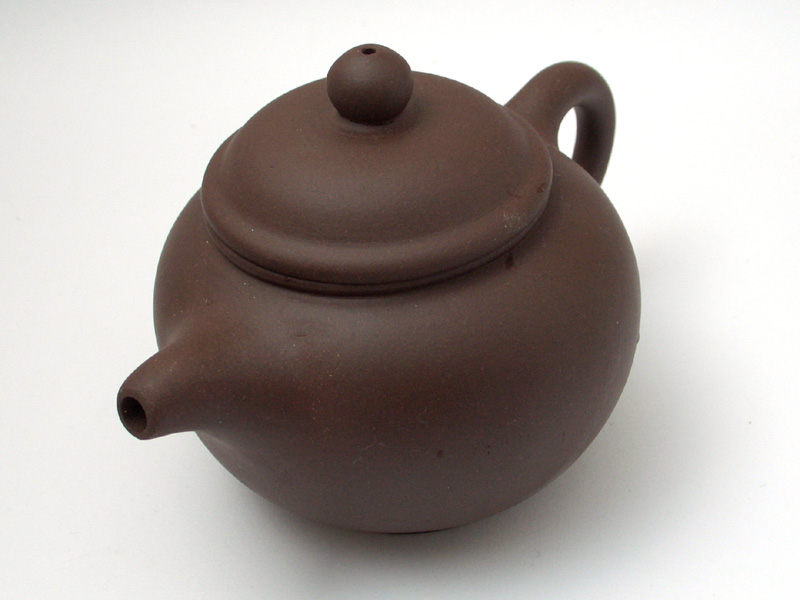
Yixing clay teapots are traditional Chinese brewing vessels made from regional purple clay near Lake Tai in Jiangsu province. Potters shape the unglazed stoneware by hand for preparing oolong, puer, and black teas in the gongfu style, allowing the clay to absorb tea oils over time.
When is Yixing clay teapot kept?
Yixing clay teapot is kept on whenever preparing and serving tea.
Yixing clay teapots are celebrated Chinese tea vessels crafted from mineral-rich local clay known as zisha. Originating around the sixteenth century near Lake Tai, these unglazed pots are shaped by hand and seasoned over years of use. Because the porous clay absorbs essential oils and aromas from each steep, tea drinkers dedicate individual pots to single types of tea, creating a smooth and deeply flavourful brew.
Clay and craftsmanship
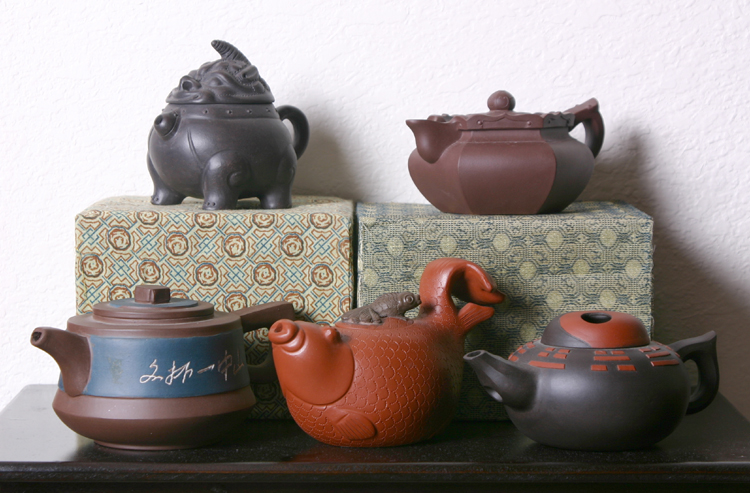
The foundation of this craft is zisha, an unglazed clay excavated near Yixing in Jiangsu province. Potters work with three primary natural shades, including purple, red, and beige varieties like duan ni. The most prized purple variation, known as tianqing, yields a sandy texture, liver-coloured finish, and jade-like sheen after regular handling. Master artisans shape premium vessels entirely by hand, manipulating raw clay slabs with simple wooden and bamboo implements rather than throwing them on wheels. Simpler wares are formed using slipcasting methods. Over decades, local workshops in towns such as Dingshan have continued creating these wares alongside decorative tea pets, jars, and ornamental figures.
Origins and scholar culture
Archaeological findings indicate that potters used purple clay for functional vessels as early as the Song dynasty. Historical records from the Ming era credit a Buddhist monk at Jinsha Temple with fashioning the earliest dedicated teapots from regional mud. Kung Ch'un, a household servant to tea master Wu Lun, helped popularise the design during the sixteenth century. The understated, natural aesthetic resonated strongly with China's scholarly class, who valued simple elegance over ornate glazes. By the twentieth century, production expanded into industrial workshops such as Yixing Zisha Factory Number 1, preserving historical handcrafting skills while supplying tea lovers throughout the country.
The gongfu brewing ritual
Yixing teapots play a central role in gongfu tea service, a method focused on precise steeping and mindful hospitality. Because the vessels are relatively small, tea masters use concentrated leaf portions and short steeps with hot water. The brewed liquid is decanted into a pitcher before being distributed into delicate teacups that hold thirty millilitres or less. This swift serving sequence ensures that tea is enjoyed immediately before losing heat. The pots perform best with robust leaves such as puer, oolong, and black tea, which thrive in the vessel's steady heat retention.
Seasoning and care
The porous walls of zisha ware gradually drink in trace minerals and aromatic oils from steeped leaves. Over hundreds of infusions, this accumulation forms an interior patina that enriches the flavour and depth of future brews. To prevent conflicting tastes, practitioners usually reserve one pot exclusively for one variety of tea. Soap or synthetic detergents are strictly avoided, as the clay would absorb the chemicals and spoil future servings. Instead, owners cleanse their teapots using only pure water, allowing the clay to dry naturally in fresh air.
How Yixing clay teapot is kept
During tea service, the host warms the Yixing pot with hot water and adds dry tea leaves, traditionally oolong, black, or puer. Fresh boiled water is poured over the leaves for brief, controlled steeping intervals. The host empties the liquor into a small sharing pitcher and pours it into tiny cups of thirty millilitres or less for guests. After the session, the pot is emptied of spent leaves, rinsed thoroughly with pure distilled water without soap, and left open to dry naturally in the air.
When and where
This brewing practice takes place throughout the year whenever tea is shared with guests or enjoyed during personal contemplation. There is no set season, though gongfu tea sessions are a staple of daily hospitality and gatherings across China.
The craft is rooted in Yixing and the ceramics centre of Dingshan on the western shore of Lake Tai in Jiangsu province. The teapots are used widely across China, particularly wherever gongfu tea traditions are practiced.
What Yixing clay teapot means
To tea practitioners, a seasoned Yixing pot reflects patience, care, and the passage of time. The gradual development of an interior coating embodies the shared memories of every tea session it has served. Its unadorned, earthy surface reflects classical scholar ideals, prioritising natural texture and understated utility over ostentatious ornament.



Questions people ask about Yixing clay teapot
When is Yixing clay teapot kept?
Yixing clay teapot is kept on whenever preparing and serving tea.
What is a Yixing clay teapot?
A Yixing teapot is a traditional Chinese tea vessel made from porous purple clay found in Jiangsu province. It is handcrafted to brew teas like oolong and puer, absorbing tea aromas over time to enhance each subsequent steep.
Where are Yixing teapots made?
They originate in eastern China near Yixing in Jiangsu province. Most modern production takes place in the nearby town of Dingshan, situated along the western edge of Lake Tai, where workshops and ceramics factories process the local clay.
Why should Yixing teapots not be washed with soap?
Because the clay is porous, it readily absorbs whatever touches it. Washing with soap would leave detergent residues inside the walls, ruining the flavour of future brews. Teapots are rinsed only with fresh water and air-dried.
What is the gongfu style of brewing?
Gongfu brewing uses compact teapots, high leaf ratios, and short steeping times. The host pours tea into a pitcher before serving it in small cups under thirty millilitres, allowing guests to drink several fresh infusions before the liquid cools.
See also
 Gongfu teaA skilled Chinese method of brewing tea in small teaware with precise heat and timingGuanxiA Chinese tradition of cultivating trusted networks and reciprocal obligations
 Lion danceA dynamic ritual dance featuring costumed lions, drums and martial acrobatics
 Qingming FestivalA spring custom of sweeping family graves and honouring ancestors across East Asia.
Good reading and sources
The facts on this page come from the Wikipedia article "Yixing clay teapot", written by its contributors and used under the CC BY-SA 4.0 licence, and from its Wikidata record (CC0). EveryParampara rewrote the text in its own words, with AI assistance, and compares every page with the article to make sure no passage is copied. It may be reused under the same CC BY-SA 4.0 licence with a link back.
It may contain mistakes. Traditions differ from one family, village and community to the next, and the people who keep them know them best. If something is wrong, tell us. Last refreshed 2026-10-04.
More from China
All the traditions of China 🇰🇷 South Korea and 2 moreNajeonchilgi나전칠기
A Korean craft of inlaying mother-of-pearl onto lacquered wood to create decorative objects.Craft
🇰🇷 South Korea and 2 moreNajeonchilgi나전칠기
A Korean craft of inlaying mother-of-pearl onto lacquered wood to create decorative objects.Craft
 🇺🇬 Uganda and 4 moreBarkcloth
Cloth beaten from tree bark across Africa, Asia and the PacificCraft
🇺🇬 Uganda and 4 moreBarkcloth
Cloth beaten from tree bark across Africa, Asia and the PacificCraft
 🇵🇬 Papua New Guinea and 5 moreShell money
Traditional currency made from cowries, ground clam beads, and carved sea shellsCraft
🇵🇬 Papua New Guinea and 5 moreShell money
Traditional currency made from cowries, ground clam beads, and carved sea shellsCraft
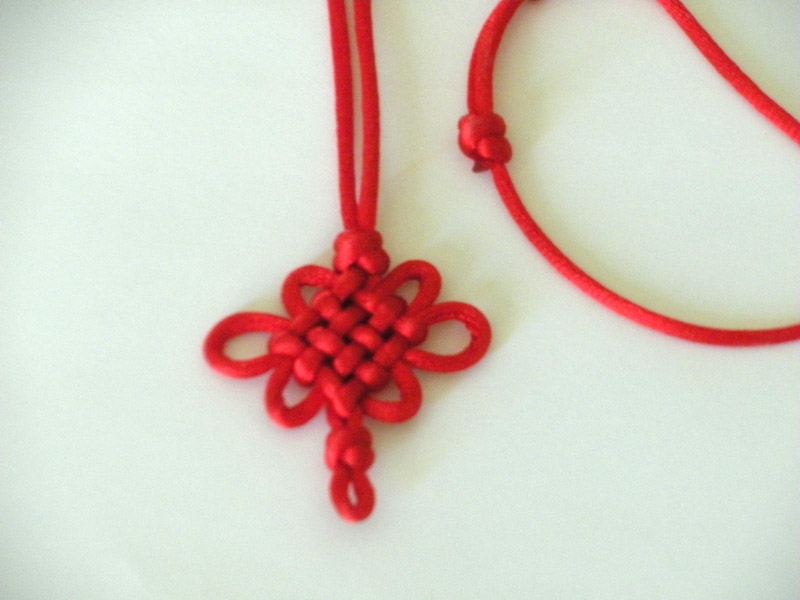 🇨🇳 China and 2 moreChinese knotting中國結 (Zhōngguó jié)
A folk craft of cord tied into lucky shapes, made in China and given as charmsCraft
🇨🇳 China and 2 moreChinese knotting中國結 (Zhōngguó jié)
A folk craft of cord tied into lucky shapes, made in China and given as charmsCraft
The same idea elsewhere
Tea, coffee and the drinking ceremony compared 🇮🇹 Naples, Italy and 5 moreCaffè sospeso
An anonymous gift of a paid cup of coffee for a stranger in needTable custom · Tea, coffee and drinking ceremonies
🇮🇹 Naples, Italy and 5 moreCaffè sospeso
An anonymous gift of a paid cup of coffee for a stranger in needTable custom · Tea, coffee and drinking ceremonies
 🇮🇹 Naples, ItalyCaffè
Italy's daily coffee habit: espresso taken standing at the bar, and moka coffee at homeTable custom · Tea, coffee and drinking ceremonies
🇮🇹 Naples, ItalyCaffè
Italy's daily coffee habit: espresso taken standing at the bar, and moka coffee at homeTable custom · Tea, coffee and drinking ceremonies
 🇲🇾 Malaysia and 4 moreKopitiam
A neighbourhood coffee shop where Southeast Asians share meals, drinks and newsTable custom · Breakfast
🇲🇾 Malaysia and 4 moreKopitiam
A neighbourhood coffee shop where Southeast Asians share meals, drinks and newsTable custom · Breakfast