Life-cycle ritesEast AsiaShinto, Taoist and folk Chinese
Shinto wedding
In its own language: 神前結婚
A short purification ceremony before the kami, sealed by three cups of sake

A Shinto wedding is a marriage rite held in front of the kami, the spirits honoured in Shinto practice; it took shape in Japan from the 1870s among the families of Shinto priests and became a common form of wedding in the 20th century. A priest purifies the shrine, the couple share sake from three cups, and vows, offerings and rings follow.
When is Shinto wedding kept?
Shinto wedding is kept on the day of the marriage; there is no fixed date in the calendar.
A Shinto wedding is a marriage ceremony held before the kami, the spirits honoured in Shinto. It is short and private, lasting about half an hour, and it belongs to Japan. A priest purifies the shrine, a shrine maiden assists, and the couple seal the union by drinking sake from three cups. Once nearly every Japanese wedding took this form. Today far fewer do, but it remains the religious shape of a Japanese marriage.
What it is
A Shinto wedding is small and quiet, and its purpose is to purify the couple before the kami rather than to entertain a crowd. Close family stand nearest; friends are more likely to be invited to a reception afterwards than to the ceremony itself. The whole rite takes about 20 to 30 minutes. Offerings of salt, water, rice, sake, fruit and vegetables rest on the altar, along with the wedding rings. A priest stands on the right of the altar and a shrine maiden, the miko, on the left. The couple take the middle of the room, with relatives behind tables holding sake and small fruit.
Origins and history
The ceremony is modern. A wedding first appears in a Shinto manual in 1872, and none were reported until the 1880s; those early ones were held only among the families of Shinto priests. Before that, a Shinto wedding was a family gathering with little religious content, apart from female dancers called katsurame who were said to keep demons away from the bride. Scholars link the new ceremonies to the decline of state-sponsored shrines in the 1880s, when rites for newborns and certain birthdays also appeared. In 1900 Crown Prince Yoshihito married Kujo Sadako at the Imperial Palace, one of the first ceremonies of its kind, and it drew wide attention. The next was held in 1901 at Tokyo's Hibiya Daijingu shrine.
Three cups of sake
The heart of the rite is san-san-ku-do, which means three, three, nine times. Three promises are made three times over: three cups, filled three times, emptied in three sips. The cups grow larger as they go. The smallest is given to the groom first, and he passes it to the bride; the second reaches the bride first, then the groom; the third returns to the groom first. No one knows for certain where the pattern came from, though it may have begun at samurai weddings. Some read it as a couple sharing joy and sorrow. Others hear a pun in san-san, 'birth after birth', a wish for children. Still others see man, woman and child, or heaven, earth and humankind.
Dress and headwear
Both wear kimono, though a groom may wear a Western suit. The bride's outermost layer is her most formal: a colourful uchikake or a white shiromuku. The uchikake descends from the showy robes of samurai women before the Meiji Restoration, and is often heavy brocade in gold and silver. Both are silk or imitation silk, worn over the kimono and sash, which stay unfastened; most brides hire, borrow or inherit them rather than buy new. A wig, the katsura, is common, styled traditionally with lucky ornaments, under one of two headdresses. The tsunokakushi, a rectangle of cloth, usually white silk, is said to hide the horns of jealousy and selfishness. The wataboshi, a white hood, keeps her face from all but the groom until the ceremony ends.
Today and change
After 1945 Shinto lost its standing as a state religion, and weddings in the tradition spread widely and quickly. Families were moving into cities and smaller homes, where holding a ceremony at home became harder, and a commercial wedding industry grew out of groups that lent large venues. In the 1950s a single god of marriage, popularly Ōkuninushi, was often called on, with offerings from the couple, their families and young girls. Today priests still lead these weddings, but hotels and halls built for weddings are common settings. Numbers have fallen, from about 90 per cent of Japanese ceremonies to roughly 50 per cent since the 1990s, and many couples now choose a Christian-style ceremony instead, whatever their own faith.
How Shinto wedding is kept
A small group gathers: close family, a priest, and a shrine maiden called the miko. The priest cleanses the shrine and invites the kami to attend. Then the couple share sake in the san-san-ku-do, the three cups that form the centre of the rite. The groom reads his vows aloud. A nakodo, or matchmaker, is named and thanked in those vows, and if the couple have none, a relative or friend stands in. The families then drink together and call out kanpai. Evergreen is laid at the altar, first by the priest, then by the couple, then by one person from each family, often a father. Last, the rings are presented.
When and where
There is no set date. A Shinto wedding happens whenever a couple marry, and the shrine or venue is booked for that day. The ceremony itself lasts about 20 to 30 minutes, and a reception for a larger group of friends usually follows.
Shinto weddings belong to Japan and are strongest in its cities. Early ceremonies were concentrated in Tokyo, at shrines such as Hibiya Daijingu and the Izumo Grand Shrine. Osaka and Kyoto followed. Today they are often held in hotels or in halls designed for weddings rather than in a shrine building.
What Shinto wedding means
The rite is about purification and about joining two families in front of the kami. The prayers ask the couple to keep a respectful home and to have children. Izanagi and Izanami, the married gods of the first wedding in Japanese lore, are often called on for harmony. The shared sake is read in many ways: as sharing joy and sorrow, as a wish for children, or as man, woman and child, or heaven, earth and humankind.


Questions people ask about Shinto wedding
When is Shinto wedding kept?
Shinto wedding is kept on the day of the marriage; there is no fixed date in the calendar.
What is a Shinto wedding?
It is a marriage ceremony performed before the kami, the spirits honoured in Shinto. A priest leads it, a shrine maiden assists, and the couple seal their union by drinking sake from three cups. The ceremony is short, usually 20 to 30 minutes, and is attended mainly by close family.
What happens during the ceremony?
The priest purifies the shrine and calls on the kami. The couple drink from three cups, three times each. The groom reads vows, a matchmaker is thanked, the families share sake and say kanpai, evergreen is offered at the altar, and the rings are presented.
Why do the couple drink sake three times?
The three cups stand for three promises made three times. The drinking may also be understood as sharing joy and sorrow, as a wish for children, or as a picture of man, woman and child, or heaven, earth and humankind. The sources give no single agreed origin for the numbers.
Are Shinto weddings still common in Japan?
They are less common than they were. The share of Japanese weddings performed in this way fell from about 90 per cent of ceremonies to roughly 50 per cent from the 1990s. Fewer people marry, and many who do choose a Christian-style chapel ceremony instead.
See also
 Rite of passageA ceremony that marks leaving one group and entering another, with a new status
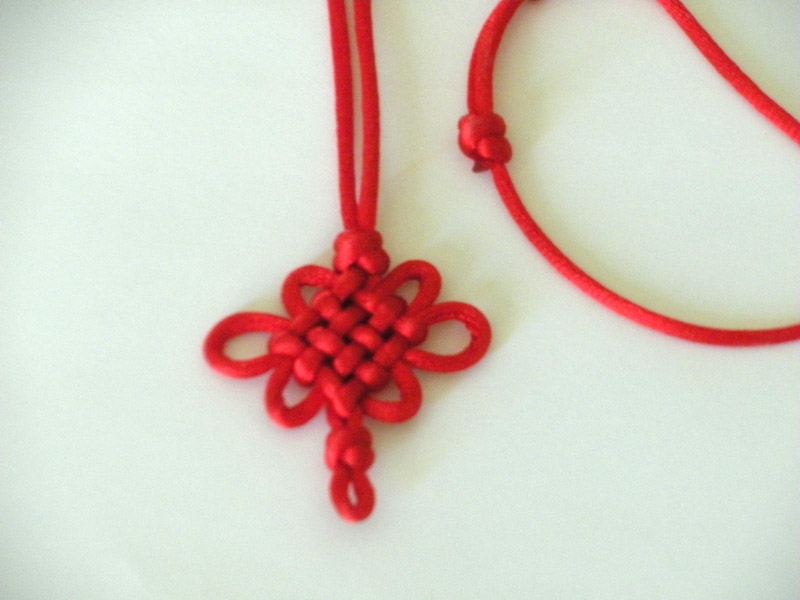 Chinese knottingA folk craft of cord tied into lucky shapes, made in China and given as charms
 IkatA resist-dyeing craft from Southeast Asia, where yarns are tied and dyed before weaving
 CujuAn ancient Chinese kicking game played without hands using a stuffed or air-filled ball
Good reading and sources
- Shinto wedding on WikipediaEncyclopedia
- More photos on Wikimedia CommonsPhotos and video
- Wikidata recordOpen data
The facts on this page come from the Wikipedia article "Shinto wedding", written by its contributors and used under the CC BY-SA 4.0 licence, and from its Wikidata record (CC0). EveryParampara rewrote the text in its own words, with AI assistance, and compares every page with the article to make sure no passage is copied. It may be reused under the same CC BY-SA 4.0 licence with a link back.
It may contain mistakes. Traditions differ from one family, village and community to the next, and the people who keep them know them best. If something is wrong, tell us. Last refreshed 2026-10-05.
More from Japan
All the traditions of Japan
🇺🇸 United States and 5 moreRite of passage
A ceremony that marks leaving one group and entering another, with a new statusRite of passage
 🇺🇸 United States and 5 moreMarriage proposal
A ritual where one partner asks another to marry them, marking the start of engagement.Rite of passage
🇺🇸 United States and 5 moreMarriage proposal
A ritual where one partner asks another to marry them, marking the start of engagement.Rite of passage
 🇨🇳 China and 5 morePostpartum confinement
A period of rest, nourishment, and seclusion for mothers after giving birth.Rite of passage
🇨🇳 China and 5 morePostpartum confinement
A period of rest, nourishment, and seclusion for mothers after giving birth.Rite of passage
 🇮🇪 Ireland and 2 moreWake
A gathering before a funeral, where family and friends keep watch over the deadRite of passage
🇮🇪 Ireland and 2 moreWake
A gathering before a funeral, where family and friends keep watch over the deadRite of passage
The same idea elsewhere
Weddings compared
🇮🇩 Bali, Indonesia and 5 moreIkat
A resist-dyeing craft from Southeast Asia, where yarns are tied and dyed before weavingCraft
 🇮🇷 Isfahan, Iran and 3 morePersian gardenباغ ایرانی
An ancient tradition of creating walled, geometric sanctuaries of shade and flowing waterCraft
🇮🇷 Isfahan, Iran and 3 morePersian gardenباغ ایرانی
An ancient tradition of creating walled, geometric sanctuaries of shade and flowing waterCraft
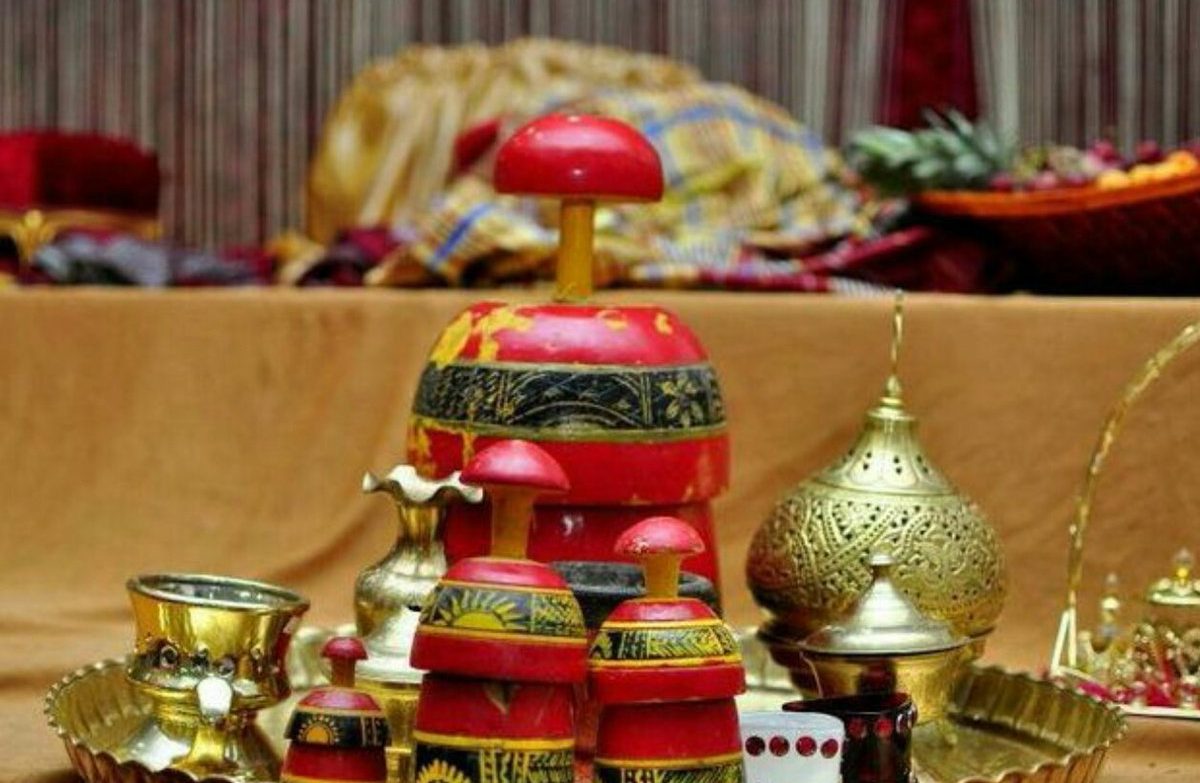 🇸🇩 SudanJirtigالجَرْتِقْ
A Sudanese wedding ritual of regal adornment, protection, and blessings of fertilityRite of passage
🇸🇩 SudanJirtigالجَرْتِقْ
A Sudanese wedding ritual of regal adornment, protection, and blessings of fertilityRite of passage
 🇹🇴 Tonga and 1 moreTaʻovala
A waist mat worn in Tonga for weddings, funerals and formal daysDress
🇹🇴 Tonga and 1 moreTaʻovala
A waist mat worn in Tonga for weddings, funerals and formal daysDress