Customs of food and drinkEurope
Smorgasbord
In its own language: smörgåsbord
A Swedish table of hot and cold dishes where guests serve themselves

A smörgåsbord is a Swedish buffet meal: many small dishes, mostly cold and some hot, laid out so guests help themselves. It took its present form in the 19th century, and at Christmas it becomes the julbord, a long table of fish, meat, cheese and sweets that Swedish and Norwegian families keep.
When is Smorgasbord marked?
Smorgasbord is kept as part of Christmas, which is on Friday, 25 December 2026.
On a smörgåsbord, a table is laid with many small dishes, cold and hot, and guests take what they like. The word is Swedish, and so is the custom, which took its present shape in the 1800s. It is kept for family gatherings, parties and restaurant lunches, and at Christmas the same table becomes the julbord, one of the high points of the Swedish year.
What it is
A smörgåsbord is a way of serving a meal rather than a single dish. The table holds a spread of small plates, most of them cold and some warm, and diners help themselves as often as they wish. Always on the table are bread, butter and cheese. In a restaurant the same word means a fixed-price buffet. Outside Sweden the English word has drifted: it can mean any buffet, or, more loosely, a wide choice of almost anything, as in a smörgåsbord of courses or books. In Sweden itself the word stays closer to the traditional dishes.
Origins and history
The custom grew out of the brännvinsbord, a small standing buffet of bread, butter, cheese, herring and spirits that wealthier households in Sweden and Finland put out before dinner in the 1500s. By the middle of the 1600s the food had moved from a side table to the main one, and both warm and cold dishes appeared. Hotels and later railway stations served it to travellers while they waited. At the 1912 Olympic Games in Stockholm, restaurants stopped treating it as an opener and began serving it as the main meal. The form most people know today settled in the 19th century.
How it is kept
At a seated smörgåsbord, diners usually go up in a set order rather than all at once. The first plate holds cold fish: pickled herring in several styles, salmon, perhaps eel. A second plate of other cold dishes follows, then a third with warm food. Dessert may or may not come at the end. Because people serve themselves, portions stay small and the meal stretches over a long table. The same pattern runs through the Christmas julbord, which is eaten in as many as five to seven courses depending on family and region.
The Christmas julbord
The julbord is the Swedish Christmas table, and the cooks take it seriously. It usually opens with three fish plates: pickled herring with sour cream and chives, then cold fish such as gravlax, then a warm fish dish, often lutfisk. Cold sliced meats come next, with Christmas ham as the centre. Then warm dishes, among them meatballs, small sausages and Janssons frestelse, a potato and sprats casserole. A cheese plate and a dessert plate close the meal. In the rice pudding an almond is hidden; whoever finds it is rewarded or said to have luck. Beer, snaps and the soft drink julmust are poured.
Around the world
The idea of a cold table is shared across northern Europe, and each language has its own name for it. Norwegians say koldtbord, Danes det kolde bord, Icelanders hlaðborð. In German it is kaltes Buffet, in Dutch and Flemish koud buffet. Languages further east tend to call it the Swedish table: Rootsi laud in Estonian, švediškas stalas in Lithuanian, shvedsky stol in Russian and Ukrainian. Finland offers voileipäpöytä, a butter-bread table. In Japan the buffet is known as baikingu, from Viking. The 1939 New York World's Fair, where a Swedish pavilion restaurant served one, brought the word into American English.
How Smorgasbord is kept
Diners serve themselves from a long table of small dishes, going up in a customary order: cold fish first, then other cold dishes, then warm food, with dessert optional. Herring, salmon and eel open the meal; bread, butter and cheese sit alongside throughout. A restaurant version charges a set price for as much as a guest wants. At Christmas the same table becomes the julbord, eaten in five to seven courses, and most Swedish and Norwegian workplaces hold one between November and January.
When and where
A smörgåsbord can be eaten at any time of year, most often at lunch or at a celebration. The julbord belongs to Christmas: restaurants serve it from early December until just before Christmas Eve, and some households keep it going until Epiphany. Workplaces in Sweden and Norway hold their julbord between November and January.
It comes from Sweden and is strongest there, with a place in Swedish homes, restaurants and workplaces. Versions of the cold table are also kept in Norway and Finland, and names for it exist in Denmark, Iceland, Germany, the Netherlands, Estonia, Latvia, Lithuania and further east. The 1939 New York World's Fair carried the word to the United States.
What Smorgasbord means
To those who keep it, a smörgåsbord is abundance shared out rather than plated in a kitchen. Guests choose for themselves, so the table makes room for different tastes and appetites, and a host can feed a crowd without standing over the stove. The julbord carries more weight: it gathers family and colleagues at Christmas, and the almond hidden in the rice pudding turns good luck into something a guest can find on a spoon.
On the table


Days Smorgasbord is marked
Questions people ask about Smorgasbord
When is Smorgasbord marked?
Smorgasbord is kept as part of Christmas, which is on Friday, 25 December 2026.
What is a smörgåsbord?
It is a Swedish way of serving a meal: many small dishes, mostly cold and some hot, set out on one table so guests can help themselves as much as they like. Bread, butter and cheese are always part of it. The custom took its present form in the 19th century.
Where does it come from?
Sweden. Its ancestor was the brännvinsbord, a standing appetizer of bread, butter, cheese, herring and spirits served in wealthier Swedish and Finnish households in the 1500s. The food later moved to the main table, and hotels and railway stations served it to waiting guests.
How is it eaten in the traditional order?
Guests begin with cold fish, usually herring, salmon or eel. A second plate of other cold dishes follows, and the meal ends with warm dishes. Dessert is optional. The julbord works the same way but runs longer, usually five to seven courses with the Christmas ham at the centre.
Is it the same as any buffet?
In English the word often means any buffet, and it can also describe a wide choice of things, such as a smörgåsbord of books. In Sweden it points to a table of traditional dishes. Buffets stay popular there for parties, for fika pastries and for all-you-can-eat Asian restaurants, where the word used is buffé.
See also
 GlöggA spiced, warm winter wine served across Nordic countries around ChristmasJulebordA Scandinavian Christmas banquet of traditional dishes, festive drinks and celebration
 HyggeA Danish word for unhurried time at home with others, kept with candles and cooking
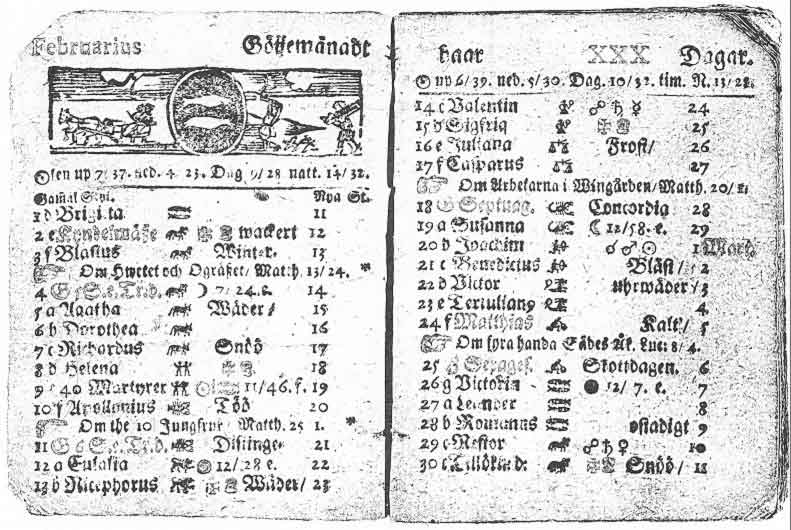 Name dayA calendar tradition where people celebrate the feast day of the saint after whom they are named.
Good reading and sources
- Smorgasbord on WikipediaEncyclopedia
- More photos on Wikimedia CommonsPhotos and video
- Wikidata recordOpen data
The facts on this page come from the Wikipedia article "Smorgasbord", written by its contributors and used under the CC BY-SA 4.0 licence, and from its Wikidata record (CC0). EveryParampara rewrote the text in its own words, with AI assistance, and compares every page with the article to make sure no passage is copied. It may be reused under the same CC BY-SA 4.0 licence with a link back.
It may contain mistakes. Traditions differ from one family, village and community to the next, and the people who keep them know them best. If something is wrong, tell us. Last refreshed 2026-10-05.
More from Sweden
All the traditions of Sweden
🇸🇪 Sweden and 2 moreGlögg
A spiced, warm winter wine served across Nordic countries around ChristmasTable custom · Tea, coffee and drinking ceremonies
🇳🇴 Norway and 2 moreJulebord
A Scandinavian Christmas banquet of traditional dishes, festive drinks and celebrationTable custom · Feasts and festival meals
 🇩🇰 Copenhagen, Denmark and 4 moreRisalamande
A chilled Danish Christmas rice dessert with cream, chopped almonds and cherry sauceTable custom · Sweets given and shared
🇩🇰 Copenhagen, Denmark and 4 moreRisalamande
A chilled Danish Christmas rice dessert with cream, chopped almonds and cherry sauceTable custom · Sweets given and shared
 🇬🇧 United Kingdom and 4 moreSaffron bun
A golden, spiced yeast roll flavoured with saffron, baked for festive and holy daysTable custom · Tea-time and snacking customs
🇬🇧 United Kingdom and 4 moreSaffron bun
A golden, spiced yeast roll flavoured with saffron, baked for festive and holy daysTable custom · Tea-time and snacking customs
The same idea elsewhere
Hospitality and welcome compared 🇹🇷 Turkey and 5 moreEid al-Fitrعيد الفطر
The feast that ends Ramadan, opened with morning prayers, sweets and visits homeFestival · Feasts and festival meals
🇧🇩 Bangladesh and 3 moreAs-salamu alaykumسَلَامٌ عَلَيْكُمْ
A traditional Arabic greeting of peace exchanged in daily life and prayerEtiquette
🇹🇷 Turkey and 5 moreEid al-Fitrعيد الفطر
The feast that ends Ramadan, opened with morning prayers, sweets and visits homeFestival · Feasts and festival meals
🇧🇩 Bangladesh and 3 moreAs-salamu alaykumسَلَامٌ عَلَيْكُمْ
A traditional Arabic greeting of peace exchanged in daily life and prayerEtiquette
 🇮🇱 Jerusalem, IsraelSukkotסוכות
A seven-day autumn Jewish festival of temporary booths, harvest prayers and hospitalitySpiritual
🇮🇱 Jerusalem, IsraelSukkotסוכות
A seven-day autumn Jewish festival of temporary booths, harvest prayers and hospitalitySpiritual
 🇮🇱 Jerusalem, Israel and 1 morePurimפּוּרִים
A lively Jewish festival of storytelling, shared food, masks and charityFestival · Feasts and festival meals
🇮🇱 Jerusalem, Israel and 1 morePurimפּוּרִים
A lively Jewish festival of storytelling, shared food, masks and charityFestival · Feasts and festival meals