Spiritual and religiousMiddle EastMuslim
Tasu'a
In its own language: تاسوعاء
A Shia day of remembrance before Ashura, honouring Abbas and the fallen at Karbala

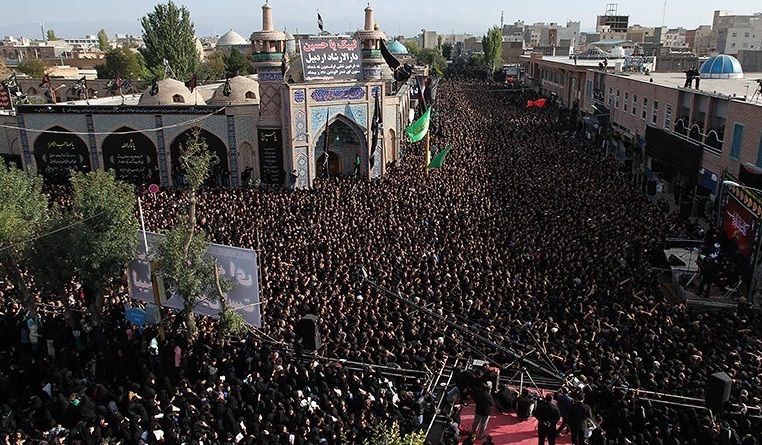
Tasu'a is a solemn day of mourning observed by Shia Muslims on the ninth of Muharram, preceding Ashura. Through prayer gatherings, theatrical reenactments, and street processions, communities honour the steadfast companions and relatives of Husayn ibn Ali at Karbala.
When is Tasu'a marked?
Tasu'a is kept as part of Achoura in Morocco, which is on Tuesday, 15 June 2027.
Tasu'a is an annual day of mourning observed across Shia Muslim communities. Falling on the ninth day of the opening month of the Islamic calendar, it precedes Ashura and recalls the eve of the Battle of Karbala in 680 CE. Mourners gather to honour Husayn ibn Ali and his half-brother Abbas, remembering their refusal to yield to an Umayyad army, their devotion to justice, and their final night of prayer.
The eve of Karbala
In 680 CE, Husayn ibn Ali and a small group of family and companions were besieged on the desert plains of Karbala. An Umayyad force led by Umar ibn Sa'd prepared to attack on the ninth of Muharram. Husayn sent his half-brother, Abbas ibn Ali, to request a delay until morning, creating a pause before the final clash. During this respite, Husayn released his companions from their duty, giving them permission to escape under cover of darkness. Every follower chose to stay beside him. The Umayyad officers also offered safe conduct to Abbas and his brothers, but they rejected the offer to remain loyal to Husayn.
Gatherings and mourning rites
Communities mark Tasu'a in communal assembly halls called Husayniyas, takiyas, imambarahs, or azakhanas. Speakers recount the events of Karbala through narrative tellings known as rawza-khwani, moving listeners to grief. Chanted elegies and poetic dirges, called nawha or marsia, accompany rhythmic chest beating, known as latm or sina-zani. These communal expressions of sorrow allow participants to identify with Husayn's suffering while standing against injustice. While extreme physical mourning involving blades has been prohibited in places like Iran and Lebanon, traditional rhythmic striking remains widespread during these evening gatherings.
Processions and passion plays
Public streets fill with organised processions called dastahs or mawkibs. Mourners carry symbolic items including tall banners called alams, which represent Husayn's military standard, as well as decorative structures like nakhls that represent his bier. In the Iraqi city of Najaf, evening processions carry lit torches to the shrine of Ali ibn Abi Talib. Tasu'a is also notable for ta'ziyeh, a form of traditional theatre where actors reenact the drama of Karbala. The performances staged on this day often focus on Abbas, highlighting his courage as standard-bearer and his doomed effort to secure water for the camp.
How Tasu'a is kept
Observances begin with assemblies in dedicated mourning halls, where reciters chant dirges and recount the stand of Abbas and Husayn. Attendees beat their chests rhythmically in unison as an act of shared grief. During the day and into the night, large processions take to the streets, holding aloft banners, torches, and symbolic funeral biers. Theatrical passion plays reenact the negotiations and choices made by Husayn's camp on the eve of battle, while pilgrims travel to holy shrines.
When and where
Tasu'a is kept every year on the ninth day of Muharram, the opening month of the Islamic lunar calendar. Because the Islamic calendar is lunar, the observance moves forward by roughly ten to eleven days each solar year.
It is observed across Shia Muslim communities worldwide, with major gatherings in Iraq, Iran, Lebanon, and Syria. The most prominent sites include the shrine of Husayn in Karbala and the shrine of Ali in Najaf.
What Tasu'a means
For Shia believers, Tasu'a represents loyalty, sacrifice, and the moral courage to resist tyranny. The refusal of Abbas to accept safe passage exemplifies unwavering devotion to truth over self-preservation. Mourning Husayn's camp is seen as both an act of religious worship and a spiritual stand against oppression across history.


Days Tasu'a is marked
Questions people ask about Tasu'a
When is Tasu'a marked?
Tasu'a is kept as part of Achoura in Morocco, which is on Tuesday, 15 June 2027.
What is Tasu'a?
Tasu'a is a solemn day of remembrance in Shia Islam that takes place on the ninth day of Muharram. It commemorates the final eve before the Battle of Karbala and honours the loyalty of Husayn ibn Ali's companions, especially his half-brother Abbas.
Who was Abbas ibn Ali?
Abbas ibn Ali was the half-brother and standard-bearer of Husayn. On Tasu'a, he negotiated a day's delay of the battle and repeatedly refused enemy offers of safe passage, choosing to remain and die alongside Husayn.
How do mourners observe the day?
People gather in mourning halls to listen to historic recitations, sing elegies, and practice rhythmic chest beating. Communities also stage open-air street processions with symbolic banners and perform theatrical reenactments of the events at Karbala.
Where are the largest observances held?
Observances take place wherever Shia communities live, with major centres in Iraq, Iran, Lebanon, and Syria. Important pilgrimage centres include the shrine city of Karbala and the shrine of Ali in Najaf.
See also
 Holy FireA fire ceremony in Jerusalem each year, kept by Orthodox Christians before Easter
 Fire templeA consecrated sanctuary where Zoroastrians tend sacred fires and gather for worship
 VisitationA Christian feast commemorating Mary's journey to visit her cousin Elizabeth
 Ta'ziyehA ritual drama from Iran that retells the Karbala mourning each Muharram
Good reading and sources
- Tasu'a on WikipediaEncyclopedia
- More photos on Wikimedia CommonsPhotos and video
- Wikidata recordOpen data
The facts on this page come from the Wikipedia article "Tasu'a", written by its contributors and used under the CC BY-SA 4.0 licence, and from its Wikidata record (CC0). EveryParampara rewrote the text in its own words, with AI assistance, and compares every page with the article to make sure no passage is copied. It may be reused under the same CC BY-SA 4.0 licence with a link back.
It may contain mistakes. Traditions differ from one family, village and community to the next, and the people who keep them know them best. If something is wrong, tell us. Last refreshed 2026-10-06.
More from Iraq
All the traditions of Iraq 🇮🇶 Karbala, Iraq and 4 moreMuharramٱلْمُحَرَّم
The sacred opening month of the Islamic year, observed through remembrance and fastingSpiritual · Fasting and breaking the fast
🇮🇶 Karbala, Iraq and 4 moreMuharramٱلْمُحَرَّم
The sacred opening month of the Islamic year, observed through remembrance and fastingSpiritual · Fasting and breaking the fast
 🇮🇱 Safed, Israel and 5 moreHakafotהַקָּפוֹת
Circling the synagogue platform with the Torah scrolls, at Sukkot and Simchat TorahSpiritual
🇮🇱 Safed, Israel and 5 moreHakafotהַקָּפוֹת
Circling the synagogue platform with the Torah scrolls, at Sukkot and Simchat TorahSpiritual
 🇮🇶 Karbala, Iraq and 5 moreMourning of Muharramعَزَاءُ ٱلْمُحَرَّمِ
Annual rites of grief and remembrance for Imam Husayn and his companionsSpiritual
🇮🇶 Karbala, Iraq and 5 moreMourning of Muharramعَزَاءُ ٱلْمُحَرَّمِ
Annual rites of grief and remembrance for Imam Husayn and his companionsSpiritual
 🇮🇷 Iran and 5 moreFatimiyyaفاطمیة
A Shia period of mourning honoring the life and martyrdom of Lady FatimahSpiritual
🇮🇷 Iran and 5 moreFatimiyyaفاطمیة
A Shia period of mourning honoring the life and martyrdom of Lady FatimahSpiritual
The same idea elsewhere
Death and mourning compared 🇮🇳 Gaya, India and 1 moreShraddhaश्राद्ध
Rituals of faith for the ancestors, kept yearly and through Pitru PakshaSpiritual
🇮🇳 Gaya, India and 1 moreShraddhaश्राद्ध
Rituals of faith for the ancestors, kept yearly and through Pitru PakshaSpiritual
 🇮🇳 Haridwar, India and 3 moreAntyestiअन्त्येष्टि
The traditional Hindu funeral ceremony and final rite of passageRite of passage
🇮🇳 Haridwar, India and 3 moreAntyestiअन्त्येष्टि
The traditional Hindu funeral ceremony and final rite of passageRite of passage
 🇨🇳 ChinaKowtow叩頭
A traditional Chinese prostration of deep respect by kneeling and bowing to the groundEtiquette
🇨🇳 ChinaKowtow叩頭
A traditional Chinese prostration of deep respect by kneeling and bowing to the groundEtiquette
 🇮🇳 Varanasi, IndiaHead shaving in Hinduism
Ritual tonsure for spiritual renewal, life transitions, and devotion in HinduismSpiritual
🇮🇳 Varanasi, IndiaHead shaving in Hinduism
Ritual tonsure for spiritual renewal, life transitions, and devotion in HinduismSpiritual