Spiritual and religiousMiddle EastJewish
Hakafot
In its own language: הַקָּפוֹת
Circling the synagogue platform with the Torah scrolls, at Sukkot and Simchat Torah

Hakafot are processions in which worshippers carry the Torah scrolls around the synagogue platform, singing and dancing. The custom is strongest on Simchat Torah and during Sukkot, and it took its modern shape in Safed in the sixteenth century, though it is a custom rather than a legal duty.
When is Hakafot marked?
Hakafot is kept as part of Simchat Torah, which runs from 23 to 24 October 2027.
Hakafot are the circling processions that Jewish congregations make around the platform in the middle of the synagogue, holding the Torah scrolls. They are danced and sung on Simchat Torah and during Sukkot. The practice is a custom rather than a law laid down in the Torah, and many communities treat it as the high point of the festival year.
What it is
Hakafot is the plural of hakafah, a going round. In synagogue use it means the walk that worshippers make in a circle around the bimah, the raised platform where the Torah is read. The scrolls are carried, and the walking turns into singing and dancing. The custom belongs to Sukkot and to Simchat Torah. It is described as a minhag, a community tradition, not as a duty set out in Jewish law or commanded in the Tanakh. The circling itself is the point: the congregation moves together around the scroll.
Origins and history
A Conservative rabbi, Reuven Hammer, wrote in his commentary Or Hadash, published in 2003, that hakafot in the form known today began in Safed in the sixteenth century. The custom of circling on Simchat Torah seems to be no older than the fifteenth century. The Maharil, Yaakov ben Moshe Levi Moelin, known as the father of Ashkenazi custom, described the Torah being taken from the ark on Hoshana Rabbah and Simchat Torah. Moses Isserles, the Rema, wrote in the sixteenth century about the circling and the joy that came with it. Not everyone took it up: some communities in Western Europe resisted it.
How it is kept
On Simchat Torah the scrolls are lifted from the ark and carried around the bimah seven times or more. A reader walks at the front of each round and recites verses arranged in alphabetical order, and at the end of the verses the congregation breaks into song. The poem sung at this point is Elohei HaRuchot, God of the winds, save us now. Children join in with small scrolls or with flags bearing the symbols of the day. In the Diaspora an apple holding a lit candle is fixed to the flag. Some Hasidic and other communities stop for a sixth round, remembering the six million who died in the Holocaust.
Second Hakafot
When the festival ends and the second day begins in the Diaspora, congregations in Israel go out into the street with the scrolls and dance again. This is Second Hakafot. Its origin is credited to Rabbi Hayyim ben Joseph Vital, who wrote down the practices of his teacher Isaac Luria in Safed. Luria visited several synagogues after Simchat Torah, which lengthened the services and gave time for more circling. The custom passed to Hebron, then to the Beit El Synagogue in Jerusalem, then to other Jerusalem congregations, and finally across the country.
Circling in other rites
Circling also appears at two moments of life. In some Ashkenazi communities of Western Europe a bride walks around the groom three times or seven times under the chuppah, the wedding canopy, and then stands at his side. The earliest record of this is from 1430, in a commentary by Rabbi Dosa HaYoni, who noted that Austrian Jews did it three times. In Mizrahi communities, those who prepared a body for burial would walk around the bed of the dead person seven times, saying Psalms, to keep away evil spirits. That practice comes from Kabbalah and is rarely seen now.
How Hakafot is kept
Congregants gather in the synagogue. On Sukkot they hold the four species and walk once around the platform while the day's Hoshanot poems are sung; Ashkenazi congregations do this at the end of Musaf, some Sefardi congregations before the Torah reading, and none on Shabbat. On Hoshana Rabbah the circuit is made seven times. On Simchat Torah every scroll is taken from the ark, the congregation follows the reader around the bimah seven times or more, and each round ends in dancing. Children carry small scrolls or flags. Some communities pause on a sixth round to remember the Holocaust.
When and where
In Israel the circling is done on the 22nd of Tishri, Shemini Atzeret. In the Diaspora it belongs to the 23rd of Tishri, Simchat Torah, and some congregations circle on both days. It also takes place during Sukkot, on the first day and the intermediate days, and seven times on Hoshana Rabbah. Rounds are held at night after Maariv and in the morning during Shacharit.
Hakafot are kept wherever Jewish congregations meet, and they are common in Israel. They were once absent in parts of Western Europe; the Frankfurt community did not practise them, and the four communities that followed Provençal custom refused them too. Second Hakafot spread from Safed to Hebron and Jerusalem and then through Israel, and from there to Italy and to communities in Turkey, Baghdad, Persia, Kurdistan and India.
What Hakafot means
For those who keep it, the circle stands for harmony: one community moving together with one Torah. It is also a dance of gratitude for learning, and a renewal of the bond between God and the Jewish people. A verse from Proverbs, calling Torah a tree of life to those who hold it, is quoted in this connection. The seven circuits on Hoshana Rabbah echo the seven days at Jericho, when the walls came down after the Israelites marched. The bride's circles at the wedding borrow the same image.

Days Hakafot is marked
Questions people ask about Hakafot
When is Hakafot marked?
Hakafot is kept as part of Simchat Torah, which runs from 23 to 24 October 2027.
What is hakafot?
Hakafot are the processions that worshippers make around the bimah, the platform where the Torah is read, carrying the scrolls. The Hebrew word means goings-round. They are a minhag, a custom, rather than an obligation under Jewish law, and they belong above all to Simchat Torah and Sukkot.
Where did the custom begin?
According to Conservative rabbi Reuven Hammer, writing in his 2003 commentary Or Hadash, the form of hakafot practised now began in Safed in the sixteenth century. The circling on Simchat Torah appears to be no older than the fifteenth century, and some Western European communities long refused it.
Why do children carry flags?
Children take part by carrying small Torah scrolls or flags printed with symbols of the festival. In the Diaspora such a flag may hold an apple with a lit candle set in it. Adults sometimes lift the children onto their shoulders so they can join the dancing.
What is Second Hakafot?
It is an Israeli custom of dancing with the scrolls in the street once the festival has ended, while the Diaspora is beginning its second day. It is traced to Isaac Luria in Safed. During the British Mandate a rabbi in Tel Aviv named Frankel began holding it in 1942.
See also
 Akhand PathThe unbroken, continuous reading of the entire Sikh scripture over two days
 PretaOfferings and rites for spirits enduring deep hunger across Asian traditions.
 TallitA four-cornered Jewish prayer shawl with ritual fringes worn during worship
 KaddishA Jewish hymn of sanctification recited during prayer services and mourning rituals.
Good reading and sources
- Hakafot on WikipediaEncyclopedia
- More photos on Wikimedia CommonsPhotos and video
- Wikidata recordOpen data
The facts on this page come from the Wikipedia article "Hakafot", written by its contributors and used under the CC BY-SA 4.0 licence, and from its Wikidata record (CC0). EveryParampara rewrote the text in its own words, with AI assistance, and compares every page with the article to make sure no passage is copied. It may be reused under the same CC BY-SA 4.0 licence with a link back.
It may contain mistakes. Traditions differ from one family, village and community to the next, and the people who keep them know them best. If something is wrong, tell us. Last refreshed 2026-10-05.
More from Israel
All the traditions of Israel
🇮🇱 Israel and 5 moreKaddishקַדִּישׁ
A Jewish hymn of sanctification recited during prayer services and mourning rituals.Spiritual
🇮🇱 IsraelTallitטלית
A four-cornered Jewish prayer shawl with ritual fringes worn during worshipSpiritual
 🇮🇱 Israel and 4 moreTorah readingקריאת התורה
The public reading of the Torah scroll in synagogue, chanted to a special tuneSpiritual
🇮🇱 Israel and 4 moreTorah readingקריאת התורה
The public reading of the Torah scroll in synagogue, chanted to a special tuneSpiritual
 🇮🇶 Karbala, Iraq and 4 moreMuharramٱلْمُحَرَّم
The sacred opening month of the Islamic year, observed through remembrance and fastingSpiritual · Fasting and breaking the fast
🇮🇶 Karbala, Iraq and 4 moreMuharramٱلْمُحَرَّم
The sacred opening month of the Islamic year, observed through remembrance and fastingSpiritual · Fasting and breaking the fast
The same idea elsewhere
Weddings compared 🇼🇸 Samoa and 1 moreʻIe tōga
Precious woven mats exchanged in Samoan ceremonies to honor family ties and chiefly status.Dress
🇼🇸 Samoa and 1 moreʻIe tōga
Precious woven mats exchanged in Samoan ceremonies to honor family ties and chiefly status.Dress
 🇮🇩 Indonesia and 2 moreKenduri
A communal prayer meal and gathering shared across Indonesia, Malaysia and BruneiSpiritual · Feasts and festival meals
🇮🇩 Indonesia and 2 moreKenduri
A communal prayer meal and gathering shared across Indonesia, Malaysia and BruneiSpiritual · Feasts and festival meals
 🇹🇱 Timor-LesteUma Lulik
Sacred ancestral clan houses and ritual shrines in East TimorSpiritual
🇹🇱 Timor-LesteUma Lulik
Sacred ancestral clan houses and ritual shrines in East TimorSpiritual
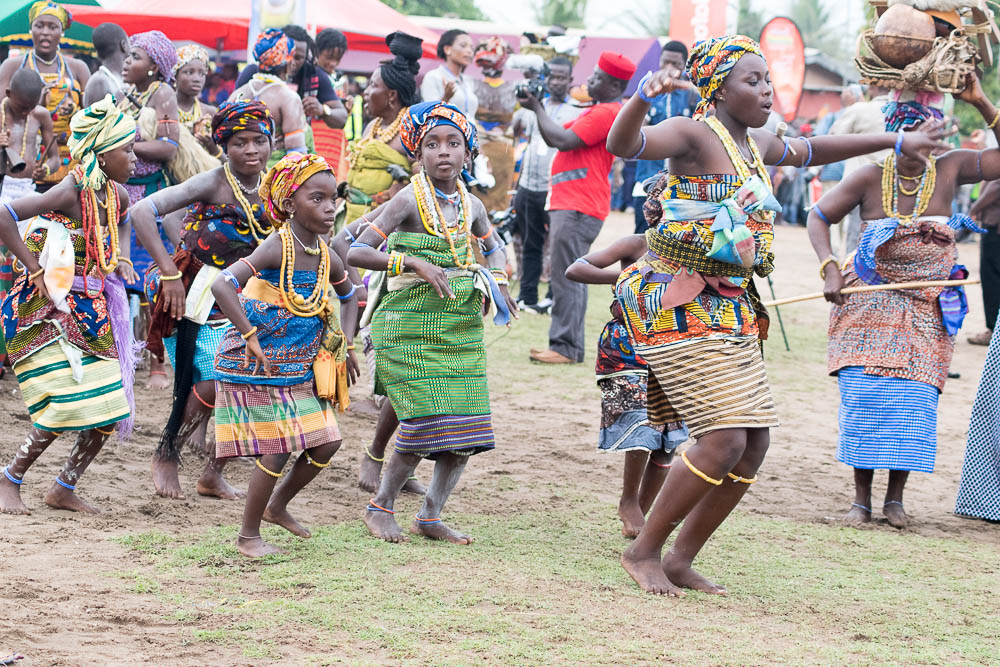 🇬🇭 Ghana and 2 moreAgbadza
An Ewe music and dance, born of war songs and kept for funerals, weddings and festivalsPerformance
🇬🇭 Ghana and 2 moreAgbadza
An Ewe music and dance, born of war songs and kept for funerals, weddings and festivalsPerformance