Spiritual and religiousMiddle EastMuslim
Muharram
In its own language: ٱلْمُحَرَّم
The sacred opening month of the Islamic year, observed through remembrance and fasting

Muharram is the first month of the Islamic lunar calendar, observed by Muslims worldwide as a sacred season of peace and reflection. Shia Muslims mark the first ten days in deep mourning for the martyrdom of Husayn at Karbala, while Sunni Muslims observe Ashura through voluntary fasting and remembrance.
When is Muharram marked?
Muharram is kept as part of Achoura in Morocco, which is on Tuesday, 15 June 2027.
Muharram marks the beginning of the Islamic year. As one of four sacred months in Islam, it historically prohibited warfare. For Shia communities, the month is defined by solemn remembrance of Husayn ibn Ali, the grandson of the Prophet Muhammad, who fell at the Battle of Karbala in 680 CE. Sunni believers also hold the month in high regard, observing the tenth day, Ashura, with voluntary fasting, prayers, and acts of gratitude.
The sacred beginning
Muharram is the opening month of the lunar calendar and lasts twenty-nine or thirty days. In ancient times, before Islam, it was called Muharram Safar to distinguish it as a sacred period when fighting was strictly forbidden. Over time, the descriptive title Muharram, meaning forbidden or sacred, became the month's formal name. Because the Islamic calendar tracks the moon, the month begins with the sighting of the new crescent. Each lunar year is shorter than the solar year by about eleven or twelve days, so Muharram shifts across the seasons. It holds quiet reverence for early milestones, including the early setting of Jerusalem as the direction of prayer.
Remembrance of Karbala
For Shia Muslims, Muharram centers on the tragedy of Karbala in 680 CE. Husayn ibn Ali stood against the Umayyad caliph Yazid on moral grounds, refusing to give his allegiance. Intercepted in the Iraqi desert, Husayn and his companions were surrounded and cut off from drinking water near the Euphrates. The siege culminated on the tenth day, Ashura, when Husayn and most of his male family and followers were killed. Shia communities view Husayn's stand as an enduring symbol of justice, resistance to tyranny, and sacrifice for truth. His memory is honored as a universal call to right action against falsehood.
Mourning rituals and gatherings
During the first ten days, Shia believers gather in mosques, prayer halls known as husayniyyas, and community spaces. Scholars and reciters narrate the hardships of Karbala, focusing on loyalty, sacrifice, and devotion to the family of Muhammad. Processions move through streets with participants chanting laments and performing chest-beating, known as latmiyya or sinah-zani, as a physical display of grief. Communities distribute water and food freely to honor those who suffered thirst during the desert siege. These observances reach their emotional peak on Ashura through solemn gatherings and theatrical reenactments of the battle.
Observing the tenth day
Ashura holds distinct meaning across different traditions within Islam. Sunni Muslims view the tenth day as a time of thanksgiving. They trace it to Noah leaving the Ark, God forgiving Adam, and Moses parting the Red Sea to deliver the Israelites from bondage. Sunnis frequently observe supererogatory fasting on Ashura and engage in quiet reflection. Some local traditions have included bonfires, special meals, or carnivals, alongside sermons honoring Husayn's memory. In Pakistan, the fifth day also marks the annual remembrance of the Sufi saint Baba Farid in Pakpattan.
How Muharram is kept
Observances span the first ten days of the month. In Shia communities, believers attend daily gatherings in husayniyyas and mosques to hear elegies and accounts of Karbala. Mourners join outdoor processions, chant lamentations, and perform ritual chest-beating. Volunteers hand out free water and food to the public in memory of the martyrs. On the tenth day, Ashura, solemn ceremonies, reenactments, and major processions culminate the mourning period. Sunni Muslims mark Ashura by undertaking voluntary fasts, offering prayers, listening to historic sermons, and sharing pious meals.
When and where
Muharram is the first month of the Islamic lunar calendar. The exact start depends on the visual sighting of the crescent moon. Because the lunar calendar is eleven to twelve days shorter than the solar year, Muharram moves through different seasons over time.
Muslims observe Muharram worldwide. The most prominent mourning processions occur in Shia centers, particularly Karbala in Iraq, where the historic battle occurred. Commemorations and gatherings also take place in places like Pakistan, India, Syria, and Jerusalem.
What Muharram means
The month carries dual themes of sanctity and sacrifice. Its ancient name reflects a ban on violence and war. For Shia Muslims, Husayn's death represents a universal stand for justice against tyranny, an ethical duty to defend truth, and hope for spiritual intercession. For Sunni Muslims, Ashura recalls divine deliverance, mercy, and deliverance from hardship, exemplified by the salvation of Moses and his people.


Days Muharram is marked
Questions people ask about Muharram
When is Muharram marked?
Muharram is kept as part of Achoura in Morocco, which is on Tuesday, 15 June 2027.
What is Muharram?
Muharram is the opening month of the Islamic lunar calendar and one of four sacred months during which warfare was traditionally prohibited. It is marked by periods of reflection, voluntary fasting, and solemn mourning.
Why is the month significant for Shia Muslims?
Shia Muslims dedicate the first ten days to mourning Husayn ibn Ali, the grandson of Prophet Muhammad, who was killed with his companions at the Battle of Karbala in 680 CE while resisting an oppressive caliph.
How do Sunni Muslims observe Ashura?
Sunni Muslims observe the tenth day of Muharram with voluntary fasting and prayers, celebrating the salvation of the Israelites when Moses parted the Red Sea, while also remembering Husayn through sermons and reflection.
What is Ashura?
Ashura is the tenth day of Muharram. It marks the climax of the Shia mourning period for the martyrs of Karbala and is observed in Sunni Islam as a day of deliverance and fasting.
See also
 Yom KippurThe holiest day in Judaism, dedicated to fasting, prayer and atonement
 Rosh HashanahThe Jewish New Year marked by shofar horn blasts, prayer and sweet foods
 Krishna JanmashtamiA Hindu festival celebrating the birth of Krishna with fasting, singing and night vigils
 Naga PanchamiA day of worship for serpent deities and cobras, observed by Hindus, Jains, and Buddhists across South Asia.
Good reading and sources
- Encyclopaedia BritannicaArticle
- ASWJ rallies in many towns to observe Yaum-i-Umar FarooqDawn, Article
- ASWJ rallies in many towns to observe Yaum-i-Umar FarooqDawn, Article
- Muharram on WikipediaEncyclopedia
- More photos on Wikimedia CommonsPhotos and video
- Wikidata recordOpen data
The facts on this page come from the Wikipedia article "Muharram", written by its contributors and used under the CC BY-SA 4.0 licence, and from its Wikidata record (CC0). EveryParampara rewrote the text in its own words, with AI assistance, and compares every page with the article to make sure no passage is copied. It may be reused under the same CC BY-SA 4.0 licence with a link back.
It may contain mistakes. Traditions differ from one family, village and community to the next, and the people who keep them know them best. If something is wrong, tell us. Last refreshed 2026-10-04.
More from Iraq
All the traditions of Iraq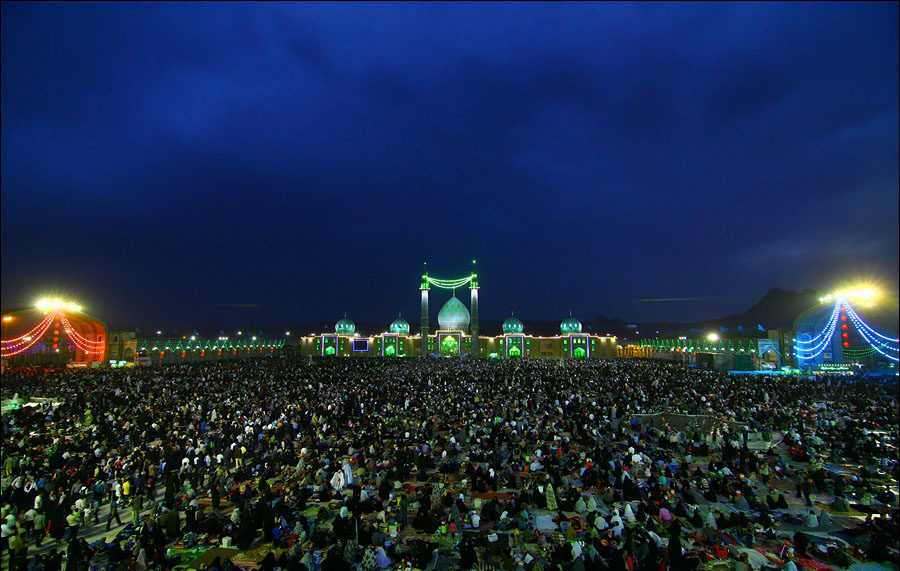 🇮🇷 Iran and 5 moreMid-Sha'banنصف شعبان
An Islamic night of prayer, remembrance, and seeking divine forgiveness.Spiritual
🇮🇷 Iran and 5 moreMid-Sha'banنصف شعبان
An Islamic night of prayer, remembrance, and seeking divine forgiveness.Spiritual
 🇮🇱 Safed, Israel and 5 moreHakafotהַקָּפוֹת
Circling the synagogue platform with the Torah scrolls, at Sukkot and Simchat TorahSpiritual
🇮🇷 Iran and 5 moreMid-Sha'banنصف شعبان
An Islamic night of prayer, forgiveness, ancestral remembrance and sweet offeringsSpiritual · Sweets given and shared
🇮🇱 Safed, Israel and 5 moreHakafotהַקָּפוֹת
Circling the synagogue platform with the Torah scrolls, at Sukkot and Simchat TorahSpiritual
🇮🇷 Iran and 5 moreMid-Sha'banنصف شعبان
An Islamic night of prayer, forgiveness, ancestral remembrance and sweet offeringsSpiritual · Sweets given and shared
 🇮🇶 Karbala, Iraq and 5 moreMourning of Muharramعَزَاءُ ٱلْمُحَرَّمِ
Annual rites of grief and remembrance for Imam Husayn and his companionsSpiritual
🇮🇶 Karbala, Iraq and 5 moreMourning of Muharramعَزَاءُ ٱلْمُحَرَّمِ
Annual rites of grief and remembrance for Imam Husayn and his companionsSpiritual
The same idea elsewhere
Death and mourning compared 🇺🇸 United States and 1 moreVigil
A purposeful watch of prayer, mourning, or reflection kept through the nightSpiritual · Fasting and breaking the fast
🇺🇸 United States and 1 moreVigil
A purposeful watch of prayer, mourning, or reflection kept through the nightSpiritual · Fasting and breaking the fast
 🇮🇳 Ayodhya, India and 7 moreDiwaliदीपावली (Dīpāvalī)
A five-day festival of lights celebrated across India and its diaspora to mark the victory of light over darkness.Festival · Feasts and festival meals
🇮🇳 Ayodhya, India and 7 moreDiwaliदीपावली (Dīpāvalī)
A five-day festival of lights celebrated across India and its diaspora to mark the victory of light over darkness.Festival · Feasts and festival meals
 🇰🇷 Jeju, South KoreaGut굿
Sacred rites of song, dance, and spirit communion performed by Korean shamansSpiritual
🇰🇷 Jeju, South KoreaGut굿
Sacred rites of song, dance, and spirit communion performed by Korean shamansSpiritual
 🇮🇳 India and 5 morePretaप्रेत
Offerings and rites for spirits enduring deep hunger across Asian traditions.Spiritual
🇮🇳 India and 5 morePretaप्रेत
Offerings and rites for spirits enduring deep hunger across Asian traditions.Spiritual