Customs of food and drinkEast Asia
Toshikoshi soba
In its own language: 年越し蕎麦
Buckwheat noodles eaten on New Year's Eve, cut easily to let the year go

Toshikoshi soba is a bowl of buckwheat noodles eaten in Japan on 31 December, the last night of the year. Households take it so the closing year's troubles are left behind, and the long strands are read as a wish for a long life.
When is Toshikoshi soba kept?
Toshikoshi soba is kept on 31 December, the last evening of the year, before the new year begins.
On the final evening of the year, households in Japan sit down to a bowl of buckwheat noodles called toshikoshi soba. The meal marks the passing of one year and the start of the next. Noodles are simple to bite through, so the dish stands for leaving the year's difficulties behind, while the length of each strand is read as a wish for long life.
What it is
Toshikoshi soba is a Japanese dish of buckwheat noodles served in a bowl of broth, and it belongs to one night only: 31 December, the final day of the year. In Japan that date is called ōmisoka. This is no ordinary everyday noodle meal. It is the bowl families look for as the old year runs out, and soba shops serve it as well. In the pictures the sources carry, a slice of kamaboko, the pink and white steamed fish cake, rests on top of the noodles.
Origins and history
The sources place the beginning of the custom around the Edo period, the years between 1603 and 1867. That is given as an approximate starting point rather than one founding moment. Asked why noodles became the food of the evening, the sources point to more than one older idea. One holds that a long unbroken strand stands for a long stretch of years. Another looks at the buckwheat plant, which grows through harsh weather, and takes it as a picture of strength that lasts. Practice spread unevenly, so both the details and the local names for the bowl differ from district to district.
How it is kept
Keeping the custom is domestic and plain. A household eats the noodles on the evening of 31 December, before midnight brings the new year, so that the difficulties of the closing year can be set down. Because the noodles part easily when bitten, eating them is itself the act of letting the year go. Families may eat at home, or they may go out to a soba shop; the sources show one such shop in Tokyo. No fixed rule is given. Districts keep the evening in their own way, which is why the bowl carries a range of local names instead of one.
What it means
Two meanings sit together in the bowl. The first is release: the year's hardship is meant to be left behind, and noodles that give way without effort carry that idea, since nothing has to be torn or fought. The second is hope for what follows. A long noodle is read as long life, and buckwheat, a crop that holds up through severe weather, is read as strength that endures. The meal therefore looks backwards and forwards at once, closing one year and wishing well for the one about to start.
How Toshikoshi soba is kept
A household sits down to a bowl of buckwheat noodles on 31 December, the last evening of the year, before midnight brings the new one. Eating comes first, and the point is that the noodles separate easily, so the year's troubles go with them. Some families eat at home, others go to a soba shop, and the sources record one such shop in Tokyo. Customs differ from one district to the next, and the bowl goes by different local names depending on where it is served.
When and where
It belongs to one date: 31 December, the final day of the year, known in Japan as ōmisoka. The bowl is eaten on that evening, ahead of the new year's first hours. There is no moveable feast and no second date. The custom is tied to New Year's Eve itself.
The custom belongs to Japan and is kept across the country on the last night of the year, at home and in soba shops. The sources treat it as a Japanese practice rather than one tied to a single town, while noting that households in different districts give the bowl different names and keep small variations.
What Toshikoshi soba means
For those who keep it, the evening is a hinge between two years. Noodles that give way at a bite stand for setting down what was hard, so the household does not carry it forward. The long strand points to a long life, and the buckwheat plant, tough enough to grow through bad weather, points to strength that endures. Eating is therefore a small ceremony of farewell and good wish at once.


Questions people ask about Toshikoshi soba
When is Toshikoshi soba kept?
Toshikoshi soba is kept on 31 December, the last evening of the year, before the new year begins.
What is toshikoshi soba?
It is a Japanese bowl of buckwheat noodles eaten on 31 December, the last day of the year. In Japan that date is called ōmisoka. The dish is tied to that one evening and is not a general everyday noodle meal.
Why noodles, and why that kind?
Soba noodles break easily when eaten, so the household is said to let go of the year's hardship with them. Long strands are also taken as a wish for long life, and the buckwheat plant, which survives severe weather, as a sign of lasting strength.
Where is the custom kept?
In Japan, in homes and in soba shops, on the last evening of the year. The sources describe it as varying from area to area, which is why the bowl has several local names across the country rather than a single one.
How old is the custom?
The sources date its beginning to around the Edo period, the years from 1603 to 1867. They name no founder and no single starting event, and they link the choice of noodles to more than one existing idea about long life and strength.
See also
 JiaoziCrescent Chinese dumplings filled with meat or vegetables, eaten for fortune and feasts
 KarutaJapanese playing cards from the 16th century, still raced over poems each New Year
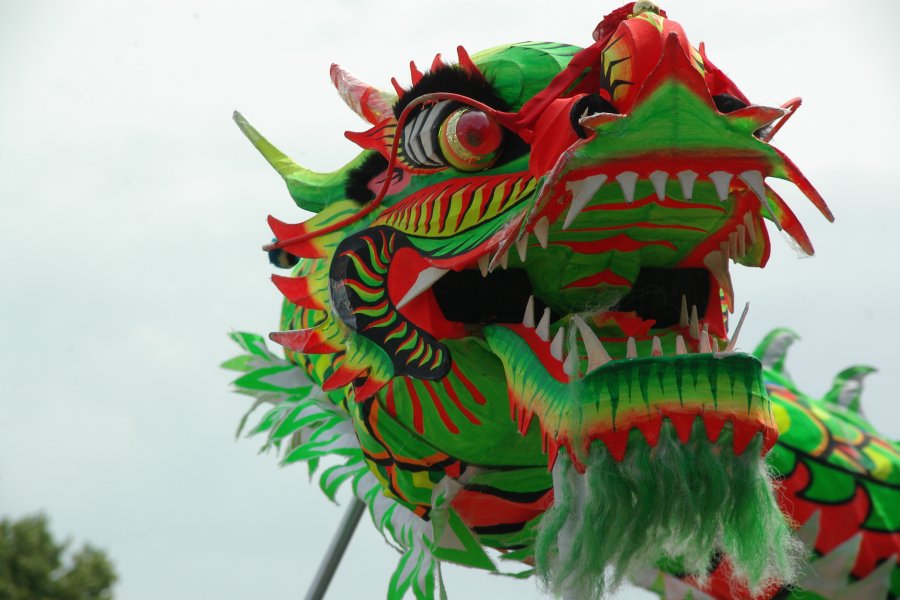 Dragon danceA long dragon puppet on poles, danced by a team at Chinese New Year and other festivals
 Lion danceA dynamic ritual dance featuring costumed lions, drums and martial acrobatics
Good reading and sources
- Toshikoshi soba on WikipediaEncyclopedia
- More photos on Wikimedia CommonsPhotos and video
- Wikidata recordOpen data
The facts on this page come from the Wikipedia article "Toshikoshi soba", written by its contributors and used under the CC BY-SA 4.0 licence, and from its Wikidata record (CC0). EveryParampara rewrote the text in its own words, with AI assistance, and compares every page with the article to make sure no passage is copied. It may be reused under the same CC BY-SA 4.0 licence with a link back.
It may contain mistakes. Traditions differ from one family, village and community to the next, and the people who keep them know them best. If something is wrong, tell us. Last refreshed 2026-10-05.
More from Japan
All the traditions of Japan
🇨🇳 Shanghai, China and 1 moreJiaozi餃子
Crescent Chinese dumplings filled with meat or vegetables, eaten for fortune and feastsTable custom · Breakfast
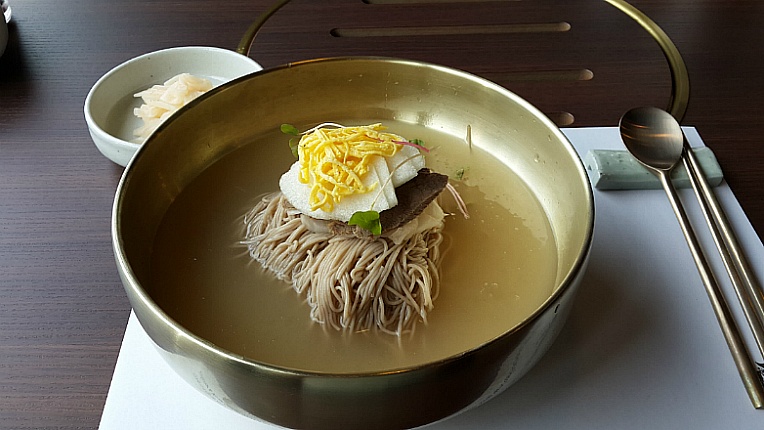 🇰🇵 Pyongyang, North Korea and 3 moreNaengmyeon냉면
Long buckwheat noodles in icy broth, born in North Korea and eaten most in summerTable custom · Dinner
🇰🇵 Pyongyang, North Korea and 3 moreNaengmyeon냉면
Long buckwheat noodles in icy broth, born in North Korea and eaten most in summerTable custom · Dinner
 🇯🇵 Kyoto, JapanKaiseki懐石
A multi-course Japanese dining tradition shaped by tea ceremonies and the seasonsTable custom · Dinner
🇯🇵 Kyoto, JapanKaiseki懐石
A multi-course Japanese dining tradition shaped by tea ceremonies and the seasonsTable custom · Dinner
 🇨🇳 China and 5 moreTea culture
How tea is prepared, shared and served, from Chinese tea houses to Tibetan butter teaTable custom · Tea, coffee and drinking ceremonies
🇨🇳 China and 5 moreTea culture
How tea is prepared, shared and served, from Chinese tea houses to Tibetan butter teaTable custom · Tea, coffee and drinking ceremonies
The same idea elsewhere
New Year compared 🇮🇳 Ayodhya, India and 7 moreDiwaliदीपावली (Dīpāvalī)
A five-day festival of lights celebrated across India and its diaspora to mark the victory of light over darkness.Festival · Feasts and festival meals
🇮🇳 Ayodhya, India and 7 moreDiwaliदीपावली (Dīpāvalī)
A five-day festival of lights celebrated across India and its diaspora to mark the victory of light over darkness.Festival · Feasts and festival meals
 🇮🇷 Iran and 7 moreNowruzنوروز
The Iranian new year at the March equinox, kept with fire, greenery and picnicsSeasonal
🇮🇷 Iran and 7 moreNowruzنوروز
The Iranian new year at the March equinox, kept with fire, greenery and picnicsSeasonal
 🇮🇱 Jerusalem, Israel and 1 moreHanukkahחֲנֻכָּה
An eight-day Jewish festival marking the rededication of the Second Temple in Jerusalem and the miracle of a single day'Festival
🇮🇱 Jerusalem, Israel and 1 moreHanukkahחֲנֻכָּה
An eight-day Jewish festival marking the rededication of the Second Temple in Jerusalem and the miracle of a single day'Festival
 🇪🇬 Egypt and 5 moreMawlidمولد (Mawlid)
An annual festival marking the birth of the Prophet Muhammad, marked by poetry, processions and feasts.Festival · Feasts and festival meals
🇪🇬 Egypt and 5 moreMawlidمولد (Mawlid)
An annual festival marking the birth of the Prophet Muhammad, marked by poetry, processions and feasts.Festival · Feasts and festival meals