Dress and adornmentSoutheast Asia
Vietnamese clothing
In its own language: Trang phục Việt Nam
The dress of Vietnam: áo dài today, plus Chinese, Cham and Western layers
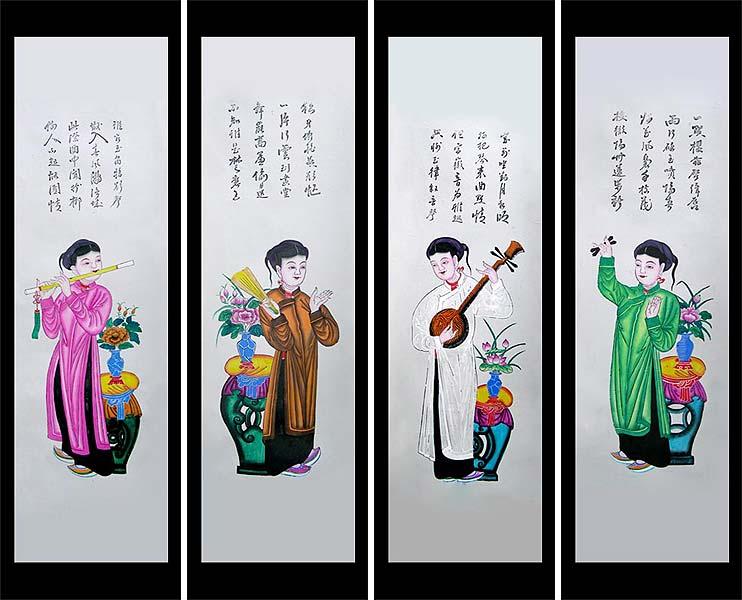
Vietnamese clothing (Trang phục Việt Nam, or Việt phục) is the dress traditionally and historically worn in Vietnam. It was shaped by Chinese fashions during a thousand years of northern rule, with Tai, Cham and later Western elements added, and its best-known form today is the áo dài, a twentieth-century version of the áo ngũ thân.
When is Vietnamese clothing kept?
Vietnamese clothing is kept on worn daily; court dress followed set days, including the first and fifteenth of each month.
Vietnamese clothing, or Việt phục, is the dress worn in Vietnam across its history. Chinese fashions shaped it deeply, and Tai, Cham and later Western influences were woven in too. The best-known form is the áo dài, a twentieth-century version of the áo ngũ thân, made mainly for women. Vietnam's many ethnic groups each keep dress of their own, and the royal court had rules for what to wear.
Cloth and materials
Vietnam's textiles go back a long way. Silk was made and worn in the north. Elsewhere people used barkcloth and cloth spun from banana fibre, and kapok and hemp were common long before cotton arrived. Rank showed in the fabric: the elite wore silk, coloured and decorated, while ordinary people had plain hemp clothing. In the north, Tai nobles who arrived in the Đông Sơn era became dominant, and the Mon-Khmer and Kra-dai peoples already living there took up Tai dress.
Everyday wear
For centuries countrywomen put on a halter top, the yếm, under a blouse or an overcoat, with a skirt below it. In remote hamlets of the north, skirts were still worn in the 1920s. A round-necked robe cut from four pieces of cloth, buttoned, was worn by men and women alike, and the long-flapped áo tràng vạt, tied to the right, was common before the Nguyễn dynasty. Most men, and men of minority peoples as well, came to wear Chinese-style trousers and shirts. Garments known as áo end below the knee.
Court dress
Court clothing followed Chinese rules for centuries, and officials in the north dressed to those regulations. In 1437, on the advice of Lương Đăng, Emperor Lê Thái Tông wore the gunmian, a ceremonial robe and cap, for the sacrifice to Heaven, the announcement at the ancestral temple, his birthday and New Year. For ordinary audiences he wore a yellow robe and the xung thiên crown, a futou hat whose two wings turned upward. Nguyễn dynasty officials wore formal dress at the sacrifice to Heaven and Earth. The Lịch triều hiến chương loại chí records these rules.
Hair, teeth and edicts
Short hair, or a shaved head, was usual for men from ancient times, and Emperor Trần Nhân Tông and his men are shown that way in a surviving painting. A Chinese encyclopedia of the 17th century, the Sancai Tuhui, records the same. Teeth blackening was a long-standing custom. When the Ming held Vietnam in the early 15th century, they ordered men to let their hair grow and to wear Chinese clothing within a month, and told women to dress in Chinese style. A royal edict of 1474, set down in Ngô Sĩ Liên's chronicle, banned foreign languages, hairstyles and clothes.
Influence and variety
Chinese aesthetics shaped Vietnamese dress both in ordinary fashion and at court, the strongest single thread in its history. Other strands came from elsewhere: Tai styles in the far past, Cham elements from the south, and Western fashions that arrived with French colonial rule. Lê dynasty scholars argued that Vietnamese clothing set the country apart from its neighbours, and an edict of 1474 backed them. Vietnam holds many ethnic groups, and dress has long shown which community a person belongs to. Today the áo dài, made mainly for women, is the best-known form.
When and where
Vietnamese dress has no one date. Court life tied it to the calendar: the emperor wore full ceremonial robes for the sacrifice to Heaven, the ancestral temple announcement, his birthday and New Year, and a yellow robe with the xung thiên crown for audiences on the first and fifteenth day of each month.
Vietnam is home to it. The northern lowlands, under Chinese rule for a thousand years, took in the heaviest Chinese influence; the centre and south, once part of the Indian-influenced kingdom of Champa, looked elsewhere. Dress also differs between ethnic groups, so there is no single local style.
What Vietnamese clothing means
Dress in Vietnam has long carried meaning about who you are and where you belong, marking rank in silk or hemp and marking a people against its neighbours. In the 15th century the scholar Nguyễn Trãi taught that adopting the language or clothing of the Ming, Champa, Laos, Siam or Cambodia would bring disorder to Vietnamese customs, and an edict of 1474 echoed him. Keeping local dress was a way of keeping local custom.


Questions people ask about Vietnamese clothing
When is Vietnamese clothing kept?
Vietnamese clothing is kept on worn daily; court dress followed set days, including the first and fifteenth of each month.
What is Vietnamese clothing?
It is the dress worn in Vietnam, known as Trang phục Việt Nam or Việt phục. It takes in everyday clothes, court robes and the many styles worn by the country's ethnic groups. The best-known form is the áo dài, a twentieth-century remake of the áo ngũ thân made mainly for women.
Where in Vietnam is it kept?
Across the country. The north was under Chinese rule for about a thousand years and borrowed most heavily from Chinese fashion. The south belonged to the Indian-influenced kingdom of Champa. Vietnam's many ethnic groups each keep dress of their own.
Did Chinese rule change Vietnamese dress?
Yes, in lasting ways. Chinese aesthetics shaped folk fashion and court dress, officials followed Chinese regulations, and ordinary men took to Chinese-style trousers and shirts. Local customs survived: the Ming forced long hair and Chinese clothes on people in the 1400s, and a 1474 edict pushed back against foreign styles.
What did people wear every day in the past?
Countrywomen wore a yếm, a halter top, under a blouse or coat, with a skirt below, and in isolated northern hamlets skirts were still worn in the 1920s. Men and women wore a round-necked robe cut from four pieces of cloth, and most men came to wear trousers and shirts.
See also
 DiyiA formal ceremonial robe worn by empresses and royal women in China, Korea, and Vietnam.
 Dragon robeRobes embroidered with dragons, worn by Chinese emperors and copied by nearby courts
 MianfuThe most formal dress of China's emperors, worn at coronations and court rites
 Bon Om ToukA three-day Cambodian festival of dragon boat races, floating lanterns and moon offerings
Good reading and sources
The facts on this page come from the Wikipedia article "Vietnamese clothing", written by its contributors and used under the CC BY-SA 4.0 licence, and from its Wikidata record (CC0). EveryParampara rewrote the text in its own words, with AI assistance, and compares every page with the article to make sure no passage is copied. It may be reused under the same CC BY-SA 4.0 licence with a link back.
It may contain mistakes. Traditions differ from one family, village and community to the next, and the people who keep them know them best. If something is wrong, tell us. Last refreshed 2026-10-14.
More from Vietnam
All the traditions of Vietnam
🇨🇳 China and 2 moreDragon robe袞龍袍 (gǔn lóngpáo)
Robes embroidered with dragons, worn by Chinese emperors and copied by nearby courtsDress
🇨🇳 China and 3 moreMianfu冕服
The most formal dress of China's emperors, worn at coronations and court ritesDress
🇨🇳 China and 2 moreDiyi翟衣 (Díyī)
A formal ceremonial robe worn by empresses and royal women in China, Korea, and Vietnam.Dress
 🇻🇳 Huế, VietnamNón lá𥶄蘿
A pointed leaf and bamboo hat worn across Vietnam for shelter, work and celebrationDress
🇻🇳 Huế, VietnamNón lá𥶄蘿
A pointed leaf and bamboo hat worn across Vietnam for shelter, work and celebrationDress
The same idea elsewhere
Royalty and coronation compared 🇮🇱 IsraelRosh Hashanahרֹאשׁ הַשָּׁנָה
The Jewish New Year marked by shofar horn blasts, prayer and sweet foodsSpiritual
🇮🇱 IsraelRosh Hashanahרֹאשׁ הַשָּׁנָה
The Jewish New Year marked by shofar horn blasts, prayer and sweet foodsSpiritual
 🇵🇪 Cusco, Peru and 4 moreIntiinti (Quechua)
The Inca sun deity, honoured with temples, offerings and the June festival Inti RaymiSpiritual
🇵🇪 Cusco, Peru and 4 moreIntiinti (Quechua)
The Inca sun deity, honoured with temples, offerings and the June festival Inti RaymiSpiritual
 🇲🇱 Bamako, Mali and 5 moreGriotjeli, ߖߋ߬ߟߌ in N'Ko script
West Africa's hereditary keepers of spoken history, praise and musicPerformance
🇲🇱 Bamako, Mali and 5 moreGriotjeli, ߖߋ߬ߟߌ in N'Ko script
West Africa's hereditary keepers of spoken history, praise and musicPerformance
 🇺🇸 United StatesTalking stick
A carved staff that shows who may speak at a Northwest Coast gatheringCeremony
🇺🇸 United StatesTalking stick
A carved staff that shows who may speak at a Northwest Coast gatheringCeremony