Festivals and celebrationsLatin America and the CaribbeanIndigenous and traditional
We Tripantu
In its own language: Wiñoy Tripantu
The Mapuche new year, kept on the June solstice as the sun turns back

We Tripantu is the Mapuche new year, kept at the June solstice, the shortest day in the Mapuche homeland of southern Chile and Argentina. Communities stay awake through the longest night with a fire, songs, dances, offerings and a shared meal, then eat breakfast together as the sun rises.
When is We Tripantu kept?
We Tripantu is kept on the June solstice, the shortest day of the year in the Southern Hemisphere.
For the Mapuche people, the year turns on the longest night. We Tripantu marks the sun's return after the June solstice, the shortest day and longest night in the southern half of the world. Families gather in the dark, light a fire, sing and dance, offer to the land, and greet the dawn with a shared breakfast.
What it is
The Mapuche read the year by the sun. When the days have drawn in to their shortest and the night runs longest, they hold We Tripantu, the point where light begins to come back. In the southern half of the world that falls in June, not December. Mapuche language speakers do not all use the same word for it. Some call the June solstice celebration Wiñoy Tripantu and use We Tripantu for the new year of the Gregorian calendar, on 1 January. Others use the two names side by side for the solstice itself.
The longest night
Families and whole communities gather on the shortest day. A wood fire is lit and kept alive until sunrise, so it burns right through the dark hours. There is singing and dancing, a meal shared by everyone, and offerings given to the land. Elders speak, handing on stories that carry Mapuche history, thought and politics to those who are younger. Each person has a part to play, and nobody stands outside watching. At daybreak the night closes with a communal breakfast, eaten together as the new cycle opens.
Sun, earth and names
The sun stands at the centre of the night, and across the region it carries many names: Antü in Mapudungun, Inti in Aymara, Rapa in Rapa Nui. As the light returns, Nuke Mapu, the name Mapuche speakers give the earth as a mother, begins to flower again, from the high Andes down to the far south. Quechua speakers call that same earth Pachamama. Writers have placed the Mapuche celebration beside Inti Raymi. What both hold is one idea: the land wakes, and warmth and growth come back with it.
Today and change
We Tripantu belongs to a long Mapuche practice, kept now in southern Chile and Argentina, the two countries that hold the Mapuche homeland. In recent decades the observance has come back into plainer view, part of a wider return to Mapuche cultural life and to campaigning for land rights. The solstice night is where the two meet, with fire, food, music and talk carrying a people's memory into the coming year. For those who keep it, the shortest day is not the loss of light. It is the moment the year turns.
How We Tripantu is kept
Community members gather on the shortest day and stay together through the night. A fire is lit and tended until sunrise. There is singing, dancing, a shared meal and offerings made to the land. Elders tell stories that hold Mapuche history, philosophy and politics, passing them to younger people. The ceremony ends at dawn with a communal breakfast.
When and where
It falls on the June solstice, the shortest day of the year in the Southern Hemisphere, so the date follows the sun rather than the calendar. In the Mapuche homeland this is the middle of winter, and the night that follows is the longest of the year.
It belongs to the Mapuche homeland, which today lies in southern Chile and southern Argentina. The ceremony is strongest in Mapuche communities there, where families and neighbours keep the night together.
What We Tripantu means
The longest night is also the turning point. From that evening the sun begins to return, and with it warmth, growth and food. Mapuche people read the solstice as the start of a new cycle rather than the end of the old one. The fire that burns until morning stands for a light that has not gone out, and the stories told in the dark carry the community's memory into the year ahead.
Questions people ask about We Tripantu
When is We Tripantu kept?
We Tripantu is kept on the June solstice, the shortest day of the year in the Southern Hemisphere.
What is We Tripantu?
It is the Mapuche new year, kept at the June solstice. Families and communities stay together through the longest night of the year in the Southern Hemisphere to mark the sun's return, with a fire, songs, dances, offerings and a shared breakfast at dawn.
Where is it kept?
It is kept by the Mapuche in their homeland, which lies in southern Chile and southern Argentina. In recent decades it has become more visible, alongside a wider revival of Mapuche cultural practices and advocacy for land rights.
Is it the same as the January new year?
Not for everyone who speaks Mapudungun. Some use We Tripantu for the new year of the Gregorian calendar on 1 January and keep Wiñoy Tripantu for the June solstice celebration. Others treat the two names as interchangeable.
What happens during the night?
A wood fire is lit and burns until sunrise. People sing, dance, share a meal and bring offerings to the land. Elders pass on stories of Mapuche history and thought, and the night ends with a communal breakfast.
See also
 Twelve GrapesA grape for every chime at midnight on 31 December, welcoming the new year
 IntiThe Inca sun deity, honoured with temples, offerings and the June festival Inti Raymi
 WillkakutiAn Aymara new year at the June solstice, marking the sun's return
 ChristmasA festival of Jesus's birth, kept on 25 December with gifts, lights and shared meals
Good reading and sources
The facts on this page come from the Wikipedia article "We Tripantu", written by its contributors and used under the CC BY-SA 4.0 licence, and from its Wikidata record (CC0). EveryParampara rewrote the text in its own words, with AI assistance, and compares every page with the article to make sure no passage is copied. It may be reused under the same CC BY-SA 4.0 licence with a link back.
It may contain mistakes. Traditions differ from one family, village and community to the next, and the people who keep them know them best. If something is wrong, tell us. Last refreshed 2026-10-05.
More from Chile
All the traditions of Chile 🇧🇩 Dhaka, Bangladesh and 5 moreInternational Mother Language Day
An annual observance on 21 February to protect linguistic diversity and honour the Bengali language movement.Festival
🇧🇩 Dhaka, Bangladesh and 5 moreInternational Mother Language Day
An annual observance on 21 February to protect linguistic diversity and honour the Bengali language movement.Festival
 🇵🇾 Ypacaraí, Paraguay and 5 moreFestival of the Lake YpacaraíFestival del Lago Ypacaraí
A Paraguayan folk festival celebrating national music, dance and poetry at the shores of Lake Ypacaraí.Festival
🇨🇱 ChileFiesta de La Tirana
A week-long pilgrimage and dance festival in northern Chile honoring the Virgin of Mount Carmel.Festival
🇵🇾 Ypacaraí, Paraguay and 5 moreFestival of the Lake YpacaraíFestival del Lago Ypacaraí
A Paraguayan folk festival celebrating national music, dance and poetry at the shores of Lake Ypacaraí.Festival
🇨🇱 ChileFiesta de La Tirana
A week-long pilgrimage and dance festival in northern Chile honoring the Virgin of Mount Carmel.Festival
 🇪🇸 Madrid, Spain and 4 moreFeast of Saint Isidore the LaborerFiestas de San Isidro Labrador
A May festival honoring the patron saint of farmers, marked by processions and harvest gratitude in Spain and former colFestival · Feasts and festival meals
🇪🇸 Madrid, Spain and 4 moreFeast of Saint Isidore the LaborerFiestas de San Isidro Labrador
A May festival honoring the patron saint of farmers, marked by processions and harvest gratitude in Spain and former colFestival · Feasts and festival meals
The same idea elsewhere
New Year compared 🇨🇳 Shanghai, China and 1 moreJiaozi餃子
Crescent Chinese dumplings filled with meat or vegetables, eaten for fortune and feastsTable custom · Breakfast
🇨🇳 Shanghai, China and 1 moreJiaozi餃子
Crescent Chinese dumplings filled with meat or vegetables, eaten for fortune and feastsTable custom · Breakfast
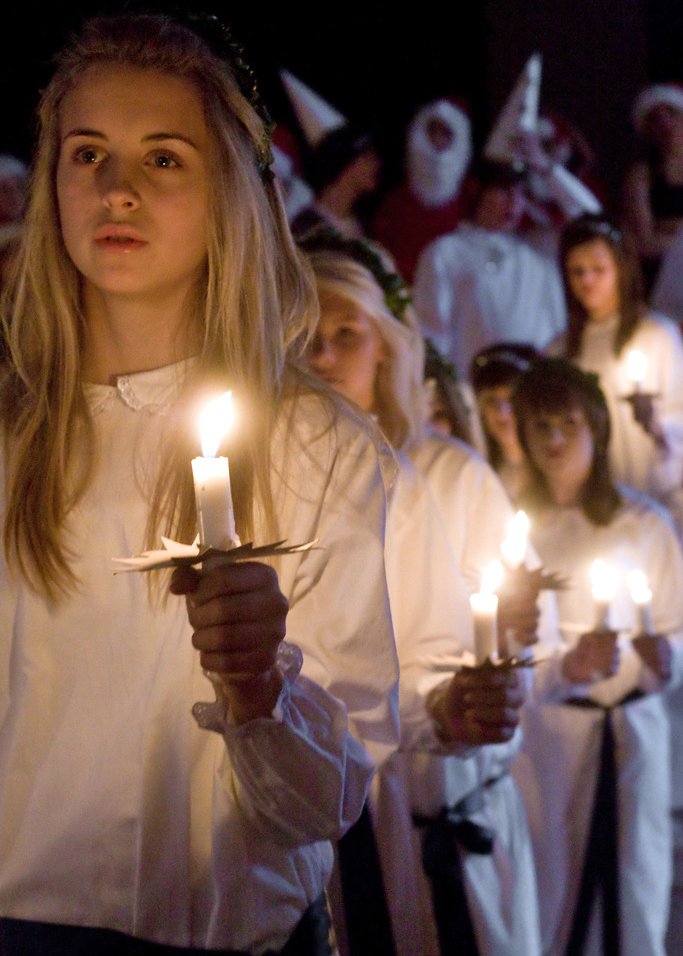 🇸🇪 Stockholm, Sweden and 4 moreSaint Lucy's Day
A December festival of light and song held across Scandinavia and Italy to honour a Christian martyr.Festival · Breakfast
🇸🇪 Stockholm, Sweden and 4 moreSaint Lucy's Day
A December festival of light and song held across Scandinavia and Italy to honour a Christian martyr.Festival · Breakfast
 🇬🇧 United Kingdom and 5 moreYule log
A log kept burning on the hearth through the twelve days of Christmas, for luckSeasonal
🇬🇧 United Kingdom and 5 moreYule log
A log kept burning on the hearth through the twelve days of Christmas, for luckSeasonal
 🇳🇿 New ZealandMatariki
The Māori New Year marked by the midwinter rising of the Pleiades clusterSeasonal
🇳🇿 New ZealandMatariki
The Māori New Year marked by the midwinter rising of the Pleiades clusterSeasonal