Seasons, harvest and the calendarLatin America and the CaribbeanIndigenous and traditional
Willkakuti
An Aymara new year at the June solstice, marking the sun's return

Willkakuti is an Aymara new year kept each 21 June, the winter solstice in the southern hemisphere. Bolivia made the day a national holiday in 2009. Chile keeps it as well, and so does the Puno region in southern Peru, while Tiwanaku is the main place of gathering.
When is Willkakuti kept?
Willkakuti is kept every year on 21 June, the winter solstice in the south.
On 21 June each year, Aymara communities greet the return of the sun after the year's longest night. They call the day Willkakuti, or Machaq Mara, the new year. Bolivia recognised it as a national holiday in 2009, and the biggest crowds gather at Tiwanaku, the place that has become the celebration's main home.
Names for the day
Willkakuti is the name English speakers use most. In Aymara it means the return of the sun. Machaq Mara, another Aymara name, means new year, and the sources record three further names: Pacha Kuti, Jach'a Laymi and Mara T'aqa. Spanish speakers call the observance Año Nuevo Andino Amazónico, the Andean-Amazonic New Year, a phrase that reaches out to Andean and Amazonian peoples generally rather than to Aymara speakers alone. The day is described as an Aymara celebration, and the names it carries are Aymara words.
The June solstice
The date never moves: 21 June. In the southern hemisphere that day is the winter solstice, when the night runs longest and the sun stands at its lowest. After it, daylight lengthens again, which is the turn the Aymara name greets. The same date opens a new year in the Aymara calendar, and years in that count are numbered: the sources note that 2013 was year 5521. Willkakuti falls in the same month every year, on a fixed date.
A public holiday
In 2009 Bolivia declared Willkakuti a national holiday. The government of Evo Morales made the decision, and it brought the Aymara new year into the country's official calendar. Before that step the sources record no national standing for the day, and no earlier date for its beginning. What they describe is an Aymara celebration kept across the Andes. The 2009 declaration is the earliest event connected with the observance that the sources give.
Tiwanaku and other sites
Tiwanaku in Bolivia is the place the sources name as the hub of the celebration, and it is there that the largest marking of the day happens. Willkakuti is not confined to one location. In 2013 it was marked in more than two hundred places. The sources list Uyuni, Samaypata, Inka Raqay and Inkallaqta among them. The spread of sites points to a date kept in many communities at once rather than at a single place.
How Willkakuti is kept
The day belongs to Aymara people and to other Andean communities who join them. Where it is a public holiday in Bolivia, many people travel to be with family and to take part. The biggest gathering forms at Tiwanaku, named as the hub of the celebration. Elsewhere the day is marked locally; in 2013 it happened in more than two hundred places. Chile keeps the date as well, and so does the Puno region in southern Peru.
When and where
It comes once a year, on 21 June. That is the winter solstice south of the equator, the longest night of the southern year. The Aymara calendar numbers its own years, so the same day is also a new year: 2013 was year 5521 in that count.
The day belongs to Bolivia first, where it is a public holiday. Chile keeps it as well, and so does the Puno region in southern Peru. In Bolivia the strongest focus is Tiwanaku. In 2013 the observance reached more than two hundred places, among them Uyuni, Samaypata, Inka Raqay and Inkallaqta.
What Willkakuti means
The name carries the meaning: the sun comes back. Aymara people meet the longest night of the year as the start of a new cycle, and Machaq Mara, new year, says this plainly. The date also belongs to a longer count, since the Aymara calendar reached year 5521 in 2013. Season, calendar and community come together in one observance.
Questions people ask about Willkakuti
When is Willkakuti kept?
Willkakuti is kept every year on 21 June, the winter solstice in the south.
What is Willkakuti?
It is an Aymara new year, and its name means the return of the sun. It is kept on 21 June, the winter solstice in the south. Machaq Mara, another name for the day, means new year. Bolivia treats it as a national holiday.
Where is it kept?
In Bolivia, where it is a public holiday. Chile keeps it too, and so does the Puno region in southern Peru. Tiwanaku is the main gathering place. In 2013 the day was marked in more than two hundred locations.
Who takes part?
Aymara people, whose language gives the day its names, and other communities in the Andes who join the gatherings. The sources give no founder and no founding date. The public standing of the day in Bolivia begins with the 2009 declaration.
Why does it fall in June?
June is midwinter south of the equator, so the night is at its longest. After the solstice the days grow longer, and the Aymara name, return of the sun, describes that turn. The same date is the Aymara new year.
See also
 IntiThe Inca sun deity, honoured with temples, offerings and the June festival Inti Raymi
 Simbang GabiA nine-day series of early morning Masses held in the Philippines to prepare for Christmas.
 Qoyllur Rit'iAn Andean mountain pilgrimage uniting indigenous star lore and Catholic devotion
 TurrónA festive Mediterranean nut-and-honey confection shared at Christmas and local feasts
Good reading and sources
The facts on this page come from the Wikipedia article "Willkakuti", written by its contributors and used under the CC BY-SA 4.0 licence, and from its Wikidata record (CC0). EveryParampara rewrote the text in its own words, with AI assistance, and compares every page with the article to make sure no passage is copied. It may be reused under the same CC BY-SA 4.0 licence with a link back.
It may contain mistakes. Traditions differ from one family, village and community to the next, and the people who keep them know them best. If something is wrong, tell us. Last refreshed 2026-10-05.
More from Bolivia
All the traditions of Bolivia
🇵🇪 Cusco, Peru and 4 moreIntiinti (Quechua)
The Inca sun deity, honoured with temples, offerings and the June festival Inti RaymiSpiritual
 🇨🇱 Santiago, Chile and 3 moreCueca
A courtship dance of Chile and the Andes where partners trace circles with handkerchiefs to mimic a rooster and hen.Performance
🇦🇷 Salta, Argentina and 3 moreZamba
A graceful Argentine couple dance of circling steps and fluttering white handkerchiefsPerformance
🇨🇱 Santiago, Chile and 3 moreCueca
A courtship dance of Chile and the Andes where partners trace circles with handkerchiefs to mimic a rooster and hen.Performance
🇦🇷 Salta, Argentina and 3 moreZamba
A graceful Argentine couple dance of circling steps and fluttering white handkerchiefsPerformance
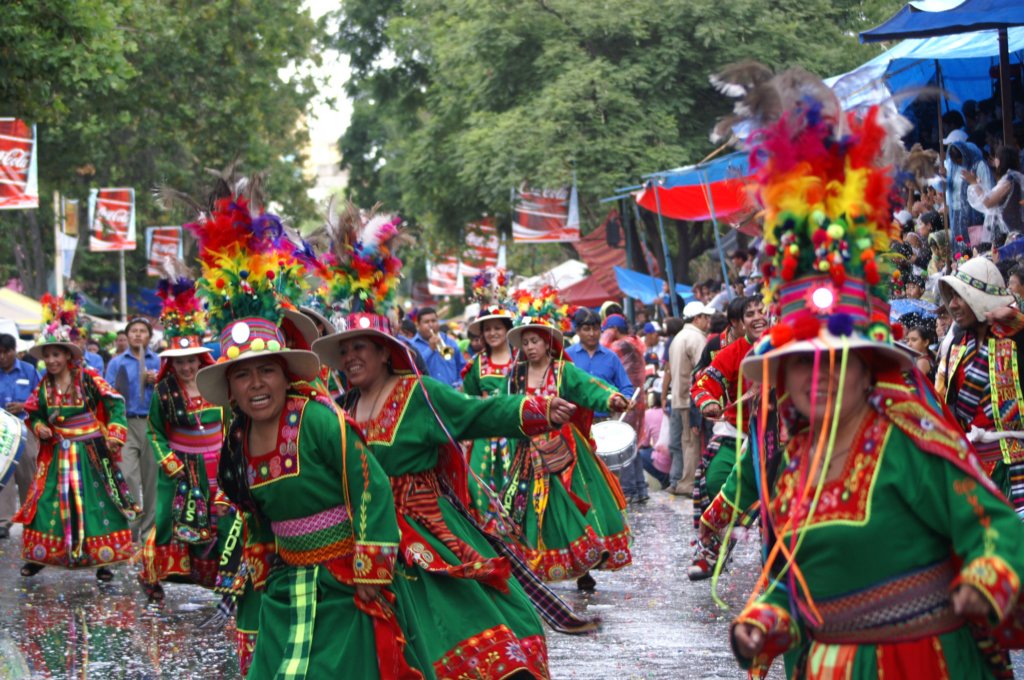 🇧🇴 Potosí, BoliviaTinku
A ritual combat and dance from northern Potosí, Bolivia, honoring Pachamama through ceremonial fighting and performance.Festival
🇧🇴 Potosí, BoliviaTinku
A ritual combat and dance from northern Potosí, Bolivia, honoring Pachamama through ceremonial fighting and performance.Festival
The same idea elsewhere
New Year compared 🇨🇳 Shanghai, China and 1 moreJiaozi餃子
Crescent Chinese dumplings filled with meat or vegetables, eaten for fortune and feastsTable custom · Breakfast
🇨🇳 Shanghai, China and 1 moreJiaozi餃子
Crescent Chinese dumplings filled with meat or vegetables, eaten for fortune and feastsTable custom · Breakfast
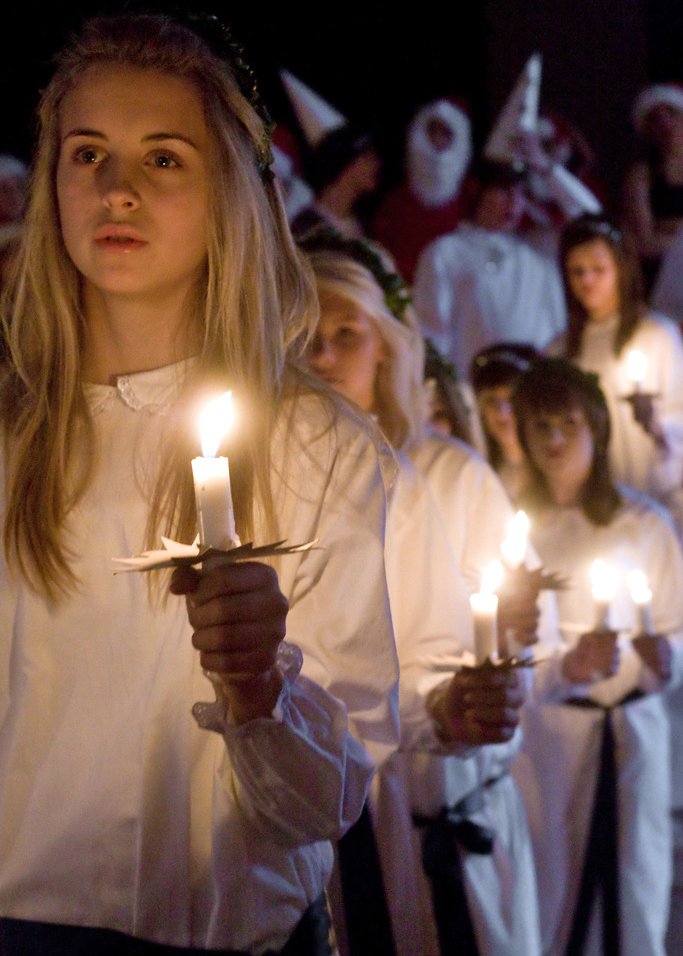 🇸🇪 Stockholm, Sweden and 4 moreSaint Lucy's Day
A December festival of light and song held across Scandinavia and Italy to honour a Christian martyr.Festival · Breakfast
🇸🇪 Stockholm, Sweden and 4 moreSaint Lucy's Day
A December festival of light and song held across Scandinavia and Italy to honour a Christian martyr.Festival · Breakfast
 🇬🇧 United Kingdom and 5 moreYule log
A log kept burning on the hearth through the twelve days of Christmas, for luckSeasonal
🇬🇧 United Kingdom and 5 moreYule log
A log kept burning on the hearth through the twelve days of Christmas, for luckSeasonal
 🇳🇿 New ZealandMatariki
The Māori New Year marked by the midwinter rising of the Pleiades clusterSeasonal
🇳🇿 New ZealandMatariki
The Māori New Year marked by the midwinter rising of the Pleiades clusterSeasonal