Life-cycle ritesNorth AfricaPagan and ancient
Ancient Egyptian funerary practices
Rites for the dead in ancient Egypt: preserving the body, spells and grave goods

Ancient Egyptians believed a person needed certain rites after death to reach an afterlife. From the Predynastic period to the Ptolemaic dynasty they mummified bodies, recited spells and placed food, jewellery and other goods in tombs.
When is Ancient Egyptian funerary practices kept?
Ancient Egyptian funerary practices is kept at death, from the Predynastic period until the end of the Ptolemaic dynasty.
In ancient Egypt, death was not an end but a passage that required care. People believed the body had to be preserved, spells spoken and provisions placed in the tomb so the dead could live on. These practices shaped Egyptian life for thousands of years, from simple pit burials to pyramids, mummy masks and canopic jars.
What it is
Ancient Egyptian funerals were a set of rites that, people believed, secured life after death. Three things stayed central even as details changed across the centuries: preparing the corpse, performing magical rituals and leaving goods in the grave. The body was preserved so it could serve as a home for the dead. Spells were spoken to guide and protect them. Objects from daily life, from jewellery to games, were laid in tombs because they were thought to be needed again. Without these steps a funeral was not considered complete.
Origins and history
The oldest graves found in Egypt belong to the Merimde culture, dated to about 4800 to 4300 BCE. Those people, in the Nile delta, made clay figures but put nothing in the grave. The first burials with offerings come from Omari and Maadi, villages in the north near today's Cairo, where a single pot was set beside the dead, most likely to hold food. In the Badarian period, from about 4400 to 3800 BCE, round graves with one pot continued the same habit. Later, in the Naqada II period, bodies were laid in a crouched position, facing the rising sun in the east or the west, the land of the dead. Mummification began around 3600 BCE, with the body treated with oils from conifer resin and aromatic plants.
Tombs and grave goods
In the First Dynasty, wealthier Egyptians built tombs above the grave instead of leaving the body in sand. These mudbrick structures, now called mastabas, had recessed walls copied from the king's palace. A stone slab bearing the dead person's name stood at the entrance, marking the grave as an individual's. Grave goods grew to include furniture, jewellery and games, and in the richest tombs they ran into the thousands. Coffins made for the tomb itself appear in this period. Under the Old Kingdom, high officials were buried in stone mastabas around the king's pyramid, while kings lay in pyramids. Later, the dead were associated with Osiris, the god of the dead. Elite bodies were mummified, swathed in cloth, and laid in wooden or stone coffins.
What it means
Egyptians held that a person entered the next world only if they had a purpose there. A king qualified because he had ruled; nobles hoped the king, who became a god at death, would grant them the same favour. Early royal graves contained servants who were killed, probably to attend the king, and later small figures and wall paintings took their place. Those who served a king in life often asked to be buried near him. Offerings and prayers were made at a false door, a stone likeness of a doorway built into the chapel, so the dead could receive them. Spells written inside coffins were meant to guide and shield the deceased.
Later changes
Funerary texts were once reserved for kings. In the First Intermediate period, royal power weakened and these spells became available to others, so more people could hope for an afterlife. Local art styles multiplied, and coffin decoration varied from place to place, including pairs of falcon marked eyes and different sets of hieroglyphs. In the Middle Kingdom, the Eleventh Dynasty, based at Thebes, cut royal tombs into the mountains there, while Twelfth Dynasty rulers and their officials were buried near Lisht in the north. Ordinary graves stayed plain: a wooden box, a cloth mask, some bread and meat, and beer for the dead. The customs lasted into the Graeco-Roman period.
How Ancient Egyptian funerary practices is kept
When someone died, the body was first taken for preparation. It was treated with oils and resins, then wrapped in cloth, and in some periods a plastered mask was laid over the face. Internal organs were placed in canopic jars. Priests recited spells, and the coffin carried inscriptions asking for offerings. The body then travelled to the tomb, where family and officials left food, drink, jewellery, weapons or model figures. A final rite was performed at a false door or chapel, where prayers were said and gifts of food presented. The same pattern, with changes in detail, ran through Egyptian history.
When and where
There was no fixed day for these rites. They began when a person died and ran in a set order over the days that followed. Offerings and prayers for the dead continued at the tomb afterwards. The practices described here were kept from the Predynastic period until the end of the Ptolemaic dynasty.
Ancient Egypt, chiefly along the Nile and its desert edges. Burials cluster at sites named in the sources: shallow pits and village graves in the north near Cairo, mastaba fields beside royal pyramids, rock cut tombs in the mountains at Thebes, and cemetery grounds near Lisht.
What Ancient Egyptian funerary practices means
Those who kept these customs believed that death was a doorway, not an ending. The body had to be kept whole so the person could live on; spells were the words that opened the way; goods in the tomb were provisions for a continued existence. Entry depended on being useful in the next world, which is why kings were thought certain of it and others hoped for a share. The tomb was a house, the false door a place to be fed, and a name carved on a stone slab a way of being remembered.


Questions people ask about Ancient Egyptian funerary practices
When is Ancient Egyptian funerary practices kept?
Ancient Egyptian funerary practices is kept at death, from the Predynastic period until the end of the Ptolemaic dynasty.
What were ancient Egyptian funerary practices?
A set of rites that ancient Egyptians believed were needed for life after death. They prepared and preserved the body, recited magic spells, and placed goods such as food, jewellery and games in the tomb. These practices changed across thousands of years, but these three elements stayed.
Where did burials take place?
In Egypt, mostly beside the Nile. Early graves were simple pits. Later came mudbrick mastabas, pyramids for kings, and tombs cut into the mountains at Thebes. Officials of the Twelfth Dynasty were buried near Lisht in the north of the country.
Why did they mummify the body?
Egyptians thought the person needed a preserved body to live on after death. From around 3600 BCE the dead were treated with oils and wrapped in cloth. Internal organs were stored separately in canopic jars, and masks of plastered cloth were laid over the face.
What was placed in a tomb?
Goods the dead were thought to need: food and drink, jewellery, furniture, games, weapons, amulets and small figures. In the richest tombs these ran into the thousands. Wall reliefs and wooden models sometimes stood in for real objects.
See also
 MawlidAn annual festival marking the birth of the Prophet Muhammad, marked by poetry, processions and feasts.HamadshaA Moroccan possession rite kept by Muslim fraternities to cure affliction and restore social balance through music and d
 Traditional tattooingThe ancient custom of marking the skin for protection, healing, status and sacred rites
 Opet FestivalAn ancient Egyptian festival in Thebes celebrating divine kingship and the Nile flood
Good reading and sources
- World's Only Known Pregnant Egyptian Mummy RevealedSmithsonian Magazine, Article
- Ancient Egyptian BurialWorld History Encyclopedia, Article
- The Sacred and Secret Rituals in the Egyptian Book of the DeadNational Geographic, Article
- World's Only Known Pregnant Egyptian Mummy RevealedSmithsonian Magazine, Article
- Ancient Egyptian BurialWorld History Encyclopedia, Article
- The Sacred and Secret Rituals in the Egyptian Book of the DeadNational Geographic, Article
- Ancient Egyptian funerary practices on WikipediaEncyclopedia
- More photos on Wikimedia CommonsPhotos and video
- Wikidata recordOpen data
The facts on this page come from the Wikipedia article "Ancient Egyptian funerary practices", written by its contributors and used under the CC BY-SA 4.0 licence, and from its Wikidata record (CC0). EveryParampara rewrote the text in its own words, with AI assistance, and compares every page with the article to make sure no passage is copied. It may be reused under the same CC BY-SA 4.0 licence with a link back.
It may contain mistakes. Traditions differ from one family, village and community to the next, and the people who keep them know them best. If something is wrong, tell us. Last refreshed 2026-10-05.
More from Egypt
All the traditions of Egypt 🇰🇪 Kenya and 5 moreBurial
Placing the dead in the ground or a structure to honor them and guide their journey.Rite of passage
🇰🇪 Kenya and 5 moreBurial
Placing the dead in the ground or a structure to honor them and guide their journey.Rite of passage
 🇪🇬 EgyptOpening of the mouth ceremony
An ancient Egyptian rite to awaken a spirit's senses for the afterlifeRite of passage · Feasts and festival meals
🇵🇬 Papua New Guinea and 5 moreCouvade
Childbirth rituals where fathers take to bed and mimic the labor of childbirthRite of passage
🇪🇬 EgyptOpening of the mouth ceremony
An ancient Egyptian rite to awaken a spirit's senses for the afterlifeRite of passage · Feasts and festival meals
🇵🇬 Papua New Guinea and 5 moreCouvade
Childbirth rituals where fathers take to bed and mimic the labor of childbirthRite of passage
 🇺🇸 United States and 5 moreBaby shower
A gift-giving party for a new or expected baby, kept in many countriesRite of passage
🇺🇸 United States and 5 moreBaby shower
A gift-giving party for a new or expected baby, kept in many countriesRite of passage
The same idea elsewhere
Death and mourning compared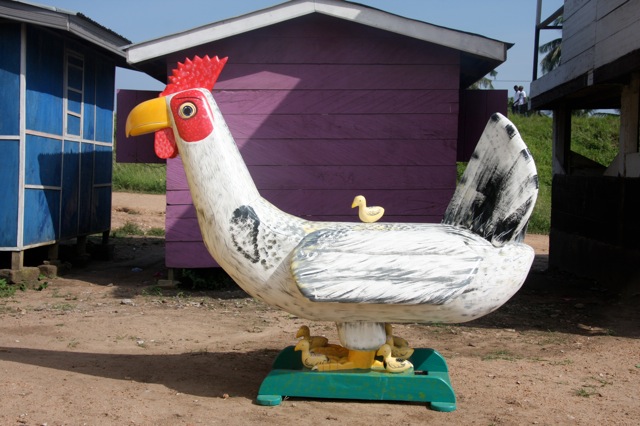 🇬🇭 Accra, GhanaFantasy coffinsAbebuu adekai
Custom hand-carved burial caskets shaped as animals, tools and symbols in southern GhanaRite of passage
🇬🇭 Accra, GhanaFantasy coffinsAbebuu adekai
Custom hand-carved burial caskets shaped as animals, tools and symbols in southern GhanaRite of passage
 🇰🇷 Jeju, South KoreaGut굿
Sacred rites of song, dance, and spirit communion performed by Korean shamansSpiritual
🇰🇷 Jeju, South KoreaGut굿
Sacred rites of song, dance, and spirit communion performed by Korean shamansSpiritual
 🇨🇳 Puyang, ChinaFeng shui風水
The Chinese spatial practice of aligning homes and graves with natural energyFolklore
🇨🇳 Puyang, ChinaFeng shui風水
The Chinese spatial practice of aligning homes and graves with natural energyFolklore
 🇬🇭 Cape Coast, GhanaFetu Afahye
A harvest festival of cleansing, boat races and royal durbars in Cape Coast, GhanaFestival · Feasts and festival meals
🇬🇭 Cape Coast, GhanaFetu Afahye
A harvest festival of cleansing, boat races and royal durbars in Cape Coast, GhanaFestival · Feasts and festival meals