Life-cycle ritesMiddle EastJewish
Upsherin
In its own language: אָפּשערן
A boy's first haircut at three, the day his Jewish learning begins

A first-haircut rite kept by Jewish families, most widely among Haredi and Hasidic communities, usually when a boy reaches three. It marks his start in formal religious learning, and many celebrate it on Lag BaOmer, sometimes at the burial places of revered teachers.
When is Upsherin marked?
Upsherin is kept as part of Lag BaOmer, which is on Tuesday, 25 May 2027.
Upsherin is a Jewish ceremony for a boy's first haircut, usually at the age of three. Families who keep it treat the cut as the moment he begins to learn, taking on a skullcap and ritual fringes. It is common across many Jewish communities and especially among Haredi and Hasidic families. Sometimes it is held beside the graves of teachers revered in Jewish tradition, with songs, sweets and wine.
What it is
An upsherin is the first time a Jewish boy's hair is cut. Most families hold it when he is three, though some Hasidic groups do it at two and some Sephardic families, especially in Jerusalem, wait until five. The boy begins wearing a skullcap (yarmulke) and fringed garments (tzitzit), and he starts learning the Hebrew letters and prayers. Among Hasidic families the day is treated as his first step into the classroom. The ceremony is kept by a broad range of Jewish households, and it is most at home in Haredi and Hasidic circles.
Origins and history
The custom is fairly recent in Jewish life, though its pieces are older. The anthropologist Yoram Bilu, of the Hebrew University of Jerusalem, argues that it rests on little religious footing and that its spread is mostly social. Two habits of hair met in it: letting the ear-locks grow, and cutting the hair of the head. A ritual cut for boys, perhaps borrowed from the practice of shaving a Muslim child's head at a saint's shrine, was known in medieval times among the Musta'arbim, the Jewish communities native to the land. In the 1500s the kabbalist Isaac Luria gave the ear-locks a mystical weight and helped fix the ceremony's current shape. It stayed largely Sephardic for a time, then took hold among East European Hasidim over roughly two centuries and later spread to Jewish communities abroad.
How it is kept
The cutting itself is often shared out. Guests take turns snipping a lock, and the boy drops a coin into a charity box for each one. Sometimes the cut hair is weighed, and a gift to charity matches its weight. Long hair may be handed to an organisation that turns donated hair into wigs for people who lose theirs to cancer treatment. A Hasidic family links the day to the start of study: the Hebrew letters are coated in honey and the child licks them off, so that learning tastes sweet. A Hebrew song drawn from Deuteronomy 33:4 may be sung, and at Lag BaOmer gatherings parents give out wine and sweets.
Lag BaOmer and Meron
Hair is not cut while the Omer is counted, from Passover until Lag BaOmer, but the rule lifts on the day itself. A boy whose third birthday falls inside that stretch therefore waits for the festival. By the 1700s and 1800s travellers described crowds at Meron in Israel on Lag BaOmer, where bonfires burned and children's hair was cut. First haircuts there come with wine and sweets handed out by the parents. Families in Jerusalem who cannot make the journey gather instead at the burial place of Simeon the Just. A Bostoner Rebbe, Levi Yitzchak Horowitz, revived an older practice in 1983: a bonfire and haircuts at Tiberias, close to where Rabbi Akiva is buried.
What it means
Jewish teaching often compares a person's life to a tree. Leviticus 19:23 says the fruit of a newly planted tree is set aside for three years, and some families read the same three years into a boy's hair: no cut until he turns three. The hope is that he will grow in knowledge and good deeds, and one day have a family of his own. Some communities call a boy who has not yet had the cut an orlah, the word for a tree whose fruit may not be picked. Chabad Hasidim put it another way: for three years a child takes in what surrounds him, not yet ready to give, and at three his education begins and he can start to offer something of his own.
How Upsherin is kept
A family decides on the day, often a boy's third birthday, and invites relatives and friends. Someone cuts the first lock. Then each guest takes a turn with the scissors, and with every snip the boy puts a small coin into a charity box. In some families the hair is weighed and matched with a donation, or given away to be made into wigs. Hasidic parents turn the occasion into a first lesson: the Hebrew letters coated in honey for the child to lick, a song from Deuteronomy. At Meron or Jerusalem on Lag BaOmer the same act happens in a crowd, with wine and sweets passed around.
When and where
The usual age is three. Some Hasidic groups, Gur among them, hold it at two, following a reading of Genesis 21:8 in which Abraham marks Isaac's weaning. In some Sephardic circles, especially Jerusalem, the age is five. Many families wait for Lag BaOmer, the day in the Omer count when haircuts are allowed again, so a boy whose birthday falls earlier in the season celebrates then.
The rite belongs to Jewish communities everywhere, and its strongest settings are in Israel and in the old centres of Jewish life in Europe and the Middle East where Hasidic and Sephardic families settled. Meron's Lag BaOmer gathering became a mass affair. Jerusalem has its own meeting place for those who stay behind, and Tiberias has hosted a revived celebration since 1983.
What Upsherin means
For those who keep it, the first haircut says something about growth. A child is likened to a young tree: for three years nothing is taken from him, and then he begins to bear fruit in learning and kindness. The ear-locks left uncut carry their own meaning, a mark of devotion that Isaac Luria taught his followers to value. The honey on the letters is meant to leave the taste of study sweet. And the day itself is a threshold: the boy stops being only a receiver and starts to belong to the community of learners.


Days Upsherin is marked
Questions people ask about Upsherin
When is Upsherin marked?
Upsherin is kept as part of Lag BaOmer, which is on Tuesday, 25 May 2027.
What is an upsherin?
It is a Jewish ceremony for a boy's first haircut, usually at three years old. The cut marks his entry into formal religious learning, when he begins to wear a skullcap and fringed garments and to learn the Hebrew letters and prayers.
Where do people celebrate it?
At home or in a synagogue for most families. The largest gatherings are at Meron in Israel on Lag BaOmer, with a smaller one in Jerusalem at the burial place of Simeon the Just. Tiberias has had a revived celebration since 1983.
Why is the hair not cut before the ceremony?
Some families read the three-year rule for a newly planted tree in Leviticus 19:23 into a child's life, so his hair is left alone until he turns three. A boy who has not yet had the cut is sometimes called an orlah, the same word used for such a tree.
What happens to the hair?
It may be weighed, with a matching gift to charity, or donated so it can be made into wigs for people who have lost their hair during cancer treatment. In some families each guest cuts a lock and the boy gives a coin to charity for every one.
See also
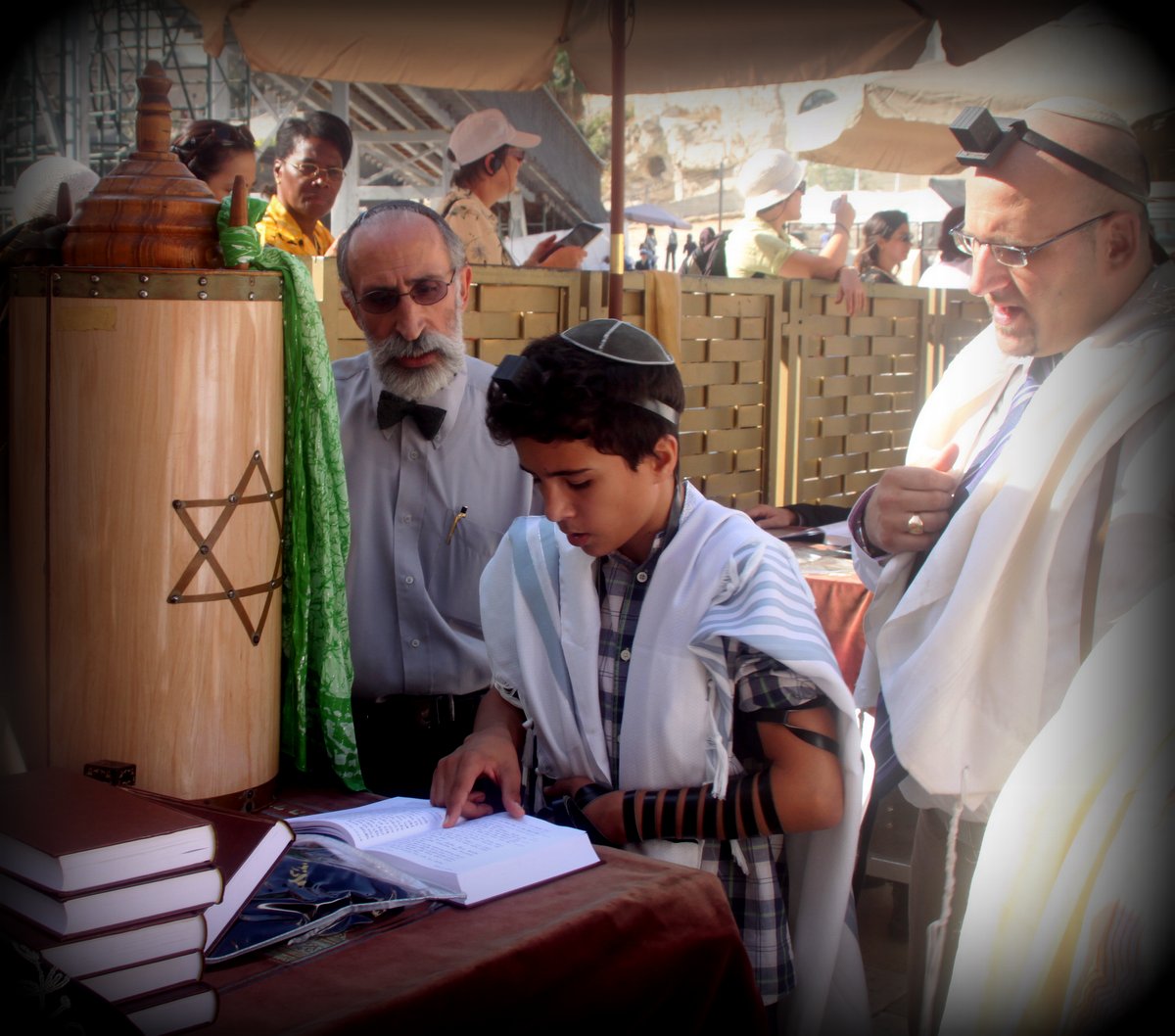 Bar and bat mitzvahA Jewish rite of passage marking when youth reach adulthood and take responsibility for their own actions.
 TallitA four-cornered Jewish prayer shawl with ritual fringes worn during worship
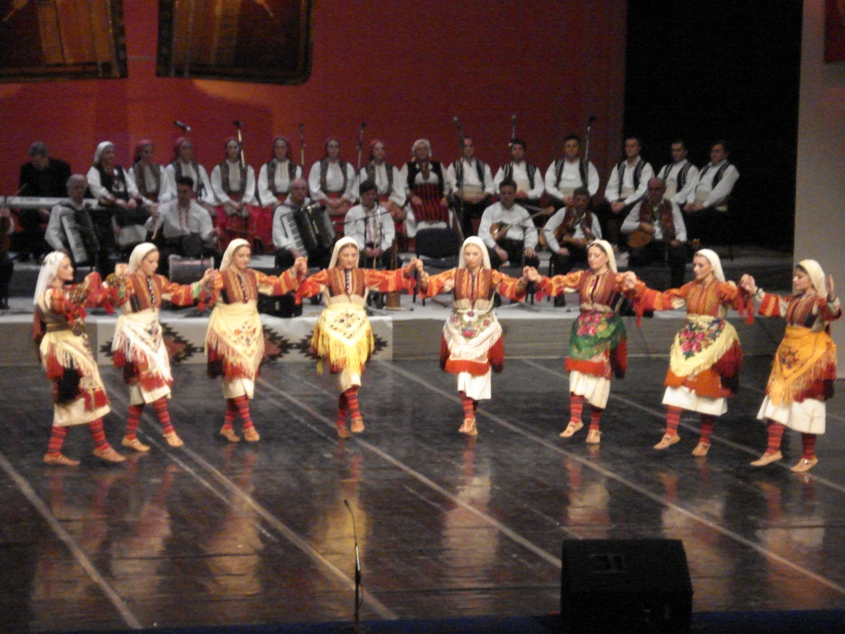 HoraA circle dance from Southeast Europe, danced at weddings and festivals
 Profession of FaithA public declaration of religious belief across Jewish, Christian and Islamic traditions
Good reading and sources
- Upsherin on WikipediaEncyclopedia
- More photos on Wikimedia CommonsPhotos and video
- Wikidata recordOpen data
The facts on this page come from the Wikipedia article "Upsherin", written by its contributors and used under the CC BY-SA 4.0 licence, and from its Wikidata record (CC0). EveryParampara rewrote the text in its own words, with AI assistance, and compares every page with the article to make sure no passage is copied. It may be reused under the same CC BY-SA 4.0 licence with a link back.
It may contain mistakes. Traditions differ from one family, village and community to the next, and the people who keep them know them best. If something is wrong, tell us. Last refreshed 2026-10-10.
More from Israel
All the traditions of Israel
🇮🇱 Jerusalem, Israel and 5 moreBar and bat mitzvahבַּר מִצְוָה / בַּת מִצְוָה
A Jewish rite of passage marking when youth reach adulthood and take responsibility for their own actions.Rite of passage · Feasts and festival meals
 🇮🇱 Tiberias, Israel and 2 moreYahrzeitיאָרצײַט (yortsayt)
A Jewish death anniversary marked by prayer and a burning candle to honour the departed.Rite of passage
🇮🇱 Tiberias, Israel and 2 moreYahrzeitיאָרצײַט (yortsayt)
A Jewish death anniversary marked by prayer and a burning candle to honour the departed.Rite of passage
 🇰🇪 Kenya and 5 moreBurial
Placing the dead in the ground or a structure to honor them and guide their journey.Rite of passage
🇰🇪 Kenya and 5 moreBurial
Placing the dead in the ground or a structure to honor them and guide their journey.Rite of passage
 🇮🇱 Israel and 5 moreZeved habatזֶבֶד הַבָּת
A Jewish naming ceremony for newborn girls, kept by Sephardi, Mizrahi and Ashkenazi communities.Rite of passage
🇮🇱 Israel and 5 moreZeved habatזֶבֶד הַבָּת
A Jewish naming ceremony for newborn girls, kept by Sephardi, Mizrahi and Ashkenazi communities.Rite of passage
The same idea elsewhere
Coming of age compared 🇪🇬 Egypt and 5 moreTraditional tattooing
The ancient custom of marking the skin for protection, healing, status and sacred ritesDress
🇪🇬 Egypt and 5 moreTraditional tattooing
The ancient custom of marking the skin for protection, healing, status and sacred ritesDress
 🇼🇸 Samoa and 1 morePeʻa
The traditional Samoan rite of full-body tattooing for men, tapped by master artistsRite of passage
🇼🇸 Samoa and 1 morePeʻa
The traditional Samoan rite of full-body tattooing for men, tapped by master artistsRite of passage
 🇵🇬 Maprik, Papua New GuineaHaus Tambaran
A sacred house of the Sepik peoples, used for ancestor worship and male initiationSpiritual
🇵🇬 Maprik, Papua New GuineaHaus Tambaran
A sacred house of the Sepik peoples, used for ancestor worship and male initiationSpiritual
 🇯🇵 Japan and 2 moreKyūdō弓道
The Japanese martial art of archery, practiced with an asymmetrical longbowGame
🇯🇵 Japan and 2 moreKyūdō弓道
The Japanese martial art of archery, practiced with an asymmetrical longbowGame