Customs of food and drinkEast Asia
Bento
In its own language: 弁当
A single-portion packed meal in a lidded box, carried to school, work or on a train

Bento is a Japanese packed meal for one person, usually rice with fish, meat or vegetables, arranged in a lidded box. Home cooks, shops, railway stations and convenience stores all prepare it, and families carry it to school, work, picnics and train journeys.
When is Bento marked?
Bento is kept as part of Hanami, which runs from 1 to 14 April 2027.
Bento is a Japanese meal packed for one person in a box with a lid, usually rice with fish, meat or vegetables. It is made at home in the morning, bought from convenience stores, stations and bento shops, and carried to school, work, picnics and train journeys. The word also covers the boxes themselves, from disposable plastic trays to lacquered wood.
What a bento is
A bento is a meal packed for one person, of Japanese origin, in a box with a lid. The box often has sections or dividers so that strong flavours do not spread; the green plastic strip called baran is one common divider, and it also slows how quickly bacteria grow. Inside there is usually rice or noodles, fish or another meat, and pickled or cooked vegetables. Lunch is the usual time. Boxes range from throwaway plastic to lacquered wood. In Japan they are sold in convenience stores, department stores, railway stations and shops known as bentō-ya. Scholars have read the box as a text: Chie Nakane used ekiben to describe how Japanese groups are organised.
Origins and history
Portable food eaten away from home appears in the Kojiki and the Nihon Shoki, both finished in the 8th century; it was then called hoshi-ii, dried rice made by steaming grain and then drying it. A poem in The Tales of Ise mentions hoshi-ii softened by tears. The name bento came into use in the Azuchi-Momoyama period, when it meant to prepare something in advance. Wooden lacquered boxes existed by the 16th century. In the Edo period travellers carried koshibentō, and theatregoers ate makunouchi between acts. Japan's first ekiben is said to have been sold at Utsunomiya Station on 16 July 1885. Aluminium boxes followed in the Taishō era.
Making and carrying
Bento are often made at home. In Japan mothers are expected to send children to school with one that is both balanced and pleasing to look at, so some prepare ingredients the night before and pack everything in the morning. The meal is most often made by the mother or wife, though it can be bought at convenience stores, from street vendors at lunchtime, or as ekiben at train stations for a Shinkansen journey. Homemade boxes are wrapped in a furoshiki cloth that serves as a bag and then a mat. Hayaben means eating the bento early. Osechi, the New Year foods, is arranged in a stacked jūbako box much like a bento.
Styles and boxes
Named styles are many. Hinomaru bentō is white rice with one umeboshi in the centre, after the flag. Noriben covers rice with soy-soaked nori and usually fried fish, and karaage bentō is built around fried chicken; both rank high in sales at the chain Hotto Motto. Makunouchi is the classic box of rice, umeboshi, broiled salmon and rolled egg. Kyaraben looks like anime or game characters, oekakiben like people, animals or flowers, and contests reward the prettiest. Others take their name from where they are sold: ekiben at stations and on trains, soraben at airports, hokaben from take-out shops, shidashi bentō delivered for gatherings.
Beyond Japan
The word travelled with Japanese rule and with trade. Taiwan spent about fifty years under Japanese administration, and bento culture took root there. In Taiwan, Hong Kong and mainland China the meal is written 便當 and said biàndāng; in Taiwanese Hokkien it is piān-tong. Korea has its own boxed lunch, dosirak. Elsewhere in Asia the Japanese word is borrowed, or hokben, meaning steaming bento, is used. In the United States, people share bento boxes on social media, and creators such as Sulhee Jessica Woo have drawn millions of followers with themed lunches.
How Bento is kept
A parent, most often the mother or wife, or a shop, makes it. Ingredients may be cooked the night before, then the box is assembled and packed in the morning, with dividers or baran keeping flavours apart. It is wrapped in a furoshiki cloth and carried to school, work, a picnic or a train. It is eaten at midday, sometimes earlier as hayaben. Shops, convenience stores, station kiosks and street vendors sell ready-made boxes, and shidashi bentō are delivered to gatherings.
When and where
Bento has no single date. It is kept on any day, most often at midday, and whoever makes it decides that morning what goes in. Special boxes appear on particular occasions: hanami picnics in spring, sports days and school picnics, and delivered or gift meals at funerals and parties. Osechi, eaten at the New Year, is arranged in a stacked box like a bento.
Bento belongs to Japan, where it is sold everywhere from convenience stores to department stores, railway stations and street corners. It is strongest as a school and workplace lunch. Bento culture also took root in Taiwan during the years of Japanese rule, and boxed lunches of related kinds are common in Korea, Hong Kong, mainland China and other Sinophone communities.
What Bento means
At home the box carries care. A mother who packs a balanced and good-looking bento is seen to be doing her duty, and the meal stands for the family that made it. Scholars have taken it further: Chie Nakane compared ekiben to the way Japanese groups hold together without depending on outsiders, and others have read the small, tightly packed box as a picture of Japanese culture. For a traveller, a station bento marks a journey.


Days Bento is marked
Questions people ask about Bento
When is Bento marked?
Bento is kept as part of Hanami, which runs from 1 to 14 April 2027.
What is a bento?
It is a single portion of food packed in a box with a lid, of Japanese origin, usually eaten at lunch. A typical one holds rice or noodles with fish or other meat, and often pickled or cooked vegetables. The word also refers to the box itself.
Where does the name come from?
The word comes from a Chinese Song dynasty term meaning convenient, brought into Japanese and written 弁当. In Japan it took on the sense of a portable meal. Earlier, such food was called hoshi-ii, or dried rice.
Can a bento be bought instead of made?
Yes. In Japan they are sold in convenience stores, department stores and bento shops, from street stalls at lunchtime and at railway stations, where they are called ekiben. Bento are also sold at airports, and restaurants deliver shidashi bentō to gatherings.
Is bento only about food?
People also make or buy the box for how it looks. Kyaraben are arranged as characters from anime, games or manga, and oekakiben as people, animals or flowers, and contests are held for the best arrangements. Cheaper boxes are often polystyrene, finer ones lacquered wood.
See also
 Gongfu teaA skilled Chinese method of brewing tea in small teaware with precise heat and timing
 Toshikoshi sobaBuckwheat noodles eaten on New Year's Eve, cut easily to let the year go
 Night markets in TaiwanStreet markets that open at sunset across Taiwan, selling snacks, drinks and goods
 JiaoziCrescent Chinese dumplings filled with meat or vegetables, eaten for fortune and feasts
Good reading and sources
- Encyclopaedia BritannicaArticle
- Events and listings: CNY food deals, Nafa open house, Singapore Art Week eventsThe Straits Times, Article
- Events and listings: CNY food deals, Nafa open house, Singapore Art Week eventsThe Straits Times, Article
- Bento on WikipediaEncyclopedia
- More photos on Wikimedia CommonsPhotos and video
- Wikidata recordOpen data
The facts on this page come from the Wikipedia article "Bento", written by its contributors and used under the CC BY-SA 4.0 licence, and from its Wikidata record (CC0). EveryParampara rewrote the text in its own words, with AI assistance, and compares every page with the article to make sure no passage is copied. It may be reused under the same CC BY-SA 4.0 licence with a link back.
It may contain mistakes. Traditions differ from one family, village and community to the next, and the people who keep them know them best. If something is wrong, tell us. Last refreshed 2026-10-05.
More from Japan
All the traditions of Japan
🇯🇵 JapanToshikoshi soba年越し蕎麦
Buckwheat noodles eaten on New Year's Eve, cut easily to let the year goTable custom · Feasts and festival meals
🇨🇳 Shanghai, China and 1 moreJiaozi餃子
Crescent Chinese dumplings filled with meat or vegetables, eaten for fortune and feastsTable custom · Breakfast
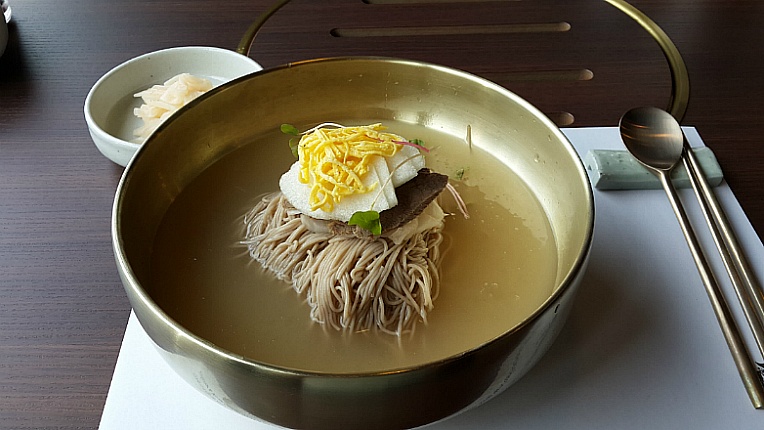 🇰🇵 Pyongyang, North Korea and 3 moreNaengmyeon냉면
Long buckwheat noodles in icy broth, born in North Korea and eaten most in summerTable custom · Dinner
🇰🇵 Pyongyang, North Korea and 3 moreNaengmyeon냉면
Long buckwheat noodles in icy broth, born in North Korea and eaten most in summerTable custom · Dinner
 🇯🇵 Kyoto, JapanKaiseki懐石
A multi-course Japanese dining tradition shaped by tea ceremonies and the seasonsTable custom · Dinner
🇯🇵 Kyoto, JapanKaiseki懐石
A multi-course Japanese dining tradition shaped by tea ceremonies and the seasonsTable custom · Dinner
The same idea elsewhere
All of this kind 🇺🇸 United StatesFeast of the Seven FishesFesta dei sette pesci
An Italian-American Christmas Eve seafood dinner marking abstinence from meat.Table custom · Dinner
🇺🇸 United StatesFeast of the Seven FishesFesta dei sette pesci
An Italian-American Christmas Eve seafood dinner marking abstinence from meat.Table custom · Dinner
 🇺🇦 Ukraine and 1 moreBanushбануш
A Carpathian cornmeal porridge cooked with sour cream and savoury toppingsTable custom
🇺🇦 Ukraine and 1 moreBanushбануш
A Carpathian cornmeal porridge cooked with sour cream and savoury toppingsTable custom
 🇮🇹 Naples, ItalyCaffè
Italy's daily coffee habit: espresso taken standing at the bar, and moka coffee at homeTable custom · Tea, coffee and drinking ceremonies
🇮🇹 Naples, ItalyCaffè
Italy's daily coffee habit: espresso taken standing at the bar, and moka coffee at homeTable custom · Tea, coffee and drinking ceremonies
 🇮🇹 Venice, ItalyCicchettiCicheti
A Venetian custom of small counter snacks enjoyed with a glass of local white wineTable custom · Tea-time and snacking customs
🇮🇹 Venice, ItalyCicchettiCicheti
A Venetian custom of small counter snacks enjoyed with a glass of local white wineTable custom · Tea-time and snacking customs