Dress and adornmentSouth AsiaHinduBuddhist
Bindi
A dot worn between the eyebrows, red for marriage and devotion, worn daily by many women

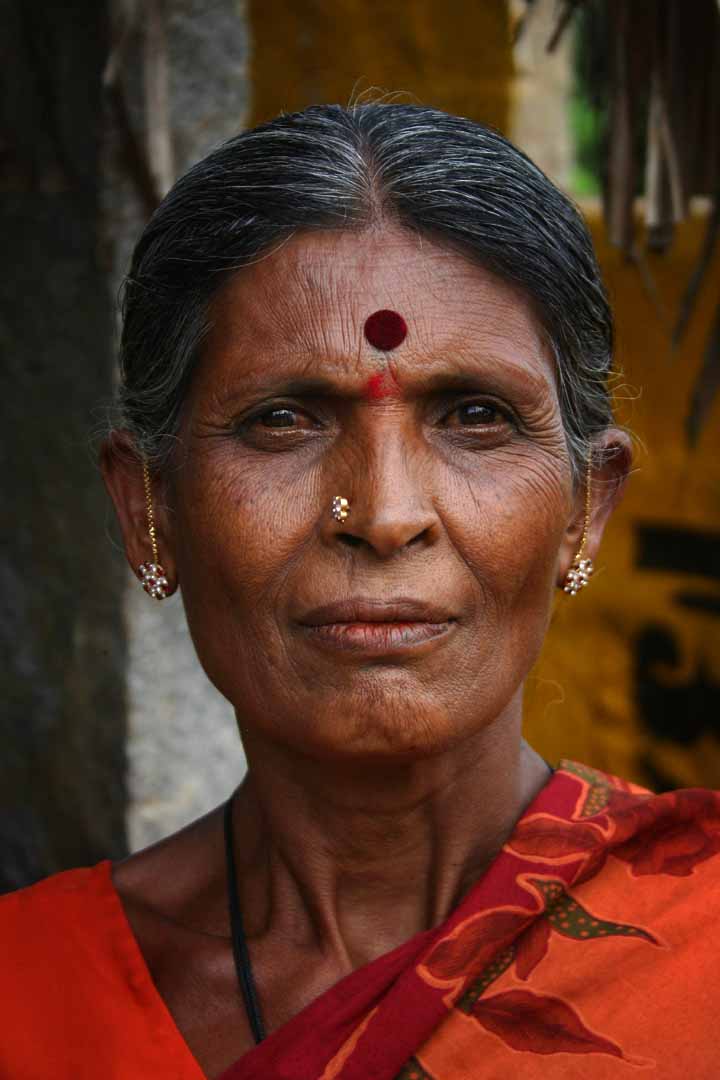
The bindi is a mark placed between the eyebrows, worn across the Indian subcontinent and by Hindu communities in Southeast Asia. Made from kumkum, vermilion, sandalwood or ready-made stickers, it carries meanings of marriage, protection and the third eye.
When is Bindi marked?
Bindi is kept as part of Durga Puja, which runs from 17 to 20 October 2026.
A bindi is a dot worn in the middle of the forehead. It can be a powder, a paste or a modern sticker. Hindu, Jain and Buddhist women across the Indian subcontinent wear it, and so do Hindu communities in Southeast Asia. Red is the older colour, and married women often keep one on every day.
What it is
The bindi sits centrally on the forehead, close to the eyebrows. Traditionally it is a red or maroon dot made with kumkum, a red powder used in worship. It may also be a paste of vermilion, sandalwood, turmeric or ash. In cities today, many people use self-adhesive stickers instead, cut from felt or thin metal in any colour and shape. The word comes from Sanskrit, where bindu means a point, a drop or a small particle. Both the dot and the word carry that sense of a single point.
Origins and history
Clay figurines of women found at Indus Valley sites have red pigment on the forehead and along the hair parting. Archaeologists cannot say whether this held religious or cultural meaning. The word bindu appears in an early Sanskrit hymn. In Sindh and in Bengal, forms of the mark are tied to older family customs. Bengali sources record that teep, the Bengali word for a bindi, was in wide use by the eighteenth century. The origins of the bindi are contested, and accounts describe several local histories rather than a single beginning.
Meanings and the third eye
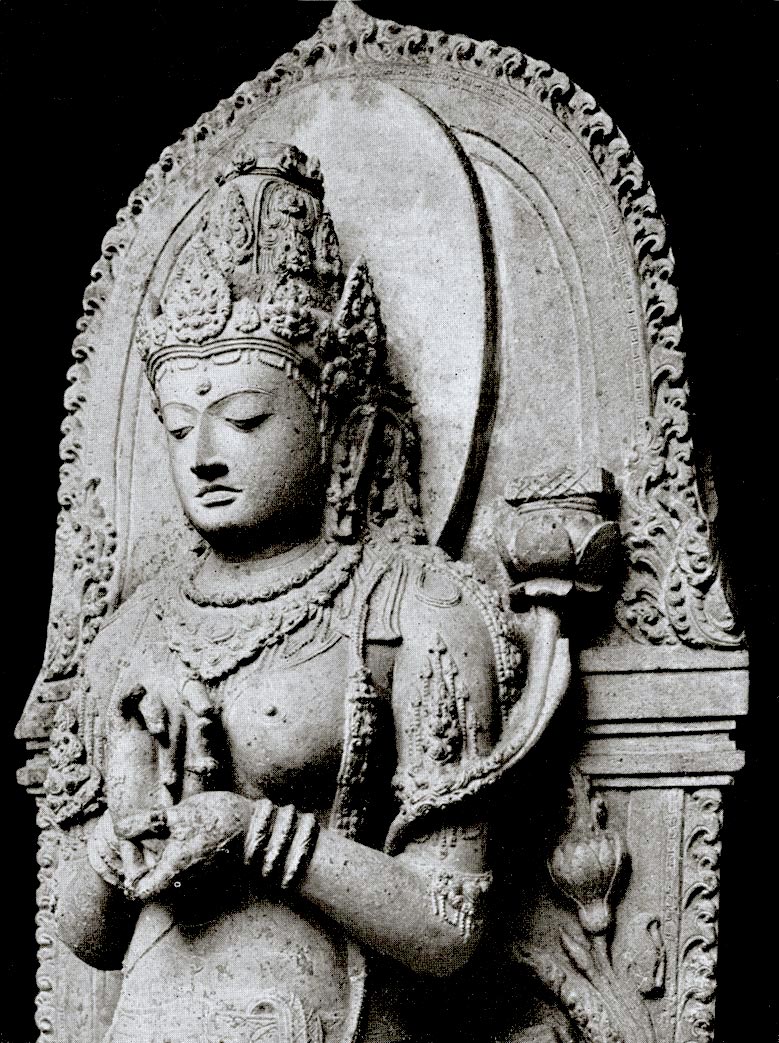
Many Hindus, Jains and Buddhists set the bindi at the point they call the ajna chakra, the sixth centre of the body in yogic thought and often named the third eye. Teachers describe it as a seat of inner guidance and of concentration. In this reading, bindu is the point from which a mandala is drawn and the point at which creation begins. Red stands for honour, love and prosperity, which is why a bride receives a bindi at her wedding.
Regional forms
The mark takes different shapes in different places. In Maharashtra women wear a large crescent with a small black dot beside it, known there as chandrakor. Bengali brides wear a wide round red bindi, often with alpana painted on the forehead and cheeks. In southern India a small red dot is paired with a white tilak below. Rajasthani women often choose a round bindi, and long tilak-shaped ones are common as well. Speakers of Bengali call the bindi teep.
Today and change
Bindis now travel far beyond the subcontinent. Immigrants from South Asia brought decorative styles to other countries, and singers and actors have worn them on stage. Some Hindus, among them the leader Rajan Zed, say the mark is religious and should not be treated as a fashion item, while others welcome the borrowing. In Pakistan, stickers are common in rural Sindh, but use has fallen in most other areas, where many people consider the bindi un-Islamic.
How Bindi is kept
A woman or girl takes kumkum or vermilion on a fingertip and presses it between the eyebrows. Beginners may use a small ring-shaped disc: wax paste goes through the hole, powder covers it, and the disc lifts off, leaving a round dot. A bride has the mark placed on her forehead at the wedding and often keeps wearing one after. Many Bengali women wear a teep daily, and more so at Durga Puja and Saraswati Puja. In Sindh, kohl dots are drawn on a newborn's face.
When and where
There is no single date. Most married women wear a bindi every day, and it is placed on a bride at her wedding. Bengali women often add a teep for festivals, especially Durga Puja and Saraswati Puja. In some communities a black mark is drawn on a newborn, and kohl dots are used against the evil eye.
The bindi belongs above all to the Indian subcontinent. India is home to the largest number of wearers, and the mark is also part of everyday life in Nepal, Bangladesh, Sri Lanka and Bhutan. Hindu communities in Indonesia, Malaysia, Singapore, Myanmar and Vietnam also keep it. In China, babies and children are given a similar mark. In Pakistan it survives mainly in Sindh, especially in Hindu villages and around Nagarparkar.
What Bindi means
For those who keep it, the bindi is more than ornament. It marks the ajna chakra, the sixth centre, which yogic teaching calls the command point and the third eye, where the two side channels are said to meet the central one and duality ends. A red bindi stands for honour, love and prosperity. On a bride it marks the change of status into married life, and in Sindh a kohl dot is a guard against the evil eye.


Days Bindi is marked
Questions people ask about Bindi
When is Bindi marked?
Bindi is kept as part of Durga Puja, which runs from 17 to 20 October 2026.
What is a bindi?
A bindi is a dot, or a modern sticker, worn in the middle of the forehead near the eyebrows. It is traditionally red or maroon and made with kumkum or vermilion. Hindus, Jains and Buddhists of the Indian subcontinent wear it, as do Hindus in parts of Southeast Asia.
Where is it worn?
India has the most wearers, and the mark is also common in Nepal, Bangladesh, Sri Lanka and Bhutan. Hindu communities in Indonesia, Malaysia, Singapore, Myanmar and Vietnam keep it too. In Pakistan it is found mostly in Sindh, and immigrants have carried it to many other countries.
Why is it placed between the eyebrows?
That spot is called the ajna chakra, the sixth centre in yogic teaching, often named the third eye. Teachers say it is a seat of concentration and inner guidance. Images of deities in meditation show the gaze resting there.
Is the bindi only religious?
No. Some people wear decorative bindis purely as style, with no religious or cultural link. Others, including some Hindu leaders, hold that the mark is sacred and should not be a fashion accessory. The question of who may wear one is still discussed.
See also
 UlosA hand-woven textile of the Batak people in Indonesia, worn for warmth and ceremony.
 SherwaniA long buttoned coat for men, worn at weddings and state occasions in South Asia
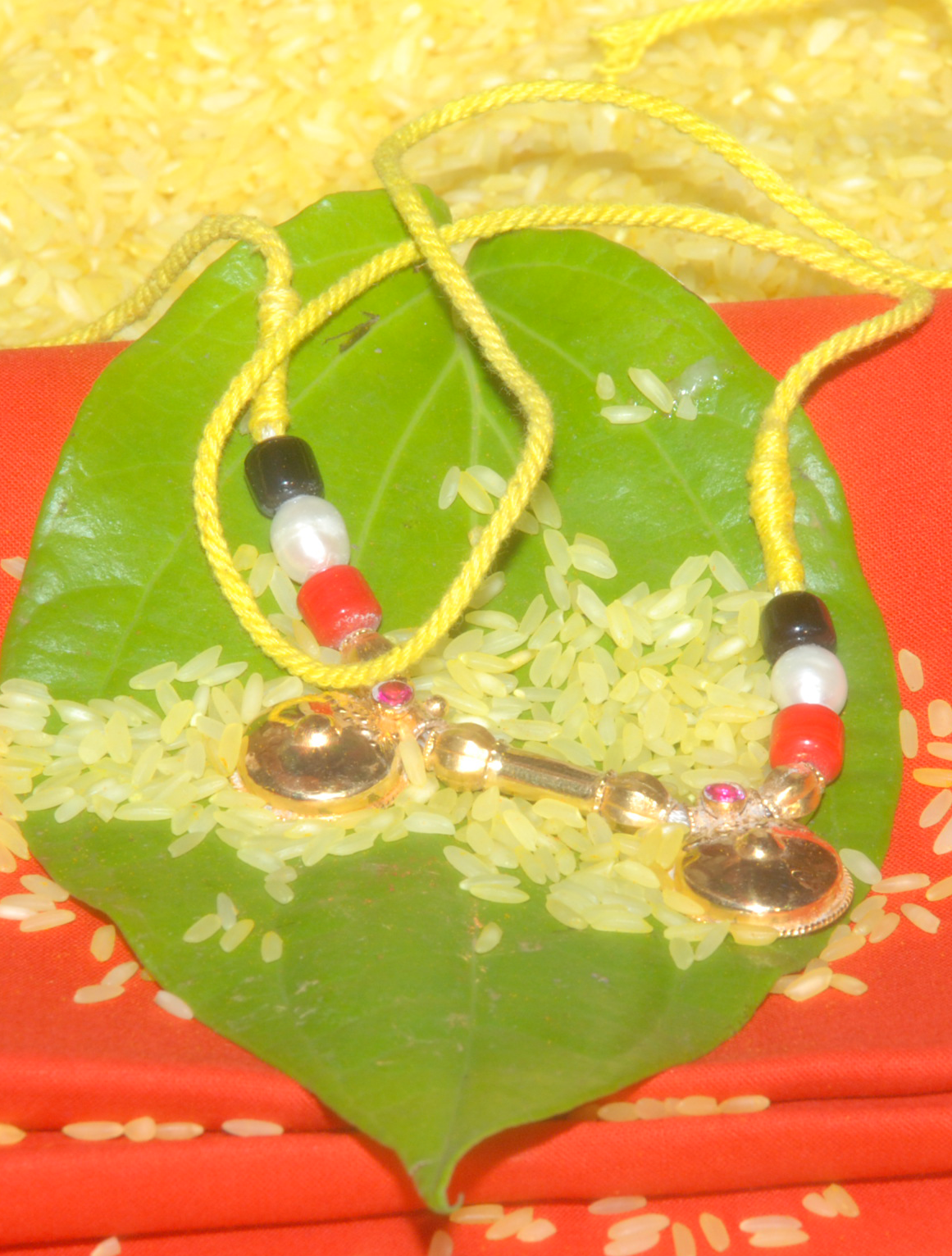 MangalasutraA necklace tied by the groom at a wedding, worn through married life
 TurbanCloth wound around the head, worn for faith, rank, shade and identity
Good reading and sources
- বাঙালি নারীদের মধ্যে টিপ পরার প্রচলন শুরু হলো যেভাবেBBC, Article
- বাঙালি নারীদের মধ্যে টিপ পরার প্রচলন শুরু হলো যেভাবেBBC, Article
- Bindi on WikipediaEncyclopedia
- More photos on Wikimedia CommonsPhotos and video
- Wikidata recordOpen data
The facts on this page come from the Wikipedia article "Bindi", written by its contributors and used under the CC BY-SA 4.0 licence, and from its Wikidata record (CC0). EveryParampara rewrote the text in its own words, with AI assistance, and compares every page with the article to make sure no passage is copied. It may be reused under the same CC BY-SA 4.0 licence with a link back.
It may contain mistakes. Traditions differ from one family, village and community to the next, and the people who keep them know them best. If something is wrong, tell us. Last refreshed 2026-10-05.
More from India
All the traditions of India
🇮🇳 India and 2 moreMangalasutraमङ्गलसूत्रम् (maṅgalasūtram)
A necklace tied by the groom at a wedding, worn through married lifeDress
🇮🇳 Pune, India and 5 moreTurbanدولبند (dolband)
Cloth wound around the head, worn for faith, rank, shade and identityDress
🇮🇳 Lucknow, India and 3 moreSherwani
A long buttoned coat for men, worn at weddings and state occasions in South AsiaDress
 🇮🇳 Mumbai, India and 1 moreDhoti
A long unstitched cloth men wrap like trousers, for worship and formal daysDress
🇮🇳 Mumbai, India and 1 moreDhoti
A long unstitched cloth men wrap like trousers, for worship and formal daysDress
The same idea elsewhere
Weddings compared 🇮🇩 IndonesiaSlametan
A short communal meal on Java where neighbours share food, prayer and a wish for peaceSpiritual · Feasts and festival meals
🇮🇩 IndonesiaSlametan
A short communal meal on Java where neighbours share food, prayer and a wish for peaceSpiritual · Feasts and festival meals
 🇷🇺 Russia and 5 moreBread and saltхлеб-соль
Bread and salt offered to a guest: a welcome kept from Russia to AlbaniaEtiquette
🇷🇺 Russia and 5 moreBread and saltхлеб-соль
Bread and salt offered to a guest: a welcome kept from Russia to AlbaniaEtiquette
 🇮🇱 Israel and 4 moreTorah readingקריאת התורה
The public reading of the Torah scroll in synagogue, chanted to a special tuneSpiritual
🇮🇱 Israel and 4 moreTorah readingקריאת התורה
The public reading of the Torah scroll in synagogue, chanted to a special tuneSpiritual
 🇨🇳 ChinaChinese paper cutting剪紙 / 剪纸 (jiǎnzhǐ)
Chinese cut paper pictures, pasted on windows and doors for luck at New YearCraft
🇨🇳 ChinaChinese paper cutting剪紙 / 剪纸 (jiǎnzhǐ)
Chinese cut paper pictures, pasted on windows and doors for luck at New YearCraft