Ukrainian embroidery
In its own language: вишивка (vyshyvka)
A stitched folk art of Ukraine, worked into shirts, cloths and church furnishings

Ukrainian embroidery, known as vyshyvka, is a needlework tradition of Ukraine. Women stitch patterns onto shirts, household linens and church cloths, and the designs differ from region to region, and even from village to village, while still being recognised as one national style.
When is Ukrainian embroidery kept?
Ukrainian embroidery is kept on kept all year, and made ready for weddings, births and church use.
Ukrainian embroidery, known as vyshyvka, is stitched decoration worked onto clothing, cloths and church furnishings across Ukraine. For centuries it has been a household art, made mostly by women, and patterns are read like a signature of the district they come from. People keep it for wear, for worship and for the ceremonies that mark family life.
What it is
Embroidery is ornament added to cloth with needle and thread. The shirt, the vyshyvanka, is the piece most often worked, with patterns along the sleeves, around the neck and cuffs, and across the chest. Other garments carry it as well, among them sheepskin coats, waist sashes and women's head coverings, and in some districts men's clothes too. Household textiles are decorated, such as towels, tablecloths, bench covers, veils, kerchiefs and pillowcases, and in certain places bed linen. Churches use embroidered covers for the sacrament and shrouds for icons. A rushnyk, a decorated cloth, is a symbolic object in ceremony.
Origins and history
Herodotus, describing the campaign of Darius in 513 BC, noted that peoples of the Balkans and western Ukraine trimmed their clothes with stitching. Towns of the 1st century AD in Ukraine have yielded embroidered garments. Pre-Christian goddess motifs survive as well, among them Berehynia, and the frescoes and miniatures of Saint Sophia Cathedral in Kyiv show eleventh-century embroidery. It remained an everyday skill among ordinary people until the nineteenth century, after which it became more of a craft. By the twentieth century, according to the Ukrainian-Canadian activist Mary Doliszny, Soviet Russification harmed the tradition. Ukrainians abroad then set about recording old patterns and reviving the work, much of the documenting happening at centres for Ukrainian studies at Harvard and at the University of Toronto.
Stitches and colours
Needleworkers draw on a wide range of techniques. Cross-stitch is the most widely seen today. Older methods include nyzynka, a needle-weaving stitch worked mainly on the back of the cloth, so the finished side looks rather like tweed, and zawolikannia, a horizontal needle-weaving stitch that lays down dense bands and gives an effect close to weaving. In the Carpathian regions there is bryzhky, a finely pleated smocking used at collars and cuffs, and in Pokuttia a curly stitch. Red and black are the colours most often chosen, alone or with blue, while pale blues, whites, ochres, greens and greys appear in the centre of the country.
Regional styles
Patterns change from district to district and even between villages, yet taken together they are seen as one national style. In the centre and east, Poltava, Kyiv and Chernihiv each have their own manner, with gentle palettes and white-on-white work; Reshetylivka is famed for white-on-white and openwork. Hutsul embroidery in the south-west uses sharp contrasts and geometric shapes. Lemko work began with red and red-blue lines, later adding blue, green and yellow. Bukovina is among the richest, with nine or more colours, metallic thread and glass beads. Volyn favours red or black thread, and the north and north-west have kept old geometric and floral bands.
Today and change
Stitching is still largely women's work, as it has been for centuries. Clubs for embroiderers meet in Ukraine and among Ukrainians abroad, where patterns are copied and shared. In November 2023, six entries linked to embroidery were added to Ukraine's official list of intangible cultural heritage. They include Krolevets handloom weaving, the white-on-white work of Reshetylivka, Borshchiv folk embroidery, and a Klembivka shirt described as being with a flower. Together they show a practice that is still being recorded and handed on rather than left behind.
How Ukrainian embroidery is kept
A woman usually learns stitching at home, watching older relatives, and then works on her own pieces between other tasks. The pattern is counted out on the cloth. Sometimes the stitching is built up on the reverse of the fabric, so that the front shows the design cleanly. A finished shirt goes to a family member and is worn at a wedding or another celebration. Cloths made for a church are given over for its use. Today people also gather in embroidery clubs, in Ukraine and in the diaspora, to work side by side and to copy older patterns.
When and where
Embroidery is not tied to a season or a single date. It goes on through the year, and pieces are prepared in advance for weddings, births and other family ceremonies, and for use in church.
The tradition belongs to Ukraine and is found in every region, from the Carpathians to the north, with the strongest survivals in village needlework. It also travels with Ukrainians abroad, in Canada, the United States and elsewhere, where diaspora communities have kept old patterns alive and passed them on.
What Ukrainian embroidery means
Stitching carried meaning beyond decoration. Folk embroidery was bound up with beliefs, myths and superstitions, especially concerns about protection and fertility, and the lozenge, a diamond shape, stood for a sown field and for female fertility. Embroidered cloths serve ceremonies and rituals, and the rushnyk is treated as a symbolic object. Over time the practice came to stand for something wider as well, as part of Ukrainian cultural and national identity.


Questions people ask about Ukrainian embroidery
When is Ukrainian embroidery kept?
Ukrainian embroidery is kept on kept all year, and made ready for weddings, births and church use.
What is Ukrainian embroidery?
It is needlework used to decorate cloth, known in Ukrainian as vyshyvka. Shirts, towels, tablecloths, kerchiefs and church furnishings all carry it. It has been a household art in Ukraine for centuries and differs by region, though the styles are recognised together as one national tradition.
Who does the embroidery?
Mostly women. In the past nearly every woman knew the skill to some degree, and it is still largely a women's activity, with clubs in Ukraine and in the diaspora where patterns are shared and copied.
What do the patterns mean?
Many motifs come from folk belief. The lozenge, or diamond, stands for a sown field and for female fertility, and embroidery was tied to ideas of protection. Some designs are older than Christianity, such as goddess figures, while other work was made for churches.
Is it officially recognised?
Yes. Ukraine's official list of intangible cultural heritage added six entries connected with embroidery in November 2023, among them the white-on-white work of Reshetylivka, Borshchiv folk embroidery and a Klembivka shirt.
See also
 KhachkarA carved stone cross raised as a memorial, a grave marker and a prayer in stone
 Christmas treeA decorated evergreen or artificial tree placed indoors to mark the Christmas season.RushnykA sacred embroidered cloth used in East Slavic rituals, weddings and daily life.
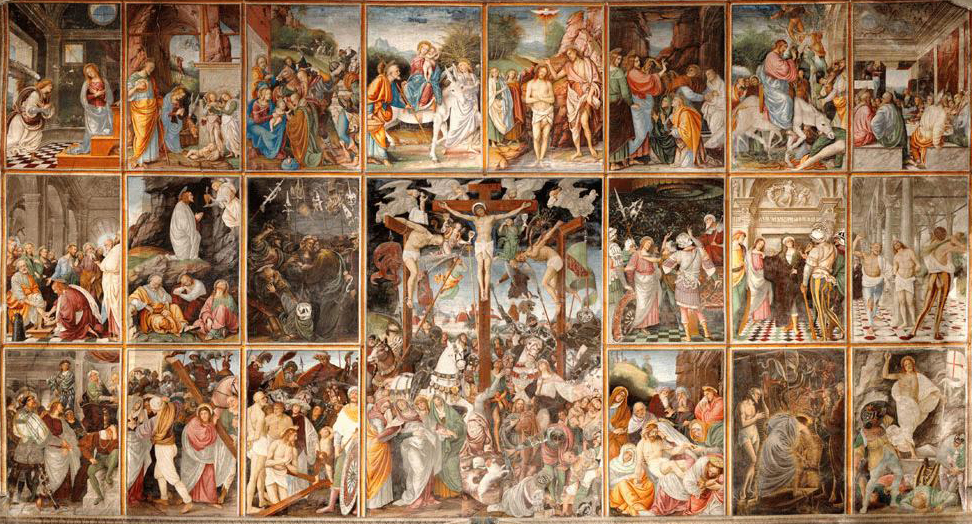 Presentation of Jesus at the TempleA February feast of candles and welcome, kept forty days after Christmas
Good reading and sources
- Ukrainian embroidery on WikipediaEncyclopedia
- More photos on Wikimedia CommonsPhotos and video
- Wikidata recordOpen data
The facts on this page come from the Wikipedia article "Ukrainian embroidery", written by its contributors and used under the CC BY-SA 4.0 licence, and from its Wikidata record (CC0). EveryParampara rewrote the text in its own words, with AI assistance, and compares every page with the article to make sure no passage is copied. It may be reused under the same CC BY-SA 4.0 licence with a link back.
It may contain mistakes. Traditions differ from one family, village and community to the next, and the people who keep them know them best. If something is wrong, tell us. Last refreshed 2026-10-05.
More from Ukraine
All the traditions of Ukraine 🇺🇦 Ukraine and 7 moreEgg decorating
Decorating eggs with dye, wax and carving, kept at Easter, Nowruz and springCraft
🇺🇦 Ukraine and 2 moreRushnykрушник
A sacred embroidered cloth used in East Slavic rituals, weddings and daily life.Dress
🇺🇦 Ukraine and 7 moreEgg decorating
Decorating eggs with dye, wax and carving, kept at Easter, Nowruz and springCraft
🇺🇦 Ukraine and 2 moreRushnykрушник
A sacred embroidered cloth used in East Slavic rituals, weddings and daily life.Dress
 🇺🇦 Chernivtsi, Ukraine and 3 moreMalankaМаланка
A Ukrainian folk celebration of masked mummers, feasting and New Year blessingsFestival · Feasts and festival meals
🇺🇦 Chernivtsi, Ukraine and 3 moreMalankaМаланка
A Ukrainian folk celebration of masked mummers, feasting and New Year blessingsFestival · Feasts and festival meals
 🇺🇦 Ukraine and 4 moreKorovaiкоровай (Ukrainian), каравай (Russian)
A round wedding bread of Eastern Europe, baked with songs and shared by all the guestsTable custom · Feasts and festival meals
🇺🇦 Ukraine and 4 moreKorovaiкоровай (Ukrainian), каравай (Russian)
A round wedding bread of Eastern Europe, baked with songs and shared by all the guestsTable custom · Feasts and festival meals
The same idea elsewhere
Weddings compared 🇨🇳 China and 5 moreLion dance舞獅
A dynamic ritual dance featuring costumed lions, drums and martial acrobaticsPerformance
🇨🇳 China and 5 moreLion dance舞獅
A dynamic ritual dance featuring costumed lions, drums and martial acrobaticsPerformance
 🇬🇪 Tbilisi, Georgia and 4 moreGeorgian polyphonic singing
Several voices at once, sung without instruments at Georgian feasts and weddingsPerformance
🇬🇪 Tbilisi, Georgia and 4 moreGeorgian polyphonic singing
Several voices at once, sung without instruments at Georgian feasts and weddingsPerformance
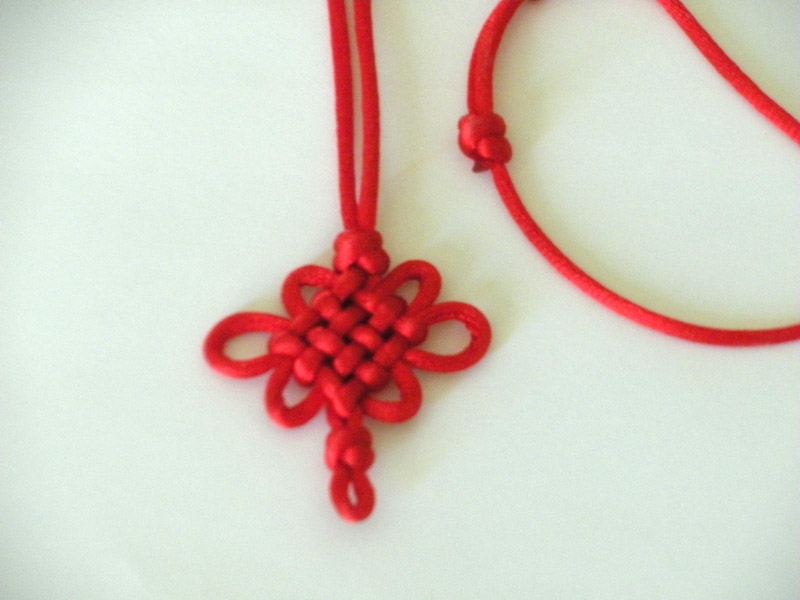 🇨🇳 China and 2 moreChinese knotting中國結 (Zhōngguó jié)
A folk craft of cord tied into lucky shapes, made in China and given as charmsCraft
🇨🇳 China and 2 moreChinese knotting中國結 (Zhōngguó jié)
A folk craft of cord tied into lucky shapes, made in China and given as charmsCraft
 🇲🇦 Tan-Tan, MoroccoTan-Tan Moussem
An annual gathering of Saharan nomadic tribes with music, trading and equestrian artsFestival
🇲🇦 Tan-Tan, MoroccoTan-Tan Moussem
An annual gathering of Saharan nomadic tribes with music, trading and equestrian artsFestival