Customs of food and drinkEurope
Elevenses
A short mid-morning pause for a drink and a small bite, kept in many countries

Elevenses is a brief stop in the late morning, usually around eleven o'clock, for a drink and something small to eat. The habit is best known in Britain, where tea or coffee and a few biscuits are usual, and it has close relatives in many other countries under different names.
When is Elevenses kept?
Elevenses is kept every day, in the middle of the morning, most often near eleven o'clock.
Elevenses is a short pause in the late morning for a drink and a small bite, usually around eleven o'clock. The name is British, though the habit of a mid-morning rest has many local forms, from a school break in Slovakia to a savoury pastry in Bolivia. It marks a breather between breakfast and the midday meal, and in some places it is a social moment at work or school.
What it is
By the clock, elevenses sits between breakfast and the midday meal, most often near eleven in the morning. It is not a full meal. A cup of tea or coffee and a biscuit will do in some households, while elsewhere the plate is heartier. The word itself points to the hour, and the same trick of naming a snack after the time it is eaten appears in several languages, from the Hungarian tízórai to the Dutch tienuurtje. What people call it, and when they sit down to it, changes from country to country.
Around the world
In Chile the old name las once survives, but the meal has drifted towards late afternoon and can stand in for dinner, which national food surveys reflect. Colombia keeps onces in the evening and a morning version called medias nueves. Bolivia has its salteñadas, built around the salteña pastry. Spain and the Basque Country take a bite mid-morning, Germany and Poland and Slovakia lean on a second breakfast or a light tenth-hour snack, and Australia and New Zealand say morning tea.
At work and school
The break is often written into the day rather than chosen. Workplaces in Australia and New Zealand sometimes fix morning tea in agreements, and schools give pupils a short pause, called little lunch in New Zealand. Shearers, farmers and tradespeople there speak of smoko, a word that began with smoking but is now used by anyone stopping for a cup. Israeli schools serve arukhat eser after the second lesson. Dutch primary pupils watch a ten o'clock news bulletin, then eat fruit or a small snack outside.
Food and drink
What lands on the table depends on the place. British and Swedish breaks lean on tea or coffee with biscuits or a light sandwich. Switzerland puts its Znüni at nine, and the name holds even when the snack arrives later. Slovak desiata is kept deliberately light, fruit or a sandwich, so that lunch is not spoiled. Germans may take warm filled rolls or cold meats. Belgian children carry cookies, fruit, juice or chocolate milk from home. Chileans compare la once to a slighter form of British high tea.
Today and change
Some versions are fading. In Indian towns and cities the ten o'clock tea has grown rarer, though it holds on in the countryside among agricultural and manual workers. Other versions have quietly changed shape: the Chilean once moved into the evening, and in the United States the first decades of the nineteenth century saw whiskey at that hour, long before the coffee break took its place. The old hour-names persist even when the clock moves, as Swiss families show by calling any mid-morning snack Znüni.
How Elevenses is kept
Someone calls a halt to work or lessons. A drink is made, tea, coffee, chocolate milk or juice, and a small amount of food is shared: biscuits, fruit, a pastry, a sandwich, or something warm and savoury, depending on the place. The pause lasts a short while. In school it falls in a fixed slot on the timetable; at work it may be a scheduled stop or an informal gathering. In Australia and New Zealand, teams use the same moment for birthdays, farewells and retirements, or simply to sit together.
When and where
Most countries place it in the late morning, near eleven o'clock, though the clock varies: nine or half past nine in Switzerland and Germany, ten in Slovakia, Poland, the Netherlands and Israel, half past ten in Australia and New Zealand. Chile and Colombia have shifted their versions towards the afternoon or evening.
The habit is strongest in Britain, Australia, New Zealand and parts of northern and central Europe, and it appears in schools and workplaces in Israel and the Netherlands. In Latin America it takes different names and hours in Chile, Colombia and Bolivia. In India it survives mainly in rural areas and among people doing physical work.
What Elevenses means
The custom carries little ceremony, which is part of its point. It is a shared pause, a way of marking the middle of a working morning and of making room for company. In offices and schools it becomes a social slot, used for welcoming a new colleague or saying goodbye to one. Naming the hour in the local language ties the break to the shape of the day itself, breakfast behind, the main meal ahead.


Questions people ask about Elevenses
When is Elevenses kept?
Elevenses is kept every day, in the middle of the morning, most often near eleven o'clock.
What is elevenses?
A short break in the late morning for a drink and a small amount of food. The name comes from the hour, roughly eleven o'clock. It is not a full meal, and in some countries the same idea is named after ten o'clock instead.
Is it the same everywhere?
No. Each country gives it a name, an hour and a plate of its own. Chile and Colombia moved theirs towards the afternoon or evening, Bolivia eats salteñas, Poles take pastry with a hot drink, and rural India keeps a tea at ten.
Who keeps it today?
Schoolchildren and workers in many places. Australian and New Zealand workplaces build it into agreements, Dutch and Israeli schools set aside a slot, and British and Swedish households simply stop for tea or coffee. In Indian cities it has become less common.
Does it have to be tea?
No. The drink can be coffee, chocolate milk, fruit juice or a soft drink, and in the early nineteenth century Americans drank whiskey at that hour. What holds across countries is the pause itself, not the cup.
See also
 Caffè sospesoAn anonymous gift of a paid cup of coffee for a stranger in need
 Tea cultureHow tea is prepared, shared and served, from Chinese tea houses to Tibetan butter tea
 CaffèItaly's daily coffee habit: espresso taken standing at the bar, and moka coffee at home
 KopitiamA neighbourhood coffee shop where Southeast Asians share meals, drinks and news
Good reading and sources
- Elevenses on WikipediaEncyclopedia
- More photos on Wikimedia CommonsPhotos and video
- Wikidata recordOpen data
The facts on this page come from the Wikipedia article "Elevenses", written by its contributors and used under the CC BY-SA 4.0 licence, and from its Wikidata record (CC0). EveryParampara rewrote the text in its own words, with AI assistance, and compares every page with the article to make sure no passage is copied. It may be reused under the same CC BY-SA 4.0 licence with a link back.
It may contain mistakes. Traditions differ from one family, village and community to the next, and the people who keep them know them best. If something is wrong, tell us. Last refreshed 2026-10-05.
More from the United Kingdom
All the traditions of the United Kingdom
🇨🇳 China and 5 moreTea culture
How tea is prepared, shared and served, from Chinese tea houses to Tibetan butter teaTable custom · Tea, coffee and drinking ceremonies
 🇬🇧 London, United Kingdom and 4 moreAfternoon tea
A late-afternoon spread of tea, small sandwiches and cakes, kept across BritainTable custom · Tea-time and snacking customs
🇬🇧 London, United Kingdom and 4 moreAfternoon tea
A late-afternoon spread of tea, small sandwiches and cakes, kept across BritainTable custom · Tea-time and snacking customs
 🇬🇧 United Kingdom and 5 moreChristmas dinner
The festive family meal of Christmas Eve or Christmas Day, with roast meats and puddingsTable custom · Dinner
🇬🇧 United Kingdom and 5 moreChristmas dinner
The festive family meal of Christmas Eve or Christmas Day, with roast meats and puddingsTable custom · Dinner
 🇬🇧 United Kingdom and 4 moreSaffron bun
A golden, spiced yeast roll flavoured with saffron, baked for festive and holy daysTable custom · Tea-time and snacking customs
🇬🇧 United Kingdom and 4 moreSaffron bun
A golden, spiced yeast roll flavoured with saffron, baked for festive and holy daysTable custom · Tea-time and snacking customs
The same idea elsewhere
Tea, coffee and the drinking ceremony compared 🇨🇳 Chaozhou, China and 1 moreGongfu tea工夫茶
A skilled Chinese method of brewing tea in small teaware with precise heat and timingTable custom · Tea, coffee and drinking ceremonies
🇨🇳 ChinaGuanxi关系
A Chinese tradition of cultivating trusted networks and reciprocal obligationsEtiquette
🇰🇼 KuwaitDewaniya
An evening gathering and reception central to Kuwaiti social, business, and civic lifeEtiquette · Tea, coffee and drinking ceremonies
🇨🇳 Chaozhou, China and 1 moreGongfu tea工夫茶
A skilled Chinese method of brewing tea in small teaware with precise heat and timingTable custom · Tea, coffee and drinking ceremonies
🇨🇳 ChinaGuanxi关系
A Chinese tradition of cultivating trusted networks and reciprocal obligationsEtiquette
🇰🇼 KuwaitDewaniya
An evening gathering and reception central to Kuwaiti social, business, and civic lifeEtiquette · Tea, coffee and drinking ceremonies
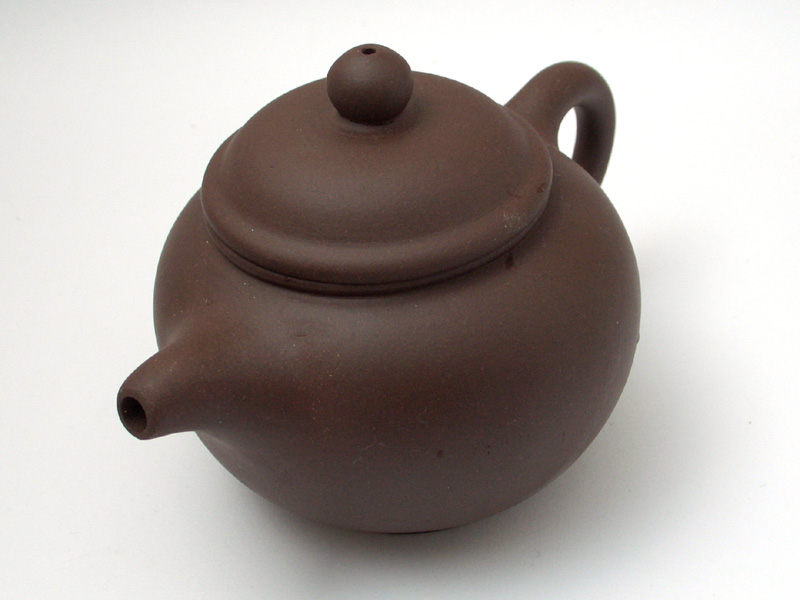 🇨🇳 Yixing, ChinaYixing clay teapot紫砂
Handcrafted Chinese purple clay teapots that season with every brewCraft · Tea, coffee and drinking ceremonies
🇨🇳 Yixing, ChinaYixing clay teapot紫砂
Handcrafted Chinese purple clay teapots that season with every brewCraft · Tea, coffee and drinking ceremonies