Festivals and celebrationsMiddle EastMuslim
Gargee'an
In its own language: قرقيعان
A mid-Ramadan night when children sing at doors for sweets and nuts
Gargee'an is a celebration kept in Eastern Arabia, Iraq and southern Iran, on the 13th, the 14th or the 15th night of Ramadan. Children and grown-ups wear traditional clothes, walk from door to door singing, and collect sweets and nuts from their neighbours.
When is Gargee'an marked?
Gargee'an is kept as part of Ramadan, which runs from 8 February to 9 March 2027.
In the middle of Ramadan, children in Eastern Arabia go out after dark in small singing groups. They knock at neighbours' doors, sing, and are given sweets and nuts. The custom is called Gargee'an, and it is kept by Sunni and Shia families in Iraq, Kuwait, Bahrain, Qatar, Saudi Arabia and southern Iran. Grown-ups join in, wearing traditional dress, and the night is meant to build warmth between households.
A mid-Ramadan night
Gargee'an sits in the middle of Ramadan. The night falls on the 13th, the 14th or the 15th of the month, and the streets turn festive once the sun is down. The custom is at home on the eastern side of the Arabian peninsula, and also in Iraq and the south of Iran. Sunni and Shia families both take part. Shi'i Muslims tie the night to the birth of Imam Hasan ibn Ali, which fell in the middle of the month. For many others it is simply a night for children, sweets and neighbours.
Names and the word
The name Gargee'an has no settled origin. One idea connects it to an Arabic word for a clicking or clacking noise, the sound made when metal pots knock together as sweets are carried from house to house. Different places use different names for the same night: Garangao and Gerga'oon in Iraq, and Majeena further across the Arab world. The custom itself is old, going back hundreds of years, though nobody recorded its first night. It is most firmly rooted in parts of Gulf culture, particularly the Qatif and Al-Ahsa districts of eastern Saudi Arabia.
How the night runs
Small groups of children move through the streets together after dark. When they stop outside a house they sing, and the people inside bring out nuts and sweets. The longer the singing goes on, the more they are given. Grown-ups take part too, many of them in traditional clothing, walking with the children or waiting at their doors. The verses are a blessing on the house: they wish its smallest member good health and the mother lasting happiness. Underneath it all is a simple aim, to draw adults and children closer and to fill the neighbourhood with warmth.
Today and change
In recent decades the night has become a marketing moment as well. Supermarkets, companies and shopping malls compete for children's attention, advertising at this time of year, offering special promotions and putting on their own Gargee'an events. Alongside all of that, the older custom carries on in the neighbourhoods where families have kept it for generations. What children still wait for has not changed: a door opening, a song sung, and a handful of nuts and sweets.
How Gargee'an is kept
Children form small choirs and walk the neighbourhood after dark. At each house they sing their song, and the people inside come out with nuts and sweets. The more they sing, the more they are given. Adults join in, many of them in traditional dress, and the evening moves from door to door until the groups head home. In some places, malls and shops now stage their own versions of the night for children. Families that mark the occasion keep it simple: singing, visiting, and sharing what the house has.
When and where
The celebration belongs to Ramadan, the Islamic month in which it falls, and it takes place on the 13th, the 14th or the 15th night of that month. Because the Islamic calendar follows the moon, the date moves through the solar year, so the night lands at a different point on the Gregorian calendar each time.
It is kept in Eastern Arabia, along the Gulf coast and inland. The countries named are Saudi Arabia, Iraq, Kuwait, Bahrain and Qatar, with southern Iran also part of its range. Within Saudi Arabia it is especially rooted in Qatif and Al-Ahsa. Both Sunni and Shia households take part.
What Gargee'an means
For the families who keep it, Gargee'an is about closeness. Singing from door to door is meant to grow affection between grown-ups and the young, and every handful of nuts or sweets turns a street into a web of small gifts. Shi'i Muslims also treat the night as a remembrance, because it falls close to the birth of Imam Hasan ibn Ali in mid-Ramadan. Most of all it belongs to children, who hold the attention of the whole street for one evening.
Days Gargee'an is marked
Questions people ask about Gargee'an
When is Gargee'an marked?
Gargee'an is kept as part of Ramadan, which runs from 8 February to 9 March 2027.
What is Gargee'an?
Gargee'an is a celebration held in the middle of Ramadan in Eastern Arabia, Iraq and southern Iran. On the 13th, the 14th or the 15th night of the month, children go from door to door in small singing groups and are given sweets and nuts by their neighbours. Both Sunni and Shia families keep it.
Where is it kept?
The tradition belongs to Eastern Arabia and the wider Gulf. It is found in Saudi Arabia, especially around Qatif and Al-Ahsa, and also in Iraq, Kuwait, Bahrain and Qatar. Southern Iran is part of its range too, and the night is shared by Sunni and Shia communities.
Why do children sing?
The singing works as a doorbell and as a gift in return. It tells the household that children are outside, and it carries a blessing for the family inside. The more the children sing, the more nuts and sweets they receive, so the songs often go on for a while.
How old is the custom?
It has been kept for several hundred years, and no one knows exactly when it began. The origin of the word itself is also uncertain. One theory links it to the clatter of pots carrying sweets. It is deeply rooted in parts of Gulf culture, particularly in eastern Saudi Arabia.
See also
 PurimA lively Jewish festival of storytelling, shared food, masks and charity
 Tisha B'AvA solemn fast day in July or August to mourn the destruction of the Jerusalem Temples and other Jewish tragedies.
 Day of ArafahA holy day of prayer, repentance, and vigil on the second day of the Hajj pilgrimage
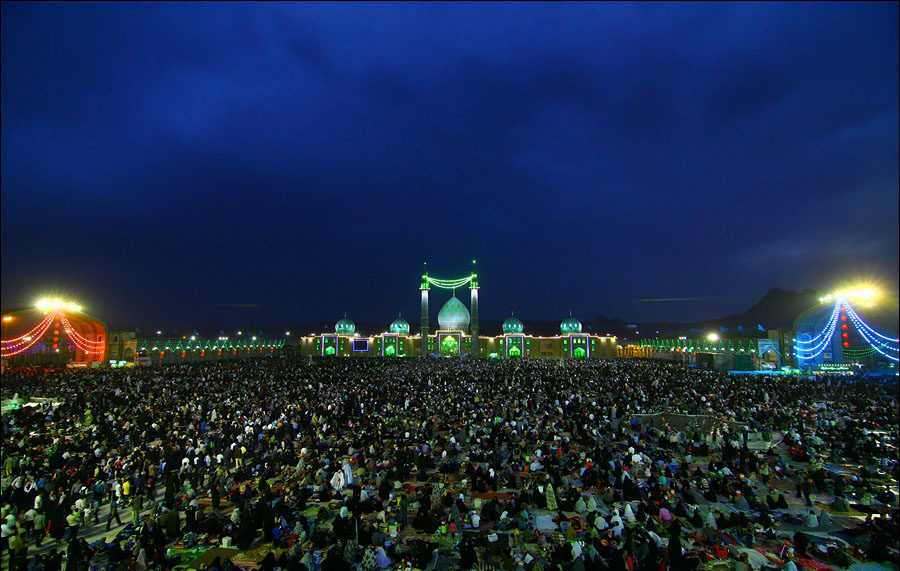 Mid-Sha'banAn Islamic night of prayer, remembrance, and seeking divine forgiveness.
Good reading and sources
The facts on this page come from the Wikipedia article "Gargee'an", written by its contributors and used under the CC BY-SA 4.0 licence, and from its Wikidata record (CC0). EveryParampara rewrote the text in its own words, with AI assistance, and compares every page with the article to make sure no passage is copied. It may be reused under the same CC BY-SA 4.0 licence with a link back.
It may contain mistakes. Traditions differ from one family, village and community to the next, and the people who keep them know them best. If something is wrong, tell us. Last refreshed 2026-10-11.
More from Saudi Arabia
All the traditions of Saudi Arabia 🇸🇦 Jenadriyah, Saudi ArabiaJenadriyahمهرجان الجنادرية
A two-week Saudi cultural festival of camel racing, folk dance, poetry, and craftsFestival
🇸🇦 Jenadriyah, Saudi ArabiaJenadriyahمهرجان الجنادرية
A two-week Saudi cultural festival of camel racing, folk dance, poetry, and craftsFestival
 🇸🇦 Saudi Arabia and 3 moreGhadir Khummغَدِير خُمّ
A historic sermon and annual festival marking Ali's role in early Islam.Festival
🇸🇦 Saudi Arabia and 3 moreGhadir Khummغَدِير خُمّ
A historic sermon and annual festival marking Ali's role in early Islam.Festival
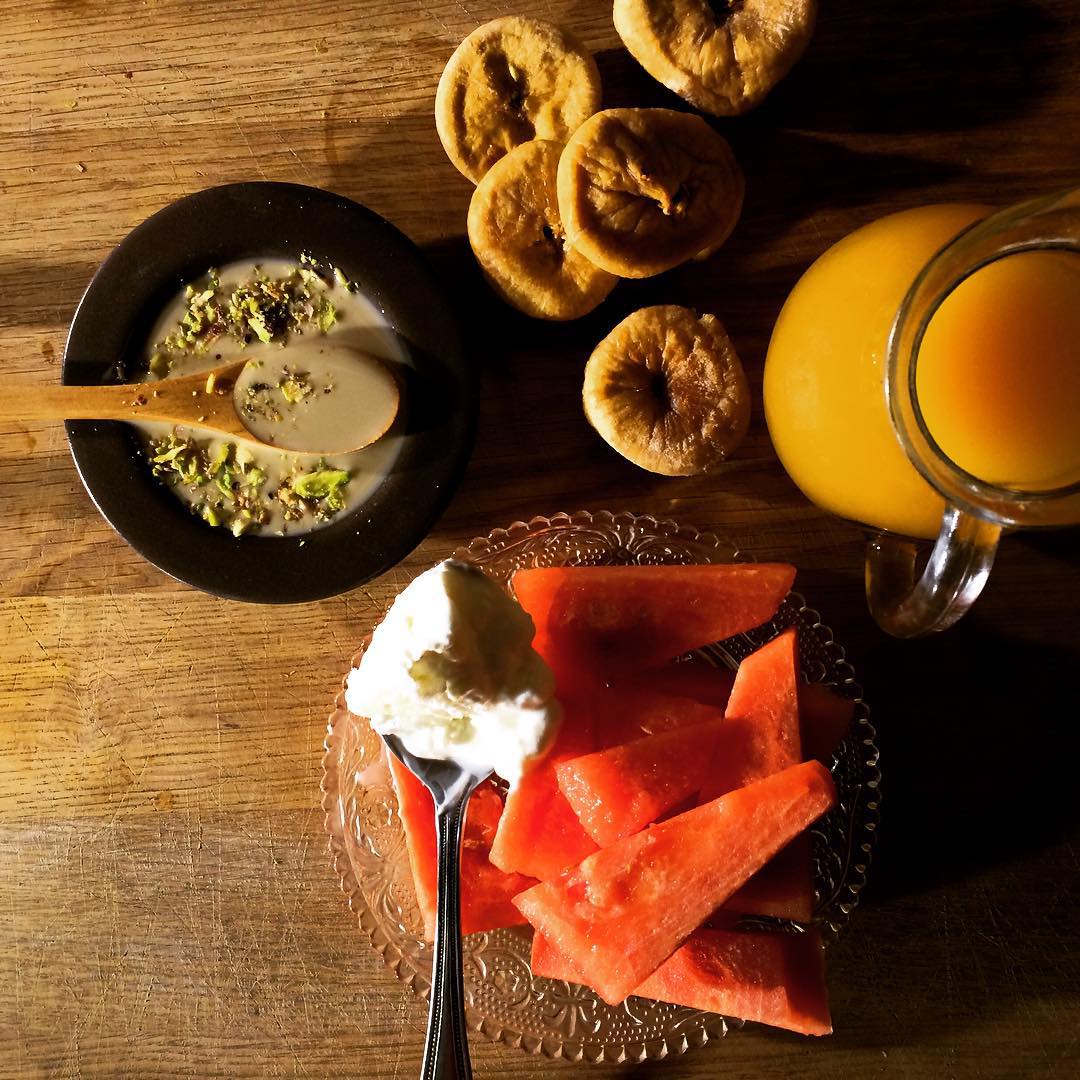 🇧🇩 Dhaka, Bangladesh and 5 moreSuhurسحور
The pre-dawn meal Muslims eat before a day of fasting in RamadanTable custom · Breakfast
🇸🇦 Mecca, Saudi Arabia and 1 moreDay of Arafahيوم عرفة
A holy day of prayer, repentance, and vigil on the second day of the Hajj pilgrimageSpiritual
🇧🇩 Dhaka, Bangladesh and 5 moreSuhurسحور
The pre-dawn meal Muslims eat before a day of fasting in RamadanTable custom · Breakfast
🇸🇦 Mecca, Saudi Arabia and 1 moreDay of Arafahيوم عرفة
A holy day of prayer, repentance, and vigil on the second day of the Hajj pilgrimageSpiritual
The same idea elsewhere
Fasting and feasting compared 🇮🇪 Ireland and 5 moreHalloween
An annual observance on 31 October marking the eve of All Saints' Day, rooted in Christian tradition and Celtic heritageFestival · Sweets given and shared
🇮🇪 Ireland and 5 moreHalloween
An annual observance on 31 October marking the eve of All Saints' Day, rooted in Christian tradition and Celtic heritageFestival · Sweets given and shared
 🇦🇺 Australia and 5 moreGood Friday
A solemn Christian holy day commemorating the crucifixion and death of Jesus Christ.Spiritual · Fasting and breaking the fast
🇦🇺 Australia and 5 moreGood Friday
A solemn Christian holy day commemorating the crucifixion and death of Jesus Christ.Spiritual · Fasting and breaking the fast
 🇮🇳 Ayodhya, India and 7 moreDiwaliदीपावली (Dīpāvalī)
A five-day festival of lights celebrated across India and its diaspora to mark the victory of light over darkness.Festival · Feasts and festival meals
🇮🇳 Ayodhya, India and 7 moreDiwaliदीपावली (Dīpāvalī)
A five-day festival of lights celebrated across India and its diaspora to mark the victory of light over darkness.Festival · Feasts and festival meals
 🇵🇭 Philippines and 5 moreHoly WeekἉγία καὶ Μεγάλη Ἑβδομάς
The solemn seven days leading to Easter, recalling the final week and Passion of JesusSpiritual · Fasting and breaking the fast
🇵🇭 Philippines and 5 moreHoly WeekἉγία καὶ Μεγάλη Ἑβδομάς
The solemn seven days leading to Easter, recalling the final week and Passion of JesusSpiritual · Fasting and breaking the fast