Customs of food and drinkEast AsiaBuddhistShinto, Taoist and folk Chinese
Japanese tea ceremony
In its own language: 茶道 (Sadō / Chadō), 茶の湯 (Chanoyu)
The formal serving of powdered matcha, shaped by Zen, Shinto and wabi
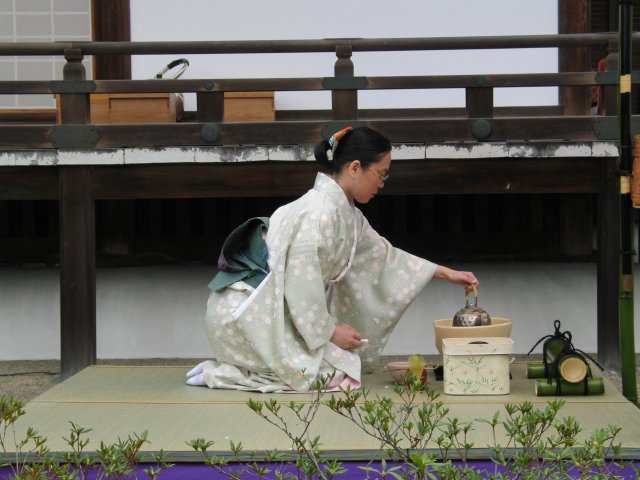
Chanoyu is the Japanese practice of preparing and serving matcha, a green tea ground to powder, for guests in a room made for that purpose. It grew out of tea brought from China and out of Zen and Shinto influences, and it is kept today by tea schools and practitioners who follow the way of tea.
When is Japanese tea ceremony kept?
Japanese tea ceremony is kept on through the year, with a sunken hearth season from November to April and a brazier season from May to October.
In a small room, a host whisks powdered green tea with hot water and passes the bowl to a guest. That is the Japanese tea ceremony, called chanoyu or chadō, the way of tea. It is a discipline of attention and welcome, built over centuries from Buddhist and Shinto roots, and it is still taught and practised today by families, schools and temples across Japan.
What it is
Chanoyu, or chadō, is the Japanese way of preparing and serving matcha, a green tea ground to powder. The host carries out a set sequence of movements called temae, and the guests watch and receive the bowl. The setting counts as much as the drink: a room built for the purpose, plain utensils, and quiet attention. Gatherings come in two kinds. A chakai is the lighter sort, with confections and thin tea. A chaji is longer and more formal, running through a full kaiseki meal, then sweets, thick tea and thin tea. A less common practice uses leaf tea, mostly sencha, and is named senchadō.
Origins and history
Records place tea in Japan in the 9th century, when the monk Eichū came back from Tang China with it and served sencha to Emperor Saga near Karasaki. Interest faded, then returned at the end of the 12th century, when the monk Eisai brought home both the whisked powdered tea then called tencha and tea seeds. Monks had used tea to stay awake in long meditation. In the 13th century, warrior tea-tasting parties gave prizes for guessing the best leaf, grown in Kyoto from Eisai's seeds. Murata Jukō later treated tea as a spiritual practice, and in the 1500s Sen no Rikyū recast its rooms, utensils and rules.
In the tea room
The ideal place is a chashitsu, a room floored with tatami mats, often 4.5 mats in area. It has a low ceiling, a hearth set into the floor, an alcove for a hanging scroll, and separate ways in for host and guest. A small water room, the mizuya, lets the host wash and arrange equipment out of sight. Guests pass through a garden called the roji before entering. Not every gathering is indoors: a nodate is held outside, in spring or summer, under a red parasol, with plainer utensils and more of an emphasis on the natural surroundings.
Seasons and vessels
Two seasons divide the year. From November to April the sunken hearth, or ro, is opened in the floor and gives the room its warmth, so guests drink from taller, cylindrical bowls. From May to October water is heated in a raised brazier, the furo, and flatter bowls let the tea cool. Incense changes with the weather as well. Flowers placed in the alcove quietly signal the time of year. Summer kimono have a single layer; at other times a lined, two-layer kimono is worn. In the changeable weeks a host may cover the hearth and set the brazier on top.
What it means
Those who study tea speak of wabi and sabi. Wabi is the inner side: plainness, restraint, humility, and a liking for what is uneven or unfinished. Sabi is the outer side, the beauty that wear and age give to an object. Together they shape the small, deliberately rustic rooms and the distorted ceramic bowls. Sen no Rikyū, drawing on his master Takeno Jōō, taught ichi-go ichi-e: each meeting is unique and will never come again, so it should be treated as precious. Four words sum up the practice, harmony, respect, purity and tranquility. Hospitality, or omotenashi, runs through all of it.
How Japanese tea ceremony is kept
Guests gather and walk in through the tea garden, then rinse their hands and mouths, a custom that comes from Shinto purification. They take their places on the tatami. The host, who has already prepared and cleaned the utensils in the mizuya, brings them out and makes the tea in a fixed order, whisking matcha with hot water in a bowl. Confections are offered before the tea. In a chaji a full kaiseki meal comes first, followed by sweets, thick tea and thin tea, and the gathering can last four hours. In a shorter chakai the hospitality is simpler.
When and where
Tea is practised right through the year, but the calendar is split in two. In the colder months, from November to April, water is heated in a sunken hearth set into the floor. From May to October it is heated in a raised brazier. Within that frame, hosts pick utensils, flowers and incense to suit the season.
The ceremony belongs to Japan, where it is taught in tea schools and kept in tea rooms, temples and private houses across the country. Its early forms and its aesthetic took shape in Kyoto, in the northern and eastern hills where the Ashikaga rulers built their villas, and the tea seeds Eisai carried back were grown there. Outdoor gatherings are held in gardens.
What Japanese tea ceremony means
For those who keep it, tea is more than a drink. It is a discipline that trains attention and courtesy, and a way of meeting another person fully. The plain room and the uneven bowl are not faults but reminders that nothing lasts and nothing is perfect, which practitioners connect to Buddhist teaching on emptiness. Each gathering is unrepeatable, so it is honoured as it happens. The English word Teaism was coined by Okakura Kakuzō to name this wider outlook, pointing past the serving of a single cup.


Questions people ask about Japanese tea ceremony
When is Japanese tea ceremony kept?
Japanese tea ceremony is kept on through the year, with a sunken hearth season from November to April and a brazier season from May to October.
What is the Japanese tea ceremony?
It is a structured way of preparing and serving matcha, a powdered green tea, to guests, usually in a room made for that purpose. The host follows a set sequence of movements called temae. Some gatherings are simple, others include a meal and last for hours.
Where does it come from?
From Japan, where tea arrived from Tang China in the 9th century. The ceremony as it is known now was shaped in the 1500s by Sen no Rikyū, and the tea schools founded by his descendants still teach it today.
Is it a religious practice?
Zen Buddhism and Shinto have both shaped it. Purifying the hands and mouth before tea comes from the Shinto rite of misogi, and monks once used tea to stay awake while meditating. It is kept as a cultural practice as well as a spiritual one.
What happens at a formal gathering?
A chaji may run up to four hours. It usually opens with a full kaiseki meal, then moves to confections, thick tea and thin tea. The simpler chakai offers confections and thin tea, and perhaps a light meal.
See also
 KaisekiA multi-course Japanese dining tradition shaped by tea ceremonies and the seasons
 Tea cultureHow tea is prepared, shared and served, from Chinese tea houses to Tibetan butter tea
 Lion danceA dynamic ritual dance featuring costumed lions, drums and martial acrobatics
 PindapataA Buddhist almsround where monks walk through towns to receive food and necessities from laypeople.
Good reading and sources
- Encyclopaedia BritannicaArticle
- Golden Tea Room in Karatsu | Japan‘s Local TreasuresJapan National Tourism Organization, Article
- Golden Tea Room in Karatsu | Japan‘s Local TreasuresJapan National Tourism Organization, Article
- Japanese tea ceremony on WikipediaEncyclopedia
- More photos on Wikimedia CommonsPhotos and video
- Wikidata recordOpen data
The facts on this page come from the Wikipedia article "Japanese tea ceremony", written by its contributors and used under the CC BY-SA 4.0 licence, and from its Wikidata record (CC0). EveryParampara rewrote the text in its own words, with AI assistance, and compares every page with the article to make sure no passage is copied. It may be reused under the same CC BY-SA 4.0 licence with a link back.
It may contain mistakes. Traditions differ from one family, village and community to the next, and the people who keep them know them best. If something is wrong, tell us. Last refreshed 2026-10-05.
More from Japan
All the traditions of Japan
🇯🇵 Kyoto, JapanKaiseki懐石
A multi-course Japanese dining tradition shaped by tea ceremonies and the seasonsTable custom · Dinner
🇨🇳 China and 5 moreTea culture
How tea is prepared, shared and served, from Chinese tea houses to Tibetan butter teaTable custom · Tea, coffee and drinking ceremonies
 🇯🇵 JapanToshikoshi soba年越し蕎麦
Buckwheat noodles eaten on New Year's Eve, cut easily to let the year goTable custom · Feasts and festival meals
🇯🇵 JapanToshikoshi soba年越し蕎麦
Buckwheat noodles eaten on New Year's Eve, cut easily to let the year goTable custom · Feasts and festival meals
 🇨🇳 Shanghai, China and 1 moreJiaozi餃子
Crescent Chinese dumplings filled with meat or vegetables, eaten for fortune and feastsTable custom · Breakfast
🇨🇳 Shanghai, China and 1 moreJiaozi餃子
Crescent Chinese dumplings filled with meat or vegetables, eaten for fortune and feastsTable custom · Breakfast
The same idea elsewhere
Tea, coffee and the drinking ceremony compared 🇮🇹 Naples, Italy and 5 moreCaffè sospeso
An anonymous gift of a paid cup of coffee for a stranger in needTable custom · Tea, coffee and drinking ceremonies
🇮🇹 Naples, Italy and 5 moreCaffè sospeso
An anonymous gift of a paid cup of coffee for a stranger in needTable custom · Tea, coffee and drinking ceremonies
 🇮🇹 Naples, ItalyCaffè
Italy's daily coffee habit: espresso taken standing at the bar, and moka coffee at homeTable custom · Tea, coffee and drinking ceremonies
🇮🇹 Naples, ItalyCaffè
Italy's daily coffee habit: espresso taken standing at the bar, and moka coffee at homeTable custom · Tea, coffee and drinking ceremonies
 🇲🇾 Malaysia and 4 moreKopitiam
A neighbourhood coffee shop where Southeast Asians share meals, drinks and newsTable custom · Breakfast
🇲🇾 Malaysia and 4 moreKopitiam
A neighbourhood coffee shop where Southeast Asians share meals, drinks and newsTable custom · Breakfast