Crafts and makingEuropeChristian
Kraków szopka
In its own language: szopka krakowska
Elaborate Christmas cribs modelled on historic Polish architecture in Kraków

The Kraków szopka is a Polish Christmas craft where builders create glowing, multi-tiered nativity cribs based on the city's historic landmarks. Craftsmen and artists present their work in central Kraków each December, combining the biblical nativity story with national folklore and civic architecture.
When is Kraków szopka marked?
Kraków szopka is kept as part of Christmas, which is on Friday, 25 December 2026.
A Kraków szopka is an intricate Christmas crib that sets the nativity scene inside glowing, imaginative versions of the city's historic monuments. Originating in the nineteenth century among local builders seeking seasonal winter earnings, these multi-tiered models blend biblical events with Polish folklore, historical figures, and civic pride. Today, the craft remains a cherished regional art form celebrated with an annual December contest and museum exhibitions.
Origins and street performance
Nativity plays known as Jasełka arrived in medieval Poland following the Franciscan custom of crib displays. Over time, street performers combined miniature sets with puppets to enact seasonal stories. As creators introduced local folklore, legendary heroes, and satirical figures, church authorities in the eighteenth century barred these theatrical models from sacred spaces. Expelled from churches, the practice flourished outdoors as distinctive folk art. By the nineteenth century, Kraków woodworkers and masons built portable cribs to earn money in cold months, carrying them between houses for paying spectators.
Architecture and design
A szopka blends realistic architecture with vivid imagination, sometimes reaching three metres in width and two metres in height. Builders borrow prominent elements from Kraków's urban landscape, especially the twin spires of St. Mary's Basilica, the walls of the Barbican, the cloth hall of the Sukiennice, and Wawel Castle. Most structures use a tiered layout. The upper level usually houses the holy family in Bethlehem, while lower levels depict historical Polish figures such as Tadeusz Kościuszko, winged cavalry soldiers, or folk legends like Pan Twardowski and the Wawel Dragon.
The civic competition
Following Poland's restored independence in 1918, szopka making gained new life as a civic symbol and souvenir. City leaders established an official competition in December 1937 to safeguard the craft. Each winter, makers assemble by the Adam Mickiewicz Monument in the central square on the month's opening Thursday to showcase their work. Aside from an interruption during the Second World War, this gathering has continued unbroken. Organizers evaluate the entries before transferring the finest specimens to the Krzysztofory Palace for a public exhibition.
How Kraków szopka is kept
Makers spend months constructing ornate, multi-level architectural cribs using foil, wood, and paper. At the start of December, participants carry their completed works to Kraków's Main Market Square and arrange them around the monument dedicated to Adam Mickiewicz. Crowds and judges inspect the colorful towers, mechanical figurines, and lighting effects. Following the public gathering, museum officials select the finest pieces to display inside the Krzysztofory Palace, preserving the craft for visitors throughout the winter.
When and where
The tradition belongs to the Christmas season. Artisans gather to show their newest cribs on the opening Thursday of December in Kraków's main square, with seasonal exhibits continuing inside the city museum throughout the winter.
The custom is rooted entirely in Kraków, Poland. Public presentations take place outdoors in the Main Market Square, with museum exhibits hosted inside the Krzysztofory Palace.
What Kraków szopka means
The szopka represents a blend of sacred devotion and local identity. By placing the birth of Christ within the historic cityscape of Kraków, creators link religious faith to civic pride. Lower tiers honor Polish heritage by portraying national heroes alongside folklore characters, while the detailed towers showcase the ingenuity and technical skill of local woodworkers and masons.
Days Kraków szopka is marked
Questions people ask about Kraków szopka
When is Kraków szopka marked?
Kraków szopka is kept as part of Christmas, which is on Friday, 25 December 2026.
What is a Kraków szopka?
It is a decorative, multi-tiered Christmas crib that places the nativity scene within elaborate models of Kraków's historic architecture, constructed by local artisans and folk makers.
Where and when does the crib showcase take place?
Artisans gather beside the Adam Mickiewicz Monument in Kraków's Main Market Square on the opening Thursday of December, after which award-winning models go on display at Krzysztofory Palace.
Which buildings appear in the designs?
Makers frequently incorporate recognizable features from prominent Kraków landmarks, most notably the spires of St. Mary's Basilica, along with Wawel Castle, the Sukiennice trade hall, and the medieval Barbican.
What figures are featured in the displays?
The upper tier depicts the biblical nativity in Bethlehem, while lower levels feature historical personalities like Tadeusz Kościuszko, winged hussars, modern public figures, and legendary characters like the Wawel Dragon.
See also


Good reading and sources
- Nativity scene (szopka) tradition in KrakowUNESCO, Heritage listing
- Nativity scene (szopka) tradition in KrakowUNESCO, Article
- Kraków szopka on WikipediaEncyclopedia
- More photos on Wikimedia CommonsPhotos and video
- Wikidata recordOpen data
The facts on this page come from the Wikipedia article "Kraków szopka", written by its contributors and used under the CC BY-SA 4.0 licence, and from its Wikidata record (CC0). EveryParampara rewrote the text in its own words, with AI assistance, and compares every page with the article to make sure no passage is copied. It may be reused under the same CC BY-SA 4.0 licence with a link back.
It may contain mistakes. Traditions differ from one family, village and community to the next, and the people who keep them know them best. If something is wrong, tell us. Last refreshed 2026-10-04.
More from Poland
All the traditions of Poland 🇺🇦 Kyiv, Ukraine and 1 moreUkrainian embroideryвишивка (vyshyvka)
A stitched folk art of Ukraine, worked into shirts, cloths and church furnishingsCraft
🇺🇦 Kyiv, Ukraine and 1 moreUkrainian embroideryвишивка (vyshyvka)
A stitched folk art of Ukraine, worked into shirts, cloths and church furnishingsCraft
 🇱🇹 Vilnius, Lithuania and 3 moreSaint Casimir's FairKaziuko mugė
A spring craft market and folk celebration across the historic streets of VilniusCraft
🇱🇹 Vilnius, Lithuania and 3 moreSaint Casimir's FairKaziuko mugė
A spring craft market and folk celebration across the historic streets of VilniusCraft
 🇦🇲 Yerevan, Armenia and 5 moreKhachkarխաչքար
A carved stone cross raised as a memorial, a grave marker and a prayer in stoneCraft
🇦🇲 Yerevan, Armenia and 5 moreKhachkarխաչքար
A carved stone cross raised as a memorial, a grave marker and a prayer in stoneCraft
 🇺🇦 Ukraine and 7 moreEgg decorating
Decorating eggs with dye, wax and carving, kept at Easter, Nowruz and springCraft
🇺🇦 Ukraine and 7 moreEgg decorating
Decorating eggs with dye, wax and carving, kept at Easter, Nowruz and springCraft
The same idea elsewhere
Midwinter and the longest night compared 🇵🇪 Cusco, Peru and 4 moreIntiinti (Quechua)
The Inca sun deity, honoured with temples, offerings and the June festival Inti RaymiSpiritual
🇵🇪 Cusco, Peru and 4 moreIntiinti (Quechua)
The Inca sun deity, honoured with temples, offerings and the June festival Inti RaymiSpiritual
 🇮🇷 Iran and 5 moreYaldā Nightشب یلدا
A solstice night of poetry, fruit and family, kept from Iran through Central AsiaFestival · Dinner
🇮🇷 Iran and 5 moreYaldā Nightشب یلدا
A solstice night of poetry, fruit and family, kept from Iran through Central AsiaFestival · Dinner
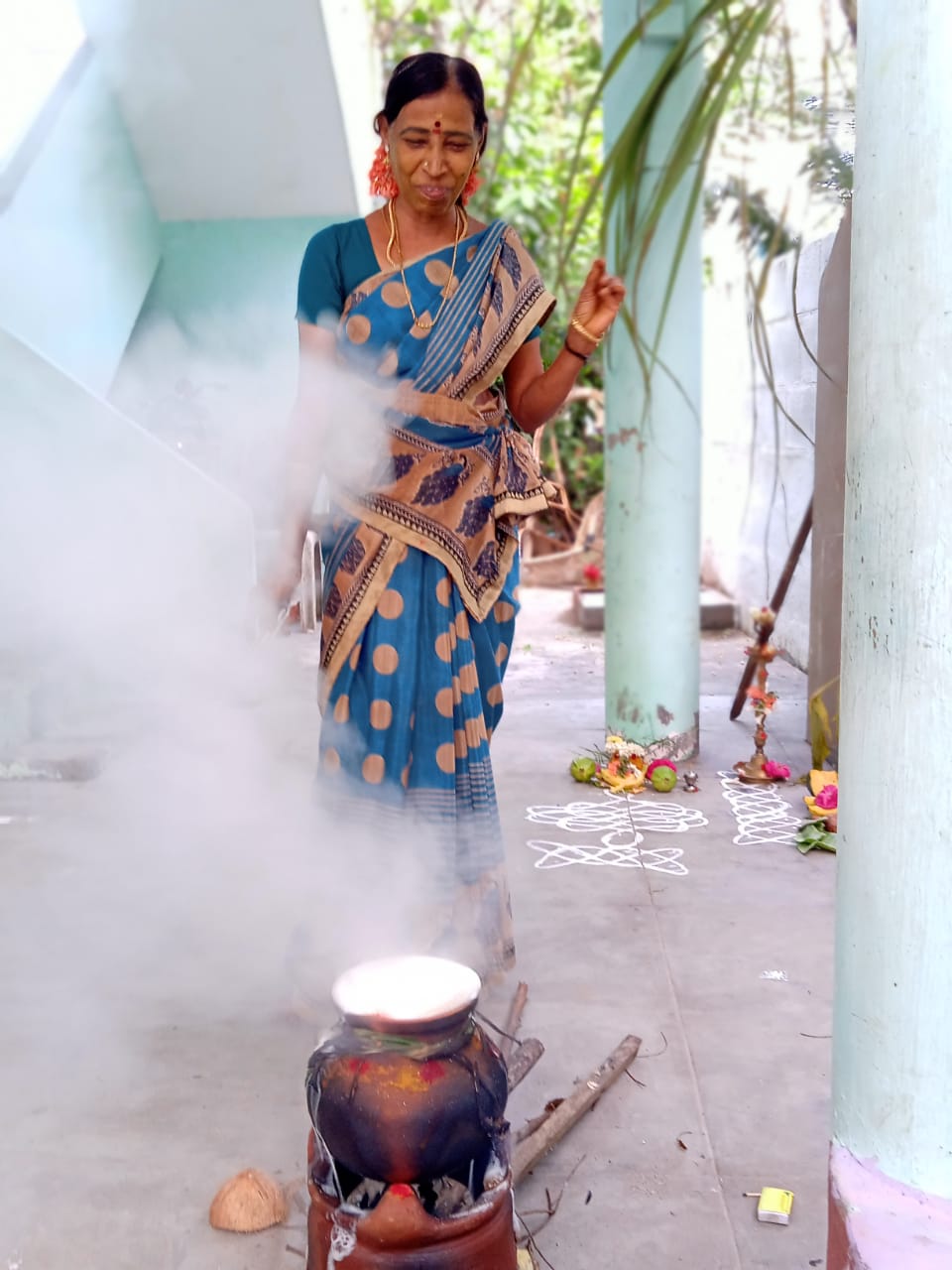 🇮🇳 India and 5 morePongal
Three or four days of boiling rice, garlanded cattle and thanks to the sunSeasonal · Sweets given and shared
🇮🇳 India and 5 morePongal
Three or four days of boiling rice, garlanded cattle and thanks to the sunSeasonal · Sweets given and shared
 🇨🇳 Shanghai, China and 1 moreJiaozi餃子
Crescent Chinese dumplings filled with meat or vegetables, eaten for fortune and feastsTable custom · Breakfast
🇨🇳 Shanghai, China and 1 moreJiaozi餃子
Crescent Chinese dumplings filled with meat or vegetables, eaten for fortune and feastsTable custom · Breakfast