Festivals and celebrationsEuropePagan and ancient
Martenitsa
In its own language: мартеница
Red and white yarn dolls worn from 1 March until spring shows itself

People in Bulgaria and North Macedonia wear small dolls twisted from red and white thread from 1 March, the day called Baba Marta or Grandma March, until they spot a stork, a swallow or a blossoming tree. Similar spring customs under other names are kept in Romania, Moldova, Albania and Greece.
When is Martenitsa marked?
Martenitsa is kept as part of Mărțișor and Baba Marta, which is on Monday, 1 March 2027.
A martenitsa is a small ornament of red and white yarn, often two tiny dolls, that Bulgarians and Macedonians give and wear to welcome spring. It goes on clothing, a wrist or a neck from 1 March, and comes off when a stork, a swallow or a flowering tree appears. Related customs under other names are kept in Romania, Moldova, Albania and Greece.
What it is
A martenitsa is a small ornament of twisted white and red yarn, worn to mark the coming of spring. The classic shape is a pair of tiny dolls: Pizho, mostly white, and Penda, mostly red and recognisable by her skirt. People pin one to their clothes or tie it around a wrist or neck. Modern versions add coloured beads and other flourishes, and makers now shape them in many forms. Bulgarians say мартеница, Macedonians martinka, Greeks mártis, Romanians mărțișor, Albanians verore, and Turkish speakers marteniçka.
Baba Marta and spring
The day of 1 March carries the name Baba Marta, Grandma March. In Bulgarian folklore and Macedonian tales she is a restless old woman whose temper shifts without warning. Wearing red and white is understood as asking her to be kind, so that winter lets go sooner and spring comes. The first stork or swallow back from migration is read as a sign that she has softened and will soon step aside. The season when martenitsi are worn is treated as a happy holiday honouring health and long life.
Giving and taking off
Martenitsi are meant to be presents. The custom holds that a person does not buy one for themselves; they receive it from someone close, a relative, a friend, a sweetheart. Once spring has clearly arrived, the ornament is removed, and what is done with it changes from place to place. Some tie it to a branch of a fruit tree, passing on the health and luck it brought. Others leave it under a stone overnight and read the creature sheltering beside it in the morning: a worm or larva promises a healthy, successful year, an ant the same but reached by hard work, a spider warns of trouble.
Where it is kept
Bulgaria and North Macedonia are the heartlands, where wearing martenitsi is a widely shared spring habit. Romania and Moldova keep a close relative of the custom called Mărțișor. In Albania the ornament is known as verore; it is worn on 14 March, a day the Julian calendar counted as March's start, for Dita e Verës or Summer Fest, which is dedicated to the ancient goddess Diana. Greece has its own mártis. UNESCO has listed the custom as intangible cultural heritage.
Origins and debate
Researchers link the custom to the old pagan life of the Balkan Peninsula and to farming cults that honoured nature. Some point to Thracian roots, others to Hellenic or Roman ones, and the twisted threads themselves are described as the product of a very long practice. A few ethnographers argue that a trace survives in the Eleusinian Mysteries, and the ancient Greek kroke mentioned in Photios' Lexicon was a red thread wound around the hand and foot of priests. Coloured threads were once used to shield children and young people from evil spirits. A tale from the early 1900s ties the first martenitsa to Khan Asparuh's victory over the Byzantines at the Battle of Ongal in the 7th century, when doves carrying white threads arrived bloodstained.
How Martenitsa is kept
Friends, relatives and sweethearts give martenitsi to one another. From 1 March the wearer pins one to clothing or fastens it at the wrist or neck, and may wear more than one. It stays there until the first returning stork, swallow or blossoming tree is noticed, or until the month ends. Removing it is a small ritual of its own: tying it to a fruit tree, or leaving it under a stone overnight and reading the creature found beside it the next day. Children and adults take part alike.
When and where
Wearing begins every year on 1 March, Baba Marta Day, and ends when a stork, a swallow or a flowering tree is seen, or with the close of March. In Albania the day is 14 March. The whole custom sits in early spring.
Strongest in Bulgaria and North Macedonia, where it is part of ordinary spring life. Romania and Moldova keep the related Mărțișor. Albania has verore for Dita e Verës, and Greece has mártis.
What Martenitsa means
White stands for purity, red for life and passion, and the two together carry a wish for good health and for the new life that spring brings. Some ethnologists have wondered whether the earliest form of the custom spoke of living and dying in turn, of good weighed against evil, and of sorrow and gladness in a human life. Others read the pair as Mother Nature: white for snow melting away, red for a sun that strengthens as spring advances.


Days Martenitsa is marked
Questions people ask about Martenitsa
When is Martenitsa marked?
Martenitsa is kept as part of Mărțișor and Baba Marta, which is on Monday, 1 March 2027.
What is a martenitsa?
It is a small ornament of white and red yarn, usually two tiny dolls, Pizho and Penda. People wear it pinned to their clothes or tied at the wrist or neck as a spring custom, and give it to those they are close to.
Where is the custom kept?
Above all in Bulgaria and North Macedonia. Romania and Moldova keep the related Mărțișor, Albania keeps verore for Dita e Verës, and Greece keeps mártis. UNESCO has listed the practice as intangible cultural heritage.
Do people buy martenitsi for themselves?
No. Custom says they are gifts, not something a person buys for their own use. They pass between relatives, friends and sweethearts, which is part of why the exchange matters.
What is done with the martenitsa afterwards?
Practice differs by district. Some tie it to a fruit tree so the tree shares the health and luck it carried. Others leave it under a stone and read the creature found beside it next morning as a sign for the coming year.
See also
 Kupala NightA summer solstice folk festival marked by bonfires, water rituals and herbal gatherings across Eastern Europe.
 HıdırellezA spring festival marking the meeting of two prophets, celebrated across Turkey and the Balkans.MărțișorA spring custom of wearing intertwined red and white strings to welcome the new season.
 AnthesteriaAn ancient Greek three-day spring festival of Dionysus, new wine, and the dead
Good reading and sources
- Cultural practices associated to the 1st of MarchUNESCO, Heritage listing
- Cultural practices associated to the 1st of MarchUNESCO, Article
- Martenitsa on WikipediaEncyclopedia
- More photos on Wikimedia CommonsPhotos and video
- Wikidata recordOpen data
The facts on this page come from the Wikipedia article "Martenitsa", written by its contributors and used under the CC BY-SA 4.0 licence, and from its Wikidata record (CC0). EveryParampara rewrote the text in its own words, with AI assistance, and compares every page with the article to make sure no passage is copied. It may be reused under the same CC BY-SA 4.0 licence with a link back.
It may contain mistakes. Traditions differ from one family, village and community to the next, and the people who keep them know them best. If something is wrong, tell us. Last refreshed 2026-10-05.
More from Bulgaria
All the traditions of Bulgaria
🇺🇦 Ukraine and 5 moreKupala Night
A summer solstice folk festival marked by bonfires, water rituals and herbal gatherings across Eastern Europe.Festival
🇹🇷 Turkey and 6 moreHıdırellez
A spring festival marking the meeting of two prophets, celebrated across Turkey and the Balkans.Festival · Feasts and festival meals
🇷🇴 Romania and 3 moreMărțișor
A spring custom of wearing intertwined red and white strings to welcome the new season.Festival
 🇺🇦 Ukraine and 7 moreKoliadaКоляда
A traditional winter caroling and solstice festival kept across Slavic EuropeFestival
🇺🇦 Ukraine and 7 moreKoliadaКоляда
A traditional winter caroling and solstice festival kept across Slavic EuropeFestival
The same idea elsewhere
Spring and renewal compared 🇰🇷 Jeju, South KoreaGut굿
Sacred rites of song, dance, and spirit communion performed by Korean shamansSpiritual
🇰🇷 Jeju, South KoreaGut굿
Sacred rites of song, dance, and spirit communion performed by Korean shamansSpiritual
 🇯🇵 JapanChildren's Dayこどもの日
A Japanese holiday on May fifth celebrating the happiness and growth of childrenFestival
🇯🇵 JapanChildren's Dayこどもの日
A Japanese holiday on May fifth celebrating the happiness and growth of childrenFestival
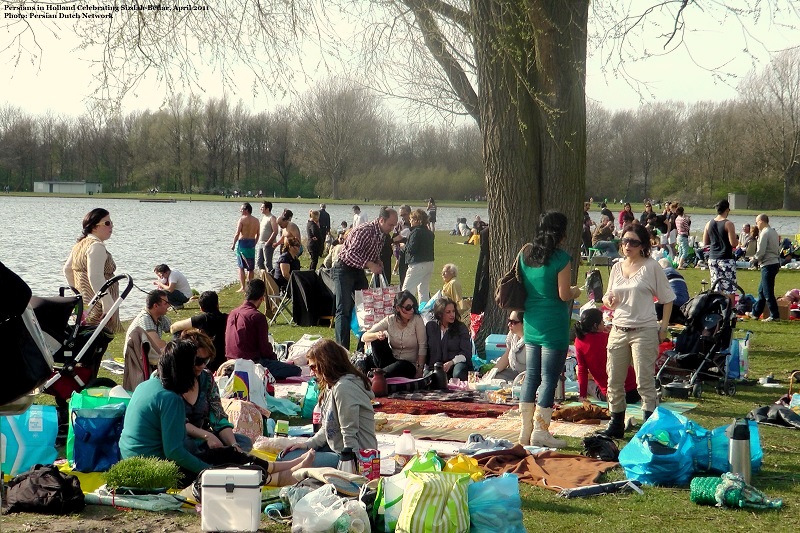 🇮🇷 Iran and 4 moreSizdah Bedarسیزدهبدر
An open-air picnic holiday concluding the Iranian New Year celebrationsFestival
🇮🇷 Iran and 4 moreSizdah Bedarسیزدهبدر
An open-air picnic holiday concluding the Iranian New Year celebrationsFestival
 🇯🇵 Kyoto, JapanAoi Matsuri葵祭
A classical Kyoto festival with an imperial procession and ancient shrine ritualsFestival
🇯🇵 Kyoto, JapanAoi Matsuri葵祭
A classical Kyoto festival with an imperial procession and ancient shrine ritualsFestival