🇲🇩 Traditions of Moldova
11 traditions from Moldova, best known first, across 2 cities and towns.
Moldovan traditions rest on deep Romanian roots shaped by centuries of Slavic, Gagauz, and broader European encounters. Rural communities keep folklore alive through ancient narrative ballads, pottery, and woven textiles. Across the country, hospitality centers on rich soups, cornmeal mămăligă, and celebrated local wines.
Moldovan cultural life reflects a heritage where Latin origins meet eastern European neighbors. Villages across the country preserve ancestral handicrafts and storytelling, while communal gatherings feature tables laden with hearty stews, filled dumplings, and regional wines. From winter festivities that run well past the modern calendar to summer celebrations of national independence and speech, communities honor their shared history while maintaining regional expressions in both Romanian and minority languages.
Celebrating the seasonal calendar
Moldova observes fourteen official national holidays alongside regional dates marked in territories like Gagauzia and Transnistria. The winter cycle begins in late November or early December when the capital lights its public tree. Festivities continue past Christmas in late December through New Year and the Old New Year, with some residents observing Hanukkah and the winter solstice. As warmth returns, communities mark municipal anniversaries starting in May, such as Bălți day. Summer culminates in late August with official celebrations for Independence Day and National Language Day, when citizens commemorate their linguistic identity and state history alongside family observances like Easter Monday.
The traditional table
Daily meals and celebratory gatherings feature hearty European staples, including pork, beef, potatoes, cabbage, and grain dishes. Soups hold a central place, notably sour ciorbă prepared with meats and vegetables, as well as vegetable-rich beet borscht. Stuffed cabbage leaves known as sarma are served alongside sauerkraut and mămăligă, a thick cornmeal porridge that forms a cornerstone of Moldovan cuisine. Cooks also prepare steamed or boiled dumplings, such as manti served with spicy sour cream, and pelmeni filled with meats, onions, mushrooms, or turnips. These savory dishes are customarily paired with dairy items, locally produced beers, native wines, or divin, the traditional Moldovan brandy.
Folklore, crafts, and song
Village life maintains many traditional creative practices, with rural artisans continuing long-standing disciplines such as ceramics and textile weaving. Storytelling remains anchored in legendary ballads, especially "Mioriţa" and "Meşterul Manole", which have been recited across generations. Folk songs and dances are showcased by national ensembles such as the Doina choir, reflecting customs that survived historical changes under imperial and Soviet administrations. Although past authorities attempted to alter certain costume elements, such as replacing traditional leather moccasins with boots, traditional performance arts remain an enduring expression of majority Romanian heritage alongside distinct Slavic and Gagauz minority artistic contributions.
Writers and theatrical life
Written traditions date back to seventeenth-century religious printing initiated by church figures such as Varlaam and Dosoftei, followed by early scholarship from figures like Dimitrie Cantemir. Literary arts expanded during the nineteenth and twentieth centuries through celebrated writers, including Ion Creangă, Mihai Eminescu, and Ion Druţă. Today, performance arts thrive across stage companies in major cities. Plays are staged primarily in Romanian, though historic venues like the A.P. Chekhov Russian Drama Theater in Chișinău and institutions in Tiraspol perform in Russian. The Licurici puppet theatre stages works in both tongues, while minority communities organize their own amateur drama circles.
The facts in this overview come from the Wikipedia article "Culture of Moldova", written by its contributors and used under the CC BY-SA 4.0 licence. EveryParampara rewrote the text in its own words, with AI assistance, and compares every page with the article to make sure no passage is copied. It may be reused under the same CC BY-SA 4.0 licence with a link back.
The table in Moldova
Foods and drinks by the moment they belong to.
| Supper | Malanka |
|---|---|
| Tea-time and snacking customs | Plăcintă |
| Sweets given and shared | Plăcintă |
| Feasts and festival meals | Hıdırellez, Malanka |
Cities, towns and villages of Moldova
 🇹🇷 Turkey and 6 moreHıdırellez
A spring festival marking the meeting of two prophets, celebrated across Turkey and the Balkans.Festival · Feasts and festival meals
🇹🇷 Turkey and 6 moreHıdırellez
A spring festival marking the meeting of two prophets, celebrated across Turkey and the Balkans.Festival · Feasts and festival meals
 🇷🇴 Romania and 3 moreCălușariCălușarii
An acrobatic Romanian spring dance and ritual brotherhood tied to folklore and healingPerformance
🇷🇴 Romania and 3 moreMărțișor
A spring custom of wearing intertwined red and white strings to welcome the new season.Festival
🇷🇴 Romania and 3 moreCălușariCălușarii
An acrobatic Romanian spring dance and ritual brotherhood tied to folklore and healingPerformance
🇷🇴 Romania and 3 moreMărțișor
A spring custom of wearing intertwined red and white strings to welcome the new season.Festival
 🇷🇴 Romania and 2 morePlăcintă
A traditional thin, filled pastry baked across Romania, Moldova, and parts of Ukraine.Table custom · Sweets given and shared
🇷🇴 Romania and 2 morePlăcintă
A traditional thin, filled pastry baked across Romania, Moldova, and parts of Ukraine.Table custom · Sweets given and shared
 🇷🇴 Romania and 1 moreColindă
A Romanian and Moldovan Christmas carol tradition where village groups sing Nativity songs door to door.Festival
🇷🇴 Romania and 1 moreColindă
A Romanian and Moldovan Christmas carol tradition where village groups sing Nativity songs door to door.Festival
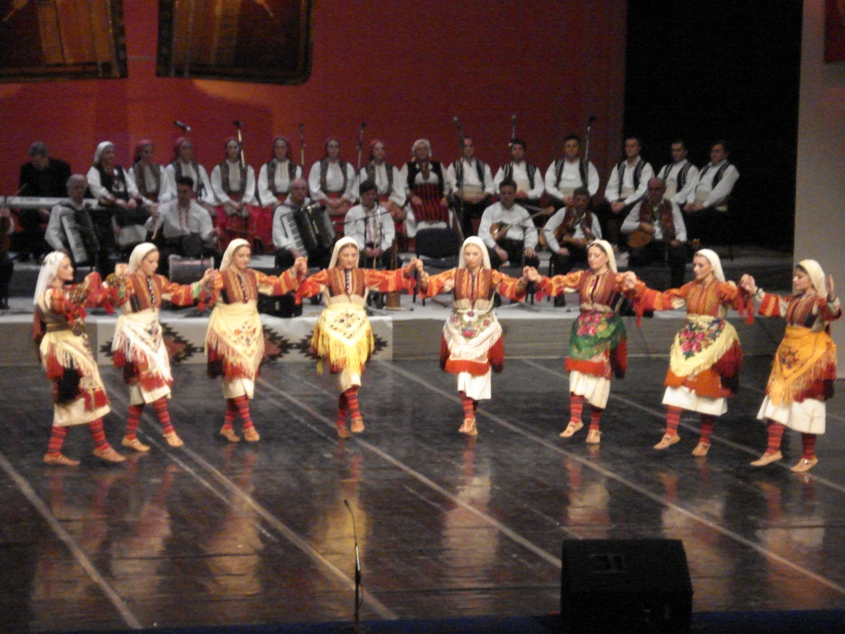 🇷🇴 Bucharest, Romania and 7 moreHorahoră (Romanian), хоро (Bulgarian), оро (Macedonian), הורה (Hebrew)
A circle dance from Southeast Europe, danced at weddings and festivalsPerformance
🇷🇴 Bucharest, Romania and 7 moreHorahoră (Romanian), хоро (Bulgarian), оро (Macedonian), הורה (Hebrew)
A circle dance from Southeast Europe, danced at weddings and festivalsPerformance
 🇧🇬 Bulgaria and 5 moreMartenitsaмартеница
Red and white yarn dolls worn from 1 March until spring shows itselfFestival
🇧🇬 Bulgaria and 5 moreMartenitsaмартеница
Red and white yarn dolls worn from 1 March until spring shows itselfFestival
 🇺🇦 Chernivtsi, Ukraine and 3 moreMalankaМаланка
A Ukrainian folk celebration of masked mummers, feasting and New Year blessingsFestival · Feasts and festival meals
🇺🇦 Chernivtsi, Ukraine and 3 moreMalankaМаланка
A Ukrainian folk celebration of masked mummers, feasting and New Year blessingsFestival · Feasts and festival meals
 🇷🇴 Bucharest, Romania and 5 moreRomanian Language DayZiua Limbii Române
A single day, 31 August, given to the Romanian language in three countriesCeremony
🇷🇴 Bucharest, Romania and 5 moreRomanian Language DayZiua Limbii Române
A single day, 31 August, given to the Romanian language in three countriesCeremony
 🇷🇴 Bucharest, Romania and 2 moreCaloian
A Romanian rainmaking and fertility ritual centered on the creation, funeral, and rebirth of a clay effigy.Festival
🇷🇴 Bucharest, Romania and 2 moreCaloian
A Romanian rainmaking and fertility ritual centered on the creation, funeral, and rebirth of a clay effigy.Festival
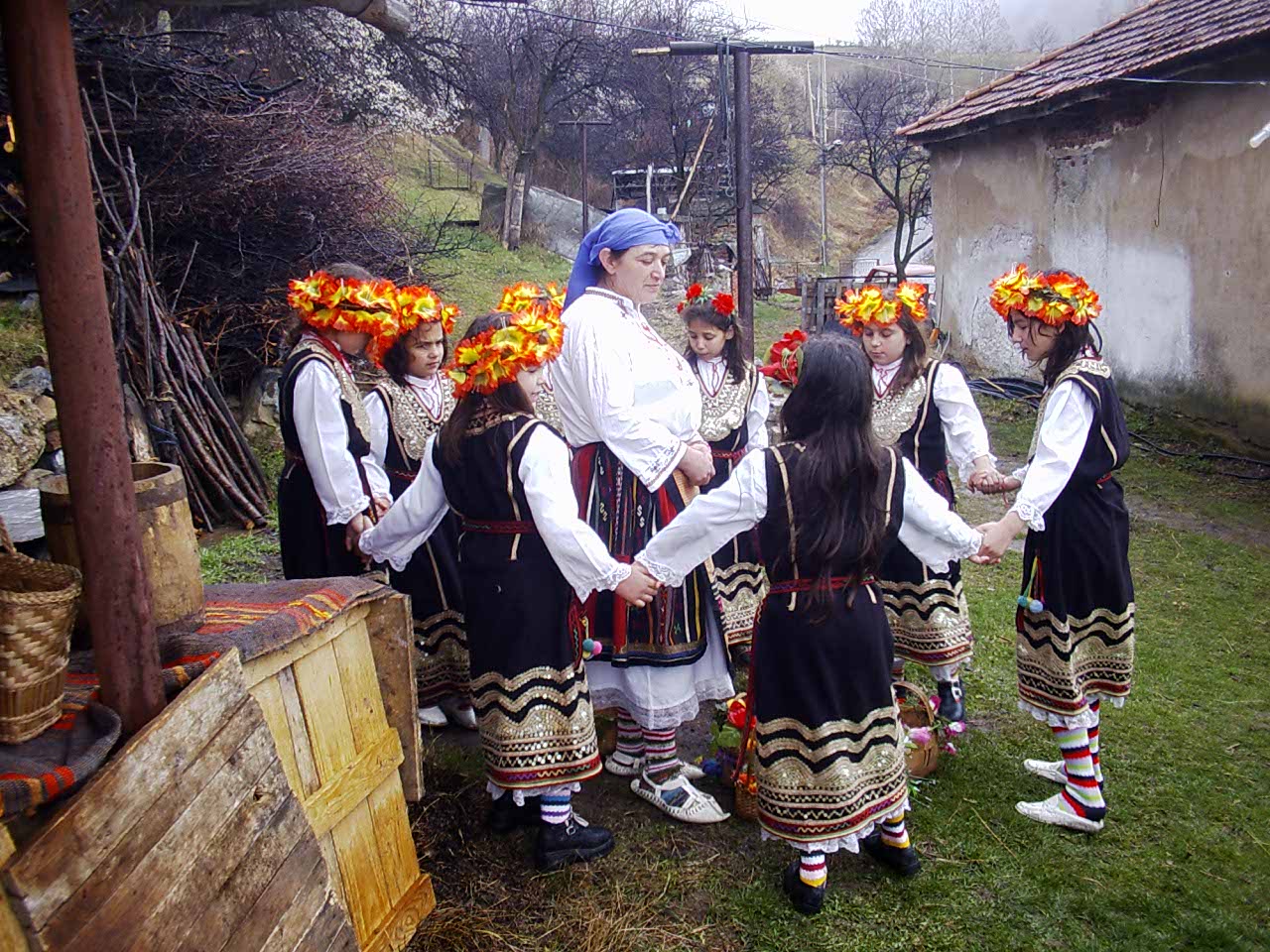 🇷🇸 Serbia and 3 moreLazariceлазарице
A spring procession of girls in flower wreaths, singing door to door before Palm SundaySpiritual
🇷🇸 Serbia and 3 moreLazariceлазарице
A spring procession of girls in flower wreaths, singing door to door before Palm SundaySpiritual
Photo credits on this page
The small pictures above come from Wikimedia Commons under free licences. Some are cropped to fit.
- Hıdırellez: Правительство Республики Крым, CC BY 4.0, source
- Călușari: El bes, CC BY 3.0, source
- Malanka: Viktoriyasechkar, CC BY-SA 4.0, source
- Plăcintă: Unknown author, Public domain, source
- Colindă: Post of Moldova, Public domain, source
- Martenitsa: Unknown author, CC BY-SA 2.0, source
- Hora: Chajeshukarie ( talk ), Public domain, source
- Romanian Language Day: Razvan Socol, CC BY-SA 4.0, source
- Lazarice: Svetlina bov at Bulgarian Wikipedia, Public domain, source
- Caloian: Costică Acsinte Archive, No restrictions, source