Music, dance and storytellingEast Asia
Nanguan
In its own language: 南管
An introspective chamber music tradition from southern Fujian and Taiwan.

Nanguan is an ancient form of Chinese chamber music rooted in Fujian and kept by amateur music societies across Taiwan and Southeast Asia. Players perform slowly on lutes, flutes, and clappers to cultivate inner calm and accompany temple ceremonies.
When is Nanguan kept?
Nanguan is kept during temple fairs, musical gatherings, and private rehearsals.
Nanguan is a refined style of Chinese chamber music that emerged along the southern coast of Fujian and spread to Taiwan and Southeast Asia. Rooted in early regional melodies, it is known for its deliberate tempo, quiet strings, and introspective quality. Amateur music clubs preserve the practice as a form of self-cultivation, performing both for community temple gatherings and in quiet shared rehearsals.
Origins and community clubs
The music took shape around the coastal port of Quanzhou in Fujian, where maritime trade routes welcomed distant musical influences between the Sui and Tang eras. Immigrants later brought the tradition to southern Taiwan during the Ming dynasty. Enthusiasts gathered in amateur associations known as quguan, which met inside local temples. These clubs treated music as an honorable, scholarly accomplishment rather than commercial entertainment, performing at temple fairs and excluding theatrical performers. Historically restricted to male players under Confucian norms, the art has opened to women in recent decades, while contemporary ensembles present the tradition through theatre and collaborative arts.
The ensemble of instruments
A core Nanguan performance features five instruments arranged in a horseshoe shape. The singer sits at the center, marking the rhythm with a five-piece sandalwood clapper known as the phik-pan. On the right sit two plucked string instruments: the four-stringed pipa lute that sets the tempo, and the three-stringed sam-hian that provides a deep resonance. On the left are the vertical bamboo flute, which guides each melodic phrase, and the two-stringed ji-hian fiddle that harmonizes with the wind instrument. For larger ceremonial works, players introduce small gongs, bells, and bamboo xylophones to create an expanded ten-sound ensemble.
Repertoire and notation
Musicians divide their vast repertoire into three separate categories. The first, tsi, comprises lengthy suites with narrative lyrics about historic events or romance, though players now perform them as serious instrumental music. The second, phoo, consists of purely instrumental pieces that depict scenes from nature and demand high technical skill. The third form, khiok, features short lyrical verses sung at a brisker tempo. Performers read these works from vertical gongchepu notation sheets. Each row contains three columns of information, displaying the musical pitch on the left, finger placements in the center, and clapper strokes on the right.
Aesthetic of restraint
Patience and self-control define the Nanguan sound. Pieces often move at an extremely deliberate pace, starting slowly, shifting into brighter passages, and returning to a quiet conclusion. Rather than playing identical melodies in unison, each musician follows an independent yet harmonizing line, listening closely so that distinct instruments blend without cluttering the texture. Performers maintain seated, focused postures on decorative chairs. This discipline turns every performance into a meditative practice, where sustaining a single word or note over several breaths is valued far more than virtuosic showmanship.
How Nanguan is kept
Musicians gather in clubhouses or temple halls, seating themselves in a horseshoe formation on traditional chairs. The singer occupies the center, striking a wooden sandalwood clapper to maintain time. Flute and bowed fiddle players sit on the left, while lute players sit on the right. Reading from vertical notation sheets, the ensemble performs long suites at an unhurried, measured pace. Each musician focuses on active listening, blending independent melodic lines while keeping a calm, composed posture throughout the session.
When and where
Music clubs meet throughout the year for regular rehearsals, private practice, and social gatherings. Formal performances take place during community temple festivals and fairs, where the clubs provide music for worship and celebration.
Nanguan is rooted in Quanzhou and southern Fujian province in China. It has a strong presence across Taiwan, especially in historic centers such as Lukang and Tainan, and is preserved by Chinese communities in Singapore, the Philippines, Indonesia, and Malaysia.
What Nanguan means
Nanguan embodies a philosophy of self-cultivation, balance, and quiet harmony. Rooted in literati values and Confucian ideals of decorum, the music avoids flashy excess. The independent instruments coordinate into a unified whole, reflecting the classical principle of harmony without losing order. For its players, the art serves as a spiritual discipline that fosters inner stillness.

Questions people ask about Nanguan
When is Nanguan kept?
Nanguan is kept during temple fairs, musical gatherings, and private rehearsals.
What is Nanguan?
Nanguan is a traditional genre of Chinese chamber music known for its slow, delicate melodies and introspective mood. It originated in Fujian province and is preserved by amateur musical societies.
Where is Nanguan practiced?
The music is kept in Fujian, throughout Taiwan in towns such as Lukang, and among overseas Chinese communities in Southeast Asian countries including Singapore, the Philippines, and Malaysia.
What instruments are used in a standard ensemble?
A core ensemble uses five instruments: a wooden sandalwood clapper played by the singer, a four-stringed pipa lute, a three-stringed sam-hian lute, a vertical bamboo flute, and a two-stringed fiddle.
How does Nanguan differ from other Chinese musical styles?
Instead of playing notes together in unison, musicians coordinate distinct, overlapping parts through attentive listening. The music features an exceptionally slow tempo, minimal ornamentation, and a calm, meditative character.
See also
 TiniklingA Philippine folk dance where dancers step between clapping bamboo poles
 GhazalA short rhyming poem of love and parting, recited and sung from Arabia to South Asia
 PangalayA traditional fingernail dance of the Tausūg and Bajau peoples in the Sulu Archipelago and Sabah.
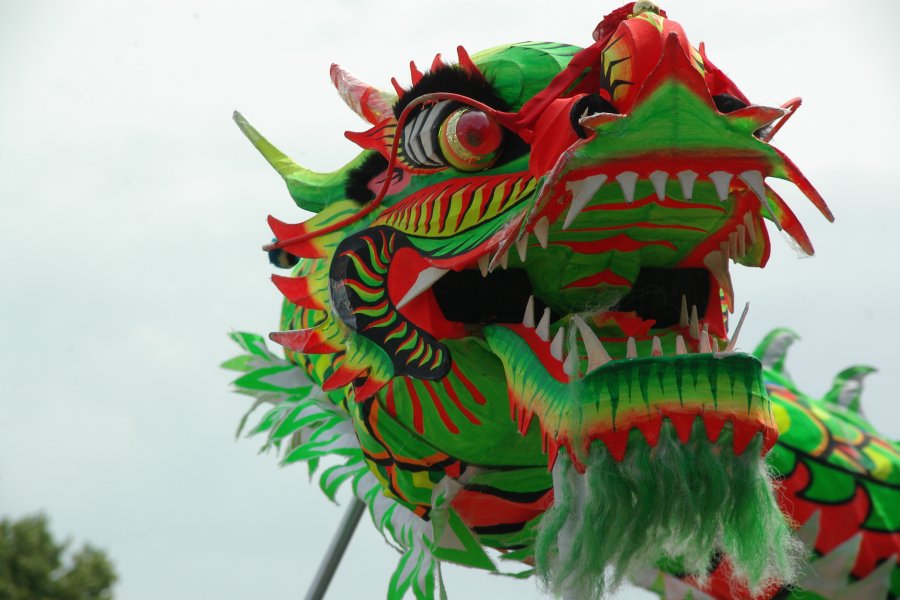 Dragon danceA long dragon puppet on poles, danced by a team at Chinese New Year and other festivals
Good reading and sources
- Nanguan music on WikipediaEncyclopedia
- More photos on Wikimedia CommonsPhotos and video
- Wikidata recordOpen data
The facts on this page come from the Wikipedia article "Nanguan music", written by its contributors and used under the CC BY-SA 4.0 licence, and from its Wikidata record (CC0). EveryParampara rewrote the text in its own words, with AI assistance, and compares every page with the article to make sure no passage is copied. It may be reused under the same CC BY-SA 4.0 licence with a link back.
It may contain mistakes. Traditions differ from one family, village and community to the next, and the people who keep them know them best. If something is wrong, tell us. Last refreshed 2026-10-06.
More from China
All the traditions of China 🇹🇼 Yilan, Taiwan and 4 moreTaiwanese opera歌仔戲
A Taiwanese theatrical art of Hokkien balladry, stylized staging, and expressive song.Performance
🇹🇼 Yilan, Taiwan and 4 moreTaiwanese opera歌仔戲
A Taiwanese theatrical art of Hokkien balladry, stylized staging, and expressive song.Performance
 🇨🇳 China and 5 moreLion dance舞獅
A dynamic ritual dance featuring costumed lions, drums and martial acrobaticsPerformance
🇨🇳 China and 5 moreLion dance舞獅
A dynamic ritual dance featuring costumed lions, drums and martial acrobaticsPerformance
 🇨🇳 Quanzhou, China and 3 moreGlove puppetry布袋戲
A traditional theatre of cloth-bodied puppets with carved wooden heads and live musicPerformance
🇨🇳 Quanzhou, China and 3 moreGlove puppetry布袋戲
A traditional theatre of cloth-bodied puppets with carved wooden heads and live musicPerformance
 🇨🇳 China and 5 moreShadow play
A storytelling art using flat puppets and light to cast moving silhouettes on a screen.Performance
🇨🇳 China and 5 moreShadow play
A storytelling art using flat puppets and light to cast moving silhouettes on a screen.Performance
The same idea elsewhere
All of this kind 🇹🇷 Kayseri, Turkey and 4 moreHalay
A traditional line and circle folk dance kept across Turkey, Azerbaijan, Armenia, Iran, and Syria.Performance
🇧🇷 BrazilBaião
A syncopated folk rhythm and partnered dance from northeastern BrazilPerformance
🇹🇷 Kayseri, Turkey and 4 moreHalay
A traditional line and circle folk dance kept across Turkey, Azerbaijan, Armenia, Iran, and Syria.Performance
🇧🇷 BrazilBaião
A syncopated folk rhythm and partnered dance from northeastern BrazilPerformance
 🇺🇦 Kyiv, UkraineBanduraБандура
A Ukrainian plucked string instrument played to accompany epic songs and folk balladsPerformance
🇺🇦 Kyiv, UkraineBanduraБандура
A Ukrainian plucked string instrument played to accompany epic songs and folk balladsPerformance
 🇳🇿 Auckland, New ZealandPoi
A Māori performing art of swinging tethered weights in rhythmical patterns.Performance
🇳🇿 Auckland, New ZealandPoi
A Māori performing art of swinging tethered weights in rhythmical patterns.Performance