Dress and adornmentSouth AsiaBuddhist
Traditional Newar clothing
In its own language: नेवार समुदायमा भएको संस्कृति पहिरन
The customary handwoven dress and ceremonial garments of Nepal's Newar people

Traditional Newar clothing encompasses the handwoven garments, saris and tunics worn by the indigenous Newar community of Nepal's Kathmandu Valley. Men wear the tapalan shirt with suruwa trousers, while women wear the distinctive black and red haku patasi sari during daily routines, festivals and life-cycle rites.
When is Traditional Newar clothing kept?
Traditional Newar clothing is kept during festivals, life-cycle ceremonies and daily routines.
Traditional Newar clothing includes the distinct garments made and worn by the Newar people of the Kathmandu Valley in Nepal. Rooted in local cotton weaving and dyeing traditions, these clothes vary across social groups, ages and genders. They range from everyday black and red cotton saris and tailored shirts to ornate brocade gowns worn during major life-cycle rituals.
Homespun fabrics and crafts
For generations, Newar garments relied on home production. Families in the Kathmandu Valley kept handlooms inside their houses, weaving cloth for themselves or for sale. Cotton processing tools, like spinning wheels and seed separators, served as customary bridal gifts. Once woven, the raw fabric went to the Chhipa community, known today as Ranjitkar, who dyed the textiles. Street scenes regularly featured women preparing yarn until the 1960s, when home weaving began to decline.
Everyday and festive dress
Men traditionally wear the tapalan, a long shirt paired with snug trousers called suruwa, often topped with a waistcoat or coat. Women wear the haku patasi, a heavy black cotton sari edged with a bright red border. They pair this with a tied blouse called a misalan and drape a shawl, or ga, across the torso. While elderly residents and farming women wear these garments daily, many community members now put them on for weddings and the Nepal Sambat New Year parade.
Garments of earlier eras
Historical records describe styles once favored by different social groups. In 1721, Italian traveler Ippolito Desideri noted locals wearing knee-length cotton or wool jackets, ankle-length trousers, red caps and slippers. Until the 1930s, courtiers and merchants wore sayn kayta, roomy trousers made of raw silk that were bound at the knees and drawn tight at the waist. Women also wore parsi, sweeping saris measuring up to twenty yards that were pleated and tied in front. Young girls wore the bhantanlan, a side-slit gown reaching the ankles.
Rites of passage attire
Newar customs prescribe distinct clothing for sacred milestones. During the first rice feeding ceremony, known as Janku, infants wear brocade caps and vests. Young girls put on elaborate silk and brocade dresses styled like adult clothing for their Ihi and Baray ceremonies. Boys wear loincloths during initiation rites, while Buddhist boys put on monastic robes for Bare Chhuyegu. Priests conduct special religious services in ankle-length pleated gowns, accompanied by turbans, crowns or ceremonial caps.
How Traditional Newar clothing is kept
People wear specific traditional outfits according to their age, gender and the event. Men put on the long tapalan shirt over suruwa trousers, occasionally layering a coat over top. Women drape the dark haku patasi sari around the waist, fastening a tied misalan blouse and wrapping a ga shawl across the shoulders. For life-cycle milestones such as the first rice feeding, coming-of-age ceremonies, or Buddhist monastic initiations, individuals dress in specialized robes, brocades, or loincloths.
When and where
The clothing is worn year-round as everyday dress by some community members, particularly older generations and farmers. Others wear it for festive celebrations like the Nepal Sambat New Year parade, wedding processions, and life-cycle rites from infancy through old age.
This attire belongs to the Kathmandu Valley and surrounding regions in Nepal, the ancestral home of the Newar community. It is worn in both urban neighborhoods and rural farming settlements.
What Traditional Newar clothing means
Clothing styles reflect social roles, life stages and cultural identity among the Newar people. Distinct garments historically signaled trade, farming or court backgrounds. In ceremonial contexts, specialized fabrics like silk and brocade mark major passages of life, transitioning children into adulthood and honoring sacred initiations.


Questions people ask about Traditional Newar clothing
When is Traditional Newar clothing kept?
Traditional Newar clothing is kept during festivals, life-cycle ceremonies and daily routines.
What is traditional Newar clothing?
It is the customary attire of the Newar people from Nepal's Kathmandu Valley. It features handwoven cotton and silk garments such as the tapalan shirt for men and the haku patasi sari for women.
Where is this clothing worn?
It is worn in Nepal, particularly throughout the Kathmandu Valley and its surrounding districts, across towns, farming settlements, religious shrines and festival parade routes.
What is a haku patasi?
A haku patasi is a traditional black cotton sari with a red border worn by Newar women. It is worn with a tied blouse and a draped shawl for daily work and festival days.
What garments are worn during Newar life-cycle ceremonies?
Babies wear brocade caps and vests for their first rice feeding. Young girls wear fine brocade dresses for early rites, boys wear loincloths or monastic robes for initiations, and priests wear pleated gowns.
See also
 PashminaUltra-fine wool of Himalayan goats, hand-woven in Kashmir into shawls of rank
 SariAn unstitched length of cloth that women drape around the body, worn across South Asia
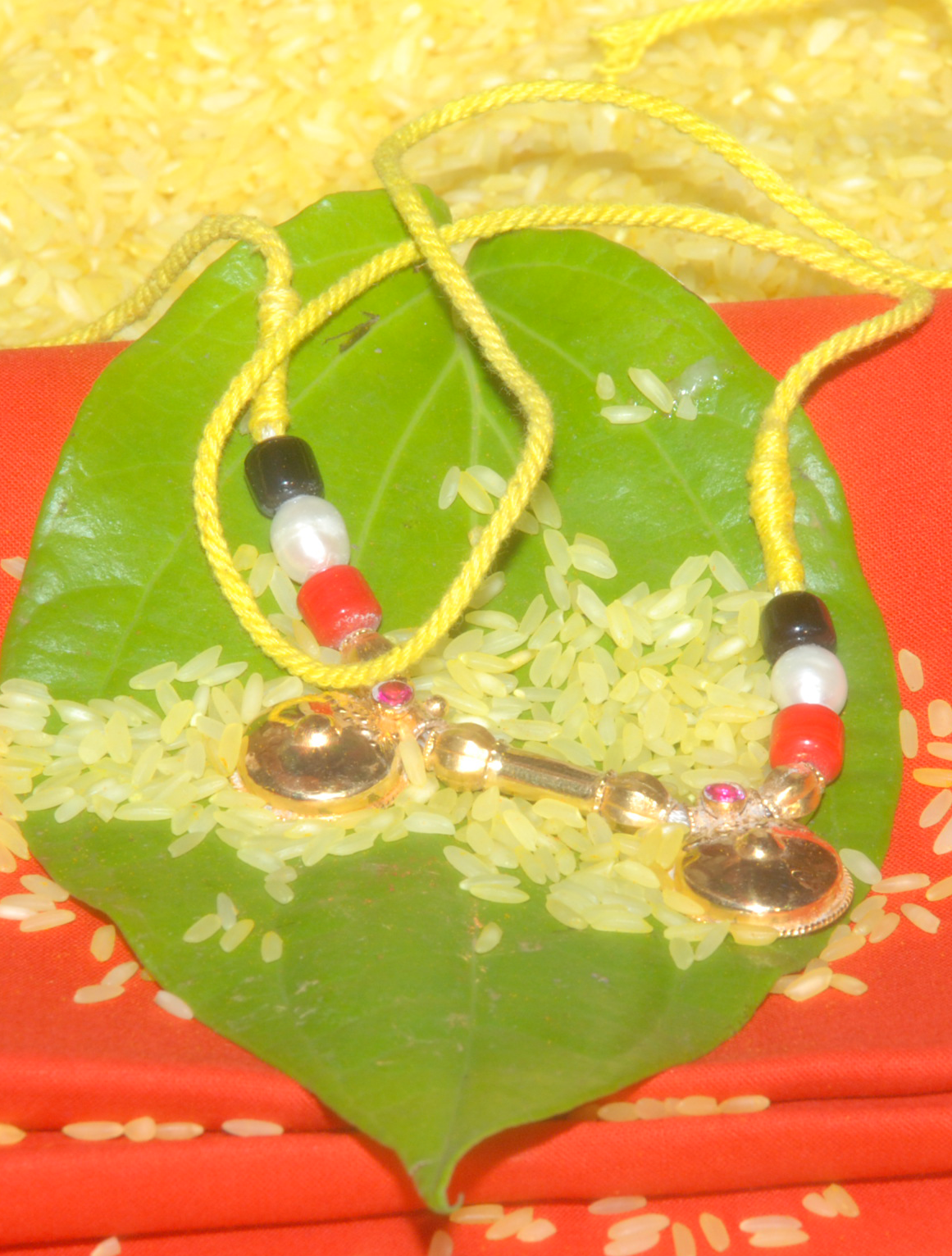 MangalasutraA necklace tied by the groom at a wedding, worn through married life
 DupattaA traditional South Asian scarf worn across the shoulders, chest, and head
Good reading and sources
The facts on this page come from the Wikipedia article "Newar traditional clothing", written by its contributors and used under the CC BY-SA 4.0 licence, and from its Wikidata record (CC0). EveryParampara rewrote the text in its own words, with AI assistance, and compares every page with the article to make sure no passage is copied. It may be reused under the same CC BY-SA 4.0 licence with a link back.
It may contain mistakes. Traditions differ from one family, village and community to the next, and the people who keep them know them best. If something is wrong, tell us. Last refreshed 2026-10-06.
More from Nepal
All the traditions of Nepal
🇮🇳 India and 4 moreSariसाड़ी
An unstitched length of cloth that women drape around the body, worn across South AsiaDress
🇮🇳 India and 2 moreMangalasutraमङ्गलसूत्रम् (maṅgalasūtram)
A necklace tied by the groom at a wedding, worn through married lifeDress
🇮🇳 Srinagar, India and 3 morePashmina
Ultra-fine wool of Himalayan goats, hand-woven in Kashmir into shawls of rankDress
 🇮🇳 India and 5 moreBindi
A dot worn between the eyebrows, red for marriage and devotion, worn daily by many womenDress
🇮🇳 India and 5 moreBindi
A dot worn between the eyebrows, red for marriage and devotion, worn daily by many womenDress
The same idea elsewhere
Coming of age compared 🇮🇩 IndonesiaSlametan
A short communal meal on Java where neighbours share food, prayer and a wish for peaceSpiritual · Feasts and festival meals
🇮🇩 IndonesiaSlametan
A short communal meal on Java where neighbours share food, prayer and a wish for peaceSpiritual · Feasts and festival meals
 🇨🇳 China and 5 moreLion dance舞獅
A dynamic ritual dance featuring costumed lions, drums and martial acrobaticsPerformance
🇨🇳 China and 5 moreLion dance舞獅
A dynamic ritual dance featuring costumed lions, drums and martial acrobaticsPerformance
 🇱🇦 Laos and 1 moreBaciບາສີ (Lao)
A Lao rite that calls the soul home and ties a thread on the wrist for good luckSpiritual
🇱🇦 Laos and 1 moreBaciບາສີ (Lao)
A Lao rite that calls the soul home and ties a thread on the wrist for good luckSpiritual
 🇮🇱 IsraelTallitטלית
A four-cornered Jewish prayer shawl with ritual fringes worn during worshipSpiritual
🇮🇱 IsraelTallitטלית
A four-cornered Jewish prayer shawl with ritual fringes worn during worshipSpiritual