Life-cycle ritesSoutheast AsiaHindu
Ngaben
A Balinese Hindu cremation rite held to free the soul of the dead

Ngaben, also called Pitra Yadnya or Pelebon, is the Balinese Hindu funeral rite of cremation. It is held to release the soul of the dead toward the upper realm, and Balinese families on the island of Bali keep it, often for many people at once, on a day chosen as auspicious.
When is Ngaben kept?
Ngaben is kept on after a death, once the family has raised the money and picked an auspicious day, with the ashes taken to the sea twelve days after the burn.
Ngaben is the Hindu cremation rite of Bali, Indonesia. Families hold it to set free the soul of someone who has died, so that it can move on to a higher realm and wait there for rebirth, or leave the round of rebirths altogether. Balinese Hindus treat it as an obligation to the dead.
What it is
Ngaben is a cremation ceremony kept by Balinese Hindus. The word covers several names: Pitra Yadnya, which points to duty toward the ancestors, and Pelebon, used for the grandest form. Behind the rite is a belief about what follows death. The soul needs help to leave this world and go upward, where it can wait, be born again, or be freed from being born again at all. Balinese Hindu teaching describes a struggle over the soul. Beings of the lower world try to seize it, and a cremation done properly gives it a better chance of reaching the higher place.
Waiting for the rite
An immediate cremation is what families want, yet the expense puts it out of reach for many. So the body is buried first and stays in the ground for a time, often near the temple called Pura Prajapati. Relatives save money, sometimes joining with other households, and then a group of people who died recently is cremated together in one large ceremony paid for by the community. When the funds are ready, the family looks for a favourable day and tells the village. Coffins called bade are built to carry the dead to the pyre.
On the way
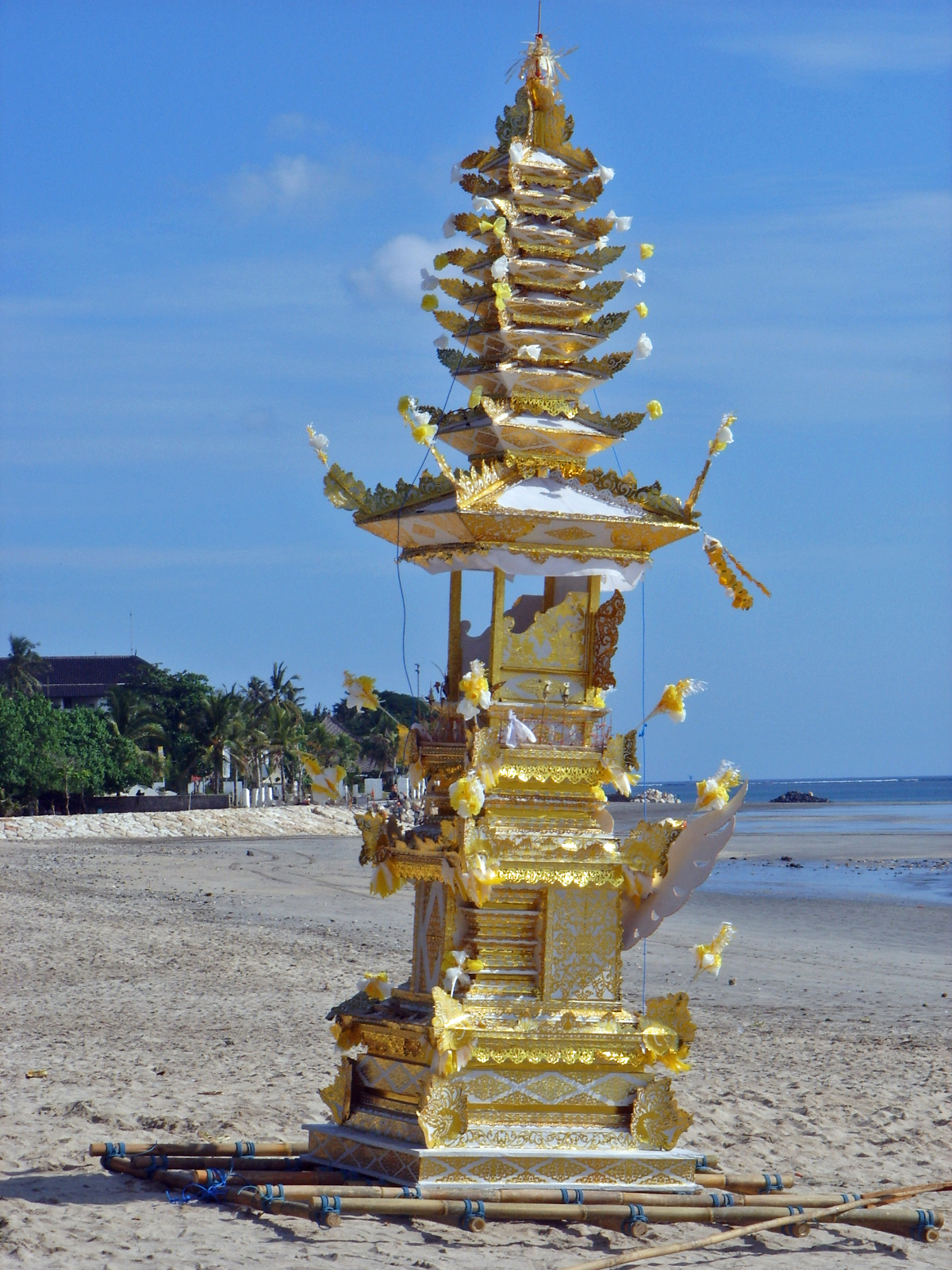
Before the procession the body is cleaned and put into Balinese dress, and family and friends say goodbye with prayers. The dead are carried to the kuburan, the cremation ground, in traditional clothing, with gamelan music and singing along the route. Where the way crosses a main road, those bearing the coffin turn it three times. This is meant to break the trail for underworld beings said to chase the soul. A patulangan is prepared for the burning as well: either a lembu, a coffin shaped as a bull or a mythical beast and built from bamboo, wood and paper, which burns with the body, or a wooden wadah shaped like a temple.
Fire and ashes
At the ground the body is laid inside the lembu or the wadah. Hymns are said one last time and the pyre is set alight. As it burns, a Balinese music group plays beleganjur, a style described as a battle song. It stands for the soul's struggle against the underworld as it tries to reach the upper realm, a place without care. Twelve days later the family gathers what is left, the ashes, and puts them into a coconut shell. These are taken to the ocean or sea nearby, so the remains go back to the elements.
How Ngaben is kept
After a death the body is buried for a period while the family raises money, sometimes together with other households. When enough is saved, a day is chosen and the village is told. Bade coffins are built. The body is washed and dressed, prayers are said, and a procession carries it to the cremation ground with gamelan music, turning the coffin three times where main roads cross. At the ground it is placed in a lembu or wadah, hymns are recited, and the pyre is lit while beleganjur music plays. Twelve days on, the ashes are gathered, placed in a coconut shell and carried to the sea.
When and where
Ngaben does not fall on one fixed date. It happens when a family can afford it, which may be years after the death, and an auspicious day is then selected. Because of the cost, several people who died around the same time are often cremated together. The ashes are carried to the sea twelve days after the burning.
The rite belongs to Bali, Indonesia, and to Balinese Hindus living there. It is a village affair: neighbours help, funds are pooled, and the whole community turns out for the procession. The body may wait near Pura Prajapati before the ceremony. The ashes are taken to the ocean or sea close to home.
What Ngaben means
For Balinese Hindus, Ngaben is a duty owed to the dead. The fire is not an ending but a release: it lets the soul go upward instead of staying bound to the body and the world. The upper realm is pictured as free of care, a place of waiting before rebirth or of final freedom from being born again. The beleganjur music played during the burning is understood as the sound of that journey, the soul fighting its way past the underworld.


Questions people ask about Ngaben
When is Ngaben kept?
Ngaben is kept on after a death, once the family has raised the money and picked an auspicious day, with the ashes taken to the sea twelve days after the burn.
What is Ngaben?
It is a cremation ceremony kept by Balinese Hindus. Families hold it so the soul of a person who has died can leave this world and travel to the upper realm, where it waits for rebirth or is freed from being reborn.
Where is it kept?
In Bali, Indonesia, among Balinese Hindus. It is a community event: relatives, neighbours and the wider village take part in preparing the coffins, the procession and the cremation, and the ashes are carried to the sea nearby.
Why is the coffin turned at road crossings?
Balinese Hindu teaching describes underworld beings that try to seize the soul. Turning the coffin three times where the route crosses a main road is meant to break the trail so those beings cannot follow it to the cremation ground.
What happens to the ashes?
Twelve days after the cremation, the family collects the ashes and puts them into a coconut shell. They are then carried to the ocean or sea close by, so that the remains return to the elements.
See also
 IkatA resist-dyeing craft from Southeast Asia, where yarns are tied and dyed before weaving
 BarkclothCloth beaten from tree bark across Africa, Asia and the Pacific
 KenduriA communal prayer meal and gathering shared across Indonesia, Malaysia and Brunei
 SlametanA short communal meal on Java where neighbours share food, prayer and a wish for peace
Good reading and sources
- Ngaben on WikipediaEncyclopedia
- More photos on Wikimedia CommonsPhotos and video
- Wikidata recordOpen data
The facts on this page come from the Wikipedia article "Ngaben", written by its contributors and used under the CC BY-SA 4.0 licence, and from its Wikidata record (CC0). EveryParampara rewrote the text in its own words, with AI assistance, and compares every page with the article to make sure no passage is copied. It may be reused under the same CC BY-SA 4.0 licence with a link back.
It may contain mistakes. Traditions differ from one family, village and community to the next, and the people who keep them know them best. If something is wrong, tell us. Last refreshed 2026-10-05.
More from Indonesia
All the traditions of Indonesia 🇿🇦 Cape Town, South Africa and 5 moreTooth ablation
A global custom of deliberately removing healthy teeth for social, ritual, or aesthetic reasons.Rite of passage
🇿🇦 Cape Town, South Africa and 5 moreTooth ablation
A global custom of deliberately removing healthy teeth for social, ritual, or aesthetic reasons.Rite of passage
 🇮🇳 India and 5 moreTribal youth dormitoryMorung
A communal house where a tribe's unmarried young people sleep, learn and serveRite of passage
🇮🇩 IndonesiaNgerorod
A Balinese Hindu way of marrying, where a couple wed by their own choiceRite of passage
🇮🇳 India and 5 moreTribal youth dormitoryMorung
A communal house where a tribe's unmarried young people sleep, learn and serveRite of passage
🇮🇩 IndonesiaNgerorod
A Balinese Hindu way of marrying, where a couple wed by their own choiceRite of passage
 🇺🇸 United States and 5 moreSaber arch
A wedding custom where sabers form an arch for the couple to walk through.Rite of passage
🇺🇸 United States and 5 moreSaber arch
A wedding custom where sabers form an arch for the couple to walk through.Rite of passage
The same idea elsewhere
Death and mourning compared 🇲🇽 Mexico City, Mexico and 1 moreDay of the DeadDía de Muertos
A Mexican remembrance of deceased family and friends with altars, marigolds and feastsFestival · Sweets given and shared
🇲🇽 Mexico City, Mexico and 1 moreDay of the DeadDía de Muertos
A Mexican remembrance of deceased family and friends with altars, marigolds and feastsFestival · Sweets given and shared
 🇳🇿 New Zealand and 2 moreMarae
A cleared, sacred gathering place at the heart of Māori and Polynesian community lifeSpiritual
🇳🇿 New Zealand and 2 moreMarae
A cleared, sacred gathering place at the heart of Māori and Polynesian community lifeSpiritual
 🇼🇸 Samoa and 1 moreʻIe tōga
Precious woven mats exchanged in Samoan ceremonies to honor family ties and chiefly status.Dress
🇼🇸 Samoa and 1 moreʻIe tōga
Precious woven mats exchanged in Samoan ceremonies to honor family ties and chiefly status.Dress
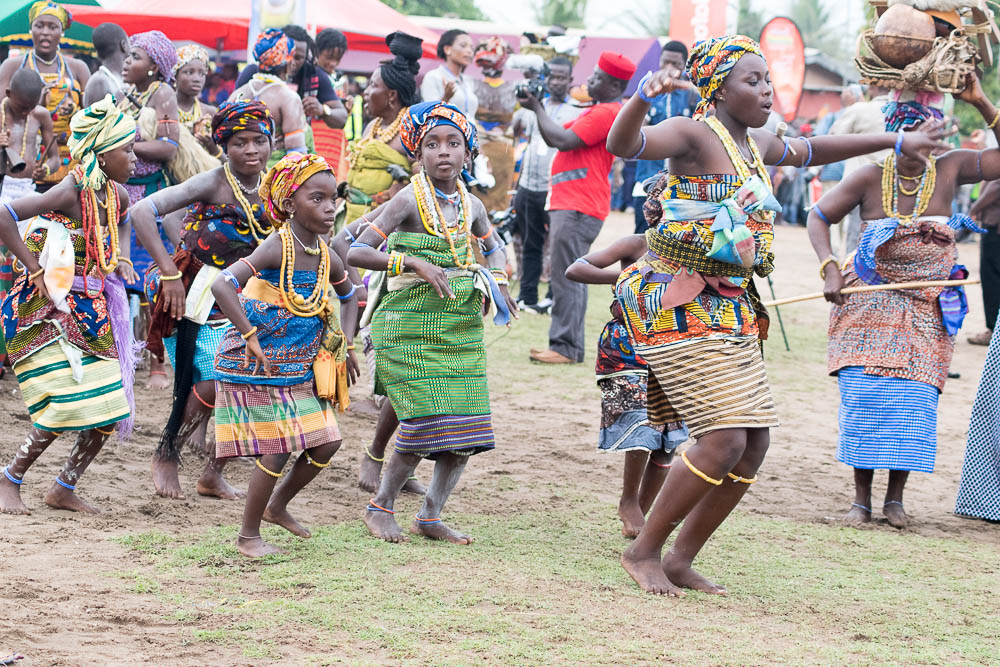 🇬🇭 Ghana and 2 moreAgbadza
An Ewe music and dance, born of war songs and kept for funerals, weddings and festivalsPerformance
🇬🇭 Ghana and 2 moreAgbadza
An Ewe music and dance, born of war songs and kept for funerals, weddings and festivalsPerformance