Dress and adornmentLatin America and the Caribbean
Pollera
A handmade skirt and outfit worn in Panama, Bolivia and Peru, and a marker of identity
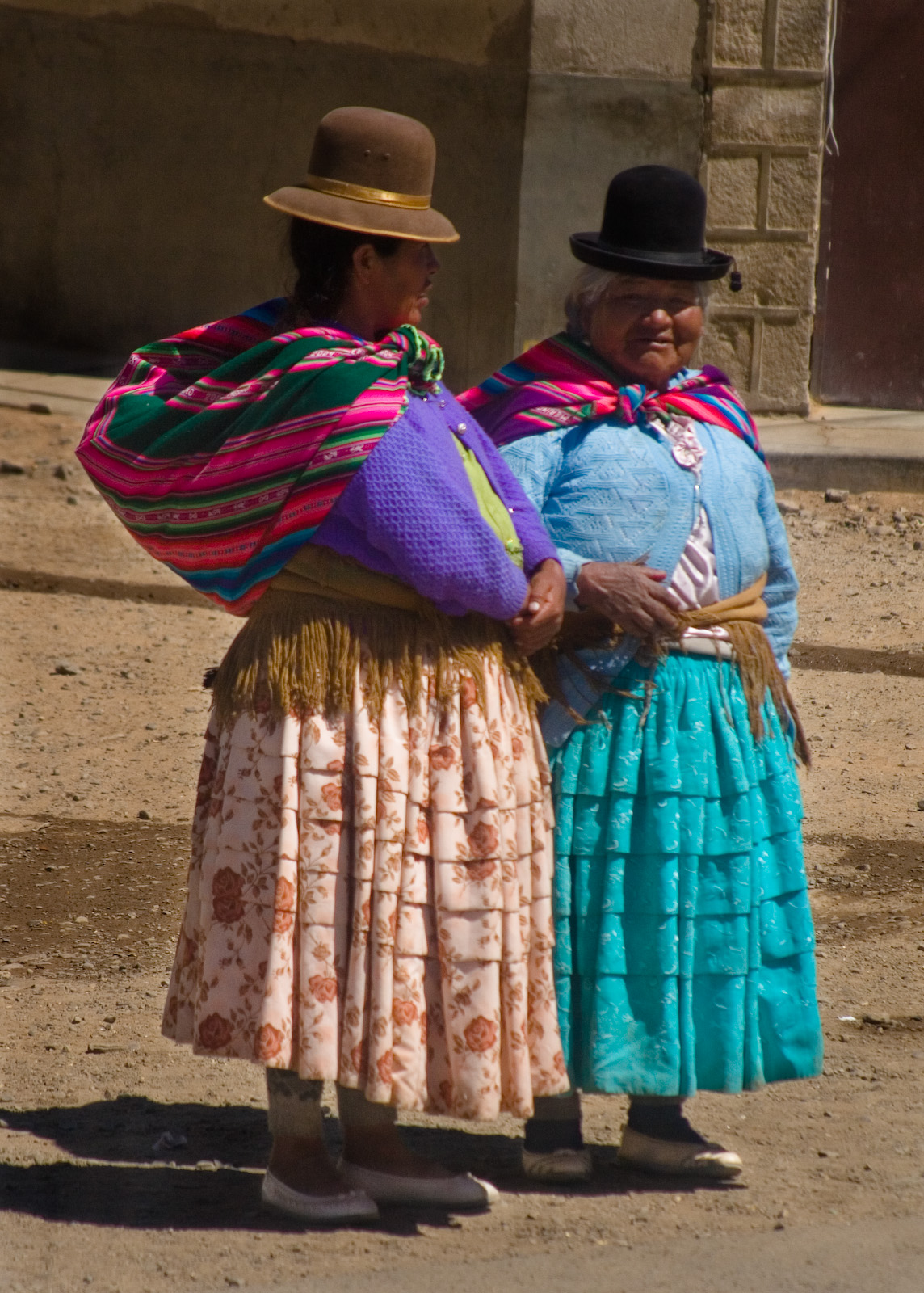
A pollera is a skirt and ensemble with roots in Panama, Bolivia and Peru; each place gave it its own cut, cloth and meaning. Panama's version became the national folk costume, sewn by hand with lace and embroidery. In Bolivia and Peru the pleated pollera is worn by Indigenous and mestizo women and has become a sign of identity.
When is Pollera marked?
Pollera is kept as part of Fiesta de la Candelaria, which runs from 2 to 15 February 2027.
A pollera is a skirt, or a whole outfit built around one, worn across Panama, Bolivia and Peru. In Panama it is the national dress, handmade and heavily embroidered. In Bolivia and Peru it is a pleated skirt linked to Indigenous and mestizo women. People wear it at festivals and family celebrations, and it carries identity as much as decoration.
What it is
In Spanish the word pollera means a skirt, and in Latin America it also names a full outfit: a wide skirt, a matching shirt, and the layers worn under them. Cotton and linen are common, and wool and lace appear too. White is the usual base, with coloured floral work on the cloth. Panama's pieces are sewn by hand, so each one is made to fit its wearer, and a single outfit can take a long time to finish. Alongside darning, cross-stitch and shading, the needlework varies by region and by occasion. Panamanian polleras fall into two broad groups: gala for formal events, and labor for work.
Origins and history
The Panamanian pollera is traced to the clothing of Spanish women who reached the isthmus in the 16th and 17th centuries. Panama was a meeting point of peoples, so Indigenous, European and Afro-Antillean ways of dressing and living all left marks on it. In time it became the country's national dress, tied most closely to the interior provinces, and today the densest group of makers works on the Azuero Peninsula. Outfits are frequently passed down in families rather than replaced. The most elaborate examples are often described as among the most detailed traditional garments in the Americas.
Styles and regions
Panama holds many named polleras. The gala is the most decorated: Valencian lace, braids made locally, and embroidery across the whole garment, sometimes worked by eye. Its talco al sol style uses cut coloured cloth, and the rarer talco en sombra sets work beneath the fabric. The montuna, also called zaraza after its cloth, began as dress for mountain women and now has showier festive versions. The congo belongs to Afro-Panamanian tradition, above all in Colón, with bright prints and patchwork, and a queen in crown and flowers who dances barefoot. The basquiña adds a tucked over-layer, gold buttons, two braids or a bun, and black pana shoes. Village styles differ in shirt, jewellery and hat.
In Bolivia and Peru
In Bolivia the same word names a pleated skirt. It belongs mainly to urban mestizo and rural Indigenous women, and some now choose it in place of woven Indigenous dresses. A common altiplano style calls for about eight metres of cloth, worn over four or five embroidered underskirts; beneath the top skirt sits the fuste, and a third layer is usually wool. The garment is linked to Spanish rural dress. Many Bolivian women wear the pollera as everyday clothing, and at festivities such as the Carnaval de Oruro, or the Virgen de la Candelaría in Peru, women who normally dress otherwise put one on to dance.
Pride and change
Between the late 1920s and the 1930s the pollera sat at the centre of Bolivian arguments about class, gender and ethnicity. Elite women's groups ran a National Women's Convention in 1929, where working-class women in polleras, called cholas, were pushed to the edges and thrown out after raising labour demands. Later, police made domestic workers and cooks in polleras carry health and identity cards, granted only after degrading medical checks. Women resisted by keeping the garment on, as an expression of Aymara identity. That link to pride continues. ImillaSkate, an all-female Indigenous skateboarding crew from Cochabamba formed in 2019, skates in polleras, ribboned bowler hats and long braids, and has appeared in Washington, D.C., at the Smithsonian Folklife Festival in 2024.
How Pollera is kept
A pollera is put on in layers. Under the skirt come petticoats and, in Bolivia, embroidered underskirts with the fuste beneath. The skirt and shirt go over these, then the jewellery: chains, pearl combs and hair ornaments, with a shawl and fan for a formal Panamanian set. Hair is arranged to suit the style, in two braids or a bun with the basquiña, or long braids in Bolivia. In Panama the outfit is carried in the parades of the Desfiles de las Mil Polleras; in Bolivia and Peru it appears above all in festival dancing, worn even by women who dress differently the rest of the year.
When and where
No single date belongs to the pollera. It comes out for weddings, quinceañeras and national holidays through the year, and takes a public role at named festivals. Panama holds the Desfiles de las Mil Polleras each January at Las Tablas. In Bolivia and Peru the skirt is worn for the dancing at the Carnaval de Oruro and the Virgen de la Candelaría.
The pollera is kept in Panama, Bolivia and Peru. Panama treats it as the national dress, strongest in the interior provinces, with makers clustered on the Azuero Peninsula and a separate Afro-Panamanian form in Colón. In Bolivia it is common in highland cities and in the countryside of the altiplano. Peru wears it at festivals, including the Virgen de la Candelaría.
What Pollera means
For Panamanians the pollera stands for the country's mixed roots, since Indigenous, European and Afro-Antillean strands all meet in it, and for the skill of the artisans who sew it. In Bolivia and Peru it speaks of belonging. Pressure to give it up was read by Indigenous women as an attack on who they were, so keeping it on became a statement of Aymara identity and community values. Inside those communities it also marks class and regional differences, and for some women, such as the anarchist Petronila Infantes, putting one on has marked a turning point.


Days Pollera is marked
Questions people ask about Pollera
When is Pollera marked?
Pollera is kept as part of Fiesta de la Candelaria, which runs from 2 to 15 February 2027.
What is a pollera?
A pollera is a skirt, and often a whole outfit built around it. In Panama it means a handmade skirt and shirt with lace and embroidery, worn as the national dress. In Bolivia and Peru it means a pleated skirt worn by Indigenous and mestizo women, usually over several underskirts.
Where is the pollera worn?
Panama, Bolivia and Peru each have their own version. Panama's is the national folk costume, especially in the interior provinces. In Bolivia the pleated pollera is common among urban mestizo and rural Indigenous women, and in Peru it appears at festivals, including the Virgen de la Candelaría.
How long does a Panamanian pollera take to make?
Making one is slow work. Panamanian artisans sew by hand, sometimes on fine-threaded cloth, with embroidery and lace. A finished outfit can take between one and a half and two years to complete. Many outfits are handed down through the generations rather than replaced.
Why do Bolivian skateboarders wear polleras?
ImillaSkate, an all-female Indigenous crew formed in Cochabamba in 2019, skates in polleras, ribboned bowler hats and long braids. Members took the look from their mothers and grandmothers. For them the skirt carries the strength of earlier generations of Indigenous women, and their public skating challenges what is expected of both women and the garment.
See also
 Nón láA pointed leaf and bamboo hat worn across Vietnam for shelter, work and celebration
 Traditional tattooingThe ancient custom of marking the skin for protection, healing, status and sacred rites
 ʻIe tōgaPrecious woven mats exchanged in Samoan ceremonies to honor family ties and chiefly status.
 RushnykA sacred embroidered cloth used in East Slavic rituals, weddings and daily life.
Good reading and sources
- Pollera on WikipediaEncyclopedia
- More photos on Wikimedia CommonsPhotos and video
- Wikidata recordOpen data
The facts on this page come from the Wikipedia article "Pollera", written by its contributors and used under the CC BY-SA 4.0 licence, and from its Wikidata record (CC0). EveryParampara rewrote the text in its own words, with AI assistance, and compares every page with the article to make sure no passage is copied. It may be reused under the same CC BY-SA 4.0 licence with a link back.
It may contain mistakes. Traditions differ from one family, village and community to the next, and the people who keep them know them best. If something is wrong, tell us. Last refreshed 2026-10-05.
More from Panama
All the traditions of Panama 🇵🇦 Panama City, PanamaMola
Layered cloth panels hand-sewn by Guna women using reverse appliquéCraft
🇵🇦 Panama City, PanamaMola
Layered cloth panels hand-sewn by Guna women using reverse appliquéCraft
 🇺🇾 Montevideo, Uruguay and 3 moreMurga
A lively Carnival musical theatre of chorus, percussion and social satirePerformance
🇺🇾 Montevideo, Uruguay and 3 moreMurga
A lively Carnival musical theatre of chorus, percussion and social satirePerformance
 🇯🇲 Kingston, Jamaica and 5 moreReggae
A Jamaican music of the late 1960s: a slow beat, a deep bass line and Rastafari rootsPerformance
🇯🇲 Kingston, Jamaica and 5 moreReggae
A Jamaican music of the late 1960s: a slow beat, a deep bass line and Rastafari rootsPerformance
The same idea elsewhere
Weddings compared 🇺🇬 Uganda and 4 moreBarkcloth
Cloth beaten from tree bark across Africa, Asia and the PacificCraft
🇺🇬 Uganda and 4 moreBarkcloth
Cloth beaten from tree bark across Africa, Asia and the PacificCraft
 🇮🇱 IsraelTallitטלית
A four-cornered Jewish prayer shawl with ritual fringes worn during worshipSpiritual
🇮🇱 IsraelTallitטלית
A four-cornered Jewish prayer shawl with ritual fringes worn during worshipSpiritual
 🇺🇸 United States and 5 moreRite of passage
A ceremony that marks leaving one group and entering another, with a new statusRite of passage
🇺🇸 United States and 5 moreRite of passage
A ceremony that marks leaving one group and entering another, with a new statusRite of passage
 🇬🇭 Odumase Krobo, GhanaDipo
An annual Ghanaian coming-of-age ceremony welcoming Krobo girls into womanhoodRite of passage
🇬🇭 Odumase Krobo, GhanaDipo
An annual Ghanaian coming-of-age ceremony welcoming Krobo girls into womanhoodRite of passage