Seasons, harvest and the calendarSouth AsiaIndigenous and traditional
Sarhul
A spring new year festival honoring nature and Sal blossoms across Jharkhand

Sarhul is a three-day spring festival celebrated across Jharkhand to welcome the new year. Indigenous and regional communities gather at sacred groves to honor deities, ancestors, and blooming Sal trees with offerings, music, and dance.
When is Sarhul kept?
Sarhul is kept on over three days in spring during the month of Chaitra.
Sarhul is a spring celebration that heralds the arrival of the new year in Jharkhand, India. Kept by several local communities, the festival centers on the blossoming of the sacred Sal tree. Villagers halt agricultural work, fast, and gather in holy groves to thank nature, honor village guardians, and remember ancestral spirits through prayers, drumming, and shared dances.
Rites at the sacred grove
Rituals take place at the Sarna, the sacred grove of the village. The spiritual leader, known as the Pahan, leads the community in worship alongside an assistant called the Pujar. Three roosters of distinct colors are dedicated respectively to the Sun, local protector spirits, and the ancestors. The priest also offers freshly harvested Sal blossoms, fruit, vermilion powder, and ritual liquor. A water vessel placed within the grove serves as an omen for the coming months, allowing the Pahan to forecast rainfall and weather patterns. After the ceremonies conclude, the priest distributes freshly cut Sal blossoms to everyone present.
Music, dance, and home life
Preparations begin the day prior with fasting and foraging. Younger villagers head into nearby woods to pick Sal flowers, while others catch fish and crabs in local waters. Farming chores such as ploughing are strictly paused during the observance. Inside their houses, families place meals before the spirits of their forebears before sitting down to eat. Afterwards, people head into open spaces with Sal flowers in hand. Musicians strike up rhythms on traditional drums including the Dhol, Nagara, and Mandar. People dance together to the percussion while enjoying Handia, a home-brewed rice beer.
Names and modern expressions
Different regional groups know the event by distinct terms. The Kurukh call it Khaddi, meaning flower, while Ho and Munda communities refer to it as Baa Parab. Santals observe it as Baha Parab, and the Bhumij know it as Hadi Bonga. While rural villages continue to observe Sarhul as an act of thanksgiving to forest spirits and deities, city celebrations have evolved. Starting in 1961 in towns like Ranchi and Gumla, public street processions became customary. Urban tribal advocates have embraced these public gatherings to celebrate and reinforce their regional heritage and cultural pride.
How Sarhul is kept
The festival begins with a fast and the gathering of woodland flowers and aquatic animals. On the main day, agricultural work stops. Community members assemble at the sacred grove to the sound of percussion instruments. The village priest makes offerings of liquor, fruit, vermilion, and roosters to deities and ancestors. He checks a water vessel to forecast the upcoming weather and gives Sal flowers to villagers. Families present food to ancestors at home before eating, then celebrate outdoors with drum music, singing, line dancing, and rice beer.
When and where
Sarhul takes place in the spring season. It begins on the third lunar day of the bright fortnight in the month of Chaitra and extends across three days until the full moon, known as Chaitra Purnima.
The observance is rooted in the Indian state of Jharkhand. Celebrations occur in rural villages around local sacred groves called Sarnas, as well as through large public street parades in towns such as Ranchi and Gumla.
What Sarhul means
Sarhul represents gratitude toward the natural world and reverence for the blooming Sal tree. The name itself reflects the collective celebration of the grove and the renewal of the annual cycle. Offerings to the Sun, ancestral spirits, and village deities acknowledge the forces that sustain life. The observance highlights harmony between human communities and the surrounding environment.



Questions people ask about Sarhul
When is Sarhul kept?
Sarhul is kept on over three days in spring during the month of Chaitra.
What is Sarhul?
Sarhul is a three-day spring and new year festival observed by indigenous and local communities in Jharkhand, India. It centers on nature worship and the flowering of the Sal tree.
Who leads the religious rituals?
The village priest, known as the Pahan, leads the rites in the sacred grove with assistance from a Pujar, offering sacrifices and forecasting the coming year's weather.
What musical instruments are played during the festivities?
Participants sing and dance to the rhythms of traditional drums, including the Dhol, Nagara, and Mandar, while carrying freshly gathered Sal flowers.
See also
 LosarThe Tibetan Buddhist New Year festival of renewal, offerings, and family feasts
 UgadiA South Indian New Year feast celebrating life with sweet, sour, and bitter tastes
 Cheti ChandThe Sindhi New Year festival celebrating the arrival of spring and Jhulelal
 Bohag BihuA multi-day Assamese New Year festival of cattle rites, music, gifts and feasts
Good reading and sources
The facts on this page come from the Wikipedia article "Sarhul", written by its contributors and used under the CC BY-SA 4.0 licence, and from its Wikidata record (CC0). EveryParampara rewrote the text in its own words, with AI assistance, and compares every page with the article to make sure no passage is copied. It may be reused under the same CC BY-SA 4.0 licence with a link back.
It may contain mistakes. Traditions differ from one family, village and community to the next, and the people who keep them know them best. If something is wrong, tell us. Last refreshed 2026-10-04.
More from India
All the traditions of India 🇮🇷 Iran and 7 moreNowruzنوروز
The Iranian new year at the March equinox, kept with fire, greenery and picnicsSeasonal
🇮🇷 Iran and 7 moreNowruzنوروز
The Iranian new year at the March equinox, kept with fire, greenery and picnicsSeasonal
 🇮🇳 IndiaIndian national calendar
India's official civil solar calendar, designed to bring unity to timekeepingSeasonal
🇧🇹 Bhutan and 4 moreLosarལོ་གསར་
The Tibetan Buddhist New Year festival of renewal, offerings, and family feastsSeasonal · Feasts and festival meals
🇮🇳 India and 1 moreUgadiఉగాది
A South Indian New Year feast celebrating life with sweet, sour, and bitter tastesSeasonal
🇮🇳 IndiaIndian national calendar
India's official civil solar calendar, designed to bring unity to timekeepingSeasonal
🇧🇹 Bhutan and 4 moreLosarལོ་གསར་
The Tibetan Buddhist New Year festival of renewal, offerings, and family feastsSeasonal · Feasts and festival meals
🇮🇳 India and 1 moreUgadiఉగాది
A South Indian New Year feast celebrating life with sweet, sour, and bitter tastesSeasonal
The same idea elsewhere
New Year compared 🇰🇷 Jeju, South KoreaGut굿
Sacred rites of song, dance, and spirit communion performed by Korean shamansSpiritual
🇰🇷 Jeju, South KoreaGut굿
Sacred rites of song, dance, and spirit communion performed by Korean shamansSpiritual
 🇮🇷 Isfahan, Iran and 4 moreChaharshanbe Suriچهارشنبهسوری
An Iranian festival of fire and renewal celebrated on the eve of the final Wednesday before spring.Festival · Tea-time and snacking customs
🇮🇷 Isfahan, Iran and 4 moreChaharshanbe Suriچهارشنبهسوری
An Iranian festival of fire and renewal celebrated on the eve of the final Wednesday before spring.Festival · Tea-time and snacking customs
 🇦🇿 AzerbaijanNovruzNovruz Bayramı
The Azerbaijani spring equinox festival of bonfires, sweets and sprouted wheatSeasonal · Feasts and festival meals
🇦🇿 AzerbaijanNovruzNovruz Bayramı
The Azerbaijani spring equinox festival of bonfires, sweets and sprouted wheatSeasonal · Feasts and festival meals
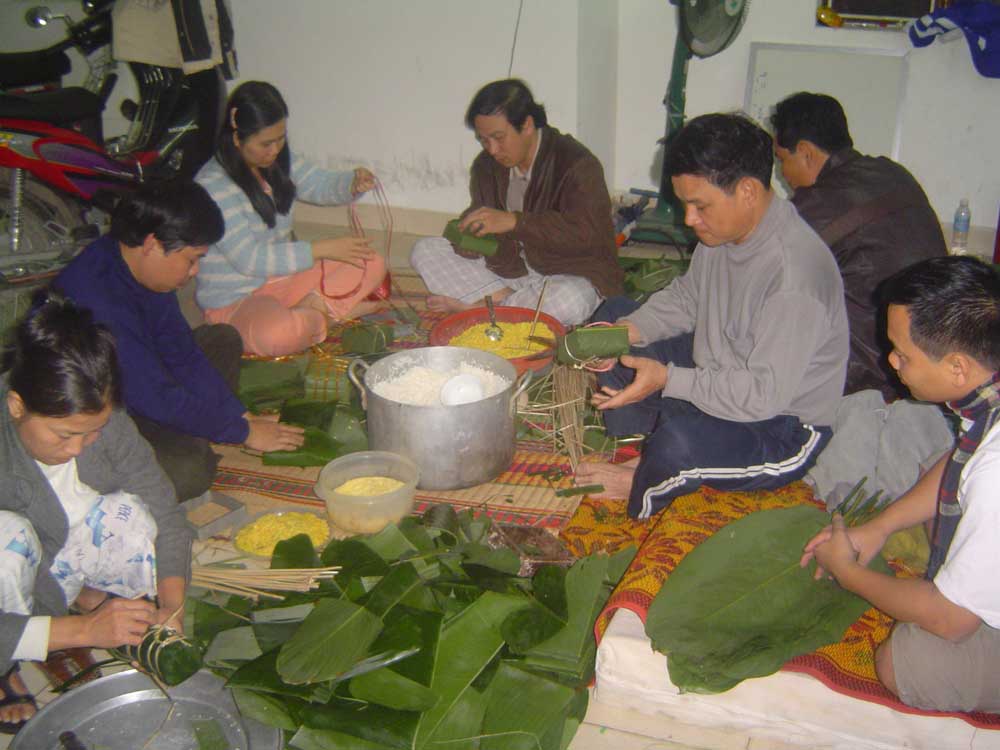 🇻🇳 VietnamTếtTết Nguyên Đán
The Vietnamese festival of the lunar new year, welcoming spring with family gatheringsFestival · Feasts and festival meals
🇻🇳 VietnamTếtTết Nguyên Đán
The Vietnamese festival of the lunar new year, welcoming spring with family gatheringsFestival · Feasts and festival meals