Festivals and celebrationsMiddle EastJewish
Seharane
A Kurdish Jewish festival of campfires, circle dances and shared food
Seharane is a multi-day festival kept by Kurdish Jews, once held in the open countryside after Passover and today observed in Israel during the middle days of Sukkot. Families camp together, cook over fires, sing and dance in circles, and Kurdish communities in Israel have held a public festival each year since 1972.
When is Seharane marked?
Seharane is kept as part of Passover, which runs from 22 to 29 April 2027.
Seharane is a festival that Kurdish Jews have long kept, once timed to the days just after Passover and now, in Israel, moved to the middle days of Sukkot. It is a loud, sociable gathering: families camp out, cook and eat together, wear their best clothes, sing, dance in circles and visit the graves of respected elders. The name is also written Seharaneh.
What it is
Seharane lasts more than a day, though how many days changed from place to place. In Iranian Kurdistan it ran for a single day; elsewhere it could stretch from two days to a week. Preparations started on the first night after Passover closed. The festival had almost no religious content of its own beyond the ordinary prayer services a community already held. People who study the name suggest three possible roots: a Kurdish word for seeing nature, an Aramaic word for the moon, and an Arabic word for a walk. Many trace the festival back to Newroz, the spring celebration kept by Persians, which in Iranic Kurdish also came to be called Sayeran.
Camping in the countryside
The old Seharane took people out of their towns. Kurdish Jews went into the countryside and set up camps, staying for the length of the festival, and communities hired guards to keep the camps safe. Households carried food with them and cooked or warmed it over campfires, sharing what they had with one another. Muslims who lived nearby joined some of the celebrations, either as guests of their neighbours or as traders who came to sell goods. Families also walked to the burial places of righteous elders.
Music and dance
Seharane was a joyful and social occasion. People put on their best clothes. They sang, and they danced, mostly in circles, and made music with two instruments, the zurna and the dahola. Some dances were for men or women only; others brought men and women together. Evenings were given over to storytelling. Because the usual barriers of class, age and gender loosened, young men and women had more chance to spend time together, and some of these meetings turned into courtships and engagements. According to oral history, smaller Seharane gatherings also marked other holidays and turning points in life across the year, though the largest were always the ones after Passover.
The move to Israel
The Kurdish Jewish community left for Israel almost entirely in the early 1950s, in the migration known as Operation Ezra and Nehemiah. Scattered across a new country, families stopped holding Seharane for roughly twenty years. A few kept small celebrations close to home, limited by money and by how easily they could travel. Some dropped the festival on purpose, wanting to fit into Israeli life. In the 1970s a broader effort to bring back cultural traditions took shape, led by the National Council of the Association of Kurdish Jewry, a body the community had just set up. The council shifted the date away from the days after Passover to the middle days of Sukkot, to avoid a clash with Mimouna, a Maghrebi Jewish festival held at the same time of year.
The festival today
In 1972 a Seharane festival was set up in Israel and has been held every year since. It gives Kurdish Jews a way to stay in touch with the wider Kurdish diaspora, and non-Jewish Kurds have been invited to take part more than once. Israeli politicians use it to meet the community. Alongside the organised festival, people mark the day with public gatherings, and a common choice is to picnic outdoors. The festival also reaches into daily life in a small way: the Israel Postal Company put out a set of stamps for it in September 2019.
How Seharane is kept
Kurdish Jews mark Seharane over more than one day. In the old form, families left their towns on the first night after Passover, reached the countryside and made camp. Guards were hired to keep the camp safe. Meals were cooked or heated on open fires and shared between households. People dressed up, sang, played the zurna and the dahola, and danced in circles, some for one sex alone and some mixed. Storytelling filled the evenings, and families walked to the graves of righteous elders. Today, in Israel, the community gathers during the middle days of Sukkot, and an annual public festival has been held since 1972, often with a picnic.
When and where
Traditionally Seharane came straight after Passover, starting on the first night the festival of unleavened bread ended, and in some communities it was kept during Passover's own middle days instead. Since its revival in Israel it has moved to the middle days of Sukkot. The shift was made so that it would not fall at the same time as Mimouna.
Seharane belongs to Kurdish Jews. It was kept in Kurdistan, and in Iranian Kurdistan the festival lasted a single day. Since the early 1950s the community has lived almost entirely in Israel, and Israel is where the revived festival is held each year, drawing Kurdish Jews from across the country.
What Seharane means
What the festival means to those who keep it is bound up with being together. Seharane loosened the usual rules of class, age and gender, letting people meet across those lines, and it was a recognised time for courtship and for fathers to settle marriages with their daughters' views taken into account. Visiting the graves of righteous elders connected the living to those who had gone before. For Kurdish Jews in Israel, the revived festival carries a second meaning: a public statement of a community's identity and a link to Kurds elsewhere.
Days Seharane is marked
Questions people ask about Seharane
When is Seharane marked?
Seharane is kept as part of Passover, which runs from 22 to 29 April 2027.
What is Seharane?
It is a multi-day festival kept by Kurdish Jews. Traditionally it followed Passover; today in Israel it is held during the middle days of Sukkot. People camp or gather outdoors, eat together, sing, dance in circles and visit the graves of righteous elders. An annual public festival has run since 1972.
Who keeps it?
Kurdish Jews, a community whose old homes were in Kurdistan. Almost all of them moved to Israel in the early 1950s. The National Council of the Association of Kurdish Jewry brought the festival back in the 1970s, and non-Jewish Kurds have sometimes been invited to join.
Why did it move to Sukkot?
According to the community's own account, the council that revived the festival shifted the date so it would not compete with Mimouna, a Maghrebi Jewish celebration held straight after Passover. Moving Seharane to the middle days of Sukkot kept the two apart.
What happens at the festival now?
In Israel the community holds public celebrations, and many people picnic. The annual festival, started in 1972, lets Kurdish Jews meet the wider Kurdish diaspora and gives Israeli politicians a chance to mix with the community. Stamps were issued for it in 2019.
See also
 Chaharshanbe SuriAn Iranian festival of fire and renewal celebrated on the eve of the final Wednesday before spring.
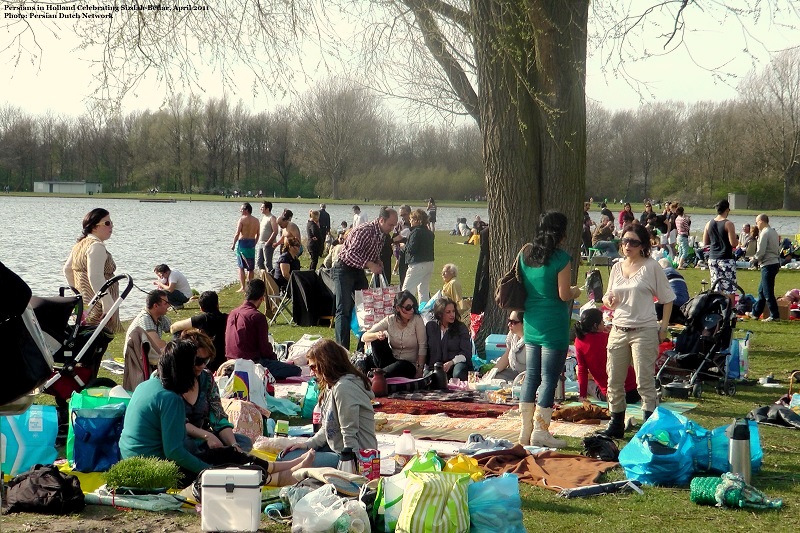 Sizdah BedarAn open-air picnic holiday concluding the Iranian New Year celebrations
 SadehAn ancient midwinter festival of fire, light, and the approach of spring
 TirganAn ancient Iranian summer festival of water, poetry and rainbow bands, kept on the thirteenth day of Tir.
Good reading and sources
The facts on this page come from the Wikipedia article "Seharane", written by its contributors and used under the CC BY-SA 4.0 licence, and from its Wikidata record (CC0). EveryParampara rewrote the text in its own words, with AI assistance, and compares every page with the article to make sure no passage is copied. It may be reused under the same CC BY-SA 4.0 licence with a link back.
It may contain mistakes. Traditions differ from one family, village and community to the next, and the people who keep them know them best. If something is wrong, tell us. Last refreshed 2026-10-05.
More from Israel
All the traditions of Israel 🇮🇱 Jerusalem, Israel and 1 moreHanukkahחֲנֻכָּה
An eight-day Jewish festival marking the rededication of the Second Temple in Jerusalem and the miracle of a single day'Festival
🇮🇱 Jerusalem, Israel and 1 moreHanukkahחֲנֻכָּה
An eight-day Jewish festival marking the rededication of the Second Temple in Jerusalem and the miracle of a single day'Festival
 🇮🇱 Jerusalem, Israel and 1 morePurimפּוּרִים
A lively Jewish festival of storytelling, shared food, masks and charityFestival · Feasts and festival meals
🇮🇱 Jerusalem, Israel and 1 morePurimפּוּרִים
A lively Jewish festival of storytelling, shared food, masks and charityFestival · Feasts and festival meals
 🇲🇦 Morocco and 4 moreMimounaמִימוּנָה
A Maghrebi Jewish celebration marking the end of Passover with sweets and open doorsFestival · Dinner
🇲🇦 Morocco and 4 moreMimounaמִימוּנָה
A Maghrebi Jewish celebration marking the end of Passover with sweets and open doorsFestival · Dinner
 🇷🇺 Moscow, Russia and 5 moreNovy GodНовый Год
A secular winter celebration of decorated trees, family feasts and midnight giftsFestival · Feasts and festival meals
🇷🇺 Moscow, Russia and 5 moreNovy GodНовый Год
A secular winter celebration of decorated trees, family feasts and midnight giftsFestival · Feasts and festival meals
The same idea elsewhere
Spring and renewal compared 🇺🇸 United States and 5 moreMother's Day
A worldwide annual celebration dedicated to mothers, maternal bonds and family careHome
🇺🇸 United States and 5 moreMother's Day
A worldwide annual celebration dedicated to mothers, maternal bonds and family careHome
 🇮🇳 Mathura, India and 5 moreHoliहोली (Hindi)
A spring festival of colours and bonfires that marks the end of winter and the triumph of good over evil.Festival
🇮🇳 Mathura, India and 5 moreHoliहोली (Hindi)
A spring festival of colours and bonfires that marks the end of winter and the triumph of good over evil.Festival
 🇫🇷 France and 5 moreCandlemas
A Christian feast of candle blessings marking the end of the Christmas seasonSpiritual
🇫🇷 France and 5 moreCandlemas
A Christian feast of candle blessings marking the end of the Christmas seasonSpiritual
 🇮🇳 Jammu, IndiaBhangra
A Punjabi harvest dance, first kept by farmers and now performed worldwidePerformance
🇮🇳 Jammu, IndiaBhangra
A Punjabi harvest dance, first kept by farmers and now performed worldwidePerformance