Music, dance and storytellingCentral Asia and the CaucasusMuslim
Shashmaqam
In its own language: Шашмақом
A classical song cycle of Central Asia, built on six modes and Sufi love poetry

Shashmaqam is a refined classical music genre of Central Asia, most at home in Tajikistan and Uzbekistan and possibly first shaped in Bukhara. Its lyrics come from Sufi poems about divine love, and a small group of lutenists and drummers accompanies the singers at concerts and gatherings.
Shashmaqam is a classical music of Central Asia, sung mainly in Tajikistan and Uzbekistan. Its name comes from Persian words meaning six modes, or maqams. Singers and players perform long, refined pieces set to Sufi poetry about divine love, with a small group of string players and a drummer. It is still performed today, and teachers pass the repertory on to new students.
What it is
Shashmaqam is a classical singing tradition of Central Asia. The word means the six maqams, or modes, in Persian. Maqam is the general term for a mode, and Persian musicians also use the word dastgah. A full performance moves through the six modes in order. The music is careful and restrained rather than showy, and the words come from Sufi poems on divine love. It is typical of Tajikistan and Uzbekistan, and it may have first taken shape in Bukhara.
Voices and instruments
A shashmaqam ensemble keeps the texture thin. The singing carries the poetry, and the instruments stay in the background. Most concerts use two long-necked lutes, picked from the rawap, the tar, the tanbur or the dutar. A dayra, a frame drum with jingles, works much like a tambourine and marks the rhythm. Some groups also include the sato, a bowed tanbur. Together they give the voices an austere setting, so a listener follows the melody and the words rather than a large sound.
A difficult century
In the early 20th century, Abdul Rauf Fitrad, a member of the Jadid movement, took a strong interest in shashmaqam, which was then played at court. His 1927 book presented it as a grand tradition of the Uzbek people. Under Joseph Stalin in the 1930s, official opinion turned against the music: it was described as a leftover of the feudal ruling class and as an obstacle to European-style harmony. In 1951 the Uzbekistan Union of Composers issued a decree, backed by the Uzbekistan committee, that shut down the maqom and stopped its development.
Tajik and Uzbek forms
From the mid-1950s the maqam was allowed back. In Tajikistan, the leadership decided that shashmaqom should be part of the national heritage. Rivalry between the two republics then split the repertory in two: a Tajik shashmaqom grew in Dushanbe, and an Uzbek shashmaqam grew in Tashkent. Books published on one side said nothing about the other. From the 1980s this division loosened, and each side began to learn the other's version. Bukhara, where Uzbek and Tajik are both spoken, shows the strain today: radio singers there use only Uzbek texts.
Beyond Central Asia
Bukharian Jews of Central Asia carried shashmaqam westward. Many were skilled performers, and they brought the music with them, especially to the United States, where it is still played. In 2008 UNESCO added Shashmaqom music, put forward by Tajikistan and Uzbekistan, to its Representative List of intangible cultural heritage. The listing treats the tradition as living practice rather than a museum piece. Today it survives in concert halls and in teaching, while arguments over language and ownership continue to shape how it is sung.
How Shashmaqam is kept
Performers sit together and work through the six modes one after another. A lead singer carries the poetry, answered by the instrumentalists and sometimes by a chorus. Two long-necked lutes, a dayra frame drum and, in some groups, a bowed sato provide the backing, kept spare so the words stay clear. Concerts are formal and quiet, though the music has also belonged to courts and to gatherings. In Bukhara and other cities, radio carries it to listeners at home, and teachers pass the repertory to students by ear.
When and where
Shashmaqam belongs to Tajikistan and Uzbekistan, and it is strongest in the cities tied to its history: Bukhara, where it may have developed, Dushanbe, home of the Tajik form, and Tashkent, home of the Uzbek form. Bukharian Jewish communities carried it to the United States, where their descendants still perform it.
What Shashmaqam means
For those who keep it, shashmaqam marks a shared Central Asian culture that is older than the borders drawn through the region. Its texts speak of divine love in the Sufi manner, so a performance can be heard as devotion as much as entertainment. The six modes give the music an order that performers learn over many years. Because Tajikistan and Uzbekistan each claim a version, the repertory has also become a way of talking about language, identity and nationhood.

Questions people ask about Shashmaqam
What is shashmaqam?
It is a classical music genre of Central Asia, sung in Tajikistan and Uzbekistan. The name means six maqams, or modes, in Persian. Its words are taken from Sufi poems about divine love, and a small group of string players and a drummer accompanies the singers.
Where is it performed?
It belongs to Tajikistan and Uzbekistan, and it is especially tied to Bukhara, Dushanbe and Tashkent. Bukharian Jews from Central Asia brought it to the United States, where performers still play it. UNESCO lists the music under both Tajikistan and Uzbekistan.
What instruments are used?
Concerts usually feature a pair of long-necked lutes, chosen from the rawap, tar, tanbur or dutar. A dayra, a frame drum with jingles like a tambourine, keeps time. Some groups add the sato, a bowed tanbur. The accompaniment stays austere so the singing and the poetry remain in front.
Was it always allowed?
No. In the 1930s Soviet authorities in Uzbekistan treated the classical maqom as a remnant of the feudal ruling class, and in 1951 a decree from the Uzbekistan Union of Composers suppressed it. From the mid-1950s it was rehabilitated, and Tajikistan's leaders made it part of the national heritage.
Why are there two versions?
Tension between Tajikistan and Uzbekistan produced a Tajik shashmaqom centred on Dushanbe and an Uzbek shashmaqam centred on Tashkent. For years books in each country ignored the other's version. From the 1980s the two sides began learning about each other again, though nationalist feeling in Uzbekistan may still affect how it is sung.
See also
 TiniklingA Philippine folk dance where dancers step between clapping bamboo poles
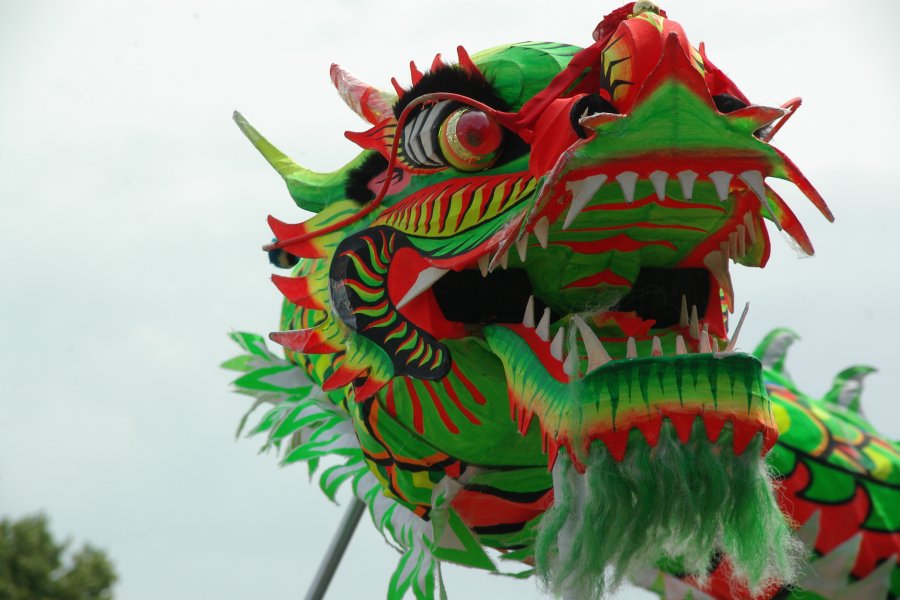 Dragon danceA long dragon puppet on poles, danced by a team at Chinese New Year and other festivals
 RaraA Haitian street music of bamboo trumpets and drums, played in the Easter season
Good reading and sources
- Shashmaqam on WikipediaEncyclopedia
- More photos on Wikimedia CommonsPhotos and video
- Wikidata recordOpen data
The facts on this page come from the Wikipedia article "Shashmaqam", written by its contributors and used under the CC BY-SA 4.0 licence, and from its Wikidata record (CC0). EveryParampara rewrote the text in its own words, with AI assistance, and compares every page with the article to make sure no passage is copied. It may be reused under the same CC BY-SA 4.0 licence with a link back.
It may contain mistakes. Traditions differ from one family, village and community to the next, and the people who keep them know them best. If something is wrong, tell us. Last refreshed 2026-10-05.
More from Uzbekistan
All the traditions of Uzbekistan 🇮🇷 Iran and 5 moreDutarدوتار
A long-necked lute crafted from wood and played across Iran and Central AsiaPerformance
🇮🇷 Iran and 5 moreDutarدوتار
A long-necked lute crafted from wood and played across Iran and Central AsiaPerformance
 🇮🇩 Bali, Indonesia and 5 moreIkat
A resist-dyeing craft from Southeast Asia, where yarns are tied and dyed before weavingCraft
🇮🇩 Bali, Indonesia and 5 moreIkat
A resist-dyeing craft from Southeast Asia, where yarns are tied and dyed before weavingCraft
 🇮🇷 Iran and 5 moreYaldā Nightشب یلدا
A solstice night of poetry, fruit and family, kept from Iran through Central AsiaFestival · Dinner
🇮🇷 Iran and 5 moreYaldā Nightشب یلدا
A solstice night of poetry, fruit and family, kept from Iran through Central AsiaFestival · Dinner
 🇮🇷 Isfahan, Iran and 4 moreMehreganمهرگان
An Iranian autumn festival honoring Mithra, friendship, and the harvestSeasonal
🇮🇷 Isfahan, Iran and 4 moreMehreganمهرگان
An Iranian autumn festival honoring Mithra, friendship, and the harvestSeasonal
The same idea elsewhere
All of this kind 🇹🇷 Kayseri, Turkey and 4 moreHalay
A traditional line and circle folk dance kept across Turkey, Azerbaijan, Armenia, Iran, and Syria.Performance
🇧🇷 BrazilBaião
A syncopated folk rhythm and partnered dance from northeastern BrazilPerformance
🇹🇷 Kayseri, Turkey and 4 moreHalay
A traditional line and circle folk dance kept across Turkey, Azerbaijan, Armenia, Iran, and Syria.Performance
🇧🇷 BrazilBaião
A syncopated folk rhythm and partnered dance from northeastern BrazilPerformance
 🇺🇦 Kyiv, UkraineBanduraБандура
A Ukrainian plucked string instrument played to accompany epic songs and folk balladsPerformance
🇺🇦 Kyiv, UkraineBanduraБандура
A Ukrainian plucked string instrument played to accompany epic songs and folk balladsPerformance
 🇳🇿 Auckland, New ZealandPoi
A Māori performing art of swinging tethered weights in rhythmical patterns.Performance
🇳🇿 Auckland, New ZealandPoi
A Māori performing art of swinging tethered weights in rhythmical patterns.Performance