Music, dance and storytellingNorth AmericaIndigenous and traditional
Stomp dance
A ceremonial night dance kept by Eastern Woodland tribes in the United States and Oklahoma.
The stomp dance is a sacred ceremony practiced by Indigenous communities across the southeastern United States and Oklahoma. Participants gather at designated grounds to sing traditional songs and move in a spiral around a central fire throughout the night.
When is Stomp dance kept?
Stomp dance is kept on nightly during the season, continuing until dawn.
The stomp dance is a living tradition of the Eastern Woodland peoples. It brings communities together for nightly singing and rhythmic movement around a sacred fire. The practice connects participants to their ancestors and spiritual beliefs through shared song and dance.
Origins and names
The English name describes the physical movements of the event. Different groups use their own terms. Muscogee speakers call it opvnkv haco, which suggests an inspirited state. Shawnee people refer to it as nikanikawe, meaning a dance of friends. Caddo traditions use the term kakiʔtihánnakah. These names highlight the social and spiritual bonds formed during the gathering.
How the ceremony works
Dancers form a counterclockwise spiral around a central fire. Women lead the rhythm using shell shakers on their legs. Men sing songs in a call-and-response style. The circle includes visitors and children. Leaders guide the rounds while others rest between songs. The event lasts from dusk until sunrise, creating a continuous flow of music and movement.
Places and leadership
Ceremonial grounds exist in North Carolina, Oklahoma, Alabama, and Florida. Each site features a square platform or arbor facing the cardinal directions. A male elder or chief typically oversees the proceedings. Specific roles include medicine men and speakers who manage the spiritual aspects. These structures serve as the heart of the community's religious life.
Food and attire
Communities share meals like cornbread and sofkee before dancing. Dancers wear comfortable clothing suitable for outdoor activity. Women often don skirts with ribbon patterns. Men might wear hats with feathers. Shell shakers are essential accessories for female dancers. These items reflect both practical needs and cultural identity.
How Stomp dance is kept
Men sing traditional songs in a call-and-response format while women provide rhythm with leg shakers. Dancers move in a counterclockwise spiral around a central fire. The event begins after dark and continues until dawn. Community members prepare food in nearby camps. Leaders guide the musical rounds while others rest between performances.
When and where
The dance occurs during specific seasons, typically at night. Gatherings last from dusk until sunrise. Dates depend on community calendars and seasonal cycles.
Active grounds are located in North Carolina, Oklahoma, Alabama, Mississippi, and Florida. Key sites include Raven's Roost in North Carolina and Park Hill in Oklahoma. These locations serve as centers for the Eastern Woodland communities.
What Stomp dance means
The central fire represents a living sacred being. The spiral movement symbolizes unity and connection to the earth. Songs preserve language and history. The gathering strengthens community bonds and spiritual health.
Questions people ask about Stomp dance
When is Stomp dance kept?
Stomp dance is kept on nightly during the season, continuing until dawn.
What is the stomp dance?
It is a ceremonial dance practiced by Eastern Woodland tribes in the United States. Participants sing and move in a spiral around a sacred fire throughout the night.
Where is it performed?
Ceremonial grounds are found in North Carolina, Oklahoma, Alabama, and Florida. Specific sites include Raven's Roost and Park Hill.
Who leads the ceremony?
A male elder or chief usually oversees the event. Medicine men and speakers handle the spiritual and organizational aspects of the gathering.
See also
 PlenaPuerto Rican folk songs and dance sharing community news with rhythmic frame drums
 Irish traditional musicA living folk practice of dance tunes, airs, songs and communal pub sessions
 Morris danceA rhythmic English folk dance performed in costume with bells, sticks and handkerchiefs
 Dandiya RaasA stick dance from Gujarat performed in pairs during the festival of Navaratri
Good reading and sources
The facts on this page come from the Wikipedia article "Stomp dance", written by its contributors and used under the CC BY-SA 4.0 licence, and from its Wikidata record (CC0). EveryParampara rewrote the text in its own words, with AI assistance, and compares every page with the article to make sure no passage is copied. It may be reused under the same CC BY-SA 4.0 licence with a link back.
It may contain mistakes. Traditions differ from one family, village and community to the next, and the people who keep them know them best. If something is wrong, tell us. Last refreshed 2026-10-04.
More from the United States
All the traditions of the United States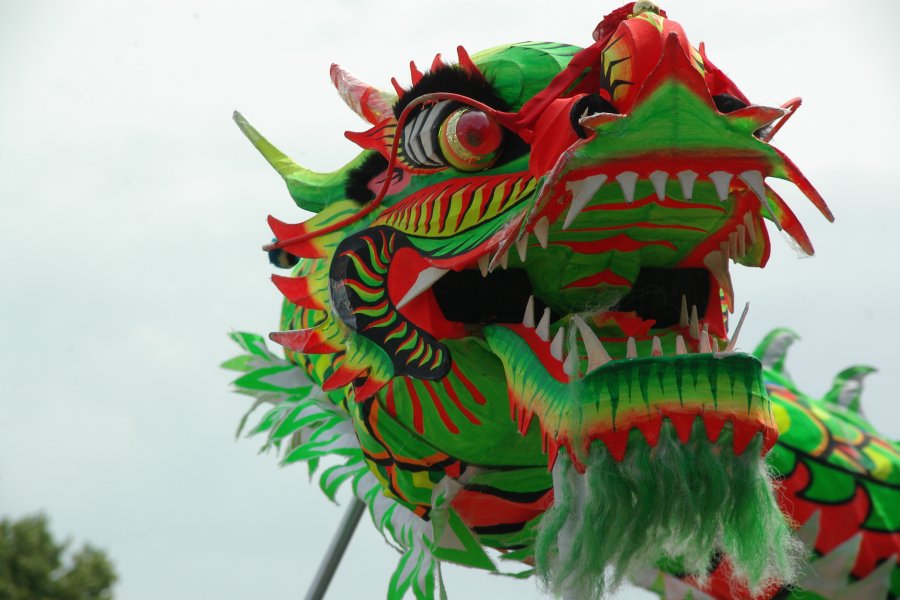 🇨🇳 China and 3 moreDragon dance舞龍 / 舞龙
A long dragon puppet on poles, danced by a team at Chinese New Year and other festivalsPerformance
🇮🇪 Ros Muc, Ireland and 2 moreSean-nós dancedamhsa ar an sean nós
An improvised solo Irish dance: low footwork, free arms and a loud battering beatPerformance
🇨🇳 China and 3 moreDragon dance舞龍 / 舞龙
A long dragon puppet on poles, danced by a team at Chinese New Year and other festivalsPerformance
🇮🇪 Ros Muc, Ireland and 2 moreSean-nós dancedamhsa ar an sean nós
An improvised solo Irish dance: low footwork, free arms and a loud battering beatPerformance
 🇵🇭 Palo, Philippines and 1 moreTinikling
A Philippine folk dance where dancers step between clapping bamboo polesPerformance
🇵🇭 Palo, Philippines and 1 moreTinikling
A Philippine folk dance where dancers step between clapping bamboo polesPerformance
 🇭🇹 Haiti and 1 moreRara
A Haitian street music of bamboo trumpets and drums, played in the Easter seasonPerformance
🇭🇹 Haiti and 1 moreRara
A Haitian street music of bamboo trumpets and drums, played in the Easter seasonPerformance
The same idea elsewhere
All of this kind 🇹🇷 Kayseri, Turkey and 4 moreHalay
A traditional line and circle folk dance kept across Turkey, Azerbaijan, Armenia, Iran, and Syria.Performance
🇧🇷 BrazilBaião
A syncopated folk rhythm and partnered dance from northeastern BrazilPerformance
🇹🇷 Kayseri, Turkey and 4 moreHalay
A traditional line and circle folk dance kept across Turkey, Azerbaijan, Armenia, Iran, and Syria.Performance
🇧🇷 BrazilBaião
A syncopated folk rhythm and partnered dance from northeastern BrazilPerformance
 🇺🇦 Kyiv, UkraineBanduraБандура
A Ukrainian plucked string instrument played to accompany epic songs and folk balladsPerformance
🇺🇦 Kyiv, UkraineBanduraБандура
A Ukrainian plucked string instrument played to accompany epic songs and folk balladsPerformance
 🇳🇿 Auckland, New ZealandPoi
A Māori performing art of swinging tethered weights in rhythmical patterns.Performance
🇳🇿 Auckland, New ZealandPoi
A Māori performing art of swinging tethered weights in rhythmical patterns.Performance