Folklore and beliefEuropePagan and ancient
Turoń
In its own language: Turoń (Polish), Turoň (Slovak)
A shaggy horned beast led from house to house by carol singers at carnival time

Turoń is a carnival mask from Polish and Slovak folk custom. A person hidden under a sheepskin carries a horned head on a pole and joins carol singers on their rounds after Christmas, mostly during Carnival. The noisy visit is meant to bring fertility, and it ends with a gift from each household.
When is Turoń marked?
Turoń is kept as part of Christmas Eve, which is on Thursday, 24 December 2026.
Turoń is a carnival figure from Polish and Slovak folk custom: a black, shaggy beast with horns and a jaw that claps open and shut. A performer carries it from house to house with carol singers in the weeks after Christmas. The visit brings noise, games and a fertility blessing, and ends with a small gift from the householder.
What the figure is
The Turoń is worn rather than held. One person drapes a cloth sheet or a sheepskin over himself and grips a wooden pole in front of his body. On top sits a bull's head with a movable jaw and horns, which may be real cattle horns or carved from wood. Rabbit fur or another animal's hide covers the head. The wearer stoops as he moves, or someone leads him on a rope. A bell hangs at the neck. In his hands he carries two sticks that he strikes against the floor at every step.
Inside the house
When the carolers step into a home, the beast springs about, dances and brays like a donkey. It likes to tease the women of the house, chasing them from room to room and sometimes knocking them with the jaw. While the carols are sung, the jaw keeps time and the neck bell rings. The wooden muzzle is wide enough to swallow a whole apple or to take a glass of vodka in a single gulp, and the drink is said to make the creature bolder. The sticks slap the boards as it hops over them and over the stools. Its horns are pushed against the people of the house, a gesture that hands on fertility.
The faint and the ransom
At a set point in the singing the beast collapses. Everyone in the room tries to bring it back: rubbing its body, burning hay so the smoke drifts like incense, blowing air beneath its tail, tipping more vodka into the muzzle, and undoing any curse that may lie on it. It comes round and starts its antics again, which usually signals that the visit is nearly over. If the household has had enough, they sing a song to drive it out. The householder then pays a small ransom in coins and food from the pantry, the carolers give thanks and move on.
Regional differences
The figure is not the same everywhere. In Kraków it walks with carolers who carry a star on Epiphany, 6 January, and it shoves anyone who stares too long at the star or at the people holding it. In Kielce County, townsfolk parade an aurochs effigy, named turuń there, through the villages during the closing week of Carnival. Tarnów has a similar round, with the Turoń joined by two other characters, a Tatar and a Żyd. In Mielec the beast comes out on Christmas Eve.
Name and meaning
The word Turoń comes from tur, the old name for the aurochs, a wild ox. Oskar Kolberg, writing in the nineteenth century, recalled a study of the aurochs by a German scholar he called Harius and argued that the animal's name belongs to the speech and customs of pagan Slavic culture, where the aurochs stood for the Sun and gave its name to a feast called Turzyce. On his reading the Turoń fits that picture, because Christmas marks the birth of a new Sun. For the people visited, the beast carries fertility, wished by gesture rather than words. A comparable figure in Central European folklore is Krampus.
How Turoń is kept
A group of carolers goes from door to door. One of them wears the Turoń: a sheet or sheepskin, a pole with a horned head, a snapping jaw and a bell. In the house the beast jumps, brays, chases the women, snaps its jaw in time with the singing and drums the floor with two sticks. At the height of the singing it falls down, and the household revives it with rubbing, hay smoke, blown air, vodka and the breaking of curses. It gets up and plays again. If the family is tired of it, they sing it away and hand over coins and pantry food before the group moves on.
When and where
The season runs from Christmas into Lent, and the figure is seen most often during Carnival, the merry weeks just before Lent begins. Some villages tie it to Christmas Eve; Kraków ties it to Epiphany on 6 January.
The custom belongs to Polish and Slovak folk life and is strongest in the Polish countryside and small towns. Kraków, Kielce County, Tarnów and Mielec each keep a version of it. Sources also list Poland, Slovakia, Czechia, Belarus, Germany and Russia as countries of origin for the rite.
What Turoń means
Turoń is a fertility figure. That meaning is passed on by touch and gesture rather than speech: the horns are pressed against the people of the house so that fertility goes with them. Kolberg also linked the beast to older Slavic ideas in which the aurochs stood for the Sun, and he read the Christmas visits as marking a new and brighter sun. Those links are his argument about origins, not a settled account.
Days Turoń is marked
Questions people ask about Turoń
When is Turoń marked?
Turoń is kept as part of Christmas Eve, which is on Thursday, 24 December 2026.
What is Turoń?
It is a carnival figure from Polish and Slovak folk custom. A performer hides under a sheet or sheepskin, carries a pole topped with a horned head and a working jaw, and joins carol singers as they visit homes.
Where is it kept?
It belongs to Polish and Slovak folk tradition. Poland is where the sources describe it in most detail, with different forms in Kraków, Kielce County, Tarnów and Mielec. Slovakia, Czechia, Belarus, Germany and Russia are also listed as homes of the rite.
Why does it faint in the middle of the singing?
The collapse is part of the show. The household then works to revive the beast by rubbing it, burning hay, blowing air under its tail, pouring in vodka and undoing curses. When it wakes and plays again, the visit is usually coming to an end.
What does the Turoń mean?
It stands for fertility. The horns are pushed against the people of the house to hand that fertility on. Kolberg, writing in the nineteenth century, also connected the beast to older Slavic ideas about the aurochs and the Sun.
See also
 SamovarA heated urn that brews tea for a slow, sociable pour, from Russia to Iran and Kashmir
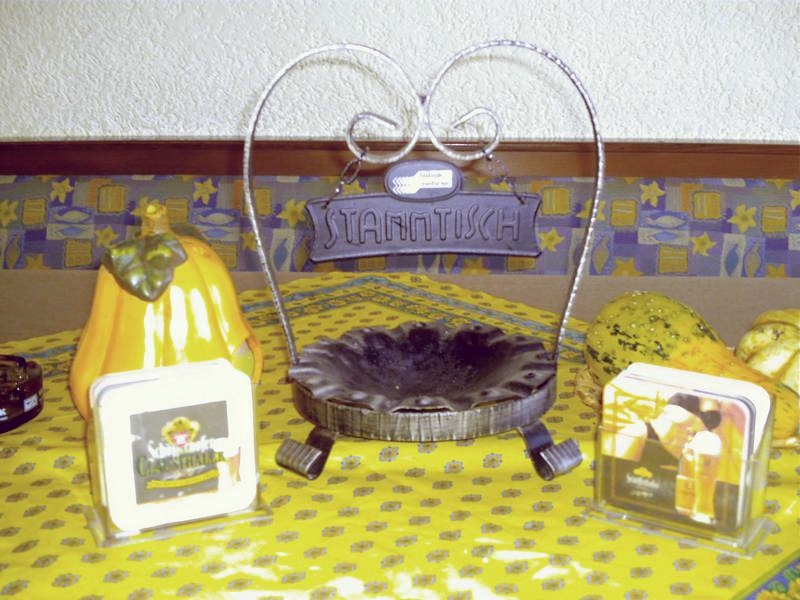 StammtischA weekly gathering of regulars at a reserved table in a pub or restaurant for conversation and community.
 Housewarming partyA gathering held soon after moving into a new home to celebrate the space and welcome guests.
 Christmas marketA seasonal street market held during Advent in German-speaking regions and beyond, featuring stalls, food, and crafts.
Good reading and sources
- Turoń on WikipediaEncyclopedia
- More photos on Wikimedia CommonsPhotos and video
- Wikidata recordOpen data
The facts on this page come from the Wikipedia article "Turoń", written by its contributors and used under the CC BY-SA 4.0 licence, and from its Wikidata record (CC0). EveryParampara rewrote the text in its own words, with AI assistance, and compares every page with the article to make sure no passage is copied. It may be reused under the same CC BY-SA 4.0 licence with a link back.
It may contain mistakes. Traditions differ from one family, village and community to the next, and the people who keep them know them best. If something is wrong, tell us. Last refreshed 2026-10-05.
More from Poland
All the traditions of Poland 🇩🇪 Germany and 5 moreNeed-fire
A ritual fire kindled by friction to ward off cattle plague, disease and harmFolklore
🇩🇪 Germany and 5 moreNeed-fire
A ritual fire kindled by friction to ward off cattle plague, disease and harmFolklore
 🇵🇱 Poland and 6 morePolaznik
The first visitor to cross the threshold at Christmas, read as a sign of the year to comeFolklore
🇵🇱 Poland and 6 morePolaznik
The first visitor to cross the threshold at Christmas, read as a sign of the year to comeFolklore
 🇬🇧 United Kingdom and 3 moreFairy-locks
A folk belief that fairies and spirits tangle the hair of sleeping children and animals.Folklore
🇬🇧 United Kingdom and 3 moreFairy-locks
A folk belief that fairies and spirits tangle the hair of sleeping children and animals.Folklore
 🇧🇪 Belgium and 5 moreSaint Nicholas Day
The feast day of Saint Nicholas, kept in Advent with gifts, shoes and church servicesSpiritual
🇧🇪 Belgium and 5 moreSaint Nicholas Day
The feast day of Saint Nicholas, kept in Advent with gifts, shoes and church servicesSpiritual
The same idea elsewhere
Hospitality and welcome compared 🇹🇷 Turkey and 5 moreEid al-Fitrعيد الفطر
The feast that ends Ramadan, opened with morning prayers, sweets and visits homeFestival · Feasts and festival meals
🇧🇩 Bangladesh and 3 moreAs-salamu alaykumسَلَامٌ عَلَيْكُمْ
A traditional Arabic greeting of peace exchanged in daily life and prayerEtiquette
🇹🇷 Turkey and 5 moreEid al-Fitrعيد الفطر
The feast that ends Ramadan, opened with morning prayers, sweets and visits homeFestival · Feasts and festival meals
🇧🇩 Bangladesh and 3 moreAs-salamu alaykumسَلَامٌ عَلَيْكُمْ
A traditional Arabic greeting of peace exchanged in daily life and prayerEtiquette
 🇮🇱 Jerusalem, IsraelSukkotסוכות
A seven-day autumn Jewish festival of temporary booths, harvest prayers and hospitalitySpiritual
🇮🇱 Jerusalem, IsraelSukkotסוכות
A seven-day autumn Jewish festival of temporary booths, harvest prayers and hospitalitySpiritual
 🇮🇱 Jerusalem, Israel and 1 morePurimפּוּרִים
A lively Jewish festival of storytelling, shared food, masks and charityFestival · Feasts and festival meals
🇮🇱 Jerusalem, Israel and 1 morePurimפּוּרִים
A lively Jewish festival of storytelling, shared food, masks and charityFestival · Feasts and festival meals