Customs of food and drinkEuropeChristianSecular and civic
Turrón
A festive Mediterranean nut-and-honey confection shared at Christmas and local feasts

Turrón is a traditional Mediterranean nougat made from honey, egg whites, sugar, and toasted nuts such as almonds. Closely associated with Christmas in Spain and Italy, it is also enjoyed at saint festivals and family gatherings across Latin America and the Mediterranean.
When is Turrón marked?
Turrón is kept as part of Christmas, which is on Friday, 25 December 2026.
Turrón is a dense confection of whipped egg whites, warm honey, sugar, and toasted nuts, traditionally shaped into thick rectangular bars or round cakes. Across Spain and Italy, sharing these sweet slices is an essential part of the Christmas table. Beyond the festive winter holidays, related versions appear at local saint processions, village fairs, and street stalls across the Mediterranean, the Americas, and the Philippines.
Spanish and Italian traditions
In Spain, turrón splits mainly into hard Alicante style (whole toasted almonds held in brittle egg-and-honey candy) and soft Jijona style (ground almond paste mixed with oil into a crumbly bar). Other Spanish towns like Agramunt, Casinos, and Xerta produce distinct regional bars, while the Canary Islands mix in toasted flour called gofio. Italian torrone similarly ranges from crunchy to chewy textures. Places such as Cremona and Benevento take pride in historic recipes, with variations featuring hazelnuts, pistachios, orange blossom honey, or dusting powders of cocoa and confectioners sugar.
Ancient roots and early recipes
The name turrón traces to the Latin word torrere, meaning to toast. Confections of this style likely developed from an Islamic sweet called turun, ancient Greek recipes, or Roman treats known as cupedia. Written records place the candy in Jijona by the fifteenth century. A sixteenth-century Spanish manuscript, the Manual de Mujeres, describes an early domestic recipe where heated honey and egg whites cook together until brittle before cooks fold in roasted pine nuts, hazelnuts, or almonds. Sliced into bars, this preparation formed the blueprint for centuries of holiday confectionery.
Varieties across the world
When the confection traveled overseas, cooks adapted it using local harvests. In Peru, turrón de Doña Pepa combines honey and anise for the October procession honoring the Lord of Miracles. Puerto Rican versions highlight toasted sesame seeds with citrus zest and cinnamon, while Cuban vendors offer peanut-based bars in hard or crumbly forms. Philippine confectioners make delicate marzipan rolls from cashew or pili nuts wrapped in thin wafers. Maltese street vendors prepare qubbajd for patron saint celebrations, showing how a festive holiday candy evolved into a global family of confections.
Modern flavours and styles
While classic recipes adhere strictly to honey, egg whites, and high percentages of almonds, the definition of turrón has expanded in recent decades. Modern confectioners produce dozens of sweet bars, wrapping candied fruits, coconut, marzipan, puffed rice, caramel, and chocolate pralines into the familiar rectangular size. Some makers craft sugar-free bars or infuse them with regional liqueurs. In late 2025, pastry chefs in Tenerife demonstrated the enduring community pride in the sweet by assembling a record-breaking bar over one kilometre long using local Canarian ingredients.
How Turrón is kept
Turrón is served as a dessert or treat during celebratory gatherings, particularly at family meals around Christmas and New Year. Hosts slice the firm tablets into bite-sized portions to share after dinner. During patron saint feasts in places like Malta or religious processions such as Peru's Lord of Miracles, people buy freshly prepared squares from street stalls and festival vendors. In everyday settings, snack-sized bars or large family loaves are sold by mobile vendors, bus-stop peddlers, and local bakeries for sharing among friends.
When and where
In Spain and Italy, turrón is primarily prepared and eaten during the winter holiday season around Christmas. In Peru, the anise-flavoured variety belongs to the month of October during the Lord of Miracles procession. Other regions enjoy local versions year-round at village saint days or as everyday snacks.
Turrón has deep roots across Spain, particularly in towns like Jijona and Alicante, and in Italian regions including Lombardy, Campania, Calabria, and Sardinia. Distinct variations are also prominent in Malta, Cuba, Peru, Puerto Rico, and the Philippines.
On the table
- Turrón duro
- Turrón blando
- Torrone di Benevento
- Turrón de Doña Pepa
- Torrone di Bagnara Calabra
- Qubbajd
- Turrón de maní


Days Turrón is marked
Questions people ask about Turrón
When is Turrón marked?
Turrón is kept as part of Christmas, which is on Friday, 25 December 2026.
What is turrón made from?
Traditional turrón is made from honey, sugar, whipped egg whites, and roasted nuts, most often almonds. Modern styles may also use peanuts, cashews, sesame seeds, chocolate, or fruit.
What is the difference between hard and soft Spanish turrón?
The hard Alicante variety contains whole toasted almonds set in a brittle honey-and-sugar candy. The soft Jijona style grinds the almonds into a rich paste with oil, creating a tender, crumbly bar.
Where did turrón originate?
Its name comes from the Latin word for toasting. The sweet likely evolved from ancient Mediterranean confections or Islamic sweets in medieval Spain, with documented production in Jijona dating back to the fifteenth century.
See also
 CandlemasA Christian feast of candle blessings marking the end of the Christmas season
 Saint Lucy's DayA December festival of light and song held across Scandinavia and Italy to honour a Christian martyr.
 Las PosadasA nine-night Christmas pageant remembering Mary and Joseph seeking shelter
 Qoyllur Rit'iAn Andean mountain pilgrimage uniting indigenous star lore and Catholic devotion
Good reading and sources
- Turrón on WikipediaEncyclopedia
- More photos on Wikimedia CommonsPhotos and video
- Wikidata recordOpen data
The facts on this page come from the Wikipedia article "Turrón", written by its contributors and used under the CC BY-SA 4.0 licence, and from its Wikidata record (CC0). EveryParampara rewrote the text in its own words, with AI assistance, and compares every page with the article to make sure no passage is copied. It may be reused under the same CC BY-SA 4.0 licence with a link back.
It may contain mistakes. Traditions differ from one family, village and community to the next, and the people who keep them know them best. If something is wrong, tell us. Last refreshed 2026-10-04.
More from Spain
All the traditions of Spain 🇮🇹 Naples, Italy and 5 moreCaffè sospeso
An anonymous gift of a paid cup of coffee for a stranger in needTable custom · Tea, coffee and drinking ceremonies
🇮🇹 Naples, Italy and 5 moreCaffè sospeso
An anonymous gift of a paid cup of coffee for a stranger in needTable custom · Tea, coffee and drinking ceremonies
 🇪🇸 Spain and 1 moreTapasTapa
Small Spanish snacks or appetizers served hot or cold, often shared among friends.Table custom · Tea-time and snacking customs
🇪🇸 Spain and 1 moreTapasTapa
Small Spanish snacks or appetizers served hot or cold, often shared among friends.Table custom · Tea-time and snacking customs
 🇬🇧 United Kingdom and 5 moreElevenses
A short mid-morning pause for a drink and a small bite, kept in many countriesTable custom · Tea-time and snacking customs
🇬🇧 United Kingdom and 5 moreElevenses
A short mid-morning pause for a drink and a small bite, kept in many countriesTable custom · Tea-time and snacking customs
 🇸🇪 Sweden and 3 moreCrayfish partykräftskiva
Boiled crayfish, snaps and paper lanterns at a late-summer party in Sweden and FinlandTable custom · Feasts and festival meals
🇸🇪 Sweden and 3 moreCrayfish partykräftskiva
Boiled crayfish, snaps and paper lanterns at a late-summer party in Sweden and FinlandTable custom · Feasts and festival meals
The same idea elsewhere
Midwinter and the longest night compared 🇵🇪 Cusco, Peru and 4 moreIntiinti (Quechua)
The Inca sun deity, honoured with temples, offerings and the June festival Inti RaymiSpiritual
🇵🇪 Cusco, Peru and 4 moreIntiinti (Quechua)
The Inca sun deity, honoured with temples, offerings and the June festival Inti RaymiSpiritual
 🇮🇷 Iran and 5 moreYaldā Nightشب یلدا
A solstice night of poetry, fruit and family, kept from Iran through Central AsiaFestival · Dinner
🇮🇷 Iran and 5 moreYaldā Nightشب یلدا
A solstice night of poetry, fruit and family, kept from Iran through Central AsiaFestival · Dinner
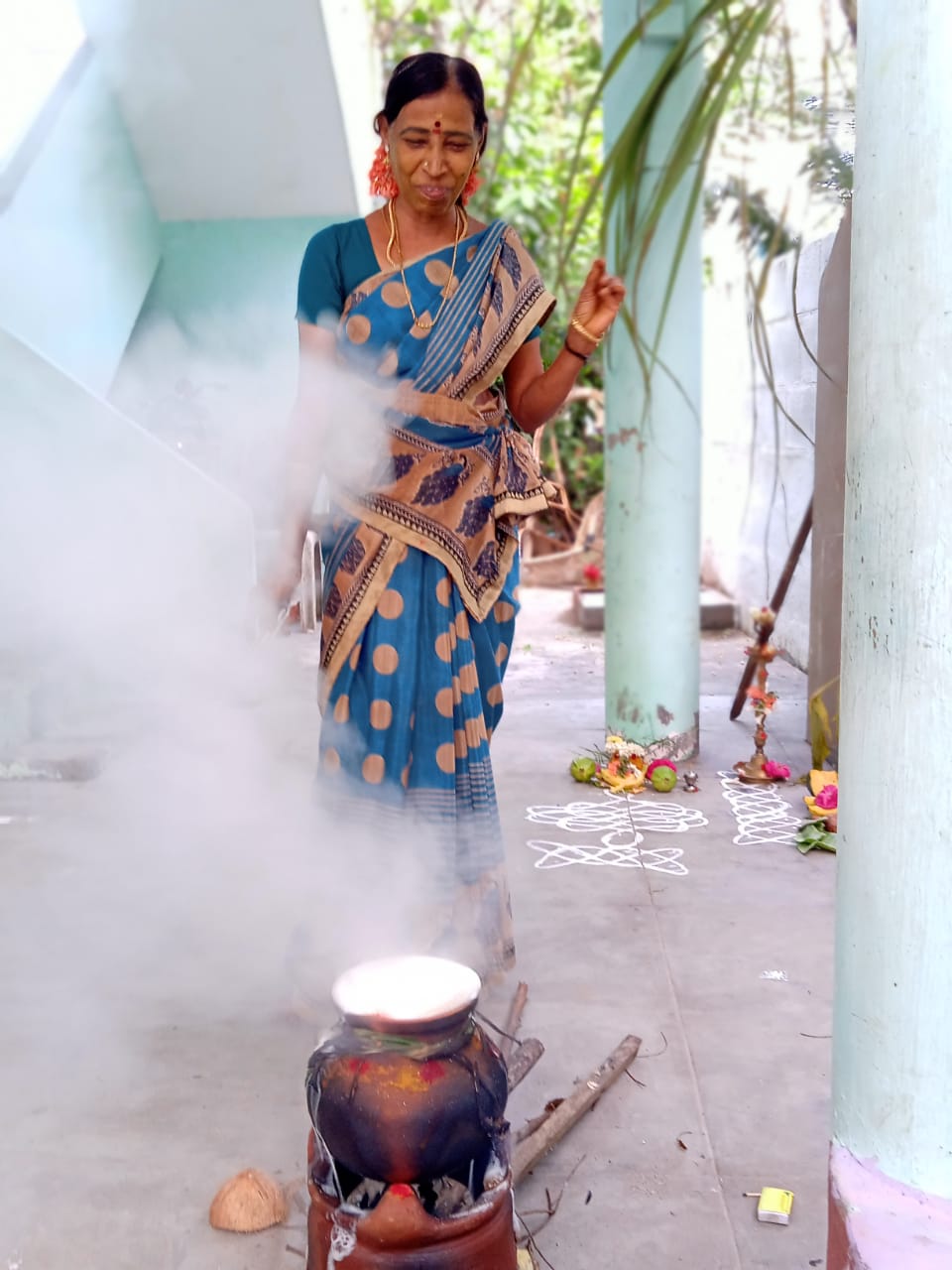 🇮🇳 India and 5 morePongal
Three or four days of boiling rice, garlanded cattle and thanks to the sunSeasonal · Sweets given and shared
🇮🇳 India and 5 morePongal
Three or four days of boiling rice, garlanded cattle and thanks to the sunSeasonal · Sweets given and shared
 🇨🇳 Shanghai, China and 1 moreJiaozi餃子
Crescent Chinese dumplings filled with meat or vegetables, eaten for fortune and feastsTable custom · Breakfast
🇨🇳 Shanghai, China and 1 moreJiaozi餃子
Crescent Chinese dumplings filled with meat or vegetables, eaten for fortune and feastsTable custom · Breakfast