Seasons, harvest and the calendarEast Asia
Yuzu bath
In its own language: 柚子湯
A winter solstice soak in hot water with whole yuzu citrus, kept across Japan

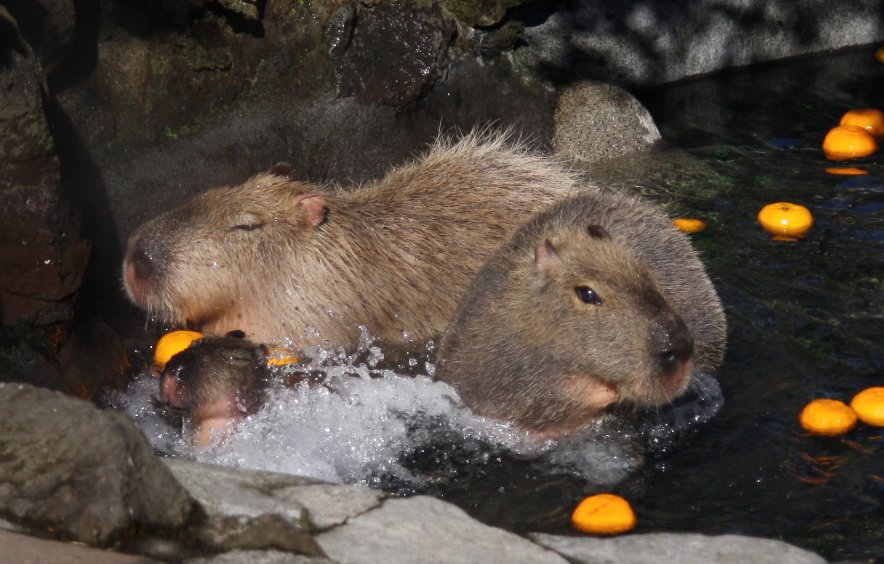
A yuzu bath is a Japanese winter solstice custom. Whole yuzu, halved yuzu or a cloth bag of the fruit is floated in hot bathwater, and bathers soak in the scented water to warm up, soften rough skin and relax. It is kept at home and in zoos, where capybaras take the same bath.
When is Yuzu bath marked?
Yuzu bath is kept as part of Winter Solstice, which is on Monday, 21 December 2026.
On the shortest day of the year, people in Japan fill a hot bath with yuzu, a small fragrant citrus, and soak in it. The fruit goes in whole, cut in half or tied in cloth, and sometimes scented salts replace it. The bath marks the winter solstice, and those who keep it say it warms the body and keeps colds away.
What it is
A yuzu bath is hot water with yuzu in it. Yuzu is a citrus fruit from East Asia, prized for its strong scent, and the fragrant oil in its skin is what perfumes the tub. Bathers may float whole fruits, drop in halves so the juice tints the water yellow-orange, or hang a cloth bag of fruit in the bath. Some use yuzu-scented bath salts instead. The practice fits the season: the same fruit that appears in winter kitchens goes into the tub on the shortest day.
Origins and history
Adding plants to bathwater is an old Japanese habit, done for health, for therapy and for pleasure. The yuzu bath grew out of that habit during the Edo period, which ran from 1603 to 1867. One explanation links it to wordplay. In Japanese, the characters for winter solstice and for a hot-spring cure can both be read as tōji, and people noticed the coincidence. That kind of pun, called goroawase, may have encouraged bathers to mark the solstice with a hot citrus soak. The custom has continued since.
What it means
Those who keep the custom describe several benefits. A yuzu bath is believed to help guard against colds, to treat rough skin, to warm the body and to relax the mind. The scent is central to it: yuzu is known for a strong aroma, and the steam carries that smell through the room. Because the winter solstice is the shortest day, the bath also marks the turning of the year, a warm pause at the coldest point of the calendar.
Capybara baths
Animals take yuzu baths too. In 1982 an employee at Izu Shaboten Zoo in Itō, Shizuoka, was cleaning the capybara enclosure with hot water and saw the animals gather in a warm puddle. Capybaras come from hot, humid places and spend much time in water; in cold weather their skin dries and roughens, and a hot soak helps. From that year on, staff have prepared a yuzu bath for the capybaras each winter. The zoo was the first to do this, and others have followed.
Today and change
The human custom stays close to its old form: yuzu, hot water, the winter solstice. What has changed is how far the capybara version travels. Clips of capybaras in their citrus bath have spread on social media since 2020 and drawn millions of views, and the animals have inspired plush toys and an anime character, Kapibara-san. Zoos beyond Itō now schedule their own yuzu baths in winter. For many viewers the zoo bath is a first sight of the tradition.
How Yuzu bath is kept
On the winter solstice, yuzu fruits are put into a hot bath. They may go in whole, be cut in half so the juice mixes with the water and turns it yellow-orange, or be tied inside a cloth bag. Yuzu-scented bath salts are an alternative. Bathers then soak in the warm, scented water. Zoos with capybaras follow a similar routine for the animals, preparing a citrus bath for them in winter.
When and where
It is kept on the winter solstice, the shortest day of the year, so it comes round once each year in late December in Japan. The date follows the solstice rather than a fixed calendar day.
It belongs to Japan, where it is kept on the winter solstice and has spread into zoos. The capybara version began at Izu Shaboten Zoo in Itō, Shizuoka, and other zoos have since taken it up.
What Yuzu bath means
The bath carries a promise of protection and comfort at the coldest point of the year. Bathers believe the yuzu helps keep colds away, soothes rough skin, warms the body and calms the mind. The fruit's strong scent is part of that: the aroma fills the room and sets the day apart from ordinary evenings. The solstice itself gives the practice its meaning, a seasonal turn observed with heat and citrus.

Days Yuzu bath is marked
Questions people ask about Yuzu bath
When is Yuzu bath marked?
Yuzu bath is kept as part of Winter Solstice, which is on Monday, 21 December 2026.
What is a yuzu bath?
It is a Japanese bathing custom in which yuzu, a fragrant citrus fruit, goes into hot water. The fruit may be whole, halved or tied in cloth, and scented bath salts can be used instead. The scent and the juice fill the bath.
Why do people take one?
Those who keep the custom say the bath guards against colds, treats rough skin, warms the body and relaxes the mind. The yuzu aroma is a large part of the appeal.
Where is it kept?
It is a Japanese tradition, kept on the solstice. Capybaras at Izu Shaboten Zoo in Itō, Shizuoka, have received yuzu baths since 1982, and other zoos have followed.
How old is the custom?
It comes from the older Japanese practice of adding seasonal plants to bathwater. Sources place the yuzu bath in the Edo period, 1603 to 1867, possibly encouraged by a pun linking the words for winter solstice and hot-spring cure.
See also
 Double Ninth FestivalAn autumn festival of mountain walks, chrysanthemum wine and ancestor remembrance
 DongzhiA midwinter festival celebrating the return of light with family feasts and dumplings
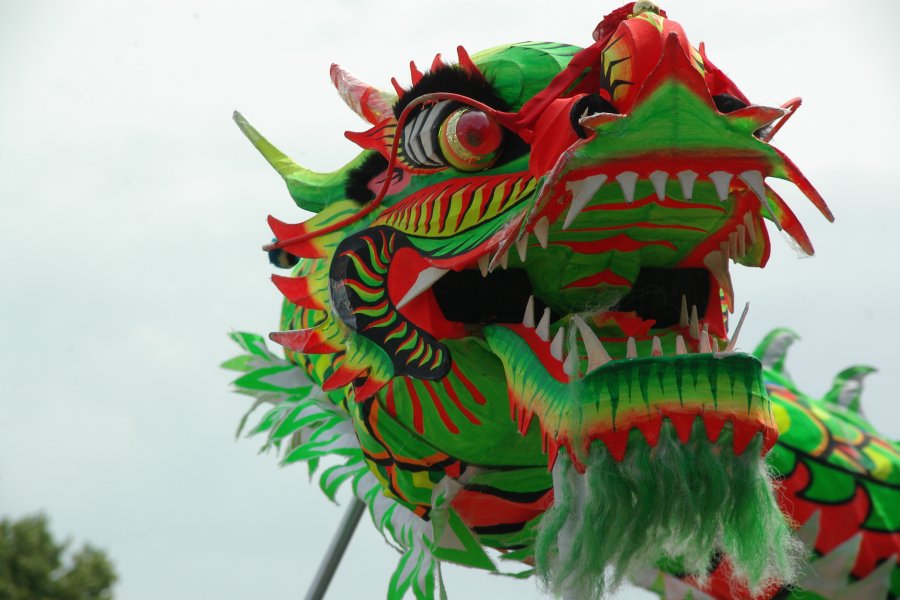 Dragon danceA long dragon puppet on poles, danced by a team at Chinese New Year and other festivals
 Water lanternSmall lamps floated on water to honour the dead and ask for good fortune
Good reading and sources
The facts on this page come from the Wikipedia article "Yuzu bath", written by its contributors and used under the CC BY-SA 4.0 licence, and from its Wikidata record (CC0). EveryParampara rewrote the text in its own words, with AI assistance, and compares every page with the article to make sure no passage is copied. It may be reused under the same CC BY-SA 4.0 licence with a link back.
It may contain mistakes. Traditions differ from one family, village and community to the next, and the people who keep them know them best. If something is wrong, tell us. Last refreshed 2026-10-05.
More from Japan
All the traditions of Japan
🇨🇳 China and 5 moreDouble Ninth Festival重陽節
An autumn festival of mountain walks, chrysanthemum wine and ancestor remembranceSeasonal · Tea-time and snacking customs
 🇮🇷 Iran and 5 moreWinter solstice
The shortest day and longest night of the year, marked with fire, feasting and poetrySeasonal
🇨🇳 Suzhou, China and 3 moreDongzhi冬至
A midwinter festival celebrating the return of light with family feasts and dumplingsSeasonal · Dinner
🇮🇷 Iran and 5 moreWinter solstice
The shortest day and longest night of the year, marked with fire, feasting and poetrySeasonal
🇨🇳 Suzhou, China and 3 moreDongzhi冬至
A midwinter festival celebrating the return of light with family feasts and dumplingsSeasonal · Dinner
 🇨🇳 Suzhou, China and 4 moreDongzhi Festival冬至
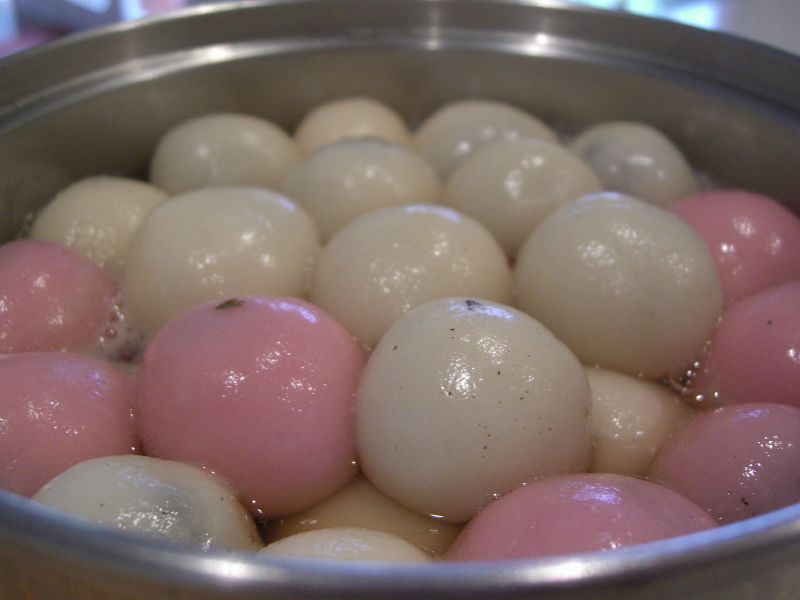
A winter solstice festival of family reunions, ancestor rites and sweet rice ballsSeasonal · Dinner
🇨🇳 Suzhou, China and 4 moreDongzhi Festival冬至
A winter solstice festival of family reunions, ancestor rites and sweet rice ballsSeasonal · Dinner
The same idea elsewhere
Midwinter and the longest night compared 🇩🇪 Germany and 5 moreChristmas tree
A decorated evergreen or artificial tree placed indoors to mark the Christmas season.Festival
🇩🇪 Germany and 5 moreChristmas tree
A decorated evergreen or artificial tree placed indoors to mark the Christmas season.Festival
 🇫🇷 France and 5 moreCandlemas
A Christian feast of candle blessings marking the end of the Christmas seasonSpiritual
🇫🇷 France and 5 moreCandlemas
A Christian feast of candle blessings marking the end of the Christmas seasonSpiritual
 🇮🇷 Iran and 5 moreYaldā Nightشب یلدا
A solstice night of poetry, fruit and family, kept from Iran through Central AsiaFestival · Dinner
🇮🇷 Iran and 5 moreYaldā Nightشب یلدا
A solstice night of poetry, fruit and family, kept from Iran through Central AsiaFestival · Dinner
 🇬🇧 United Kingdom and 5 moreYule log
A log kept burning on the hearth through the twelve days of Christmas, for luckSeasonal
🇬🇧 United Kingdom and 5 moreYule log
A log kept burning on the hearth through the twelve days of Christmas, for luckSeasonal