Folklore and belief
Legends, superstitions, charms and customs of luck.
Folklore and belief gather the legends, charms, superstitions and customs of luck that people live by: knocking on wood, the evil eye, the tooth fairy, the black dog on the moor, the fox spirit of Japan, the spirits of the forest. These are not formal religion but a living layer of stories and habits, told by grandparents and kept alive in jokes, rhymes and small rituals. EveryParampara describes them as folklore, in the way those who keep them describe them, and takes no position on whether they are true.
Tales and creatures
Every region has its stories of giants, fairies, trolls, tricksters, ghosts and talking animals, often explaining a hill, a river or a custom. They are told to entertain and to teach, and collectors such as the Brothers Grimm and local folklorists have written many down. The same tale types appear across continents, with local details, which scholars have long studied. Storytelling nights, festivals and schools keep them in circulation.
Luck and protection
Customs of luck and protection are the small daily rituals: spilling salt, a horseshoe over the door, a red thread, a coin in the fountain, a lucky number. They answer the wish for some control in an uncertain world and are often kept with a smile. Some have a practical origin, and others are echoes of older beliefs. EveryParampara notes traditional use as tradition and offers no medical or financial advice.
Written by the EveryParampara desk with AI assistance. Background on Folklore and belief (kind of tradition). Customs differ from place to place and family to family. If this is your tradition and we have it wrong, tell us.
 🇲🇲 MyanmarYoke théရုပ်သေး
A classical Burmese string puppet theatre performed with complex marionettes and music.Performance
🇲🇲 MyanmarYoke théရုပ်သေး
A classical Burmese string puppet theatre performed with complex marionettes and music.Performance
 🇹🇭 Phon Phisai, Thailand and 1 moreNaga fireballsบั้งไฟพญานาค (bang fai phaya nak)
A festival of glowing orbs rising from the Mekong River, attributed to a mythical serpent.Festival
🇹🇭 Phon Phisai, Thailand and 1 moreNaga fireballsบั้งไฟพญานาค (bang fai phaya nak)
A festival of glowing orbs rising from the Mekong River, attributed to a mythical serpent.Festival
 🇲🇲 Bagan, MyanmarNat worshipနတ်
Veneration of guardian spirits and nature deities alongside Buddhism in MyanmarSpiritual
🇲🇲 Bagan, MyanmarNat worshipနတ်
Veneration of guardian spirits and nature deities alongside Buddhism in MyanmarSpiritual
 🇵🇭 Cebu, PhilippinesArnis
The national martial art of the Philippines using sticks, bladed weapons and open handsGame
🇵🇭 Cebu, PhilippinesArnis
The national martial art of the Philippines using sticks, bladed weapons and open handsGame
 🇮🇩 Ubud, IndonesiaBarongᬩᬭᭀᬂ
A sacred Balinese masked dance drama depicting the eternal struggle of good and evilPerformance
🇮🇩 Ubud, IndonesiaBarongᬩᬭᭀᬂ
A sacred Balinese masked dance drama depicting the eternal struggle of good and evilPerformance
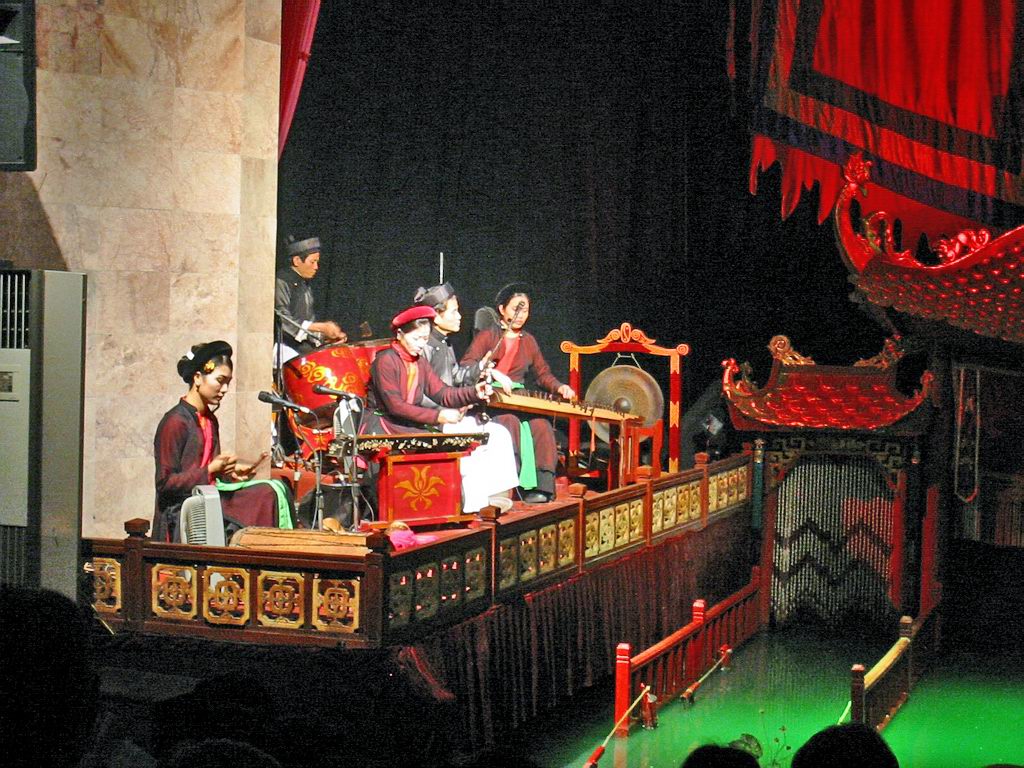 🇻🇳 Hoa Lư, VietnamChèo嘲
Satirical folk musical theatre performed by village troupes across northern VietnamPerformance
🇻🇳 Hoa Lư, VietnamChèo嘲
Satirical folk musical theatre performed by village troupes across northern VietnamPerformance
 🇲🇾 Penampang, MalaysiaKaamatanTadau Kaamatan
An annual May harvest celebration of thanksgiving and community across Sabah, MalaysiaSeasonal
🇲🇾 Penampang, MalaysiaKaamatanTadau Kaamatan
An annual May harvest celebration of thanksgiving and community across Sabah, MalaysiaSeasonal
 🇮🇩 IndonesiaBau Nyale
An annual night-time gathering on Lombok to collect spawning sea worms from the shoreFestival
🇮🇩 IndonesiaBau Nyale
An annual night-time gathering on Lombok to collect spawning sea worms from the shoreFestival
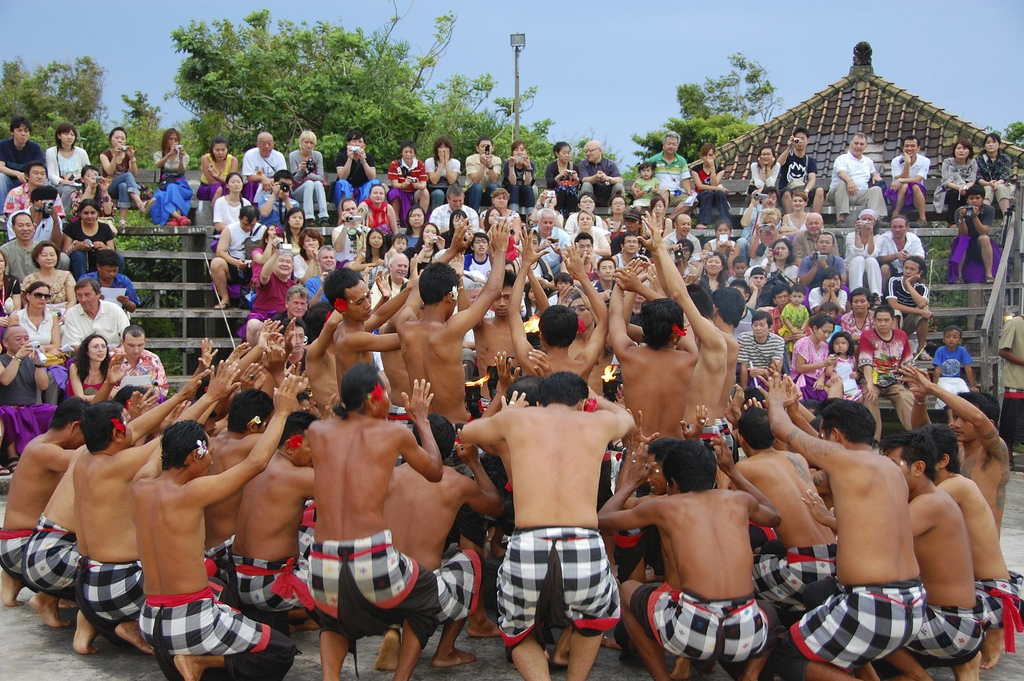 🇮🇩 Uluwatu, IndonesiaKecakᬓᬾᬘᬓ᭄ (Balinese), Tari Kecak (Indonesian)
A circle of men chanting chak as they dance the Ramayana epic in BaliPerformance
🇲🇾 Kelantan, Malaysia and 2 moreMak yongTarian Mak Yong (Jawi: مق يوڠ)
A dance-drama of Kelantan and Patani, told in song, music and improvised speechPerformance
🇮🇩 Uluwatu, IndonesiaKecakᬓᬾᬘᬓ᭄ (Balinese), Tari Kecak (Indonesian)
A circle of men chanting chak as they dance the Ramayana epic in BaliPerformance
🇲🇾 Kelantan, Malaysia and 2 moreMak yongTarian Mak Yong (Jawi: مق يوڠ)
A dance-drama of Kelantan and Patani, told in song, music and improvised speechPerformance
 🇹🇭 Thailand and 4 moreVessantara JatakaVessantara Jātaka
A Buddhist festival celebrating the last life of the Buddha as a generous prince.Festival
🇹🇭 Thailand and 4 moreVessantara JatakaVessantara Jātaka
A Buddhist festival celebrating the last life of the Buddha as a generous prince.Festival
 🇹🇭 Dan Sai, ThailandPhi Ta Khonผีตาโขน
A three-day festival in Dan Sai, north-east Thailand, of ghost masks and merit-makingFestival
🇹🇭 Dan Sai, ThailandPhi Ta Khonผีตาโขน
A three-day festival in Dan Sai, north-east Thailand, of ghost masks and merit-makingFestival
 🇵🇭 Hungduan, PhilippinesPunnuk
A tug of war in a river at harvest's end, kept by Tuwali-speaking villages in IfugaoGame
🇵🇭 Hungduan, PhilippinesPunnuk
A tug of war in a river at harvest's end, kept by Tuwali-speaking villages in IfugaoGame
 🇵🇭 PhilippinesBinirayan Festival
An annual December cultural festival in Antique celebrating Panay's Malay settlementFestival
🇵🇭 PhilippinesBinirayan Festival
An annual December cultural festival in Antique celebrating Panay's Malay settlementFestival
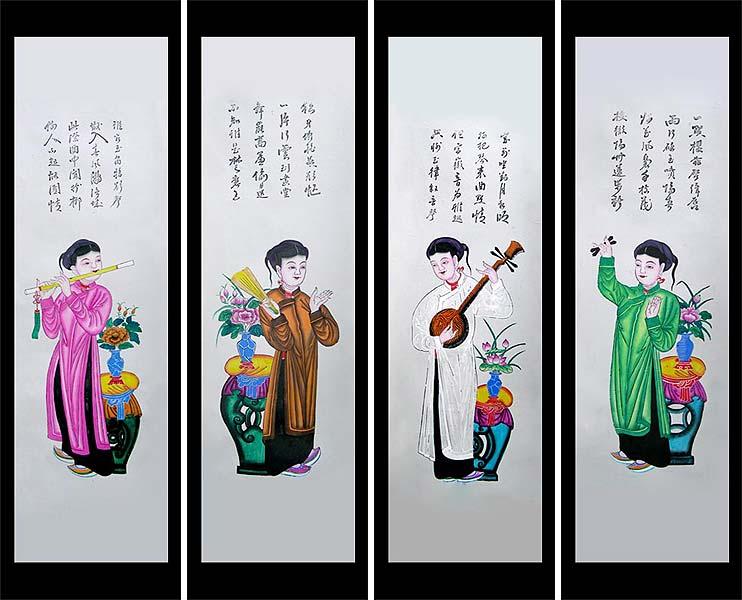 🇻🇳 VietnamVietnamese zodiacMười hai con giáp
A twelve-year cycle of animal years, kept in Vietnam on the lunar calendarFolklore
🇻🇳 VietnamVietnamese zodiacMười hai con giáp
A twelve-year cycle of animal years, kept in Vietnam on the lunar calendarFolklore
Photo credits on this page
The small pictures above come from Wikimedia Commons under free licences. Some are cropped to fit.
- Kaamatan: CEphoto, Uwe Aranas, CC BY-SA 3.0, source
- Bau Nyale: Focusfeel, CC BY-SA 4.0, source
- Nat worship: Emily Khine, CC BY-SA 4.0, source
- Arnis: Carmen Novoa, CC BY-SA 4.0, source
- Barong: Michael Gunther, CC BY-SA 4.0, source
- Chèo: Thomas Schoch, CC BY-SA 3.0, source
- Yoke thé: Uthantofburma ( talk ) 05:15, 30 November 2010 (UTC), CC BY-SA 3.0, source
- Naga fireballs: J A Forbes, CC BY-SA 4.0, source
- Kecak: Rollan Budi, CC BY-SA 2.0, source
- Vietnamese zodiac: Unknown (traditional painting dated back to the 17th century), Public domain, source
- Punnuk: Bernardguerrero, CC BY-SA 4.0, source
- Phi Ta Khon: E.D.W., Public domain, source
- Binirayan Festival: Ranieljosecastaneda, CC BY-SA 4.0, source
- Vessantara Jataka: Adam Jones, CC BY-SA 2.0, source